
As AI human robot technology advances, the integration of humanoid robots into daily life presents unprecedented challenges in liability attribution. I argue that the current legal systems globally are ill-equipped to handle the unique risks posed by these embodied AI entities. The autonomy safety paradox and anthropomorphism trap exacerbate these issues, necessitating a novel governance model. In this article, I explore the technical characteristics of AI human robot systems, analyze existing liability paradigms, and propose a chain liability framework based on economic principles and reasonable testing standards.
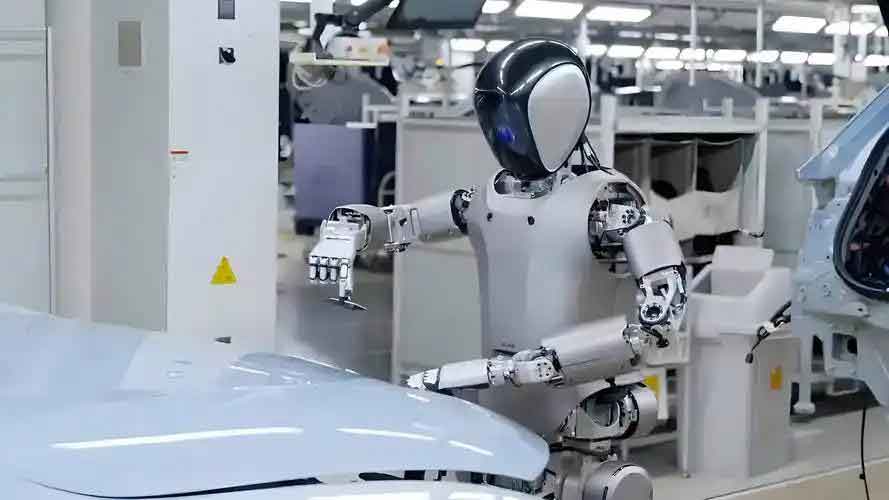
The rise of AI human robot systems marks a significant shift in human-machine interaction. Unlike traditional robots, humanoid robots possess human-like appearances and behaviors, leading to increased social integration. However, this very trait creates an autonomy safety paradox: as these AI human robot systems become more autonomous, their actions become less predictable, yet safety expectations rise. Simultaneously, the anthropomorphism trap causes users to over-trust these systems, blurring accountability lines. I contend that addressing these issues requires a multifaceted approach, combining insights from law, economics, and technology.
Technical Characteristics of Humanoid Robots
Humanoid robots, as a subset of AI human robot technologies, exhibit distinct features that differentiate them from non-humanoid counterparts. These include bipedal locomotion, social interactivity, and adaptive learning capabilities. The following table summarizes key technical attributes and their implications for liability:
| Feature | Description | Liability Implication |
|---|---|---|
| Human-like Appearance | Mimics human form, enhancing user acceptance | Increases risk of anthropomorphism trap and emotional harm |
| Autonomous Learning | AI-driven adaptation through experience | Complicates causality in defect attribution |
| Social Interaction | Uses gestures, speech, and expressions | Amplifies privacy and psychological risks |
| Environmental Adaptability | Operates in human-centric spaces | Raises issues of trespass and property damage |
The autonomy of AI human robot systems is purely technical, driven by algorithms and data. For instance, the decision-making process can be modeled using probability theory. Let the risk of harm be represented by a function $R(a, s)$, where $a$ denotes the autonomy level and $s$ the environmental stimuli. The expected damage $E[D]$ can be expressed as:
$$E[D] = \int P(h | a, s) \cdot L(h) dh$$
where $P(h | a, s)$ is the probability of harm $h$ given autonomy $a$ and stimuli $s$, and $L(h)$ is the loss function. This formula highlights how higher autonomy in AI human robot systems increases uncertainty in liability assessment.
Analysis of Existing Liability Paradigms
Globally, jurisdictions have attempted to regulate AI human robot technologies through metaphors, but these approaches fall short. I examine paradigms from the EU, U.S., and Japan, using the following comparative table:
| Jurisdiction | Metaphor Used | Key Mechanism | Deficiencies |
|---|---|---|---|
| European Union | Product (Tool) | Strict liability under product defect rules | Fails to address post-market learning and software updates |
| United States | Child/Pet (Vicarious Liability) | User responsibility as guardian | Ignores technical complexity and control issues |
| Japan | Public Good (Insurance) | Mandatory insurance schemes | High costs and insufficient coverage for novel risks |
In the EU, the AI human robot is treated as a product, imposing strict liability on manufacturers. However, this ignores the dynamic nature of AI systems. For example, if an AI human robot causes harm due to post-deployment learning, the manufacturer may not be liable under traditional product liability laws. The U.S. approach, often relying on vicarious liability, assumes users can control these systems, but this is unrealistic given the autonomy of AI human robot technologies. Japan’s insurance model spreads risk but may stifle innovation due to high premiums.
I propose that these metaphors are inadequate because they oversimplify the AI human robot’s nature. Instead, we should view them as “intelligent objects” with unique characteristics. The Hand formula, a cornerstone of negligence law, can be applied here. Let $B$ be the burden of preventive measures, $P$ the probability of harm, and $L$ the magnitude of loss. Liability should be assigned if:
$$B < P \times L$$
This economic principle ensures that parties who can prevent harm at the lowest cost bear responsibility. For AI human robot systems, this means allocating liability based on control and efficiency.
Proposed Chain Liability Governance Model
To address the autonomy safety paradox, I develop a chain liability model for AI human robot ecosystems. This model involves multiple stakeholders: manufacturers, software developers, algorithm designers, operators, and users. The chain follows a sequential responsibility order, prioritizing insurance, then fault-based liability, and finally residual manufacturer responsibility.
The model incorporates the reasonable replacement test, which assesses whether alternative designs could have prevented harm. Unlike consumer expectation tests, this standard focuses on technological feasibility. For instance, if an AI human robot causes injury, the test evaluates whether a safer algorithm was available at the time of design. Mathematically, let $C_d$ represent the cost of a safer design, and $E_r$ the expected reduction in risk. A design is defective if:
$$C_d < E_r \cdot L$$
where $L$ is the potential loss. This encourages innovation while ensuring safety.
The chain liability process can be summarized in the following table:
| Step | Action | Responsible Party |
|---|---|---|
| 1 | Insurance coverage for damages | Insurance providers |
| 2 | Fault-based liability for excess losses | Negligent users or operators |
| 3 | Residual liability for non-negligent incidents | Manufacturers or developers |
| 4 | Development risk defense | Manufacturers, if no feasible alternative existed |
In this framework, AI human robot incidents are first covered by mandatory insurance, ensuring quick compensation. If damages exceed coverage, fault is assessed using the Hand formula. For example, if a user fails to update the AI human robot’s software, leading to harm, they bear responsibility. Manufacturers are only liable for residual risks, such as inherent design flaws unknowable at the time of production.
Moreover, the model emphasizes data recording, similar to black boxes in aviation. Let $D_r$ denote the data recorded by the AI human robot, including decision paths and sensor inputs. In case of an incident, access to $D_r$ is crucial for causality analysis. If data is unavailable, the burden of proof shifts to the defendant, protecting victims.
Implementation and Future Directions
Implementing this chain liability model for AI human robot technologies requires regulatory updates and international cooperation. I suggest that standards bodies develop technical benchmarks based on the reasonable replacement test. For instance, autonomy levels in AI human robot systems could be categorized, with higher autonomy requiring stricter insurance.
The Hand formula can be extended to multiple parties. Suppose there are $n$ stakeholders involved in an AI human robot’s lifecycle. The total social cost $SC$ is minimized when:
$$SC = \sum_{i=1}^{n} B_i + \sum_{j=1}^{m} P_j \cdot L_j$$
where $B_i$ is the preventive cost for party $i$, and $P_j \cdot L_j$ is the expected loss from risk $j$. By allocating liability to parties with the lowest $B_i$, efficiency is achieved.
In conclusion, the integration of AI human robot systems into society demands a robust liability framework. The chain model, grounded in the Hand formula and reasonable replacement test, offers a balanced approach. It promotes innovation while safeguarding rights, ensuring that AI human robot technologies can evolve responsibly. As these systems become more pervasive, continuous refinement of this model will be essential to address emerging challenges.