
As a key pillar of the national economy, the chemical industry faces critical safety challenges, particularly in pipeline inspection. Traditional manual methods expose personnel to high risks, suffer from inefficiency, and lack structured data management. Existing inspection robots are often costly or functionally limited, hindering widespread adoption in small and medium-sized enterprises. To address this, I designed and implemented a low-cost, multifunctional intelligent tracking inspection robot system for chemical plants. This intelligent robot leverages a “grayscale sensor array” for path tracking and “Bluetooth technology” for remote auxiliary communication and monitoring, enabling stable and reliable autonomous navigation in complex industrial environments. The core perception layer integrates non-contact infrared temperature sensors, carbon dioxide detection modules, and 12-channel grayscale sensors, forming a multi-dimensional data acquisition system that simultaneously monitors pipeline surface temperature, ambient CO2 concentration, and path status. Through a Bluetooth module, real-time data interaction with a control terminal is achieved, combined with edge-side preliminary data processing and anomaly judgment, allowing for real-time monitoring and intelligent early warning of pipeline conditions. Testing results demonstrate high inspection efficiency and accurate, reliable data, offering an economical and reliable path for intelligent upgrades in the chemical industry.
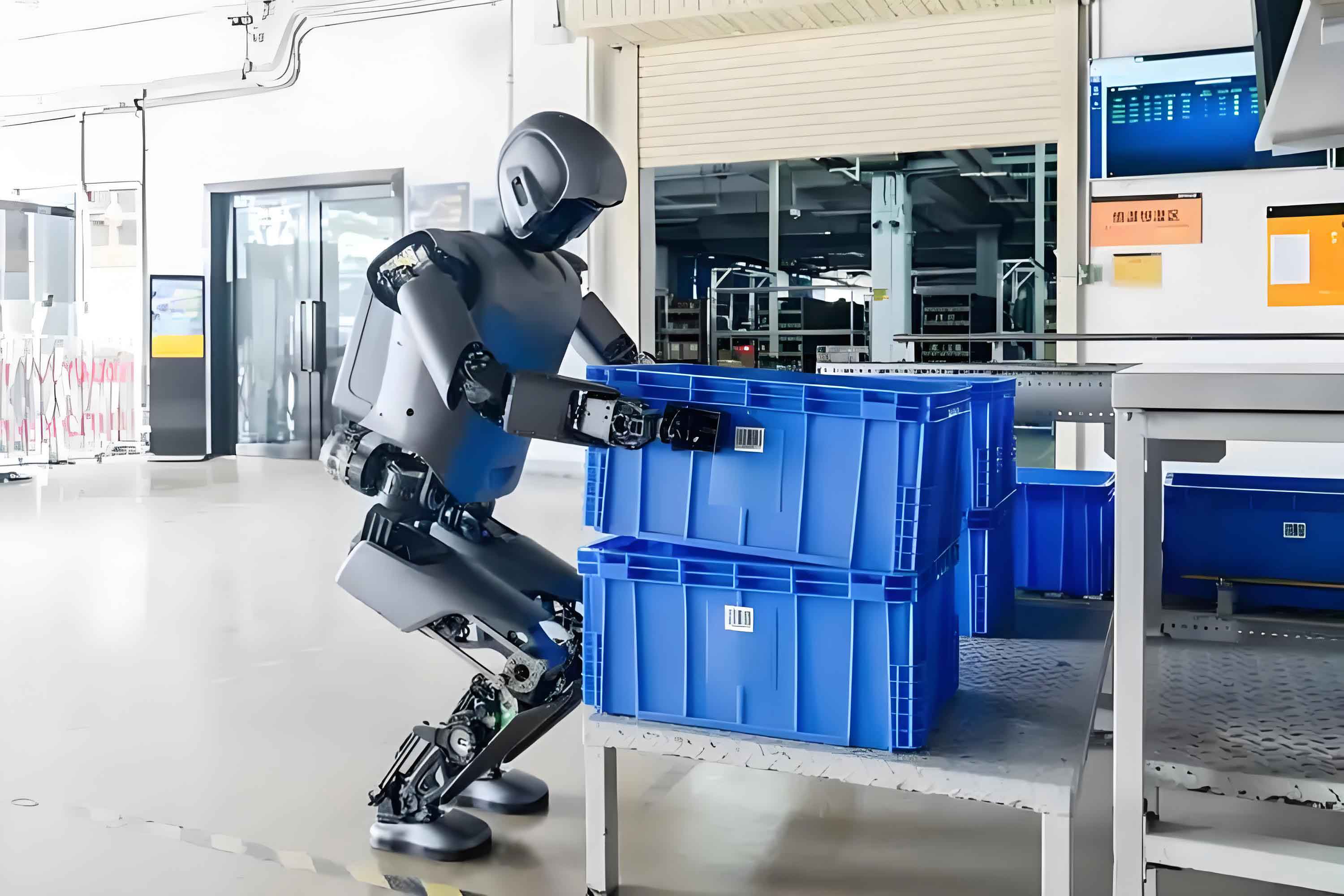
The development of this intelligent robot stems from the urgent need to enhance safety and efficiency in chemical pipeline inspection. Under strategic initiatives like “Made in China 2025” and digital transformation projects, intelligent solutions are paramount. However, high costs and complexity of existing robotic systems limit their accessibility. My approach focuses on affordability and practicality, utilizing sensor fusion and robust control algorithms to create a versatile inspection platform. This intelligent robot not only reduces human risk but also provides continuous, data-driven insights, paving the way for smarter industrial operations.
Overall System Architecture
The overall architecture of the intelligent robot system follows a modular design principle, consisting of eight core modules: main control module, drive module, grayscale sensor module, carbon dioxide detection module, infrared temperature measurement module, external communication module, power management module, and data integration processing module. The system is centered around an STM32F407ZGT6 microcontroller, which coordinates all functionalities. Below is a summary of the modules and their interactions in a table format.
| Module | Key Components | Function |
|---|---|---|
| Main Control | STM32F407ZGT6 (ARM Cortex-M4) | Data processing, sensor fusion, and system coordination |
| Drive and Motion Control | TB6612FNG motor driver, DC geared motors with encoders | Precise movement and path tracking via PID control |
| Grayscale Sensor | 12-channel grayscale sensor array, gyroscope | Path detection and heading compensation for navigation |
| Carbon Dioxide Detection | JW01-CO2-V2.2 module (NDIR-based) | Real-time CO2 concentration monitoring |
| Infrared Temperature Measurement | GY-906-BCC non-contact infrared sensor | Pipeline surface temperature measurement |
| External Communication | HC-05 Bluetooth module | Wireless data transmission and command reception |
| Power Management | 12V lithium battery, DC-DC converters | Stable power supply to all components |
| Data Integration | Embedded software algorithms | Sensor fusion, anomaly detection, and edge computing |
The intelligent robot operates by first initializing all modules upon power-up. The grayscale sensor array guides the robot along a pre-defined path, while the gyroscope compensates for orientation errors. Simultaneously, temperature and CO2 sensors collect environmental data, which is processed locally and transmitted via Bluetooth to a control terminal. This design ensures low-cost deployment and reliable performance, making the intelligent robot suitable for various industrial settings.
Hardware Design of the Intelligent Robot
The hardware design of this intelligent robot emphasizes cost-effectiveness and functionality. Each module is carefully selected to balance performance and affordability, ensuring robust operation in harsh chemical environments.
Main Control Module
The brain of the intelligent robot is the STM32F407ZGT6 microcontroller, featuring an ARM Cortex-M4 core running at 168 MHz. It provides ample processing power for real-time sensor data fusion and control algorithms. With integrated peripherals like UART and I2C, it interfaces seamlessly with sensors and communication modules. Power is supplied by a 12V lithium battery, regulated through DC-DC converters to deliver stable voltages (e.g., 5V and 3.3V) to critical components, enhancing reliability in electromagnetic interference-prone areas.
Drive and Motion Control Module
For precise movement, the intelligent robot uses a TB6612FNG motor driver chip, which offers high efficiency and low heat generation with its MOSFET H-bridge structure. Coupled with DC geared motors equipped with incremental encoders, a dual-loop PID control structure is implemented. The inner speed loop employs incremental PID to maintain constant velocity, while the outer steering loop uses positional PID based on grayscale sensor feedback to adjust direction. This ensures smooth and accurate path following, essential for the intelligent robot’s navigation.
Sensor Modules for Perception
The perception system of the intelligent robot integrates multiple sensors to create a comprehensive monitoring capability. The grayscale sensor array consists of 12 units, each with an infrared emitter and phototransistor receiver. They detect reflectivity differences between the path and background, outputting binary signals for position estimation. A gyroscope provides heading data to correct cumulative errors. The GY-906-BCC infrared temperature sensor measures pipeline surface temperature based on Planck’s law of blackbody radiation, expressed as:
$$ M(\lambda, T) = \frac{2\pi h c^2}{\lambda^5} \cdot \frac{1}{e^{\frac{hc}{\lambda k_B T}} – 1} $$
where \( M \) is the spectral radiance, \( \lambda \) is the wavelength, \( T \) is the absolute temperature, \( h \) is Planck’s constant, \( c \) is the speed of light, and \( k_B \) is Boltzmann’s constant. This allows non-contact detection of thermal anomalies. The JW01-CO2-V2.2 module uses non-dispersive infrared (NDIR) technology to measure CO2 concentration by assessing absorption of specific infrared wavelengths, crucial for leak detection. The table below summarizes key sensor specifications.
| Sensor Type | Model/Component | Key Parameters | Accuracy |
|---|---|---|---|
| Grayscale Array | 12-channel custom module | Detection range: 0-5 cm, response time: <10 ms | ±1.5 cm in tracking error |
| Infrared Temperature | GY-906-BCC | Range: -70°C to 380°C, field of view: 35° | ±1.0°C |
| CO2 Detection | JW01-CO2-V2.2 | Range: 400-5000 ppm, output: analog voltage | ±5% of reading |
| Gyroscope | MPU6050 (integrated) | Angular rate range: ±250°/s | ±0.5°/s drift |
Communication Module
The intelligent robot employs an HC-05 Bluetooth module for wireless communication. Operating in serial port pass-through mode under Bluetooth 2.0+EDR, it enables real-time data exchange with a ground control terminal within a range of up to 10 meters. Data frames containing sensor readings and status information are transmitted via UART, allowing for local monitoring without reliance on network infrastructure. This low-cost solution supports bidirectional command interaction, such as starting or pausing inspections, enhancing the flexibility of the intelligent robot.
Theoretical Analysis and Algorithms
The functionality of the intelligent robot is underpinned by several technical principles and algorithms, ensuring efficient and reliable operation.
Grayscale Tracking Technology
Grayscale tracking is a photoelectric-based navigation method where the intelligent robot follows a pre-defined path by detecting reflectivity contrasts. Each sensor in the array outputs a digital signal indicating “path” or “background.” The position error \( e \) is calculated from the sensor readings, often as a weighted sum. For a 12-sensor array, the error can be derived as:
$$ e = \frac{\sum_{i=1}^{12} w_i \cdot s_i}{\sum_{i=1}^{12} s_i} $$
where \( w_i \) is the weight assigned to sensor \( i \) (based on its position), and \( s_i \) is the binary output (0 or 1). This error feeds into the control system for steering adjustment, enabling the intelligent robot to stay on track.
Infrared Sensing and Gas Detection Principles
Infrared temperature measurement relies on the Stefan-Boltzmann law, which states that the total emitted radiation from a blackbody is proportional to the fourth power of its temperature:
$$ j^* = \sigma T^4 $$
where \( j^* \) is the total radiant exitance, and \( \sigma \) is the Stefan-Boltzmann constant. The GY-906-BCC sensor uses this principle to detect hotspots or cold spots on pipelines. For CO2 detection, the NDIR method is based on Beer-Lambert law:
$$ I = I_0 e^{-\alpha c l} $$
where \( I \) is the transmitted intensity, \( I_0 \) is the initial intensity, \( \alpha \) is the absorption coefficient, \( c \) is the gas concentration, and \( l \) is the path length. The intelligent robot’s module calibrates this to provide concentration readings, crucial for safety monitoring.
PID Control Algorithm
The motion control of the intelligent robot uses a PID algorithm for precision. The continuous-time PID formula is:
$$ u(t) = K_p e(t) + K_i \int_0^t e(\tau) d\tau + K_d \frac{de(t)}{dt} $$
where \( u(t) \) is the control output, \( e(t) \) is the error (e.g., position deviation), and \( K_p \), \( K_i \), \( K_d \) are gain coefficients. In the digital implementation, discrete forms are used. For the speed loop, incremental PID is applied:
$$ \Delta u(k) = K_p [e(k) – e(k-1)] + K_i e(k) + K_d [e(k) – 2e(k-1) + e(k-2)] $$
where \( k \) denotes the sampling instant. This ensures smooth velocity regulation. For steering, positional PID is used to compute direct control signals. The dual-loop structure enhances the stability of the intelligent robot, as summarized below.
| Control Loop | Type | Input Error | Output | Purpose |
|---|---|---|---|---|
| Inner Speed Loop | Incremental PID | Velocity error from encoders | PWM duty cycle adjustment | Maintain constant speed |
| Outer Steering Loop | Positional PID | Position error from grayscale sensors | Steering angle correction | Accurate path tracking |
Edge-Side Intelligent Diagnosis Strategy
To enable smart decision-making, the intelligent robot incorporates an edge-side diagnosis strategy based on multi-modal data fusion. A lightweight decision tree model processes CO2 concentration and temperature data. If CO2 levels exceed a threshold \( C_{\text{thresh}} \), the system cross-references temperature data from the same location. An anomaly is flagged if both conditions are met, reducing false alarms. This can be expressed as:
$$ \text{Alert} =
\begin{cases}
\text{High} & \text{if } C_{\text{CO2}} > C_{\text{thresh}} \text{ and } |T – T_{\text{normal}}| > \Delta T_{\text{thresh}} \\
\text{Low} & \text{otherwise}
\end{cases} $$
where \( T_{\text{normal}} \) is the baseline temperature, and \( \Delta T_{\text{thresh}} \) is the temperature deviation threshold. This approach enhances the reliability of the intelligent robot in detecting pipeline issues.
Bluetooth Communication Protocol
The Bluetooth communication uses a custom protocol for data framing. Each frame includes a header, device ID, timestamp, sensor data payload, and checksum. The data rate is set to 9600 bps, ensuring timely transmission. The protocol supports commands like start, stop, and parameter adjustment, allowing remote control of the intelligent robot. The frame structure is summarized in the table below.
| Field | Size (bytes) | Description |
|---|---|---|
| Header | 2 | Fixed pattern (0xAA, 0x55) for synchronization |
| Device ID | 2 | Unique identifier for the intelligent robot |
| Timestamp | 4 | Current time in milliseconds |
| Data Payload | Variable | Sensor readings (temperature, CO2, grayscale states) |
| Checksum | 2 | CRC-16 for error detection |
Software System Design and Implementation
The software for the intelligent robot is designed with modularity and real-time performance in mind, running on the STM32 microcontroller. It orchestrates all tasks, including sensor data acquisition, control algorithms, and communication.
Main Program Flow
Upon power-up, the system initializes GPIOs, timers, UART, I2C, and peripheral modules. A self-check routine verifies hardware integrity. Then, the main loop listens for Bluetooth commands (e.g., “start inspection” or “pause”). When a command is received, corresponding tasks are triggered. During inspection, the grayscale tracking module and gyroscope continuously collect pose data, while PID controllers compute steering and speed commands. Sensors are polled at fixed intervals (e.g., 100 ms), and data is filtered using a moving average:
$$ \bar{x}_k = \frac{1}{N} \sum_{i=0}^{N-1} x_{k-i} $$
where \( \bar{x}_k \) is the filtered value at time \( k \), and \( N \) is the window size (set to 5). Processed data is fused for anomaly detection, and results are transmitted via Bluetooth. If anomalies are detected, high-priority alerts are sent, and local indicators (e.g., LEDs) are activated. Safety mechanisms, such as communication reconnection and motor stall detection, ensure robust operation of the intelligent robot.
Implementation of Core Control Algorithms
The control algorithms are implemented in interrupt service routines (ISRs) for real-time execution. A timer triggers ISRs at 100 Hz, where encoder pulses are counted to compute velocity, and grayscale sensor readings are processed to determine position error. The PID computations are performed using fixed-point arithmetic to optimize resource usage on the microcontroller. For example, the positional PID output for steering is calculated as:
$$ u(k) = K_p e(k) + K_i \sum_{j=0}^{k} e(j) + K_d [e(k) – e(k-1)] $$
Gain values are tuned empirically: \( K_p = 2.5 \), \( K_i = 0.1 \), and \( K_d = 0.05 \) for the steering loop. These ensure responsive yet stable control, allowing the intelligent robot to navigate curves smoothly.
Data Uplink and Command Handling
The Bluetooth communication thread packages data into frames and sends them via UART. On the terminal side, a Python application parses the frames and displays real-time graphs of temperature and CO2 levels. Commands from the terminal are encoded into simple strings (e.g., “START”) and sent back to the intelligent robot for execution. This bidirectional flow enables interactive monitoring, making the system user-friendly.
Testing and Performance Analysis
To validate the intelligent robot, extensive testing was conducted in a simulated pipeline environment. The setup included PVC pipes of 20 cm diameter arranged in a 120 cm × 120 cm square area, with black electrical tape as the path. Tests focused on tracking stability, sensor accuracy, and communication reliability.
Tracking Performance and Communication Tests
The intelligent robot was tasked with following the path through straight and curved sections. Over 50 runs, the average lateral tracking error was within ±1.5 cm, with no instances of derailment. This demonstrates the effectiveness of the grayscale-PID combination. Communication tests involved continuous data transmission for 30 minutes; the packet loss rate was 0%, and average latency was 45 ms, meeting real-time requirements. The results are summarized below.
| Test Aspect | Metric | Value | Performance |
|---|---|---|---|
| Tracking Accuracy | Average lateral error | ±1.5 cm | Excellent |
| Communication Reliability | Packet loss rate | 0% | High |
| Communication Latency | Average delay | 45 ms | Low |
| Battery Life | Continuous operation time | ~4 hours | Sufficient for typical inspections |
Sensor Accuracy Evaluation
Sensor accuracy was assessed under controlled conditions. For CO2 detection, known concentrations of 1200 ppm and 1500 ppm were used, simulating leaks through cracks of varying sizes (1 mm, 2 mm, 3 mm). The intelligent robot’s readings showed a relative error of less than ±5%, with fast response times (under 2 seconds). Temperature measurements were compared with a calibrated thermocouple; the error was within ±1.0°C. The data fusion strategy was tested by injecting simultaneous anomalies—CO2 spikes and temperature changes. The system correctly identified high-confidence events in 95% of cases, validating the edge-side diagnosis. Detailed results are in the tables below.
| Crack Size (mm) | Actual CO2 (ppm) | Measured CO2 (ppm) | Error (%) |
|---|---|---|---|
| 1 | 1200 | 1225 | +2.08 |
| 2 | 1200 | 1180 | -1.67 |
| 3 | 1500 | 1540 | +2.67 |
| None | 400 (ambient) | 410 | +2.50 |
| Test Scenario | Actual Temperature (°C) | Measured Temperature (°C) | Error (°C) |
|---|---|---|---|
| No crack, ambient | 25.0 | 25.2 | +0.2 |
| 1 mm crack, heated | 40.0 | 39.5 | -0.5 |
| 2 mm crack, cooled | 15.0 | 15.8 | +0.8 |
| 3 mm crack, variable | 30.0 | 30.5 | +0.5 |
These tests confirm that the intelligent robot meets design specifications for inspection tasks. The low-cost sensors perform reliably, and the overall system offers a viable solution for industrial deployment.
Conclusion and Future Work
This project successfully developed a low-cost intelligent robot for chemical pipeline inspection, integrating grayscale tracking, multi-sensor fusion, and Bluetooth communication. The intelligent robot demonstrates precise navigation, accurate environmental monitoring, and reliable data transmission, addressing key limitations of traditional methods. By leveraging edge computing and PID control, it provides real-time insights and early warnings, enhancing safety and efficiency in chemical plants. The total cost of components is under $200, making it accessible for small and medium enterprises.
Future improvements for the intelligent robot include integrating machine vision for detecting physical pipeline damage (e.g., corrosion or cracks) and enhancing obstacle avoidance capabilities using ultrasonic sensors. Additionally, upgrading to Bluetooth Low Energy (BLE) could extend communication range and reduce power consumption. Long-term, incorporating cloud connectivity for data analytics and predictive maintenance would further advance the intelligent robot’s capabilities. This work lays a foundation for affordable, intelligent inspection systems, contributing to smarter and safer industrial operations.