
The development of humanoid robots represents a pinnacle of multidisciplinary engineering convergence. Their upstream industry chain encompasses raw materials and core components, while the midstream involves system integration and robot body manufacturing. The technological advancement of humanoid robots is characterized by deep integration across multiple domains and continuous leaps in intelligence levels. Within this ecosystem, the sophistication, cost-effective mass production capability, and degree of supply chain autonomy for core components—such as precision reducers, high-performance servo systems, multi-dimensional force/torque sensors, advanced vision sensors, and emerging electronic skin—directly determine the motion accuracy, response speed, and intelligent level of the humanoid robot. These core components can be categorized into critical modules like the power drive system (reducers, servo motors), the intelligent perception system (sensors, LiDAR components), and lightweight structural parts (titanium alloy brackets, carbon fiber torso). Their demanding performance specifications impose stringent requirements on machine tools and processes. Therefore, analyzing the synergy between the machining of core components and CNC machine tools, and revealing how precision manufacturing technology overcomes technical bottlenecks for industrial scale-up through the trinity innovation of “material-tool-process,” is crucial for providing theoretical and practical support for the technological autonomy of humanoid robots in the industry.
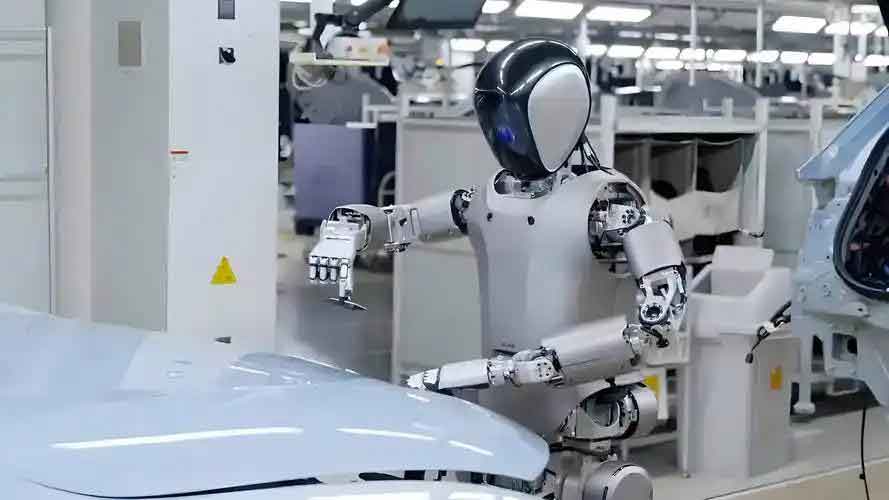
Classification of Core Components for Humanoid Robots
Core components of a humanoid robot can be systematically classified based on their primary function within the system.
| Category | Sub-components | Key Function & Requirements |
|---|---|---|
| Motion Execution | Precision Reducer (Harmonic, RV), Servo Motor, Integrated Joint Module | Provides actuation for limb movement. Requires high torque density, minimal backlash, fast response (e.g., ≤10ms), and precise dynamic tracking. |
| Perception | Force/Torque Sensor, Vision Sensor (Camera/Lens Mount), Position Sensor (Encoder) | Enables environment interaction and feedback. Demands high sensitivity, anti-interference capability, and ultra-precise dimensional stability for optical alignment. |
| Structural Support | Lightweight Alloy Frames (e.g., Al 7075, Ti TC4), CFRP Parts, End-Effector Components (e.g., PEEK fingertips) | Provides load-bearing capacity and body stability. Must balance lightweight design with mechanical strength, requiring high strength-to-weight ratio and damage-free machining. |
| Control | Core Controller, Heat Dissipation Modules | Serves as the computational brain. Requires reliable operation in wide temperature ranges (e.g., -20°C to 60°C) and effective thermal management. |
Analysis of Machining Difficulties for Core Components
The pursuit of high performance in humanoid robots translates into exceptional challenges in manufacturing their core parts, primarily stemming from material properties, geometric complexity, and stringent precision requirements.
Motion Execution Components
Harmonic Drive Reducer: The flexspline, a thin-walled cylindrical structure (wall thickness 1.0–1.2mm), requires tooth profile accuracy above ISO Grade 5. Challenges include: 1) Dimensional deviation after rough machining (±0.1mm wall thickness) leading to erroneous machining datums; 2) Micro-deformation post-heat treatment and severe tool wear when machining hardened material. The wave generator cam, an eccentric component, demands cylindricity ≤ 0.002 mm and surface roughness Ra ≤ 0.02 μm. Traditional grinding is prone to vibration-induced inconsistency.
Servo Motor: Stator laminations are ultra-thin (0.1–0.3mm silicon steel), requiring a die clearance of 0.005–0.010mm during stamping to prevent burrs or misalignment. The rotor shaft is a slender rod (diameter 5–8mm, length-to-diameter ratio >10), susceptible to bending during turning. Conventional centerless grinding struggles to achieve required roundness (≤0.001mm) and coaxiality (≤φ0.003mm).
Perception Components
Force Sensor: The elastomer, featuring thin-beam structures with micro blind holes (diameter ≤1mm, depth ≤5mm) for strain gauges, is prone to fracture due to stress concentration. The sealing surface between housing and elastomer requires flatness ≤0.005mm for hermeticity, which is difficult to achieve efficiently with traditional lapping.
Vision Sensor Lens Mount: The ultra-precise positioning holes for optical elements must meet H4 tolerance and coaxiality ≤φ0.002mm. Conventional drilling/reaming causes taper, leading to optical axis misalignment. Machining aluminum alloys like 6061 often leaves an oxide layer (>5μm), affecting optical contact and necessitating additional polishing.
Structural Support Components
Lightweight Alloy Structures: Materials like titanium alloy TC4 present challenges of high cutting forces, elevated cutting temperatures (>800°C), and work hardening, leading to poor surface finish (Ra >1.6μm) and rapid tool wear. Complex free-form surfaces (e.g., chest cavity with 50-100mm curvature) are difficult to machine without step-effects using traditional methods, and residual stress relief in aluminum causes workpiece warping.
Carbon Fiber Reinforced Polymer (CFRP) Parts: Their anisotropic and heterogeneous nature leads to defects like delamination, fiber pull-out, and burring during drilling/milling. Achieving damage-free holes with H7 tolerance in CFRP-metal hybrids is challenging due to mismatched optimal cutting parameters for each material. Carbon dust (particles <5μm) poses health hazards, requiring附加除尘 equipment.
Common Machining Challenges
Several overarching difficulties hinder the production of humanoid robot components:
- Material-Process Coupling Contradiction: A mismatch between the properties of advanced materials (Ti, CFRP, PEEK) and conventional machining parameters.
- Multi-Stage Accuracy Attenuation: Cumulative errors from multiple setups across “roughing-semi-finishing-heat treatment-ultra-finishing” processes can exceed 0.1mm.
- Poor Consistency in Batch Production: The transition from small-batch R&D to mass production reveals process discontinuities and a lack of real-time equipment monitoring.
- Micro-Part Machining Limitations: Physical constraints in machining miniature parts (e.g., gear module 0.1–0.3mm, shaft diameter <10mm) and limitations of micro-EDM wire diameter (≥0.03mm).
- Spatial Conflicts in Multi-Component Integration: Tight integration in joint modules demands high multi-baseline consistency (e.g., coaxiality <φ0.01mm between motor and reducer shafts), complicated by frequent datum changes.
- Residual Stress in Additive Manufacturing (AM): Significant thermal gradients in AM processes induce residual stress, causing warpage and potential micro-cracks, complicating subsequent precision machining.
The relationship between material properties, process parameters, and final performance can be conceptually modeled. For instance, achieving target surface roughness (Ra) is a function of multiple variables:
$$ Ra_{target} = f(V_c, f, a_p, K_{material}, T_{wear}, C_{coolant}) $$
where \(V_c\) is cutting speed, \(f\) is feed rate, \(a_p\) is depth of cut, \(K_{material}\) is a material-dependent constant, \(T_{wear}\) is tool wear state, and \(C_{coolant}\) is cooling condition. The challenge lies in optimizing this multi-variable function for each difficult-to-machine material.
Machining Solutions for Core Components
Addressing these challenges requires a combination of advanced processes, intelligent systems, and holistic manufacturing strategies.
Process-Specific Optimizations
For Harmonic Drives:
- Flexspline: Implement a combined process: Cold extrusion pre-forming → Wire EDM for tooth profile → Vacuum heat treatment → Mirror grinding with CBN wheel. This reduces machining allowance and controls deformation to ≤0.03mm, achieving Ra ≤0.02μm.
- Wave Generator: Utilize 5-axis ultra-precision grinding integrated with an in-process laser measurement system for real-time monitoring and PID-controlled dynamic adjustment of grinding parameters, achieving cylindricity ≤0.001mm.
For Servo Motors:
- Stator Laminations: Employ high-speed precision presses with diamond-coated dies (hardness ~8000 HV) and automatic vision-based stacking alignment to control burr height ≤0.01mm and misalignment ≤0.02mm.
- Rotor Shaft: Adopt a process sequence: Turning between centers (to minimize bending) → Centerless grinding with ceramic wheels → Laser straightening for residual deformation correction.
For Force Sensors:
- Machine micro-features on elastomers using ultra-precision 5-axis mills (spindle >20,000 rpm) with micro hard-alloy tools (φ0.2mm), preceded by ANSYS-based cutting stress simulation for path optimization.
- Finish sealing surfaces via ultra-precision lapping followed by plasma-sprayed PTFE coating (5-10μm thick), achieving flatness within ±0.001mm.
For Lens Mounts:
- Fabricate positioning holes using micro-EDM with pure copper electrodes (φ0.1mm) and a “step-feed” strategy, achieving H4 tolerance and coaxiality ≤φ0.0015mm.
- Apply chemical polishing (phosphoric-sulfuric solution) to remove the oxide layer, followed by anodizing to enhance surface hardness (≥300 HV) and achieve Ra ≤0.05μm.
For Lightweight Alloys & CFRP:
| Material | Challenge | Solution | Optimized Parameters/Technique |
|---|---|---|---|
| Titanium TC4 | High temp, tool wear | Ultra-fine grain carbide tool (WC-Co, grain≤0.5μm) with AlTiN coating + High-Pressure Coolant (HPC >10 MPa) | Vc=80-120 m/min, f=0.1-0.2 mm/rev, ap=0.3-0.5 mm |
| Complex Surfaces | Step-effects, path error | 5-axis toolpath planning (contour+cleanup+finish) + Digital Twin for pre-compensation | Simulated tool deflection ≤0.002mm, residual height ≤0.005mm |
| CFRP | Delamination, burrs | Diamond-coated end mills + Cryogenic air cooling (-5°C to 0°C) | Climb milling, cutting force <50N, Ra≤0.6μm |
| CFRP-Metal Hybrid Hole | Parameter mismatch | Ultrasonic-Assisted Drilling (15-25μm amplitude) + Segmented cutting parameters | CFRP: 3000 rpm, 0.05 mm/rev; Metal: 6000 rpm, 0.10 mm/rev |
Holistic and Advanced Manufacturing Strategies
To tackle common challenges, integrated technological approaches are essential.
1. Application of Advanced Machining Technologies:
- 5-Axis Simultaneous Machining: Enables one-shot machining of complex geometries, avoiding multiple setups. Dynamic error compensation systems maintain accuracy. For complex gears, 5-axis gear shaping with tilted cutter axis (5°–10°) can machine crown gears with lead error <0.003mm/10mm.
- Additive & Hybrid Manufacturing: Combining Topology Optimization (TO) with AM (e.g., Laser Powder Bed Fusion for Ti6Al4V) achieves >40% weight reduction. “AM + Subtractive” hybrid machine tools integrate 3D printing and 5-axis milling, boosting material utilization to >90% and reducing lead time by 40%.
- Ultrasonic Vibration-Assisted Cutting (UVAC): Applying 15–40 kHz vibration to the tool reduces cutting force by 30–50% and tool wear rate by 60–70% for difficult materials, extending tool life significantly.
2. Material-Process Matching Database: Establish a dynamic database linking material properties to optimal processes and tools.
| Material Module | Process Parameter Module | Tool Adapter Module |
|---|---|---|
| Hardness, Thermal Conductivity, Tensile Strength | e.g., CFRP: Vc=150-200 m/min, f=0.05-0.10 mm/rev, Cryogenic air cooling | e.g., Titanium: Ultra-fine carbide + AlTiN coating; CFRP: Diamond-coated tool |
3. Multi-Stage Precision Synergistic Control:
- Unified Datum Clamping: Use zero-point positioning systems (repeatability ≤0.002mm) to maintain the same datum across all operations, minimizing error accumulation.
- In-Process Measurement & Compensation: Integrate touch probes and laser interferometers into machining centers. Real-time measurement after each step allows for automatic CNC error compensation (≤0.001mm), controlling cumulative error to ≤0.05mm.
4. Ensuring Batch Production Consistency with FMS: Implement a Flexible Manufacturing System (FMS) creating a closed “machine-monitor-compensate” loop.
- Flexible Cells: Integrate multiple 5-axis mills, grinders, and EDM with AGVs for automatic workpiece handling.
- Real-Time Monitoring: Use Industrial IoT (IIoT) sensors to monitor tool wear (via current sensors), machine vibration, and temperature, triggering automatic tool change when wear exceeds 0.005mm.
- Statistical Process Control (SPC): Apply SPC to key quality characteristics (e.g., reducer backlash) to control variation within ±0.005mm and improve yield.
Future Trends in Machining Technology for Humanoid Robot Components
The evolution of manufacturing for humanoid robot core components is directed towards greater intelligence, sustainability, and integration.
1. Intelligent Machining Technology:
- AI-Driven Process Optimization: AI models will learn from multi-source data (material, tool, machine, quality) to autonomously generate and optimize machining parameters. Coupled with Digital Twin technology, this enables a virtual-physical closed loop for predictive and self-optimizing machining.
- Adaptive Control Machining: Real-time adjustment of feed rate, speed, and path based on in-process sensor feedback (force, vibration) will ensure consistent quality even in varying conditions, enabling reliable unmanned production.
2. Green and Efficient Machining Technology:
- Eco-friendly Cutting Fluids: Wider adoption of biodegradable vegetable-oil-based fluids (degradation >90%) and development of near-dry (MQL) or dry machining techniques with solid lubricants.
- Energy-Efficient Equipment: Development of high-efficiency spindles, servo motor energy recovery systems, and modular machine tool designs to reduce overall energy consumption.
3. Integrated Manufacturing Technology:
- Additive-Subtractive Synergy: Advanced hybrid machines will seamlessly combine AM for near-net-shape fabrication of optimal topologies with subsequent ultra-precision subtractive machining for final dimensions and surface integrity, enabling unprecedented part complexity and performance.
- Multi-Component Cooperative Manufacturing: Integrated production lines will synchronize the machining and assembly of interdependent components (e.g., reducer flexspline, motor rotor, sensor housing), minimizing transfer errors and assembly stresses, and reducing cumulative error to ≤0.03mm.
Conclusion
The manufacturing of core components is a foundational pillar for the advancement of humanoid robots. This analysis systematically detailed the classification, machining challenges, and corresponding solutions for these critical parts. The primary difficulties—thin-wall deformation, machining of advanced materials, multi-stage error accumulation, and batch inconsistency—are fundamentally rooted in the contradiction between material properties and process adaptability. The proposed solutions, encompassing specialized process optimizations, the adoption of 5-axis/ultrasonic/hybrid technologies, and the implementation of holistic systems like unified datum clamping, in-process compensation, and AI-enhanced FMS, provide a viable pathway to overcome these bottlenecks. These approaches effectively enhance machining precision, consistency, and efficiency.
As a core carrier for intelligent manufacturing and the future service economy, the development of humanoid robots will deeply focus on three main lines: technological iteration, industrial autonomy, and scenario popularization.
Technologically, components will advance towards lighter weight, higher precision, and greater intelligence. The scaled application of new materials like PEEK composites and CFRP-enhanced alloys can achieve over 40% weight reduction in key parts. Combined with hybrid manufacturing, material utilization can reach 90%. AI and Digital Twin technologies will empower processes, potentially improving dynamic response by 40% and controlling batch errors within ±0.005mm. Industrially, the push for localization will accelerate, aiming to break through bottlenecks in ultra-precision machine tools and high-end cutting tools. Building a fully autonomous “material-equipment-process-inspection” chain could increase the domestic content ratio of core components from around 30% to over 70%. Regarding application, scenarios will expand from professional fields like industrial assembly and medical rehabilitation to mass-market domains such as home service and educational companionship.
In the future, with the deepening integration of interdisciplinary technologies and the maturation of the industrial ecosystem, humanoid robots will achieve synergistic optimization of performance and cost. The technological breakthrough and autonomous controllability of core components will be the key guarantee for securing a strategic high ground in the global humanoid robot industry competition, supporting the high-quality development of this pivotal sector.