
The acceleration of the industrialization of humanoid robots, with mass production commencing in 2025, is creating a pivotal and expansive development window for high-end chemical and polymeric materials. The performance envelope of these sophisticated machines is fundamentally constrained and defined by the materials from which they are constructed. The core material demands for humanoid robots converge on two critical, yet distinct, frontiers: structural lightweighting and advanced perception. Lightweight materials are essential to overcome the intrinsic trade-off between mobility, payload capacity, and energy consumption. Concurrently, the development of sophisticated perception materials, particularly for electronic skin (e-skin), is crucial for enabling safe, dexterous, and intuitive environmental interaction. This analysis delves into the material systems at the heart of this revolution, examining their properties, applications, market dynamics, and the strategic challenges within the global supply chain.
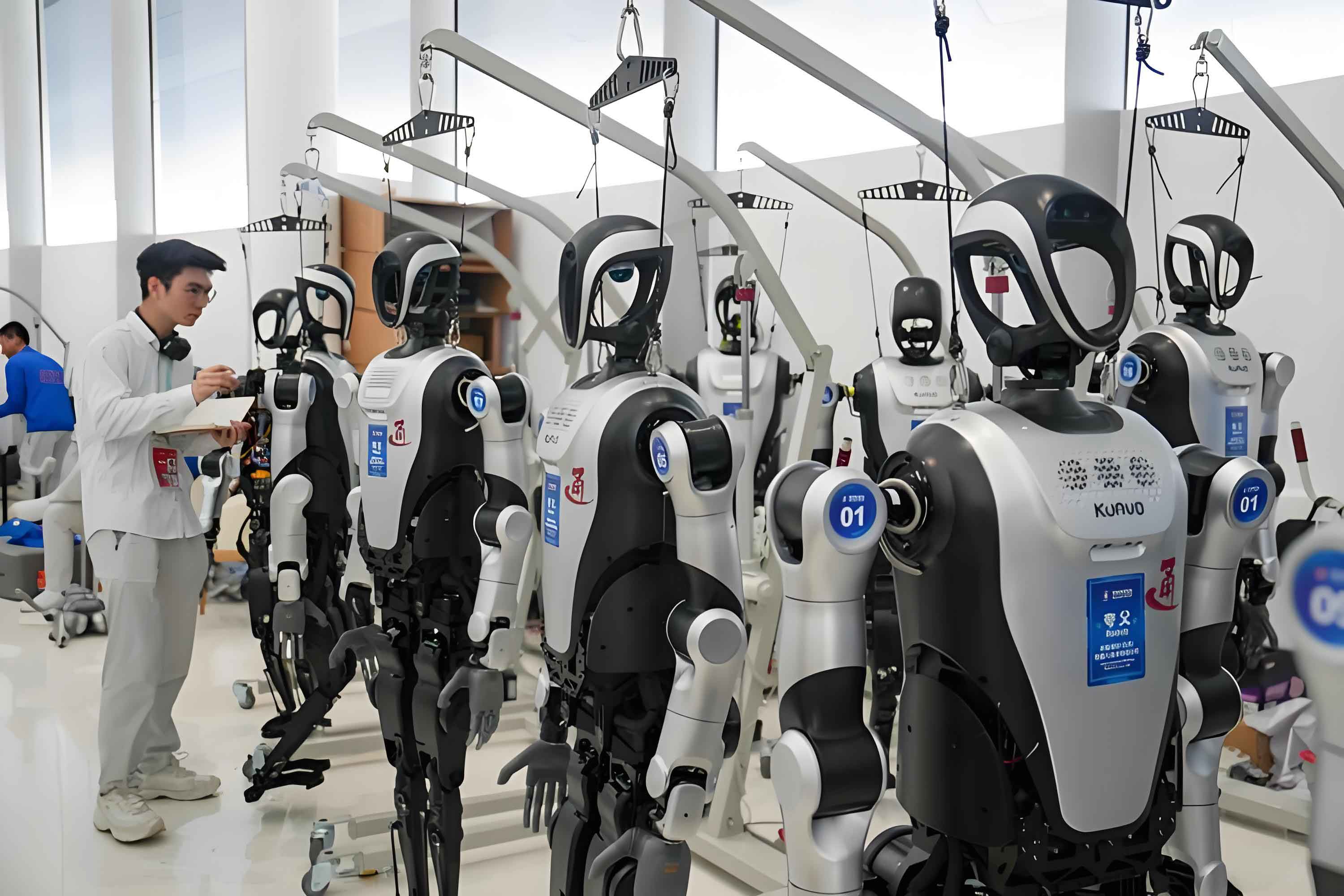
The transition of humanoid robots from laboratory prototypes to commercial products necessitates a paradigm shift in material selection. Every component, from the internal skeletal structure to the outermost tactile layer, must be re-engineered for optimal performance. The drive for lightweighting is not merely about reducing mass; it is about enhancing dynamic response, increasing operational duration, and improving overall system efficiency. Similarly, the integration of perception is not a superficial add-on but a core requirement for autonomy, enabling a humanoid robot to sense pressure, texture, and temperature, much like its biological counterpart. This creates a rich landscape of opportunity for advanced polymers, composites, and functional materials, pushing the boundaries of what is industrially feasible.
I. Lightweighting Materials: Engineering Polymers and Composites for Enhanced Dynamics
Reducing the weight of a humanoid robot is a multi-faceted challenge that directly impacts its agility, energy efficiency, and cost of operation. Replacing traditional metals with high-performance engineering plastics and composites offers a direct path to significant mass reduction while often improving corrosion resistance, damping characteristics, and design flexibility. The performance of these materials can be conceptually evaluated using a lightweighting coefficient, \(\Lambda\), which relates specific strength to a functional requirement:
$$
\Lambda = \frac{\sigma / \rho}{F_{\text{req}}}
$$
where \(\sigma\) is the tensile strength, \(\rho\) is the density, and \(F_{\text{req}}\) represents the minimum force or stress the component must withstand. A higher \(\Lambda\) indicates a more efficient material for lightweight, high-strength applications critical for joints, arms, and frames in a humanoid robot.
The following table summarizes key lightweighting engineering plastics and their properties relevant to humanoid robot design:
| Material Type | Density (g/cm³) | Tensile Strength (MPa) | Continuous Use Temp. (°C) | Typical Application in Humanoid Robot |
|---|---|---|---|---|
| Polyetheretherketone (PEEK) | ~1.3 | 90 – 170 | ~260 | Joint housings, gears, bearings, limb structures |
| Polyphenylene Sulfide (PPS) | ~1.35 | ~180 | ~220 | Skeletal frames, structural brackets |
| Liquid Crystal Polymer (LCP) | 1.4 – 1.7 | 200 – 300 | ~280 | Servo motor connectors, high-frequency circuit boards |
| Thermoplastic Elastomer (TPE) | 0.9 – 1.2 | 10 – 35 | ~120 | Gripper skins, protective external shells |
| Ultra-High-Molecular-Weight Polyethylene (UHMW-PE Fiber) | 0.93 – 0.94 | 3000 – 4000* | ~100 | Tendon systems for actuation, lightweight cables |
*Fiber strength
1. Polyetheretherketone (PEEK): The High-Performance Structural Backbone
PEEK stands out as a premier material for critical, load-bearing components in a humanoid robot. Its exceptional combination of high strength-to-weight ratio, outstanding thermal stability (continuous use above 250°C), and superb chemical resistance makes it ideal for demanding applications. In joint assemblies and gearboxes, PEEK can reduce weight by 30-40% compared to aluminum alloys while providing excellent wear resistance and low friction. The material’s ability to withstand repeated stress cycles is vital for the dynamic motion of a humanoid robot. The global PEEK market is characterized by high technical barriers, with a single producer historically dominating. However, production capacity, particularly in Asia, is expanding rapidly to meet growing demand from aerospace, medical, and now robotics sectors. For a humanoid robot with an anticipated usage of 5-10 kg of PEEK per unit, the market volume could reach thousands of tons annually within this decade.
2. Liquid Crystal Polymer (LCP): Enabling Miniaturized and Reliable Electronics
The “nervous system” of a humanoid robot, comprising countless sensors, controllers, and communication links, relies on extremely reliable and miniaturized electronic components. LCP is the material of choice for high-density connectors, fine-pitch circuit boards, and antenna modules within the robot’s body. Its key advantages are an extremely low and stable dielectric constant (\(D_k\)) and dissipation factor (\(D_f\)) across a wide frequency range, minimal moisture absorption (leading to superb dimensional stability), and high flowability for molding intricate micro-components. This ensures signal integrity for high-speed data transmission between a humanoid robot‘s “brain” and its distributed “nervous” endpoints. The market is currently led by specialized international chemical companies, though domestic suppliers are progressing in technology. A single advanced humanoid robot may incorporate dozens of LCP-based connectors, representing a specialized but critical material niche.
3. Carbon Fiber Reinforced Polymers (CFRP): The Ultimate in Stiffness and Light Weight
For primary structural elements like the torso frame, backpack structure, or major limb segments, Carbon Fiber Reinforced Polymers (CFRP) offer an unparalleled stiffness-to-weight ratio. By strategically laying up carbon fiber sheets within a polymer matrix (often epoxy), components can be designed to be both significantly lighter and stiffer than their metal counterparts. This directly translates to a humanoid robot with higher resonant frequencies (reducing vibration), better dynamic stability, and lower energy consumption for movement. The application of CFRP in a humanoid robot is a direct translation from aerospace and high-performance sports engineering. The supply chain for carbon fiber is scaling globally, with increasing capacity. A typical humanoid robot design may utilize 2-3 kg of carbon fiber composites, targeting a 15-20% reduction in the weight of key structural assemblies.
II. Perception Materials: The Rise of Electronic Skin and Flexible Sensing
Beyond mechanics, the next leap in humanoid robot capability is the endowment of rich, multimodal environmental perception. Electronic skin (e-skin) aims to replicate and even surpass the sensory functions of biological skin, integrating touch, pressure, temperature, and proximity sensing into a flexible, durable membrane. The core of this technology lies in novel material systems that combine flexible substrates, conductive elements, and functional sensitive layers. A key metric for perception materials is the perceptual density, \(\Pi\), which can be expressed as:
$$
\Pi = \frac{N_{\text{sensors}}}{A} \times \sum_{i} S_i
$$
where \(N_{\text{sensors}}\) is the number of discrete sensing elements, \(A\) is the area, and \(S_i\) represents the sensitivity of the i-th modality (tactile, thermal, etc.). Maximizing \(\Pi\) is crucial for giving a humanoid robot fine-grained awareness of its interactions.
The foundational materials for e-skin are compared below:
| Material | Key Property | Typical Value / Performance | Role in E-Skin for Humanoid Robot |
|---|---|---|---|
| Polydimethylsiloxane (PDMS) | Elongation at Break | >500%, up to 800% | Primary flexible substrate, enabling stretchable and conformal skin. |
| Polydimethylsiloxane (PDMS) | Optical Transmittance | >92% | Allows for integration of underlying optical sensors or visual systems. |
| Polyimide (PI) | Thermal Stability | Stable up to 400°C | Flexible substrate for high-temperature sensor placement (e.g., near motors). |
| Polyimide (PI) | Dimensional Stability / Thin-Film | Can be processed below 5 μm thickness | Base for ultra-thin, flexible printed circuits (FPC) routing signals from sensors. |
1. Polydimethylsiloxane (PDMS): The Quintessential Flexible Matrix
PDMS is the workhorse elastomer for flexible electronics and e-skin. Its silicone-based chemistry provides exceptional stretchability, biocompatibility, chemical inertness, and easy processing. As the bulk substrate for e-skin, PDMS allows the entire sensory array to bend, twist, and conform to the complex curvatures of a humanoid robot‘s fingers, palms, or body. Furthermore, its surface chemistry can be readily modified to micro-pattern conductive channels or to bond with other functional layers. Advanced formulations of PDMS are being developed with self-healing properties or with tunable stiffness to better mimic the mechanical gradient of real skin. The widespread use of PDMS in consumer electronics and medical devices has established a robust supply chain, though ultra-high-purity grades for sensitive electronics remain a specialized segment.
2. Polyimide (PI): The High-Reliability Interconnect Foundation
While PDMS provides the flexible “body,” Polyimide (PI) films provide the robust “nerves.” PI is indispensable as the substrate for the flexible printed circuits (FPCs) that must reliably carry electrical signals from thousands of distributed tactile sensors back to the central processing units of a humanoid robot. PI offers extraordinary thermal stability, mechanical strength, and dielectric properties in a thin-film format. It can withstand the soldering temperatures involved in assembling sensor modules and the operational heat generated nearby actuators. The ability to fabricate PI films just a few micrometers thick is critical for maintaining overall skin flexibility. The production of high-performance, electronics-grade PI film is a technologically intensive process, with a market currently dominated by a handful of global players. Achieving domestic capability in this area is a strategic objective for securing the full e-skin supply chain.
3. Functional Sensing Composites: Creating the Sense of Touch
The active sensing function in e-skin is achieved by compositing conductive nanomaterials (like carbon nanotubes, graphene, or metallic nanowires) or piezoelectric/piezoresistive particles into the flexible PDMS or other polymer matrices. These composites change their electrical resistance, capacitance, or generate a voltage in response to mechanical deformation (pressure, strain). For a humanoid robot, this translates into the ability to gauge grip force, detect slip, and map surface texture. Research is pushing towards multi-modal sensors that can decouple pressure from temperature strain, and towards increasing spatial resolution to sub-millimeter levels. The integration of these sensitive materials with the flexible substrates and reliable interconnects (PI FPCs) represents the core manufacturing challenge in e-skin production for humanoid robots.
III. Industry Chain Structure, Challenges, and Strategic Pathways
The global supply landscape for humanoid robot materials resembles a technological pyramid, with competition intensity and market concentration increasing towards the apex.
The Foundational Tier (High-Volume Polymers): This tier includes materials like general-purpose TPEs and UHMW-PE. Domestic production capacity is substantial, with localization rates exceeding 70%. However, competition is fierce and often centered on cost, with oversupply in standard grades. The challenge is the lack of high-margin, specialized variants (e.g., medical-grade, super-elastic) which remain dependent on imports.
The Critical Tier (High-Performance Specialty Polymers): This tier encompasses PEEK, PPS, LCP, and high-grade carbon fibers. International giants maintain a stronghold (often >80% market share in top-tier products) through deep patent portfolios, rigorous certification standards (e.g., for aerospace), and long-standing customer relationships. Domestic producers have entered the market and are scaling capacity but frequently face gaps in the consistency of ultra-high-performance grades required for the most demanding humanoid robot applications, such as joint components enduring millions of cycles.
The Apex Tier (Intelligent and Functional Materials): This tier includes advanced e-skin material systems, self-healing polymers, and multi-functional composites. Innovation here is dominated by leading multinational corporations and pioneering research institutions. The barriers are extreme: they involve not only novel chemical synthesis but also precision micro-fabrication processes (e.g., nanoimprinting, high-resolution printing of sensor arrays) and systemic integration know-how. Catching up requires not just material science breakthroughs but also access to, or development of, advanced manufacturing equipment.
The core bottlenecks can be summarized by a generalized innovation challenge function, \( C \), for a new material in the humanoid robot sector:
$$
C = \alpha \cdot T_{\text{gap}} + \beta \cdot \left(\frac{C_{\text{prod}}}{C_{\text{benchmark}}}\right) + \gamma \cdot I_{\text{frag}}
$$
where:
– \(T_{\text{gap}}\) represents the technological performance gap versus the incumbent.
– \(\frac{C_{\text{prod}}}{C_{\text{benchmark}}}\) is the relative production cost disadvantage.
– \(I_{\text{frag}}\) is an index of supply chain fragmentation or dependency.
– \(\alpha, \beta, \gamma\) are weighting coefficients reflecting strategic priority.
To overcome these challenges and capture the opportunity presented by the rise of the humanoid robot, a multi-pronged strategic approach is essential:
1. Fostering Integrated National Innovation Ecosystems: Move beyond isolated R&D. Establish mission-oriented consortiums that link material scientists, robotics engineers, and manufacturing specialists from academia, state institutes, and private companies. Focus should be on “materials-by-design” for specific robot functions (e.g., a tendon, a joint skin), rapid prototyping, and rigorous testing under real-world dynamic conditions.
2. Implementing Phased Market Cultivation and Application Pull: Strategy must be staged. Initial focus should be on material substitution in non-safety-critical, visible components to build confidence and manufacturing experience. The next phase targets core functional modules (e.g., certified gear materials, qualified sensor skins). Long-term strategy must aim at creating wholly new material-driven capabilities for next-generation humanoid robots.
3. Building a Resilient and Advanced Industrial Support Base: This includes investing in the capital-intensive equipment for precision polymer processing and flexible electronics fabrication. Developing and owning comprehensive testing protocols and certification standards for robot-grade materials is crucial for global competitiveness. Furthermore, creating digital databases of material properties specific to robotic loading conditions will accelerate the design process for future humanoid robot developers.
4. Pioneering Next-Generation Material Concepts: To secure long-term leadership, investment must flow into frontier areas such as energy-autonomous materials (e.g., piezoelectrics that power sensors from motion), biomimetic composites with adaptive stiffness, and sustainable or bio-derived high-performance polymers. The goal is to evolve from merely supplying materials for today’s humanoid robot designs to inventing the materials that will define the capabilities of tomorrow’s robots.
IV. Conclusion
The march towards viable, mass-produced humanoid robots is fundamentally a materials engineering endeavor. The dual imperatives of radical lightweighting and sophisticated environmental perception have elevated advanced polymers, composites, and functional materials from supporting roles to center stage. While a robust base exists for many commodity engineering plastics, the highest-value segments of the supply chain—particularly for ultra-reliable structural polymers and intelligent perception skins—remain concentrated under international technological and commercial leadership.
Success in this new industrial landscape requires more than incremental improvement. It demands a systemic strategy that vertically connects fundamental chemical innovation to the rigorous demands of robotic application. Companies and nations that can master the integration of material science, precision processing, and systems engineering will not only supply the building blocks for the first generation of humanoid robots but will also shape the physical intelligence and interactive capabilities of machines for decades to come. The race is not just to build robots, but to invent the substances from which they are made. The formula for a leading humanoid robot material of the future, \( M_{\text{future}} \), likely integrates multiple functions:
$$
M_{\text{future}} = f(\text{Lightweight, Strong, Sensitive, Adaptive, Sustainable})
$$
Those who proactively develop and industrialize such multifunctional material platforms will hold a decisive advantage in the era of embodied AI and ubiquitous robotics.