
The global demographic shift towards an aging population has catalyzed the rapid development of the medical device industry, positioning it as one of the most critically observed sectors. Within this landscape, propelled by continuous advancements in science and technology, medical robots have emerged as a focal point of innovation. New technologies are constantly emerging, and their application fields are becoming increasingly broad, forming a massive industry. Medical robot technology represents a novel interdisciplinary science integrating medicine, mechanical engineering, automatic control, digital image processing, artificial intelligence, and big data. It stands as a key research direction for contemporary medicine and engineering, fostering cross-disciplinary collaboration and injecting new vitality into the healthcare sector. As high-end medical equipment, medical robots are leveraging their technological advantages to continually meet the growing demand for high-quality medical services.
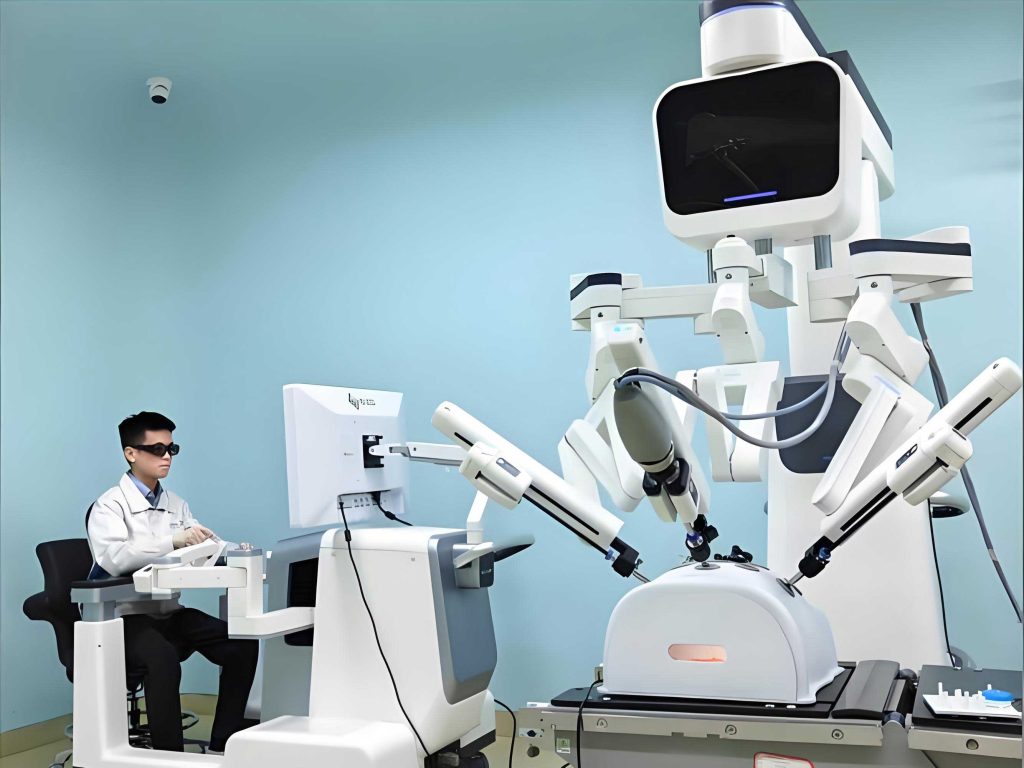
However, the clinical application of medical robots imposes exceptionally high requirements for effectiveness, precision, and safety, making risk control paramount. During operation, a medical robot can be subjected to various electromagnetic disturbances, which may degrade its performance, cause adverse effects, or even lead to severe risks. Therefore, conducting appropriate Electromagnetic Compatibility (EMC) immunity tests based on the operational characteristics and intended use environment of the medical robot is essential. Currently, the general EMC standard for medical electrical equipment is YY 9706.102-2021 (equivalent to IEC 60601-1-2), implemented on May 1, 2023. This standard, however, is not fully applicable to the unique nature of medical robots. To mitigate use risks, guide manufacturers in design and production, and clarify immunity test items and methods, the State Administration for Market Regulation and the Standardization Administration of China developed and published the standard GB/T 38326-2019, “Industrial, scientific and medical robots – Electromagnetic compatibility – Immunity test,” which came into effect on July 1, 2020. This standard encompasses general requirements, safety requirements, performance requirements, and test methods for medical robots, providing crucial theoretical guidance and normative requirements for their EMC immunity assessment. This article aims to interpret key aspects of this standard and the associated immunity testing, with the goal of informing the design, production, and testing of medical robots.
1. Classification of Medical Robots
According to GB/T 38326-2019, a medical robot is defined as a robot used in a medical electrical equipment or a medical electrical system. These robots can perceive their surroundings and their own state—demonstrating a form of situational and self-awareness—to perform medical or medically辅助 tasks. Examples include robots for lesion localization based on imaging diagnosis, microsurgical robots, gait training robots, automated drug dispensing robots, and prosthetic/orthotic robotic limbs.
Compared to traditional medical electrical equipment, medical robots often operate in specific and critical scenarios. They can be categorized by application environment as follows:
| Category by Application | Description | Example |
|---|---|---|
| Robot-Assisted Surgical Device/System | Assists surgeons in performing minimally invasive procedures, often via remote manipulation through incisions. | Laparoscopic Surgical Robot |
| Rehabilitation Robot | Assists patients in recovering motor functions through guided movement and therapy. | Gait Training Robot, Upper Limb Rehabilitation Robot |
| Evaluation Robot | Assesses patient conditions, such as range of motion or strength. | Robotic systems for biomechanical assessment |
| Compensation/Relief Robot | Provides support to compensate for lost functions or alleviate strain on healthcare workers. | Patient Lifting Robot, Exoskeleton for nurses |
GB/T 38326-2019 primarily classifies medical robots based on their installation method, which is crucial for defining test setups:
- Fixed Medical Robot: Permanently installed or not intended to be moved during operation (e.g., a large surgical system bolted to the floor).
- Mobile Medical Robot: Capable of moving under its own power during intended use (e.g., a robotic cart for logistics or a mobile rehabilitation device). A key distinction for mobile robots is their power mode, which may include a charging state in addition to battery-powered operation.
The classification directly influences the selection of test modes, as discussed in the next section.
2. Selection of Test Modes
Determining the appropriate test mode is a critical and complex first step in EMC immunity evaluation for a medical robot. This selection must thoroughly consider the robot’s functionality, basic performance, power supply modes (AC mains, DC, internal battery), product composition (accessories, optional parts), active components, sustainability of operation, and the monitorability of key parameters during tests.
The concept of Basic Performance is fundamental. In EMC testing, the equipment’s basic performance is often monitored as the pass/fail criterion. According to GB 9706.1-2020, basic performance is defined as “performance of a clinical function, other than that related to basic safety, where loss or degradation beyond the limits specified by the manufacturer results in an unacceptable risk.” A pragmatic understanding is to consider whether the absence or degradation of a function would lead to an unacceptable risk. For a medical robot, basic performance parameters must be identified based on its clinical use and technical specifications. For a surgical robot, this could include:
– Position Accuracy and Repeatability
– Orientation Accuracy and Repeatability
– Effective Workspace of the manipulator arm
– Master-Slave Control Latency
The manufacturer must conduct a risk analysis to evaluate the consequences if an identified performance degrades beyond specified limits. This involves the systematic process of risk analysis, evaluation, control, and assessment of the overall residual risk acceptability, documented in a Risk Management File. The relationship between performance degradation, risk, and testing can be conceptualized as part of a verification process to ensure safety. While not a direct formula, the underlying principle involves verifying that under disturbance conditions $D$, the performance metric $P$ remains within safe limits $L$ defined by the risk analysis: $P(D) \in L$. Establishing a robust risk management framework is a vital measure to ensure the safe application of medical robots.
If a medical robot does not have declared basic performance, all its functions should be treated as such for testing purposes. When performance related to basic safety or basic performance cannot be observed directly during testing, the manufacturer must provide an alternative method (e.g., internal parameter display, diagnostic software, or special test fixtures/auxiliary equipment) to demonstrate compliance.
Test modes are selected based on the installation classification:
| Robot Type | Power Condition | Required Test Modes |
|---|---|---|
| Fixed Medical Robot | All parts powered | 1. Standby Mode 2. Typical Operating Mode 3. Custom Mode* (if needed) |
| *If the above two do not cover all functions or the most sensitive state. | ||
| Mobile Medical Robot | Can operate while charging AND on battery | 1. Charging & Standby 2. Charging & Operating 3. Battery & Standby 4. Battery & Operating |
| Can operate only while charging | 1. Charging & Standby 2. Charging & Operating |
|
| Cannot operate while charging | 1. Charging Mode (robot off/charging) 2. Battery & Standby 3. Battery & Operating |
Testing the Standby Mode is crucial. A medical robot in standby, such as a surgical system before initiation or after a procedure, must not initiate unintended movements or actions due to electromagnetic disturbances, as this could pose a significant hazard to patients and staff. Similarly, a rehabilitation robot in standby could cause injury if it starts moving unexpectedly. Therefore, immunity evaluation must include this non-operational state.
3. Performance Criteria for Immunity Tests
GB/T 38326-2019 specifies the performance criteria for medical robot immunity tests. The manufacturer, based on their risk analysis, must define the basic performance, the pass/fail criteria for each immunity test, and the monitoring method. During testing, the following are not permitted:
– Degradation or loss of basic performance or performance related to safety.
– False alarms.
– Change of operational mode.
– Any cessation or interruption of intended operation (even if accompanied by an alarm).
– Any initiation of unintended operation (including unintended or uncontrolled movement, even if accompanied by an alarm).
For the tests of voltage dips and interruptions, the performance criteria are aligned with those specified in YY 9706.102-2021. This clear, strict set of criteria underscores the high-reliability expectations for medical robots operating in complex electromagnetic environments.
4. Detailed Analysis of Immunity Test Items
The immunity test suite for a medical robot according to GB/T 38326-2019 comprises eight key projects, referencing seven foundational EMC standards. The requirements for several of these tests are notably more stringent than those in the general medical equipment standard YY 9706.102-2021. The following table provides a comparative overview and detailed breakdown.
| Test Item | Reference Standard | GB/T 38326-2019 Level for Medical Robots | YY 9706.102-2021 Level (Typical for Non-Life Support) | Key Parameters & Notes |
|---|---|---|---|---|
| Electrostatic Discharge (ESD) | GB/T 17626.2 | Air: ±2, ±4, ±8, ±16 kV Contact: ±8 kV |
Air: ±2, ±4, ±8 kV Contact: ±2, ±4, ±8 kV |
Test levels are increased. Requires robust design: TVS diodes on I/O, non-conductive enclosures, increased creepage/clearance, proper grounding of shields. A dedicated internal metallic shield for sensitive PCBs is highly effective. |
| Radiated RF Immunity | GB/T 17626.3 | 10 V/m (80 MHz – 2.7 GHz) for Home Healthcare 3 V/m for Professional Healthcare |
3 V/m (80 MHz – 2.7 GHz) | The 10 V/m level for home use is a significant increase, reflecting less controlled environments. Design focus: minimize PCB loop areas, use shielded enclosures, employ shielded cables, and implement filtering on long interconnects. |
| Conducted RF Immunity | GB/T 17626.6 | 6 Vrms (0.15 – 80 MHz, ISM bands) | 3 Vrms | Test level is doubled in critical frequency bands. Requires careful design of power and signal line filtering, including common-mode chokes and ferrites. |
| Power Frequency Magnetic Field | GB/T 17626.8 | 30 A/m (50/60 Hz) | 3 A/m | Test level is 10 times higher. Critical for robots operating near transformers or power lines. May require magnetic shielding for sensitive sensors (e.g., Hall effect sensors, current loops). |
| Proximity Fields from RF Communications | GB/T 17626.3 (Method) | Up to 28 V/m (380 – 5800 MHz, various modulations) |
Not explicitly addressed as a separate, high-level near-field test. | Simulates close proximity to walkie-talkies, mobile phones, etc. Test distance ≥1m. A very severe test requiring excellent shielding and circuit immunity. |
| Electrical Fast Transient/Burst | GB/T 17626.4 | ±2 kV (AC/DC power lines) ±1 kV (I/O lines > 3m) |
±2 kV (AC/DC power lines) ±1 kV (I/O lines > 3m) |
Test levels are identical. Standard countermeasures: ferrites, transient suppressors, robust power supply design. |
| Surge | GB/T 17626.5 | ±0.5 kV, ±1 kV (Line-to-Line) ±0.5 kV, ±1 kV, ±2 kV (Line-to-Ground) |
±0.5 kV, ±1 kV (Line-to-Line) ±0.5 kV, ±1 kV, ±2 kV (Line-to-Ground) |
Test levels are identical. Requires coordinated protection with varistors, gas discharge tubes, and proper grounding. |
| Voltage Dips & Interruptions | GB/T 17626.11/34 | As per YY 9706.102-2021 (e.g., 0%, 40%, 70% dips) | Defined percentages and durations | Requirements are aligned. Performance criteria are critical. May necessitate uninterruptible power supplies (UPS) or robust energy storage for critical functions. |
The elevated test levels for ESD, Radiated RF, Conducted RF, Power Frequency Magnetic Field, and the inclusion of the stringent Proximity Fields test highlight the challenging operational environment and high-reliability demands for medical robots. These devices, often containing精密components and requiring high precision and real-time response, are particularly susceptible to EMC-related performance degradation or safety risks. Manufacturers must prioritize EMC-hardened design from the initial stages, incorporating strategies such as:
– Comprehensive shielding (enclosure and cable).
– Strategic filtering on all external cables.
– Careful PCB layout to minimize antenna loops.
– Use of isolated power supplies and signal conditioners.
– Robust software error detection and recovery routines.
Testing laboratories must carefully configure the medical robot in its defined test modes, establish reliable monitoring for the basic performance criteria, and utilize calibrated equipment capable of generating the required disturbance levels.
5. Conclusion
A medical robot must exhibit excellent electromagnetic compatibility—emitting minimal disturbance itself while possessing high immunity to environmental disturbances to ensure safe and reliable operation. Achieving this requires iterative testing and design refinement to enhance precision, stability, reliability, and safety, thereby driving the advancement of medical technology.
This analysis has detailed the classification, test mode selection, performance criteria, and specific immunity test requirements for medical robots as per GB/T 38326-2019, highlighting the key differences from the general medical equipment standard YY 9706.102-2021. The stricter requirements reflect the unique risks and operational complexities associated with robotic systems in healthcare.
Medical robots are becoming an integral part of modern healthcare delivery. As they become more affordable and capable, their applications will expand, offering significant benefits. To ensure this growth is safe and sustainable, a collaborative effort is needed: manufacturers must embed EMC and risk management into core design principles; testing institutions must provide accurate and thorough evaluations; and hospitals must foster appropriate operational environments. Concurrently, strengthening regulatory oversight and continuous标准development is imperative to effectively steward the application of medical robot technology, safeguarding patient health and ensuring the robust development of this vital industry.