
In recent years, the rapid development of medical robots has revolutionized healthcare, enabling breakthroughs in clinical diagnostics and treatment while addressing scarcities in medical resources. However, this跨界融合 and advancement have also triggered a series of technical, safety, and ethical issues. As an observer and researcher in this field, I find it crucial to explore how to configure a reasonable liability attribution system for torts involving medical robots, particularly diagnostic and surgical robots, which exhibit the strongest personal attributes. This system must ensure technological safety and provide remedies for harmed patients. medical robots represent a specific application scenario of artificial intelligence (AI). Currently, most AI is weak AI, serving as辅助 tools for humans. Intermediate AI represents a middle state with some agency but still requiring appropriate human intervention. Strong AI possesses autonomy, with capabilities for problem-solving, learning, and planning for the future. In this discussion, I adopt the classification of weak, intermediate, and strong AI. Through adaptive研究 of existing systems, I aim to construct a配套解决制度 for medical robot tort liability in China during the weak and intermediate AI stages. As for the strong and super AI stages, to prevent法学研究的虚无和泛化, I believe it is unnecessary to conceive of them at present or in the foreseeable future.
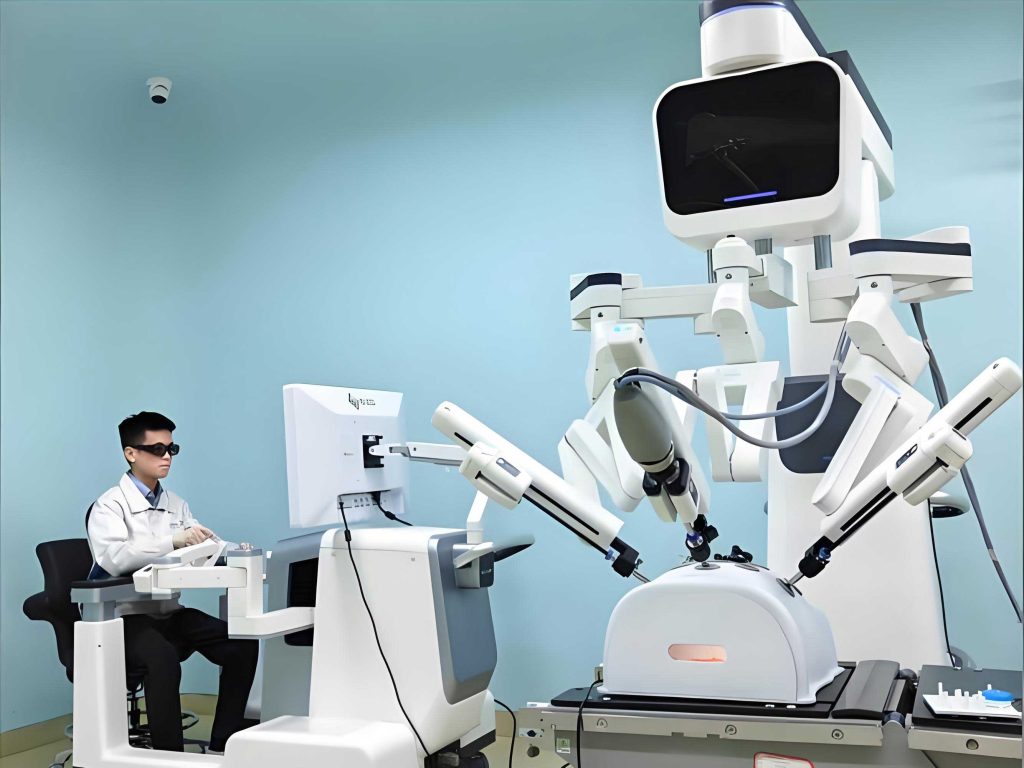
From my perspective, the integration of medical robots into healthcare has enhanced efficiency and precision, but it also introduces complexities in liability attribution. In this article, I will delve into the current state of medical robot tort liability, the legal status of these devices, and propose adaptations for责任分配 in different AI stages. Throughout, I will emphasize the term ‘medical robot’ to underscore its centrality in this discourse. To structure this discussion, I will use tables and formulas to summarize key points, ensuring clarity and depth in分析.
First, let me outline the current landscape of medical robot tort liability in China. Based on data from judicial cases, all instances涉及 medical robots have been litigated against hospitals, with plaintiffs alleging medical negligence. Courts typically rely on鉴定意见 to determine fault and compensation based on causal force. Notably, these cases apply medical damage liability under the Tort Liability Law and Civil Code, without invoking product liability. This现状 highlights a gap in addressing the unique aspects of medical robot torts. The Civil Code follows the Tort Liability Law, employing a fault-based principle for medical damage liability, except for three special circumstances under Article 1222 that presume fault. This broad framework includes not only狭义医疗损害责任 but also obligations like security and informed consent, as well as infringements on privacy and personal information. For the latter, which arise from non-professional services, they can be探讨 from an algorithmic governance perspective using the fault principle under Article 1165. Thus, my focus is on分配制度 for medical damage liability and product liability in medical robot torts.
However, traditional侵权责任规则 face several dilemmas when applied to medical robots. One major issue is the模糊 nature of “diagnostic and treatment obligations.” In scenarios involving medical robots, healthcare professionals often operate, supervise, and verify the robot’s outputs, making笼统的诊疗义务 inadequate. Specific细化规定 are needed to约束医务人员 and facilitate patient举证. Additionally,侵权责任认定困难 arises due to: (1) the distinction between weak and intermediate AI stages, where autonomy varies; (2) the complexity of causal relationships among designers, producers, sellers, and users in人机协作诊疗活动; (3) challenges in identifying causal links when software faults而非物理故障 cause harm; and (4) difficulties in内部责任分配比例 when medical and product liabilities竞合. Furthermore, patients face举证困难, as the “algorithm black box” of medical robots makes it hard to查明事实, leading to高昂的鉴定费用. In product liability, while无过错责任 applies, proving defects remains arduous for patients due to the technicality of medical robots, explaining why no cases have asserted product liability in China.
To address these challenges, it is essential to first认定 the legal status of medical robots. I align with the多数说 that medical robots, in the weak and intermediate AI stages, should be considered products without legal personality. This view is supported by the Product Quality Law, which defines products as items processed, manufactured, and sold. medical robots, combining hardware and software for批量生产, fall under this category as民法客体中的“物”. Moreover, according to the Medical Device Classification Directory issued by the National Medical Products Administration, medical robots are classified as Class II or III医疗器械 based on risk. For instance, AI that辅助诊断 without direct conclusions is Class II, while those自动识别病变并给出明确诊断提示 are Class III. Thus, most medical robots are regulated as medical devices. Furthermore, in both weak and intermediate stages, medical robots remain in an辅助地位,依赖人类指令 and lacking full autonomy or creativity. They are tools designed to serve human医疗需求, not replace humans. This recognition is crucial for liability attribution, as it implies that责任主体 should be humans or entities like医疗机构 and producers, rather than the medical robot itself.
Given this legal status, I propose调适 the existing liability frameworks for medical robot torts during the weak and intermediate AI stages. The国家药品监督管理局’s “Guidelines for Classification界定 of AI Medical Software Products” suggest considering factors like intended use and algorithm maturity. Inspired by this, I distinguish between weak AI阶段 with low algorithm maturity and可信赖度, where medical robots are highly辅助, and intermediate AI阶段 with higher algorithm maturity and可信赖度, where they exhibit more agency. For instance, medical robots used for病灶特征识别 or治疗计划制定 in weak AI require stronger注意义务 from healthcare professionals. Conversely, in intermediate AI, with more reliable and autonomous medical robots,注意义务 can be appropriately reduced. Credibility can be gauged through实践操作数据, such as diagnostic accuracy and error rates, represented by a formula: $$ \text{Credibility Score} = \frac{\text{Number of Accurate Diagnoses}}{\text{Total Diagnoses}} – \text{Error Rate} $$ A higher score indicates greater trustworthiness, influencing义务分配.
To illustrate the differences in责任分配 between weak and intermediate AI stages for medical robots, I have compiled the following table summarizing key aspects:
| Aspect | Weak AI Stage for Medical Robots | Intermediate AI Stage for Medical Robots |
|---|---|---|
| Algorithm Maturity | Low | Moderate to High |
| Autonomy Level | Minimal,纯辅助工具 | Some agency,需要适当介入 |
| Credibility | Low, based on limited data | Higher, based on accumulated performance |
| Healthcare Professional’s注意义务 | Strong, requiring vigilant oversight | Reduced, allowing more reliance on medical robot |
| Liability Focus | Primarily on医疗机构 | Shift towards designers/producers |
Now, let me delve into the specific调适 for medical damage liability. Under China’s Civil Code, medical damage liability generally applies a fault principle, where patients must prove four elements: wrongful act, harm, causation, and fault. For medical robots, fault can be assessed based on compliance with合理指令 and操作过程管理义务. However, due to the “algorithm black box,” patients bear a heavy举证 burden. To address this, I suggest interpreting violations of注意义务 in medical robot torts as falling under Article 1222’s “other relevant诊疗规范,” thereby triggering a过错推定 principle. This means医疗机构 would be presumed at fault and must举证其不存在过错. In weak AI stages, where algorithm maturity is low,医疗机构 can举证 more easily, possibly with help from designers. In intermediate AI,医疗机构 may seek assistance from producers. Some argue that过错推定 could strain doctor-patient relationships, but I believe that in protecting vital health interests,规则倾斜 toward patients is justified, especially given the complexities introduced by medical robots.
For product liability调适, defects in medical robots can arise from design, manufacturing, marketing, or tracking. Liability may involve designers, producers, sellers, or transporters. Under the Civil Code Articles 1203 and 1204, sellers or third parties may bear责任 if at fault, with recourse available. My focus here is on designers and producers, who are核心角色 in creating risks. In China, producers face无过错责任 for product defects, meaning patients can claim from医疗机构, which can then追偿 from producers. Designers can be seen as an extension of producers, as software is integral to the hardware. For pure product defects in medical robot torts, I propose using因果关系推定 in the weak AI stage, where algorithm maturity is low and举证 is relatively easier. Here,医疗机构 would first prove no fault, then producers would举证 no defect. In the intermediate AI stage, with higher algorithm maturity, the standard无过错责任 can apply. This differentiation aligns义务与责任, ensuring fairness and encouraging innovation in weak AI medical robots without overburdening producers prematurely. The responsibility allocation can be expressed with a formula: $$ \text{Liability Share} = \alpha \cdot \text{Healthcare Fault} + \beta \cdot \text{Product Defect} $$ where $\alpha$ and $\beta$ are coefficients adjusted based on AI stage—for weak AI, $\alpha > \beta$; for intermediate AI, $\alpha < \beta$.
However, two issues persist in product liability for medical robots. First, China lacks specific standards for defect认定, such as intelligent程度判断标准 to distinguish between weak and intermediate AI medical robots. Establishing these is crucial for consistent liability assessment. Second, a赔偿基金制度 for medical robots is absent. To ensure patient compensation, I recommend借鉴欧盟’s approach by implementing强制保险制度 and赔偿基金, similar to a collective risk pool. This could be modeled as: $$ \text{Compensation Fund} = \sum_{i=1}^{n} \text{Premiums from Producers} + \text{Government Subsidies} $$ where $n$ represents the number of medical robot producers, ensuring adequate resources for受害患者.
In cases of共同侵权, where both designers/producers and healthcare professionals are at fault—for example, a design flaw导致诊断错误 combined with a failure to履行再判断义务—liability分配 becomes complex. This scenario often involves竞合 of medical and product liabilities. I base this on the Civil Code Articles 1171 and 1172, which cover分别实施侵权行为 causing the same harm. Specifically, Article 1171 applies when each act alone could cause the damage, making连带责任 appropriate. Thus, patients can claim from either party, with internal追偿 based on份额.
For责任分配 in such共同侵权 involving medical robots, I propose differentiated approaches for weak and intermediate AI stages. In weak AI, where medical robots are mere辅助工具 and healthcare professionals have higher注意义务,医疗机构 should bear primary responsibility, say >50% of liability, with designers/producers taking secondary responsibility, <50%. In intermediate AI, with more autonomous medical robots, the reverse should apply:医疗机构 <50%, designers/producers >50%. This分配 reflects the evolution of medical robots from tools to more independent agents, balances义务, avoids conservative treatments that could harm patients, and fosters technological progress. The allocation can be summarized in another table:
| AI Stage for Medical Robots | Healthcare Liability Share | Designer/Producer Liability Share | Rationale |
|---|---|---|---|
| Weak AI | >50% (e.g., 60-70%) | <50% (e.g., 30-40%) | Higher注意义务 on professionals due to low algorithm maturity of medical robot |
| Intermediate AI | <50% (e.g., 30-40%) | >50% (e.g., 60-70%) | Reduced注意义务 as medical robot gains credibility and agency |
To further elaborate, consider a formula for internal责任分配 in共同侵权: $$ \text{Healthcare Liability Percentage} = \frac{C_h}{C_h + C_p} \times 100\% $$ where $C_h$ represents the causal contribution of healthcare fault, and $C_p$ represents that of product defect. In weak AI, $C_h > C_p$ due to the辅助 nature of medical robots; in intermediate AI, $C_p > C_h$ as the medical robot’s role expands. This quantitative approach can aid courts in adjudicating medical robot tort cases.
In my view, the integration of medical robots into healthcare necessitates a nuanced liability framework. Throughout this discussion, I have emphasized the importance of distinguishing between AI stages for medical robots, as this impacts everything from注意义务 to责任分配. By调适 existing laws through解释 and incremental changes, we can address the unique challenges posed by medical robot torts without stifling innovation. For instance, in weak AI stages, focusing on医疗机构 accountability with举证责任倒置 can protect patients, while in intermediate AI, shifting toward producer liability with无过错责任 can acknowledge the growing autonomy of medical robots. Moreover, establishing standards for algorithm maturity and creating赔偿基金 will enhance the system’s robustness.
Reflecting on the broader implications, medical robots are not just technological marvels but also legal conundrums. As they become more prevalent, continuous评估 of liability frameworks is essential. I advocate for interdisciplinary collaboration among法律, medical, and technical experts to refine these adaptations. For example,定期审查 of medical robot performance data can inform credibility assessments, using metrics like: $$ \text{Performance Index} = \frac{\text{Successful Procedures with Medical Robot}}{\text{Total Procedures}} \times \text{Safety Score} $$ where Safety Score is derived from incident reports. This data-driven approach can dynamically adjust liability expectations.
In conclusion, the journey of medical robots from弱人工智能 to中人工智能 stages requires careful legal调适 to ensure公平 and安全. By recognizing the product属性 and辅助地位 of medical robots, and by differentiating liability in medical damage, product, and共同侵权 contexts, we can build a配套解决制度 that safeguards patients while promoting technological advancement. I urge policymakers to consider these proposals, incorporating tables and formulas for clarity, as we navigate the evolving landscape of medical robot tort liability. The goal is to harness the potential of medical robots without compromising justice, and through thoughtful adaptation, we can achieve a平衡 that benefits all stakeholders in healthcare.
To summarize key points, I have presented a comprehensive analysis of medical robot tort liability, emphasizing the need for stage-specific rules. The use of tables and formulas, such as those for credibility scores and liability shares, aims to provide concrete tools for implementation. As medical robots continue to evolve, so too must our legal frameworks, ensuring they remain responsive to the complexities of human-robot collaboration in medicine. Through this adaptive approach, we can foster a future where medical robots enhance healthcare while being underpinned by robust and fair liability systems.