
During the 14th National People’s Congress session in Beijing, Zhong Zheng, NPC Deputy and Vice President of Midea Group, addressed critical issues in artificial intelligence governance, humanoid robotics development, and corporate globalization. Her insights drew from Midea’s operational experience while highlighting broader industrial challenges.
- Strengthening AI Governance Frameworks
The rapid proliferation of generative AI technology has significantly lowered video production barriers but simultaneously amplified risks including misinformation dissemination and copyright infringement. Zhong cited a 2024 incident where AI-synthesized videos impersonated a Peking University professor to market health supplements, causing financial losses among elderly consumers.
She proposed comprehensive countermeasures: revising China’s Copyright Law to clarify ownership of AI-generated content, enhancing AI verification tools with supplementary human oversight, and implementing mandatory labeling for synthetic media. Platform operators should intensify content authenticity reviews, while regulatory bodies must enforce stricter penalties for violations. “The combination of technological and legal safeguards is essential to maintain digital ecosystem integrity,” Zhong emphasized.
Midea’s own AI integration demonstrates practical applications. The company adopted foundational models like OpenAI and DeepSeek while developing specialized models for industrial deployment. Its “factory agent” system autonomously analyzes production data to optimize manufacturing decisions, while “home agent” technology enables context-aware appliance interactions. Additional implementations span robotics, healthcare, and office management systems.
Despite progress, Zhong acknowledged persistent hurdles including rapid technological obsolescence, data security vulnerabilities, and interdisciplinary talent shortages. “Continuous R&D investment and robust data governance frameworks are non-negotiable for sustainable AI advancement,” she stated.
- Accelerating Humanoid Robot Core Technology Development
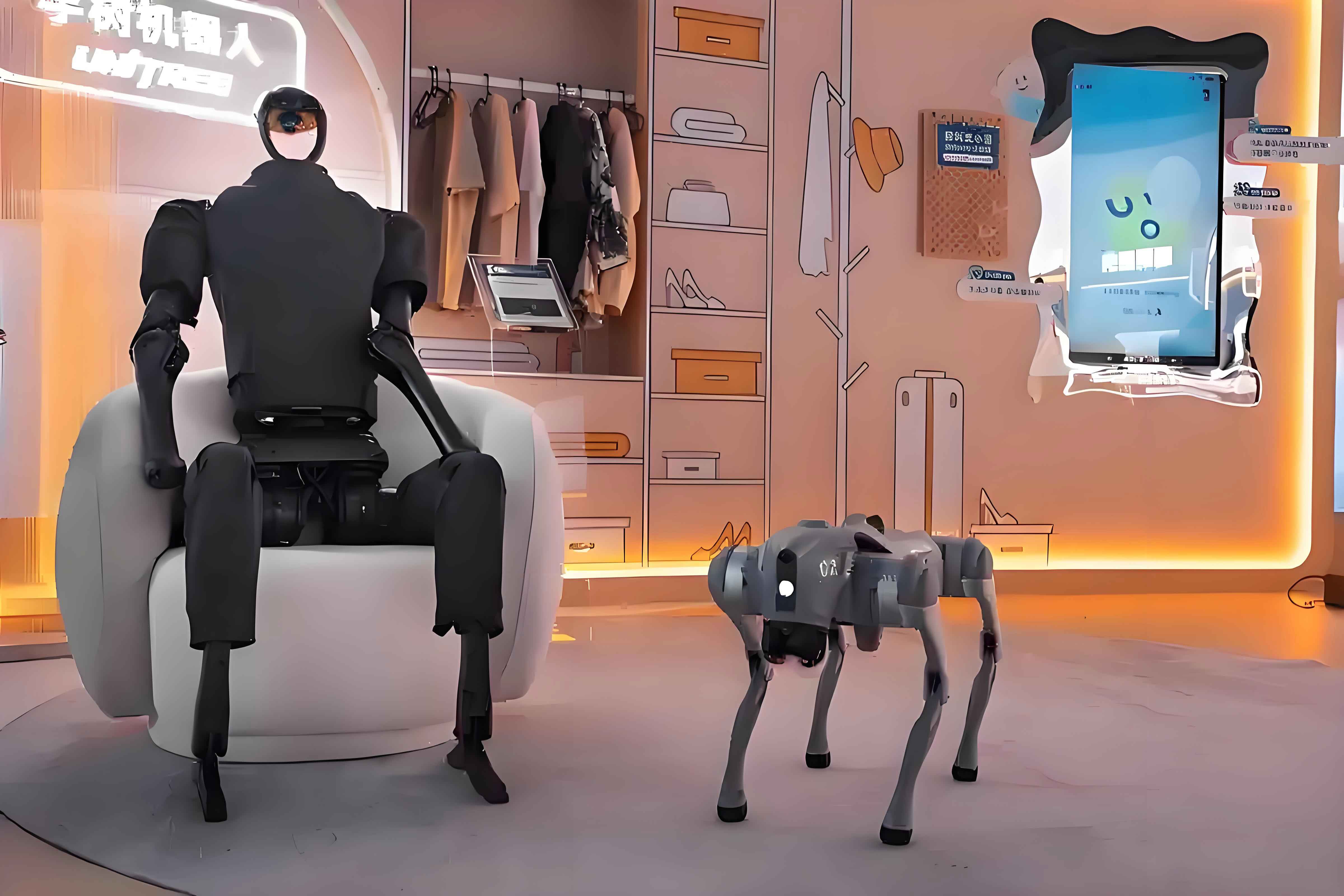
With humanoid robots gaining prominence through companies like Unitree, Zhong identified persistent bottlenecks in core component technologies. “Critical subsystems including reducers, servo control systems, and actuators remain significant hurdles for domestic humanoid robot development,” she noted. These limitations necessitate collaborative solutions beyond individual corporate capabilities.
Zhong urged governmental coordination to consolidate industry-academia-research resources, particularly for precision components vital to humanoid robots. Policy support mechanisms could include dedicated funding channels and industrial clustering initiatives. She cited Foshan’s KUKA Smart Manufacturing Park as a successful model where localized supply chains enhanced robotics innovation efficiency.
Midea’s industrial robotics subsidiary KUKA provides relevant experience. After securing national laboratory certification for heavy-duty robotics in 2022, the company concentrated on three critical subsystems: precision reducers, servo motors, and control units. Breakthroughs have been achieved in harmonic reducers and servo controllers, with partial commercialization underway. RV reducer development continues through combined corporate R&D and academic partnerships.
“Mastering these foundational technologies creates ripple effects across robotics sectors, including humanoid robots,” Zhong explained. “Systematic collaboration is paramount for China’s humanoid robot industry to achieve global competitiveness.”
- Building Resilient Global Expansion Frameworks
Addressing internationalization strategies amid geopolitical uncertainties, Zhong positioned overseas expansion as imperative for Chinese manufacturers. “Domestic market saturation contrasts with vast overseas potential,” she observed, noting Midea’s 20%+ domestic appliance share versus approximately 5% global penetration.
Midea’s globalization blueprint emphasizes four pillars:
- Decentralized Supply Chains: Transitioned from “China supplies world” to “region-for-region” manufacturing with 22 overseas factories among 43 global production bases
- Localized R&D: Overseas innovation centers developing market-specific products
- Infrastructure Investment: Integrated logistics and distribution networks
- Compliance Architecture: Proactive legal frameworks preventing regulatory violations
Zhong particularly stressed compliance as a strategic priority: “Global operational integrity prevents debilitating sanctions. Comprehensive compliance systems are not supplementary—they’re foundational to sustainable international growth.”
Her recommendations align with national “dual circulation” economic policies, advocating synchronized domestic and international market development through structural adaptability and local market immersion.
| Component Category | Development Status | Application Relevance |
|---|---|---|
| Harmonic Reducers | Commercialization achieved | Critical for humanoid robot joint precision |
| Servo Control Systems | Market implementation initiated | Essential for humanoid robot movement accuracy |
| RV Reducers | Ongoing R&D | Fundamental for heavy-duty humanoid robot applications |
Zhong concluded by emphasizing cross-sector synergies: “Our advancements in industrial robotics directly inform humanoid robot development. Simultaneously, responsible AI governance and strategic globalization establish the ecosystem necessary for China’s technological leadership.” Her proposals reflect growing consensus among manufacturers that systemic innovation—rather than isolated breakthroughs—will determine competitive positioning in critical fields including humanoid robots.