
As I delve into the realm of humanoid robots, I am struck by their transformative potential, rooted in the synergy of big data, high computing power, and strong algorithms. These entities promise to revolutionize human-machine-environment interactions, enabling seamless service in specialized fields, boosting intelligent manufacturing, and evolving into indispensable life assistants and emotional companions. However, my analysis reveals a complex landscape where innovation must be balanced against myriad risks, including functional security, network vulnerabilities, personal information breaches, data integrity threats, national security concerns, illegal “proxy” activities, infringement issues, and ethical dilemmas. In this exploration, I argue that while security is paramount, an overemphasis on safety could stifle creativity and hinder progress. Development forms the foundation of security, and security, in turn, enables sustainable development. Thus, I advocate for a harmonious approach that prioritizes both elements, guided by rational, inclusive, and prudent regulatory frameworks.
The rapid evolution of humanoid robots exemplifies the broader challenges in artificial intelligence. These systems leverage multi-modal models built on vast datasets, processed through robust computational resources, to achieve high-quality perception, planning, and action. Their ability to engage in natural language interactions makes them particularly adept at integrating into diverse environments. Yet, as I consider their deployment, I cannot overlook the inherent risks. For instance, functional failures in humanoid robots could lead to physical harm or operational disruptions, especially in critical sectors like emergency response. Similarly, cybersecurity threats pose significant dangers; if exploited, humanoid robots could be manipulated for malicious purposes, such as remote illegal acts or even terrorism. The following table summarizes key risk categories and their potential impacts, underscoring the need for a balanced perspective.
| Risk Category | Description | Potential Impact |
|---|---|---|
| Functional Security | Hardware or software defects leading to malfunctions | Physical injury, operational failures |
| Network Security | Vulnerabilities from internet connectivity | Data breaches, remote control by attackers |
| Personal Information Security | Unauthorized access to sensitive data | Privacy violations, identity theft |
| Data Security | Risks in data input, processing, and output | Loss of intellectual property, economic damage |
| National Security | Exploitation for espionage or social manipulation | Political instability, security threats |
| Illegal “Proxy” Activities | Unauthorized actions by humanoid robots | Legal disputes, financial losses |
| Infringement Risks | Violations of intellectual property or personal rights | Legal liabilities, reputational damage |
| Ethical Risks | Moral dilemmas in design and application | Social harm, erosion of trust |
In my view, the development of humanoid robots must not be hampered by an excessive focus on security. History shows that innovation thrives in environments that allow for experimentation and learning from failures. For example, if regulatory bodies impose stringent controls out of fear, the advancement of humanoid robots could stagnate, depriving society of benefits such as enhanced productivity and improved quality of life. I propose that a dynamic equilibrium between development and security can be achieved through scientific risk assessment. One useful formulation involves quantifying risk as a function of probability and impact: $$ R = P \times I $$ where \( R \) represents the overall risk level, \( P \) denotes the probability of a security incident, and \( I \) signifies the potential impact. By applying this formula, stakeholders can categorize risks into tiers—such as negligible, low, medium, high, or unacceptable—and tailor responses accordingly. This method ensures that resources are allocated efficiently, without stifling the innovative potential of humanoid robots.
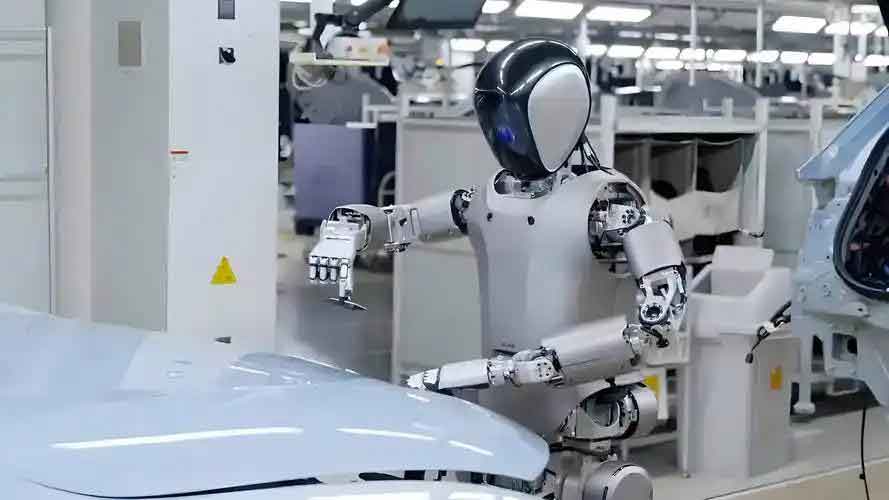
As I reflect on the regulatory landscape, I emphasize the importance of inclusive and prudent supervision. This approach, which I refer to as “inclusive prudential regulation,” encourages a flexible stance where humanoid robots are given space to evolve while being subject to gradual oversight. For instance, during early stages, regulators might adopt a laissez-faire attitude to foster innovation, but as risks materialize, they can implement measured interventions. This balances the need for safety with the drive for progress. In practice, this means that humanoid robots should be developed within frameworks that promote standardization through growth and growth through standardization. I support the use of algorithmic impact assessments and personal information protection evaluations to dynamically monitor risks. These tools can be expressed mathematically; for example, the effectiveness of a risk control measure \( E \) might be modeled as: $$ E = \frac{1}{1 + e^{-k(R – R_0)}} $$ where \( k \) is a sensitivity parameter, \( R \) is the current risk level, and \( R_0 \) is a threshold. Such models help in making informed decisions about when to intervene.
Moreover, I advocate for robust certification mechanisms to enhance trust in humanoid robots. Third-party evaluations, such as data security certifications and personal information protection certifications, serve as reputational benchmarks that assure users of safety without imposing draconian regulations. These certifications should be based on transparent standards and independent audits to prevent conflicts of interest. To illustrate, I have developed a framework for categorizing humanoid robots based on their risk profiles, which can guide certification processes. The table below outlines a proposed classification system, aligning with the principle of graded and categorized standard-setting for humanoid robots.
| Risk Level | Description | Recommended Certification | Examples of Humanoid Robot Applications |
|---|---|---|---|
| Low | Minimal impact on safety and privacy | Basic quality and safety certification | Educational assistants, entertainment companions |
| Medium | Moderate risks requiring oversight | Data security and algorithm transparency certification | Healthcare aides, industrial assistants |
| High | Significant potential for harm | Comprehensive ethical and security audits | Emergency responders, defense applications |
| Unacceptable | Risks outweigh benefits | Prohibition or strict limitations | Autonomous weapons, high-risk social manipulators |
In my assessment, the allocation of responsibility among stakeholders is critical to avoiding the “humanoid robot trap”—a scenario where over-anthropomorphization leads to blurred accountability. I contend that humanoid robots, despite their advanced capabilities, should not be granted legal personhood. Instead, developers, manufacturers, software designers, and users must bear clearly defined liabilities. This ensures that incentives align with safety and ethical considerations. For example, if a humanoid robot causes harm due to a design flaw, the developer should be held accountable, even in the absence of malicious intent. To quantify this, I propose a liability model where the total cost \( C \) of an incident is distributed based on contribution: $$ C = \sum_{i=1}^{n} w_i L_i $$ where \( w_i \) represents the weight of each party’s responsibility, and \( L_i \) denotes their respective liability share. This model promotes a fair distribution of risks and encourages proactive safety measures in the development of humanoid robots.
Ethical considerations are equally vital in my framework. I believe that embedding moral principles into humanoid robots—often referred to as “loading” ethics—can mitigate risks and foster friendly interactions with humans and the environment. This involves establishing ethical guidelines for developers, such as those inspired by frameworks like Asimov’s laws, but adapted to modern contexts. For instance, a humanoid robot’s decision-making process could be governed by an ethical algorithm that prioritizes human well-being. Mathematically, this might be represented as an optimization problem: $$ \max_{a \in A} U(a) \text{ subject to } E(a) \geq \theta $$ where \( A \) is the set of possible actions, \( U(a) \) is the utility function measuring benefits, \( E(a) \) is an ethical compliance score, and \( \theta \) is a minimum threshold. By integrating such models, humanoid robots can be designed to align with societal values, reducing the likelihood of ethical breaches.
As I conclude, I reiterate that the journey of humanoid robots is one of continuous negotiation between advancement and precaution. The integration of big data, high computing power, and strong algorithms offers unprecedented opportunities, but it demands a vigilant approach to security. Through inclusive prudential regulation, scientific risk assessments, certification systems, responsible liability frameworks, and ethical embeddings, we can harness the potential of humanoid robots while safeguarding against their pitfalls. In this dynamic landscape, I am optimistic that a focus on both development and security will pave the way for a future where humanoid robots enrich human life without compromising safety or ethical standards. The evolution of humanoid robots is not just a technological endeavor but a societal one, requiring collective effort and thoughtful governance.
To further elaborate on the technical aspects, I explore the algorithmic foundations of humanoid robots. These systems rely on machine learning models that process vast datasets to improve their interactions. For example, the performance of a humanoid robot in perception tasks can be modeled using a loss function: $$ L(\theta) = \frac{1}{N} \sum_{i=1}^{N} (y_i – f(x_i; \theta))^2 $$ where \( \theta \) represents the model parameters, \( x_i \) and \( y_i \) are input-output pairs, and \( f \) is the prediction function. Minimizing this loss through iterative training enhances the robot’s capabilities, but it also introduces risks if data quality is compromised. Thus, ongoing monitoring and validation are essential for the safe deployment of humanoid robots.
In terms of governance, I support the development of international standards for humanoid robots to ensure consistency and interoperability. This includes harmonizing regulations across borders, which can be facilitated through collaborative initiatives. The table below provides a comparative overview of potential regulatory approaches, highlighting how different strategies might impact the development and security of humanoid robots.
| Regulatory Approach | Key Features | Pros for Humanoid Robots | Cons for Humanoid Robots |
|---|---|---|---|
| Strict Pre-market Approval | Rigorous testing before deployment | High safety assurance | Slows innovation, increases costs |
| Post-market Surveillance | Monitoring after release | Allows rapid iteration | Potential for initial failures |
| Sandbox Regulation | Controlled testing environments | Balances safety and innovation | Limited real-world applicability |
| Ethical Audits | Regular reviews of moral compliance | Enhances public trust | Subjectivity in evaluations |
Finally, I emphasize that the future of humanoid robots depends on a multidisciplinary effort. By combining insights from technology, law, ethics, and sociology, we can navigate the complexities of this field. As I continue to research and engage with these topics, I remain committed to fostering an ecosystem where humanoid robots contribute positively to society, driven by a steadfast commitment to both development and security.