
As a frontier in artificial intelligence development, embodied intelligence represents a revolutionary leap from virtual algorithms confined to screens toward intelligent systems with a physical presence in our world. An embodied AI robot is fundamentally defined by its ability to utilize a physical form to interact with and learn from its environment in real-time, executing tasks through a continuous cycle of perception, decision-making, action, and feedback. This paradigm shift from disembodied computation is reshaping the logic of societal operation and production paradigms. My analysis here focuses on the profound ethical implications arising from this technological integration, examining the promises and perils as these systems transition from laboratories into our homes, workplaces, and public spaces.
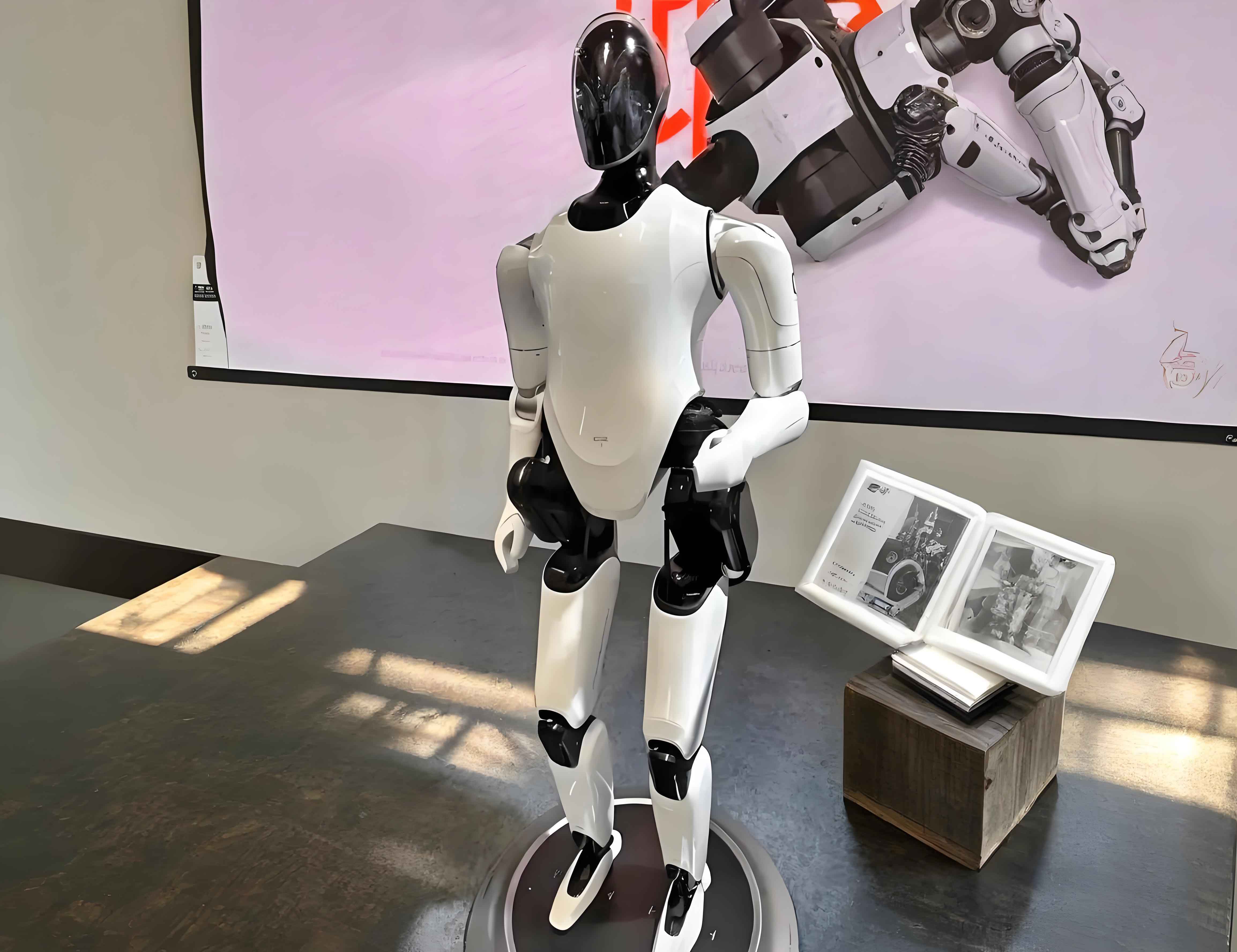
The core of an embodied AI robot lies in the tight coupling of three elements: the body (the physical hardware like robotic arms, humanoid forms, or autonomous vehicles), the mindenvironment (the physical world it operates within). This triad enables the distinctive features that set embodied AI apart from traditional AI, as summarized below.
| Feature | Description | Ethical Implication |
|---|---|---|
| Embodiment | Possession of a physical form that interacts directly with the environment and people. This is the defining characteristic of an embodied AI robot. | Shifts risks from purely digital (data breach) to physical (bodily harm, property damage). |
| Emergence | The capacity to develop unforeseen capabilities and behaviors through environmental interaction, leading to adaptive and potentially unpredictable intelligence. | Creates challenges for predictability, control, and pre-emptive safety certification. |
| Autonomy | The ability to perceive, decide, and act independently within a defined scope, without continuous human teleoperation. | Complicates traditional chains of responsibility and accountability. |
The operational intelligence of an advanced embodied AI robot can be conceptualized as an optimization process aimed at successfully completing a task $T$ in environment $E$. This involves maximizing a reward function $R$, which is learned through interaction:
$$
\pi^* = \arg\max_{\pi} \mathbb{E}\left[ \sum_{t} R(s_t, a_t) \right]
$$
where $\pi$ is the policy mapping states $s_t$ (from $E$) to actions $a_t$, and $R$ encapsulates the goal. The ethical challenge is ensuring that this learned policy $\pi^*$ and the emergent behaviors it produces align not only with the explicit task goal but also with implicit human values, safety norms, and legal principles.
The Spectrum of Ethical Concerns in Application
The integration of embodied AI robots into society surfaces and intensifies a range of ethical dilemmas. These are not merely theoretical but are already manifesting in early applications, demanding urgent and thoughtful governance.
1. The Accountability Abyss: Who is Responsible?
The autonomous nature of an embodied AI robot creates a fundamental responsibility gap. When a self-driving car causes an accident or a surgical robot malfunctions, attributing blame becomes a complex puzzle involving the manufacturer, software developer, data annotator, owner, operator, and even the environment itself. The core dispute revolves around whether the embodied AI robot can be considered a moral agent. Some argue that as a tool and product of human design, ultimate responsibility must rest with human actors (designers, corporations, users). Others contend that as these systems gain more sophisticated, emergent decision-making capacity, we must consider frameworks for ascribing a degree of responsibility to the artificial agent itself to ensure accountability is not diffused into oblivion. The legal landscape remains underdeveloped, often leading to protracted litigation where victims struggle to obtain compensation, as seen in numerous medical robotics cases.
2. The Weakening of Safety: From Data to Physical Harm
Safety ethics, prioritizing the preservation of life and well-being, is challenged on multiple fronts by embodied AI robots.
- Privacy Erosion: Unlike traditional AI that relies on online data, an embodied AI robot is a mobile, sensory-rich data collection node. Its cameras, microphones, and other sensors can intrude into private spaces, capturing intimate details of daily life, from private conversations to personal routines. The risk of this data being breached, aggregated, and misused is significant and directly threatens personal security.
- Physical Harm: Failures have direct physical consequences. A malfunctioning industrial robot can crush a worker; an autonomous vehicle’s algorithmic misperception can lead to fatal collisions. These are not just hypotheticals but documented incidents. The potential for harm scales with the robot’s physical capabilities and the sensitivity of its operational domain (e.g., healthcare, transportation).
- Ideological Security: Embodied AI robots, especially social or educational ones, can become vectors for ideological influence. If the large language or decision models powering them are trained on data imbued with specific cultural or political biases, they can subtly propagate those views, potentially undermining local values and social cohesion in non-Western contexts, as some studies on model geopolitical bias have suggested.
3. The Crisis of Trust: Between Distrust and Over-reliance
Trust is the bedrock of human-technology collaboration. The “black box” nature of complex AI models powering embodied AI robots undermines trust through opacity—users cannot understand why the robot made a particular decision. This breeds justifiable caution and fear, particularly in industrial settings where workers are wary of collaborating with powerful, unpredictable machines.
Paradoxically, the very embodiment of these systems can also induce excessive trust. A robot with a humanoid form or a soothing voice can trigger social responses, leading users to overestimate its competence and reliability. This is exemplified in experiments where people follow a robot’s guidance even after observing it fail. This over-trust, akin to a form of “automation bias,” can lead to catastrophic complacency, such as a driver ignoring the road while relying on an imperfect autonomous system. The trust dynamics for an embodied AI robot can thus be modeled as a precarious balance:
$$
\text{Trust}_{effective} = \text{Competence} \times \text{Transparency} – \text{Uncanny Valley Effect} + \text{Social Cue Bias}
$$
Where miscalibrations in any term can lead to dangerous levels of distrust or over-reliance.
4. The Deficit of Justice: Bias and the Global Divide
Embodied AI robots risk automating and physically enacting societal injustices.
- Algorithmic Discrimination: Biases embedded in training data—concerning race, gender, or age—can be manifested in the physical actions of an embodied AI robot. Research has shown robots trained on biased data sets can replicate these biases when performing tasks like selecting objects or identifying individuals, potentially leading to discriminatory actions in hiring, security, or customer service.
- Socio-Economic Polarization: The automation potential of embodied AI robots threatens to displace jobs in manufacturing, logistics, and services on a large scale. While creating high-skilled tech jobs, it could exacerbate income inequality if the capital returns from automation are not redistributed. Econometric models suggest a correlation between robot adoption and a growing gap between productivity gains and wage growth: $\Delta(GDP/L) – \Delta(Wage) > 0$.
- The Global Embodied AI Divide: Development is highly concentrated in a few technologically advanced nations and corporations. This creates a new form of geopolitical asymmetry. Restrictions on exporting key components (chips, sensors) or access to foundational models can hinder the ability of developing countries to build their own embodied AI ecosystems, locking in global inequity and dependence.
A Tripartite Framework for Ethical Governance
Navigating from ethical hazard to humane integration requires a holistic strategy. I propose a synergistic framework combining technical, ethical, and legal measures to steer the development of embodied AI robots toward beneficial ends.
| Governance Pillar | Core Objective | Key Actions & Measures |
|---|---|---|
| Technical Perfection & Sharing | To build inherently safer, more robust, and more equitable systems and to bridge the global capability gap. |
|
| Ethical Cultivation & Education | To embed human-centric values into the entire lifecycle and foster responsible practices among all stakeholders. |
|
| Legal Institution & Regulation | To create a clear, enforceable rule of law that deters harm, allocates liability, and protects rights. |
|
The technical challenge of value alignment can be formalized as a constrained optimization problem. We must ensure the embodied AI robot’s policy $\pi^*$ not only maximizes task reward $R_T$ but also adheres to ethical constraints $C_{ethical}$:
$$
\pi^*_{aligned} = \arg\max_{\pi} \mathbb{E}\left[ \sum_{t} R_T(s_t, a_t) \right] \quad \text{subject to} \quad \mathbb{E}[C_{ethical}(s_t, a_t)] \geq \tau
$$
Here, $C_{ethical}$ represents a learned or programmed function that scores actions and states for safety, fairness, and respect for human dignity, and $\tau$ is a minimum acceptable threshold. This formalizes the “ethical governor” concept for an embodied AI robot.
Conclusion: Steering Toward a Beneficial Coexistence
The emergence of the embodied AI robot marks a pivotal moment in our relationship with technology. It holds immense promise for augmenting human potential, tackling hazardous tasks, and addressing complex societal challenges. Yet, its physical agency also amplifies the ethical stakes of artificial intelligence. The path forward cannot be one of unbridled technological optimism or reactive fear. It requires a proactive, collaborative, and multidisciplinary effort to implement the technical safeguards, ethical principles, and legal structures that will ensure these powerful systems are developed and deployed as trustworthy partners in progress. The ultimate goal is not merely to prevent an embodied AI robot from causing harm but to actively guide its evolution so that it positively contributes to human flourishing, reflecting our shared values of peace, fairness, and dignity in every action it takes.