
The story of the modern medical robot is a compelling narrative of technological convergence and clinical necessity. It represents a monumental shift from concept to cornerstone in contemporary medicine. My perspective on this journey is rooted in the belief that these sophisticated systems are not merely tools but transformative partners in healthcare. Their emergence fundamentally alters traditional paradigms of diagnosis, treatment, and rehabilitation, directly addressing the growing chasm between escalating global healthcare demands and finite clinical resources.
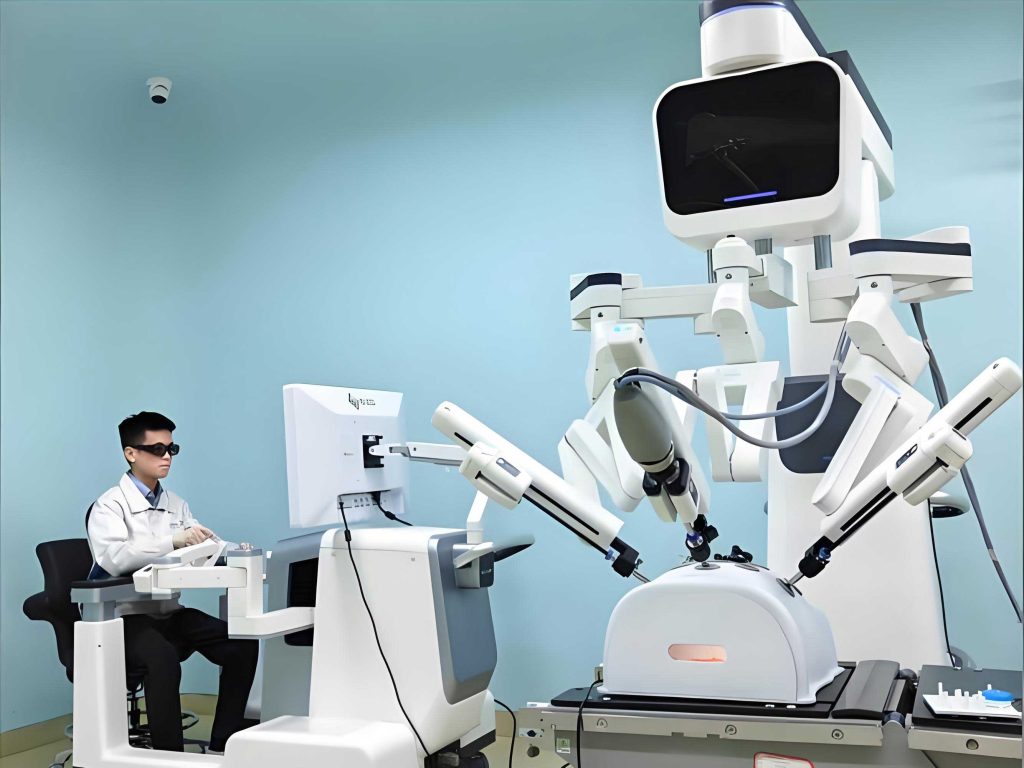
The genesis of the medical robot can be traced to a pivotal moment in 1985, when researchers adapted a PUMA260 industrial robotic arm to perform a neurosurgical biopsy. This seminal event marked the dawn of a new era. From that point forward, the trajectory has been one of rapid diversification and deepening integration. The initial focus on precise surgical assistance has blossomed into a broad ecosystem encompassing surgical, rehabilitation, diagnostic, and logistical systems. This evolution reflects a core principle: the medical robot serves as a versatile platform, capable of augmenting human skill, extending reach, and providing quantifiable, repeatable precision in environments ranging from the operating theater to the patient’s home.
The global market for these intelligent systems has matured significantly, establishing a clear competitive landscape. Current data reveals a market still dominated by North American and European innovators who leveraged first-mover advantage and robust R&D ecosystems. The industry structure is such that companies possessing breakthrough core technology and comprehensive service networks can achieve and sustain significant market leadership. For instance, in the surgical domain, robotic-assisted minimally invasive surgery has become a standard of care for numerous procedures, driven by systems that offer enhanced dexterity, 3D visualization, and tremor filtration. The commercial success in this sector underscores a critical market dynamic: proven clinical utility combined with strong intellectual property protection creates formidable, though not insurmountable, barriers to entry.
The current application spectrum of the medical robot is vast and can be systematically categorized as follows:
| Primary Domain | Sub-categories | Primary Function | Clinical Impact |
|---|---|---|---|
| Surgical Robots | Soft-tissue Manipulation, Orthopedic & Neurosurgical Navigation | To enhance a surgeon’s capability to perform complex, minimally invasive procedures with high precision and stability. | Reduced trauma, less blood loss, shorter hospital stays, and potentially improved clinical outcomes. |
| Rehabilitation Robots | Motor Therapy Systems, Powered Exoskeletons, Assistive Devices | To provide high-intensity, repetitive, and measurable therapy for motor recovery or to augment physical mobility. | Addresses therapist shortages, enables objective progress tracking, and improves patient engagement and recovery potential. |
| Hospital & Service Robots | Logistics, Disinfection, Telepresence | To automate non-clinical but critical hospital tasks such as material transport, UV-C disinfection, and remote consultation. | Increases operational efficiency, reduces hospital-acquired infections, and improves resource allocation for clinical staff. |
| Diagnostic & Interventional Robots | Radiosurgery, Robotic-assisted Ultrasound, Capsule Endoscopy | To guide and stabilize diagnostic instruments or therapeutic beams with sub-millimeter accuracy. | Enables highly targeted radiation therapy, consistent diagnostic imaging, and less invasive exploratory procedures. |
Quantifying the market’s growth provides concrete evidence of this sector’s vitality. From a base of approximately 386 units sold globally in 2004, annual sales have climbed steadily. The compound annual growth rate (CAGR) tells a clear story:
$$ \text{CAGR} = \left( \frac{V_{\text{final}}}{V_{\text{initial}}} \right)^{\frac{1}{n}} – 1 $$
where \( V_{\text{initial}} \) is the 2004 sales volume, \( V_{\text{final}} \) is the 2015 sales volume (1324 units), and \( n \) is the 11-year period. Plugging in the numbers:
$$ \text{CAGR} = \left( \frac{1324}{386} \right)^{\frac{1}{11}} – 1 \approx 0.132 \text{ or } 13.2\% $$
This sustained double-digit growth underscores the accelerating adoption of medical robot technology worldwide.
The financial landscape of the medical robot market further illustrates its segmentation and potential. The following table outlines historical and projected market sizes for key segments, highlighting the explosive growth anticipated in rehabilitation and the sustained dominance of surgical systems.
| Market Segment | 2014 Market Size (USD Billion) | 2021 Projected Market Size (USD Billion) | Projected CAGR (2014-2021) |
|---|---|---|---|
| Surgical Robots | 3.2 | 20.0 | ~30% |
| Rehabilitation Robots | 0.22 | 3.2 | ~47% |
| Other Medical Robots (Service, Diagnostic, etc.) | ~2.0 | ~9.6 | ~25% |
| Total Medical Robot Market | ~5.42 | ~32.8 | ~29.5% |
The technological core of a medical robot is a symphony of advanced engineering disciplines. Its performance can be modeled as a function of several interdependent subsystems:
$$ R_{\text{performance}} = f(S_{\text{perception}}, M_{\text{planning}}, A_{\text{actuation}}, H_{\text{interface}}, C_{\text{control}}) $$
Where:
- \( S_{\text{perception}} \): Sensing & Imaging. This includes intraoperative navigation (e.g., optical, electromagnetic), force/torque sensing, and real-time imaging fusion (e.g., CT, MRI, Ultrasound). Precision here is paramount: $$ \text{Targeting Error} = \sqrt{\epsilon_{\text{calibration}}^2 + \epsilon_{\text{registration}}^2 + \epsilon_{\text{tracking}}^2} $$
- \( M_{\text{planning}} \): Pre-operative & Intra-operative Planning. Software algorithms convert patient-specific imaging data into a surgical or therapeutic plan, defining optimal paths and boundaries.
- \( A_{\text{actuation}} \): Robotic Manipulation. This involves the mechanical design of arms and end-effectors, which must balance stiffness for accuracy with compliance for safety. The kinematics (e.g., serial, parallel) determine the workspace and dexterity.
- \( H_{\text{interface}} \): Human-Robot Interface (HRI). This is the crucial link between the clinician and the machine, encompassing haptic masters, joysticks, touchscreens, and increasingly, voice and gesture control.
- \( C_{\text{control}} \): Control Systems. These real-time algorithms ensure the medical robot follows commanded trajectories accurately and safely, often incorporating force feedback and virtual fixtures to prevent dangerous movements: $$ \tau = J^T F + K_p e + K_d \dot{e} $$ where \( \tau \) is the joint torque, \( J^T \) is the Jacobian transpose, \( F \) is the desired Cartesian force, and \( K_p e + K_d \dot{e} \) represents a PD controller for position error.
Looking forward, the drivers for the medical robot industry are powerful and interlinked. The relentless pressure of global demographic shifts, primarily aging populations, is creating an unprecedented demand for high-quality, efficient care. Concurrently, the revolution in adjacent technologies—Artificial Intelligence (AI), machine learning, advanced materials, 5G connectivity, and augmented reality—is providing the tools to make the next generation of medical robots smarter, more autonomous, and more accessible.
The future medical robot will likely be characterized by several key trends:
- Increased Intelligence and Autonomy: AI will move from an assistive role to a collaborative one. We can envision a system where:
$$ \text{Surgical Phase}_{\text{next}} = \text{AI Model}(\text{Current State}, \text{Plan}, \text{Sensor Data}) $$
The robot could suggest next steps, predict anatomical variations, or even execute defined sub-tasks under surgeon supervision. - Data Integration and Interoperability: The medical robot will cease to be a standalone device and become a node in the Internet of Medical Things (IoMT), feeding into and learning from electronic health records, genomics data, and population health databases.
- Democratization of Access: Telesurgery and remote mentoring platforms will leverage low-latency networks to export surgical expertise globally, mitigating geographic disparities in care. The economic model will also shift, with more cost-effective systems entering the market, particularly from growing industrial bases in Asia.
- Personalization and Adaptive Therapy: Rehabilitation robots will use continuous biosignal monitoring (EMG, EEG, kinetics) to dynamically adapt therapy in real-time: $$ \text{Therapy Resistance}(t) = g(\text{Fatigue}(t), \text{Compliance}(t), \text{Progress}(t)) $$
From my viewpoint, the most significant transformation will occur in the clinical workflow itself. The integration of the medical robot will foster a team-based model where surgeons become high-level supervisors and strategic decision-makers, while intelligent systems manage precise execution. This does not diminish the clinician’s role but elevates it, freeing cognitive load for complex judgment and patient interaction. The future hospital will be a symphony of human expertise and robotic precision, orchestrated through seamless digital interfaces.
In conclusion, the medical robot stands at the forefront of a fundamental restructuring of healthcare delivery. It is a catalyst for precision, a solution for scalability, and a bridge for equity in global health. The convergence of overwhelming clinical need and explosive technological capability creates a perfect storm for innovation. While challenges in regulation, reimbursement, training, and ethical frameworks remain, the trajectory is unequivocal. We are transitioning from an era where robotic assistance is an exceptional luxury to one where it is an integral, standard component of high-quality care. The intelligent future of healthcare is not a distant speculation; it is being built in research labs and operating rooms today, one precise, robotic motion at a time.