
The rhythm of industrial progress in contemporary China is characterized by a complex symphony of technological ambition, regulatory evolution, and market adaptation. As an observer deeply embedded within this dynamic ecosystem, I witness firsthand the multifaceted strategies employed to navigate global competitiveness, internal economic pressures, and the relentless drive for innovation. From the high-tech frontiers of robotics to the foundational challenges faced by small and medium enterprises (SMEs), the narrative is one of structured support meeting entrepreneurial agility. This article delves into the critical currents shaping this landscape, analyzing the concerted push for standards in emerging sectors like robotics, the persistent weight of operational costs on businesses, and the strategic pivots traditional industries are making to secure their future.
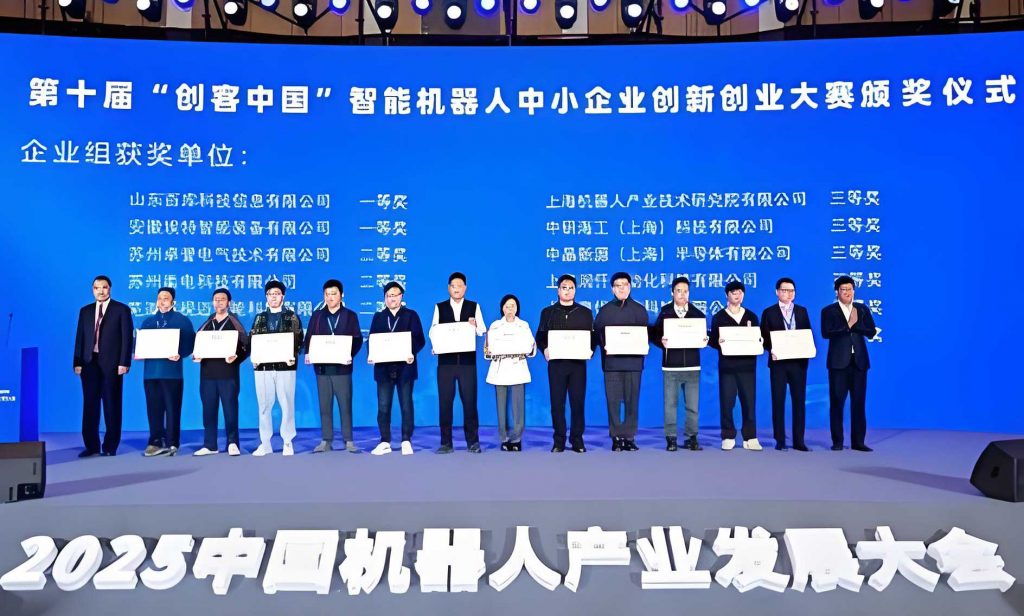
The most emblematic of these high-tech endeavors is the strategic development of the China robot industry. Recognizing its pivotal role in manufacturing升级和 automation, authorities have moved decisively to establish a robust framework for quality and reliability. The impending launch of the first official certification mark for China robot products is a landmark step. This initiative, spearheaded by a multi-ministry collaboration, aims to create a comprehensive system encompassing standards, testing, and certification to foster healthy and orderly growth. The establishment of the National Robot Testing and Evaluation Center, along with the publication of the “National Robot Standard System Construction Guide” and the “China Robot Standardization White Paper,” underscores a methodical, top-down approach to building a world-class China robot ecosystem.
The market potential is undeniably vast. Projections indicate that by 2020, the annual output of domestically-branded industrial China robot units could reach 100,000, with service robot sales exceeding 30 billion RMB. However, this promising trajectory is not without significant headwinds. The industry grapples with core technical deficiencies and a reliance on imported key components. The innovation challenge can be conceptually framed by a simplified knowledge accumulation function:
$$ K_{t+1} = K_t + \theta I_t – \delta K_t $$
Where \( K_t \) represents the existing core technological knowledge base of the China robot industry at time \( t \), \( I_t \) is the investment in R&D, \( \theta \) is the efficiency of converting R&D into usable knowledge (a parameter currently challenged by talent gaps and foundational research), and \( \delta \) is the rate of knowledge obsolescence. The strategic focus is on maximizing \( \theta \) through improved standards, certification (which reduces market noise and focuses investment), and better industry-academia collaboration. The current state can be summarized in the following analysis of drivers and impediments:
| Strategic Driver for China Robot Growth | Current Metric / Status | Primary Challenge |
|---|---|---|
| Policy & Standardization Framework | Certification system launch; National standards guide published. | Integration and international alignment of standards. |
| Market Demand & Projection | ~100k industrial units/year by 2020; 30B RMB service robot sales. | High-performance application penetration vs. low-end assembly. |
| Core Technology Independence | Growing R&D investment in reducers, controllers, servos. | High dependency on imports for precision components. |
| Industry Collaboration | Formation of Robot Testing and Certification Alliance. | Fragmented innovation efforts across enterprises and institutes. |
Parallel to this technological drive, the broader business environment faces persistent structural pressures. A recent national survey of enterprise burdens reveals that over half of the companies perceive their overall operational burden as heavy. The breakdown of cost pressures is unequivocal, with human resources emerging as the foremost concern. The model for understanding this aggregate cost pressure (ACP) on a representative firm can be expressed as:
$$ ACP = \alpha(LC) + \beta(FC) + \gamma(EC) + \epsilon(RC) $$
Here, \( LC \) is Labor Cost, \( FC \) is Financing Cost, \( EC \) is Element Cost (utilities, land), and \( RC \) is Regulatory Compliance cost. The coefficients \( \alpha, \beta, \gamma, \epsilon \) represent the subjective weight and impact of each factor. The survey clearly indicates that for a majority of firms, \( \alpha \) is the largest coefficient, with nearly half reporting an increase in \( LC \)负担 year-on-year. Financing cost (\( FC \)) follows as the second most significant weight (\( \beta \)). This empirical data is crystallized in the survey’s key findings:
| Cost Burden Area | % of Enterprises Citing as ‘Heavier’ | Year-on-Year Change Perception |
|---|---|---|
| 人工成本 (Labor Costs) | Ranked #1 | 46% report increased burden |
| 融资成本 (Financing Costs) | Ranked #2 | 28% report increased burden |
| 要素成本 (Water, Electricity, Gas, Land) | Ranked #3 | Data not specified in trend |
| 行政审批/监督检查 (Administrative & Compliance) | Lower rank | 20% report reduced burden |
The dynamic of labor costs is further evidenced by regional policy adjustments. As of the third quarter, nine provincial-level regions had raised their monthly minimum wage standards, with an average increase of 10.7%. While a positive move for workers, this adjustment also feeds directly into the \( LC \) variable in the cost pressure model for businesses, particularly in labor-intensive sectors. The trend, however, shows moderation compared to previous years, suggesting a balancing act between income growth and enterprise cost sustainability.
| Regional Minimum Wage Adjustment (Example) | Monthly Standard (Post-Adjustment) | Hourly Standard (Post-Adjustment) |
|---|---|---|
| Shanghai | 2,190 RMB (Highest Nationally) | N/A |
| Beijing | N/A | 21 RMB (Highest Nationally) |
| Jiangsu | Adjusted | Adjusted |
| Chongqing | Adjusted | Adjusted |
To directly address the high \( \beta(FC) \) financing cost coefficient, innovative public-private platforms are emerging. The launch of the Guangzhou SME Credit Information and Financing对接 Platform is a prime example. This platform seeks to reduce information asymmetry—a key market failure that leads to high \( FC \) for SMEs. By aggregating credit information from various public sources, it lowers the risk assessment cost for banks, theoretically reducing the equilibrium interest rate for creditworthy SMEs. The platform’s success hinges on data comprehensiveness and quality, modeled as a function:
$$ \Delta FC_{SME} \propto – f(Q, C, I) $$
Where a decrease in SME financing cost (\( \Delta FC_{SME} \)) is proportional to a function of improved information Quality (Q), Coverage (C), and Integration (I) provided by the platform.
This environment of high \( ACP \) and technological disruption is forcing traditional manufacturing sectors, like toys, to undertake profound strategic transformations. The case of a listed cultural company divesting its legacy toy manufacturing arm is instructive. This move represents a clean pivot from low-margin, cost-sensitive physical production to high-value, IP-centric content creation and operation. The strategic valuation can be thought of as shifting from a traditional manufacturing model to an IP monetization model:
$$ V_{new} = \sum_{t=1}^{n} \frac{IP_{royalty} + IP_{derivative} + Digital_{content}}{(1+r)^t} \gg V_{old} = \sum_{t=1}^{n} \frac{(P_{unit} – C_{labor} – C_{material}) \times Q}{(1+r)^t} $$
Where \( V_{new }\) discounts future cash flows from diverse IP streams, significantly aiming to exceed \( V_{old }\) which is vulnerable to fluctuations in labor cost \( C_{labor} \) and material cost \( C_{material} \).
Simultaneously, within the toy industry itself, convergence is the watchword. The collaboration between a established wooden educational toy maker and a technology firm specializing in “Internet + Child Education + Toy” fusion exemplifies adaptation. This partnership leverages the tangible quality and safety heritage of traditional manufacturing with digital interactivity and educational software, creating a hybrid product category. This fusion model aims to capture value in a market where pure physical products face competition from digital entertainment. It is a direct response to changing consumer demand and represents a micro-level innovation strategy within a pressured sector.
In conclusion, the industrial landscape of China is a study in simultaneous constraint and opportunity. The ambitious, state-facilitated build-out of the China robot sector seeks to create a new engine of high-tech growth, yet it is meticulously being built upon a foundation of standards and certification to avoid the pitfalls of unstructured expansion. This forward-looking drive exists alongside the immediate, grinding reality of high operational costs—particularly from labor and financing—which form a significant drag on vast swathes of the existing enterprise base. The response to these dual realities is multi-pronged: regulatory efforts to streamline administration and build credit infrastructure, and bold corporate strategies to exit low-margin operations or fuse traditional strengths with digital innovation. The path forward is not singular. It involves the precise, algorithm-guided world of the China robot, the policy-driven mitigation of cost variables in the \( ACP \) model, and the creative, disruptive energy of enterprises marrying physical play with digital experiences. The interplay between these forces—top-down standardization, market-led cost pressures, and entrepreneurial adaptation—will ultimately determine the resilience and future shape of China’s industrial prowess. The development of the China robot industry, in particular, stands as a critical test case for the nation’s ability to move from volume to value, from assembly to authentic, certified innovation.