
The field of bionic robotics perpetually seeks inspiration from nature’s most adept engineers. Among these, soft-body animals—organisms devoid of rigid skeletal support—represent a pinnacle of motion control, exhibiting unparalleled flexibility, adaptability, and efficiency. For a bionic robot designer, the challenge of controlling a structure with nearly infinite degrees of freedom and strong nonlinearities is daunting. Traditional methods based on precise kinematic mappings or finite element models often struggle with real-time adaptability and environmental interaction. Yet, animals like jellyfish, nematodes, leeches, and insect larvae perform dextrous locomotion with seeming ease. The key to their success lies not in complex, high-dimensional control but in the elegant synergy between a simplified neural control strategy and the body’s intrinsic mechanical properties—a synergy best described by neuromechanical models. This article, from the perspective of a bionic robot engineer, explores the motion control paradigms of these exemplary soft-body animals, distills the governing principles through mathematical formalisms, and charts a course for translating these biological blueprints into the next generation of adaptive bionic robots.
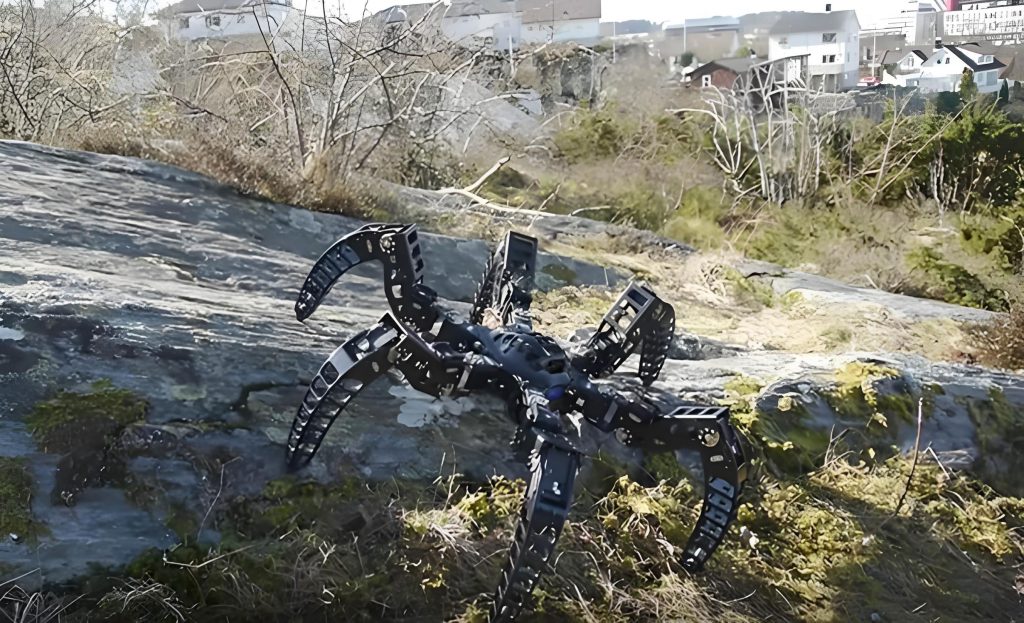
The fundamental hurdle in soft bionic robot design is the control problem. A soft body’s deformation is a high-dimensional, nonlinear, and tightly coupled process. Establishing an analytical inverse kinematics solution from a desired pose to actuator commands is often impossible. Current bionic robot control strategies range from open-loop, pre-programmed actuation with limited accuracy to closed-loop methods using vision or tactile sensors, which can be slow and struggle with dynamic environments. In stark contrast, the control system of a soft-body animal—comprising a central nervous system (controller), muscles (actuators), and sensory organs (feedback sensors)—has been refined by evolution to produce robust, adaptable, and energy-efficient motion. A critical insight is that while the body has many theoretical degrees of freedom, neural coordination and mechanical coupling drastically reduce the effective control dimensions, a concept known as “low-dimensional control.” Unraveling this biological strategy is the most promising path to overcoming the control bottleneck in bionic robotics.
The analytical framework that bridges this gap is neuromechanics. It integrates neural circuit dynamics, muscle activation kinetics, body biomechanics, and environmental interaction into a unified model. A comprehensive neuromechanical model includes: (i) a spiking neural network model representing the central pattern generator (CPG) or control circuit; (ii) a muscle activation model converting neural signals into force; (iii) a biomechanical model of the body as a viscoelastic structure (often a mass-spring-damper or finite element system); and (iv) a sensory feedback model. For the bionic robot designer, such models are not mere simulations but a design toolkit. They reveal which structural features are essential, what the key control signal signatures are, and how feedback stabilizes motion. This article will analyze four invertebrate paradigms of increasing neural and mechanical complexity, extract their core neuromechanical equations, and demonstrate how these principles can inspire tangible advances in bionic robot design.
Jellyfish: Synchronized Oscillation and Hydrodynamic Resonance
The jellyfish, with its radially symmetric bell, is a master of efficient aquatic locomotion. Its movement is characterized by whole-body, synchronized contractions. The primary locomotor muscles are circular muscles lining the subumbrella (the inner bell surface). A diffuse motor nerve net (MNN) ensures rapid, synchronous excitation of these muscles. Contraction of the bell expels water, generating thrust via jetting or, more efficiently, through vortex formation. During the relaxation phase, the bell’s intrinsic elasticity restores its shape, and the flexible margin (velarium) acts as a passive flap, enhancing vortex circulation for secondary thrust. Turning is achieved by unilateral activation of both circular and radial muscles, stiffening one side of the bell and altering vortex symmetry.
The neuromechanical model for jellyfish swimming highlights the principle of mechanical resonance. The bell acts as an oscillating, damped elastic structure. Optimal swimming performance is achieved when the neural activation frequency matches the bell’s natural resonant frequency. This principle can be formalized. We can model the bell as a damped harmonic oscillator driven by a periodic neural activation signal. The equation of motion for a simplified one-dimensional model of bell contraction is:
$$m \ddot{x} + c \dot{x} + k x = F_{neural}(t)$$
Where \( m \) is an effective mass, \( c \) is the damping coefficient (from water viscosity), \( k \) is the bell’s stiffness (from mesoglea elasticity), \( x \) is the bell’s displacement, and \( F_{neural}(t) \) is the periodic force generated by muscle activation. The natural frequency is \( f_n = \frac{1}{2\pi}\sqrt{k/m} \). When the frequency of \( F_{neural}(t) \) approaches \( f_n \), the amplitude of oscillation \( x(t) \) is maximized, leading to the most powerful strokes. Furthermore, the propagation speed of neural excitation in the MNN can couple with the speed of elastic wave propagation in the bell tissue to optimize turning maneuvers. For a bionic robot, this implies that actuator frequency and material stiffness must be co-designed. A jellyfish-inspired bionic robot should not just mimic the bell shape but should have its actuation frequency tuned to the resonant frequency of its soft body structure. Control can be dramatically simplified to a single, global oscillatory signal, with turning implemented by localized, unilateral stiffening—a principle directly transferable to a bionic robot using, for example, dielectric elastomer actuators (DEAs) with global activation and local inhibitory control zones.
| Biological Feature | Mathematical/Control Principle | Bionic Robot Implementation Insight |
|---|---|---|
| Radial Symmetry & Circular Muscles | Low-dimensional control (single phase oscillator). | Use a single, globally synchronized actuator signal. Design actuators in a circular arrangement. |
| Elastic Mesoglea & Flexible Margin | Passive energy recovery & vortex enhancement. System resonance: \( f_{actuation} \approx f_{natural} \). | Select soft materials with high elasticity and resilience. Tune actuator driving frequency to body’s mechanical resonance. |
| Diffuse Nerve Net (MNN) | Rapid, synchronous excitation wave. | Implement a simple broadcast communication network among actuator controllers. |
| Unilateral Stimulation for Turning | Modulation of oscillator symmetry: \( F_{neural}^{left}(t) \neq F_{neural}^{right}(t) \). | Apply differential stiffness/activation on one side of the robot. |
Caenorhabditis elegans: Propagating Waves and Mechanosensory Feedback
The nematode C. elegans presents a different paradigm: locomotion via undulatory waves in a highly viscous environment (low Reynolds number). Its elongated body has four longitudinal muscle strips (two dorsal, two ventral). Unlike the jellyfish, its motion is an asynchronous, traveling wave. The neural control circuit is elegantly minimal. Motor neurons in the ventral nerve cord receive inhibitory cross-connections (dorsal to ventral and vice versa), creating a fundamental antagonistic rhythm. Crucially, the motor neurons themselves, or closely associated neurons, are believed to possess proprioceptive (stretch-sensitive) properties.
The neuromechanical model for C. elegans underscores the principle of a locally coupled oscillator chain with sensory feedback. The body can be discretized into segments. Each segment i contains a simplified neural unit that drives its dorsal (\(D_i\)) and ventral (\(V_i\)) muscles. A classic model uses reciprocal inhibition within a segment and nearest-neighbor coupling:
$$\tau \dot{a}_{D,i} = -a_{D,i} + \sum_j w_{ij} \sigma(a_{V,j}) – \beta \sigma(a_{V,i}) + I_{ext}$$
$$\tau \dot{a}_{V,i} = -a_{V,i} + \sum_j w_{ij} \sigma(a_{D,j}) – \beta \sigma(a_{D,i}) + I_{ext}$$
Where \( a_{D,i}, a_{V,i} \) are the activation states of dorsal and ventral units in segment i, \( \tau \) is a time constant, \( w_{ij} \) are coupling weights (typically stronger for posterior-directed coupling), \( \sigma() \) is a sigmoidal function, \( \beta \) is the inhibition strength, and \( I_{ext} \) is external input. The mechanical model treats each segment as a point mass connected by damped springs representing the muscles and body wall. The muscle force is \( F_{muscle} = k_m \cdot \sigma(a) \), where \( k_m \) is muscle stiffness. The key insight is that the mechanical interaction between segments—due to the body’s viscoelasticity and environmental drag—can passively propagate a bend. This is reinforced by proprioceptive feedback, where stretch from a neighbor’s contraction directly excites the local motor unit. This creates a robust, decentralized control system: the wave emerges from local rules and physical coupling, not a central clock. For a bionic robot, this suggests a control architecture where each segment or actuator has a simple processor implementing a coupled oscillator rule with input from a local stretch sensor. The robot’s “CPG” is distributed, making it robust to damage—if one segment fails, the wave can propagate through mechanical coupling alone. This is highly relevant for a slender, worm-like bionic robot designed for burrowing or navigating confined spaces.
| Biological Feature | Mathematical/Control Principle | Bionic Robot Implementation Insight |
|---|---|---|
| Longitudinal Muscle Bands & Antagonism | Reciprocal inhibition: \( \dot{a}_D \propto -a_V \), \( \dot{a}_V \propto -a_D \). | Implement antagonistic actuator pairs (e.g., pneumatic chambers, tendons) with reciprocal control logic. |
| Body as a Viscoelastic Rod | Wave propagation via local coupling: \( w_{i,i+1} > w_{i+1,i} \). | Design segmental units with preferred posterior-directed communication. Use mechanical compliance to aid wave transmission. |
| Proprioception in Motor Neurons | Feedback: \( I_{ext} = \gamma \cdot (x_{i-1} – x_i) \). | Integrate stretch or curvature sensors (e.g., optical fibers, conductive elastomers) into each segment, providing direct feedback to its controller. |
| Low Reynolds Number Environment | Dominance of viscous drag: \( F_{drag} = -c \dot{x} \). | For aquatic bionic robots, actuator forces must overcome viscous, not inertial, resistance. Undulatory wavelength and frequency must be optimized for fluid viscosity. |
Medicinal Leech: Multimodal Locomotion and Gait Transition
The leech is a fascinating study in behavioral versatility. It employs two distinct gaits: swimming in water and crawling on surfaces. Swimming involves a traveling wave of dorsal-ventral flexion, controlled by a well-defined CPG in the segmental ganglia. Crawling is a radically different “inchworm” or “vermiform” gait, where the anterior and posterior suckers alternate attachment while the body undergoes substantial longitudinal contraction and extension via coordinated activity of circular and longitudinal muscles.
Neuromechanical modeling of the leech reveals principles of mode switching and mechanical intelligence. The swimming CPG can be modeled as a chain of oscillators with asymmetric coupling (stronger rearward), ensuring a posteriorly traveling wave. The neural output to dorsal (D) and ventral (V) motor neurons is approximately anti-phase:
$$a_D(t) \approx -a_V(t)$$
$$Phase(a_i) < Phase(a_{i+1})$$
The crawling CPG, however, produces a different pattern. Longitudinal motor neurons in many segments fire synchronously during the contraction phase, while circular motor neurons fire during the elongation phase. The transition between these modes is triggered by environmental cues (water vs. substrate) mediated by higher-order neurons. The mechanical model for crawling must account for the hydrostatic skeleton—a constant-volume fluid-filled cavity. Contraction of circumferential muscles increases internal pressure \( P \) and elongates the body, while contraction of longitudinal muscles shortens it. A simplified relation is:
$$P \cdot V \approx \text{constant} \quad \text{(isovolumetric constraint)}$$
$$F_{long} \propto P \cdot A_{cs} \quad \text{(force from longitudinal muscles)}$$
Where \( V \) is body volume and \( A_{cs} \) is cross-sectional area. The genius of the leech’s design for a bionic robot lies in this multimodal capability and the use of terminal suckers. The suckers provide reliable anchoring points, converting internal body deformations into net displacement. For a bionic robot, this inspires a multi-functional machine. The control system must harbor at least two distinct CPG programs (swim and crawl) and a sensory-driven switching mechanism. The body design requires a sealed, fluid-filled or granular-jammed structure to act as a hydrostat, with antagonistic actuator sets for length and diameter change. The addition of controllable adhesive end-effectors (suckers) is a direct and powerful bio-inspiration for a bionic robot needing traction in unstable environments.
| Biological Feature | Mathematical/Control Principle | Bionic Robot Implementation Insight |
|---|---|---|
| Hydrostatic Skeleton | Isovolumetric constraint: \( \Delta L \cdot A_{cs} \approx \text{const} \). Force generation: \( F \propto P \). | Use sealed, fluidic or granular chambers. Antagonistic actuators change shape against constant volume, generating high forces. |
| Dual CPGs (Swim & Crawl) | State-dependent dynamics: \( \dot{\mathbf{a}} = f(\mathbf{a}, \mathbf{s}) \), where \( \mathbf{s} \) is sensory context. | Program multiple gait patterns into the controller. Use environmental sensors (e.g., water contact, load) to trigger automatic gait switching. |
| Anterior/Posterior Suckers | Anchoring for force transduction: \( \text{Displacement} = \Delta L \cdot \text{Anchor}_{switch} \). | Incorporate switchable adhesion mechanisms (e.g., vacuum, gecko-inspired pads, electroadhesion) at robot ends. |
| Muscle Synergy for Crawling | Synchronous activation within a muscle type: \( a_{long,i}(t) \approx a_{long,j}(t) \). | Control groups of actuators (e.g., all longitudinal) in unison for whole-body contraction/extension. |
Drosophila Larva: Peristaltic Locomotion and Discrete Segmentation
The Drosophila larva showcases perhaps the most complex and versatile locomotion repertoire among the animals discussed. It can perform forward and backward peristalsis, turning, rolling, and head sweeping. Its body is divided into discrete segments, each equipped with a rich set of ~30 muscles arranged in transverse, oblique, and longitudinal orientations. This “modular” muscular architecture allows for precise, segmentally independent control of shape.
The neuromechanical model for larval crawling highlights the principle of discrete, sequential activation with local coordination. Peristalsis is a wave of segmental contraction that moves along the body. The CPG for forward crawling is located in the ventral nerve cord and generates a phase lag between segments:
$$Phase(\text{segment}_{i}) = Phase(\text{segment}_{i-1}) + \Delta \phi$$
where \( \Delta \phi \) is a constant phase increment. This is often modeled as a chain of coupled oscillators, similar to but more complex than the nematode model due to the involvement of more neuron types (e.g., wave, GDL, A27h). The biomechanical model must account for the interaction with a solid substrate. Contraction of longitudinal muscles in a segment shortens it, generating inward force. Subsequent contraction of transverse muscles in that segment increases its diameter and presses it against the substrate, providing anchorage for the next segment’s contraction. This “visceral piston” mechanism can be abstracted. The force propelling the center of mass forward is related to the friction generated by the anchored segments:
$$F_{propulsion} \approx \mu N_{anchored}$$
where \( \mu \) is the coefficient of friction and \( N_{anchored} \) is the normal force from pressurized segments. The larva’s ventral denticle belts enhance \( \mu \). For a bionic robot, the larva offers a blueprint for sophisticated, terrain-adaptive locomotion. The design should feature clear segmental units, each with multiple, independently controllable actuators to mimic transverse and longitudinal muscles. The control system requires a CPG capable of generating both forward and backward traveling waves with variable wavelength and frequency. Furthermore, the integration of contact sensing along the body is crucial to modulate the peristaltic wave based on terrain—a form of embodied intelligence where local reflexes (e.g., increased contraction upon encountering an obstacle) are integrated into the CPG operation. This makes the larva an exceptional model for a bionic robot intended for complex exploration within pipelines, rubble, or biological environments.
| Biological Feature | Mathematical/Control Principle | Bionic Robot Implementation Insight |
|---|---|---|
| Discrete Segments with Rich Musculature | High-dimensional actuation space reduced by CPG coordination: \( \mathbf{u}(t) = \mathbf{C} \cdot \mathbf{a}_{CPG}(t) \). | Design modular robot segments with multi-DoF actuation (e.g., multi-chamber pneumatics, McKibben muscle arrays). Use a matrix \( \mathbf{C} \) to map low-dimensional CPG signals to multiple actuators per segment. |
| Peristaltic Wave CPG | Traveling wave with constant phase lag: \( \phi_{i+1} = \phi_i + 2\pi/N \). | Implement a ring of coupled oscillators or a phase oscillator chain. Easily reversible by changing the direction of coupling. |
| Visceral Piston & Substrate Anchoring | Force model: \( F_{prop} \propto \mu \cdot P_{contact} \). | Incorporate mechanisms to vary segment friction/contact force (e.g., controlled inflation for grip). Design ventral surfaces with high-friction textures. |
| Multi-modal Behavior (Roll, Turn) | Recruitment of specialized neural sub-circuits: \( \mathbf{a}_{CPG} = \mathbf{a}_{crawl} + \mathbf{a}_{turn} \). | Design a hierarchical controller where a high-level “command neuron” circuit activates different pre-programmed CPG modules or injects bias signals into the main CPG. |
Synthesis: A Neuromechanical Design Framework for Bionic Robots
Analyzing these four models reveals a convergent set of principles that form a foundational framework for designing the next generation of bionic robots. The translation from biology to engineering involves abstracting the core neuromechanical relationships.
1. Co-design of Mechanics and Control: The body is not a passive structure to be controlled but an active partner in generating motion. Its mechanical properties—stiffness, damping, natural frequencies, and geometric constraints—must be designed in concert with the control strategy. The jellyfish teaches resonance tuning; the nematode and leech demonstrate how body elasticity propagates and shapes waves; the larva shows how segmental mechanics enable anchoring. The governing equation for a soft bionic robot segment can often be approximated as a forced, damped system:
$$\mathbf{M}(\mathbf{q})\ddot{\mathbf{q}} + \mathbf{C}(\mathbf{q}, \dot{\mathbf{q}})\dot{\mathbf{q}} + \mathbf{K}(\mathbf{q})\mathbf{q} = \mathbf{B}(\mathbf{q})\mathbf{u}(t) + \mathbf{F}_{ext}$$
where \( \mathbf{q} \) are generalized coordinates (e.g., curvatures, lengths), \( \mathbf{M} \) is the inertia matrix, \( \mathbf{C} \) captures damping (internal & environmental), \( \mathbf{K} \) is the stiffness matrix, \( \mathbf{B} \) is the actuation mapping matrix, \( \mathbf{u}(t) \) are control inputs, and \( \mathbf{F}_{ext} \) are external forces. The biological strategy is to simplify \( \mathbf{u}(t) \) (e.g., to a periodic, low-dimensional signal) and let the passive dynamics (\( \mathbf{M}, \mathbf{C}, \mathbf{K} \)) do much of the work.
2. Low-Dimensional, Rhythmogenic Control (CPGs): Animals do not compute inverse kinematics in real time. They use Central Pattern Generators—networks of neurons that produce rhythmic output. For a bionic robot, this can be implemented as a system of coupled nonlinear oscillators. A versatile model is the amplitude-controlled phase oscillator:
$$\dot{\theta}_i = \omega_i + \sum_j w_{ij} \sin(\theta_j – \theta_i – \phi_{ij})$$
$$r_i = f(\text{sensory input}_i)$$
$$u_i(t) = r_i \cdot \cos(\theta_i)$$
Here, \( \theta_i \) is the phase of segment i, \( \omega_i \) its natural frequency, \( w_{ij} \) the coupling strength, \( \phi_{ij} \) a desired phase lag, \( r_i \) an amplitude modulated by sensory feedback, and \( u_i(t) \) the final actuator command. This simple system can generate traveling waves, synchrony, and more, and is extremely robust and computationally cheap—ideal for embedded control in a bionic robot.
3. Integral Proprioceptive and Exteroceptive Feedback: Feedback is not an add-on but is woven into the control fabric. In animals, proprioceptive signals from stretch receptors are often integral parts of the CPG, ensuring coordination and adapting the rhythm to mechanical load. This can be modeled as:
$$\omega_i = \omega_0 + \alpha \cdot (s_{i-1} – s_i)$$
where \( s_i \) is a local strain measurement. For a bionic robot, embedding sensors (strain, pressure, curvature) and feeding their signals directly into the oscillator dynamics enables automatic gait adaptation on slopes, through constrictions, or when carrying payloads—a major step toward autonomous adaptability.
4. Functional Morphology and Adhesion: The physical form solves many problems. Suckers (leech), denticle belts (larva), and flexible margins (jellyfish) are morphological adaptations that directly enhance locomotion. A successful bionic robot must similarly consider functional surface textures, geometric features, and terminal effectors as critical components of the locomotor system, not just as an afterthought.
Future Directions and Conclusion
The path forward for bionic robots inspired by soft-body animals is rich with opportunity, guided by the neuromechanical framework. Current models and robotic implementations often fall short in several areas which define the research frontier.
1. From 2D to 3D Models and Robots: Most existing neuromechanical models are 2D, neglecting torsion, helical bending, and true 3D environmental interaction. Future bionic robots must be designed with 3D actuator arrangements (e.g., helical muscles) and corresponding 3D CPG models that can control roll, pitch, and yaw independently, enabling complex maneuvers like the larval roll or 3D swimming.
2. Fully Integrated Sensorimotor Loops: The next generation of bionic robots needs to close the loop from environment to CPG seamlessly. This requires co-locating sensors with actuators, developing neuromorphic sensor signal processing that mimics the fast, analog processing of biological systems, and integrating this information directly into the rhythm generation, much like the modulation of the leech’s CPG by water contact sensors.
3. Material Intelligence and Physical Computation: We must further exploit “physical computation”—the idea that the body’s mechanics perform computations. A bent segment automatically applies force to its neighbor; a resonating structure filters control signals. Designing bionic robot materials with nonlinear, time-varying mechanical properties (e.g., stiffness that changes with activation) could lead to even simpler control schemes, where the material itself embodies parts of the control law.
4. Validation and Reverse Engineering: Finally, a bionic robot built on precise neuromechanical principles becomes more than a tool; it becomes a testing ground for biological hypotheses. By altering robot parameters (coupling strength, body stiffness, feedback gain) and observing the resulting behavior, we can perform “reverse neuromechanics” to better understand the animals themselves.
In conclusion, the motion control of soft-body animals provides a profound and practical source of inspiration for overcoming the central challenges in bionic robot design. The core lesson is that elegance lies in integration, not in complexity. By co-designing the body’s mechanics with a low-dimensional, rhythmic, and feedback-rich control system—a blueprint directly provided by neuromechanical models—we can create bionic robots that are not merely soft, but are truly adaptive, resilient, and efficient. The future of bionic robots lies in embracing this biological wisdom, moving beyond superficial mimicry to a deep embodiment of neuromechanical principles, enabling applications from minimally invasive surgery and disaster response to environmental monitoring and beyond. The journey to build a truly lifelike, agile bionic robot is, in essence, a journey to understand and embody the conversation between neural rhythm and physical form.