
The evolution of robotics has ushered in a new era where machines are expected to operate not just in controlled, structured environments like factories, but in dynamic, unstructured spaces alongside humans. The quintessential platform for this challenge is the humanoid robot. For a humanoid robot to be truly autonomous and assistive, it must master fundamental skills such as perceiving its surroundings, identifying objects of interest, determining their precise location in three-dimensional space, and physically interacting with them through manipulation and grasping. This task is immensely complex in unstructured settings where lighting, object appearance, and background clutter are unpredictable.
Vision serves as the primary and richest sensory modality for this purpose. While monocular vision provides abundant information, it inherently lacks depth perception. Humanoid robots equipped with binocular (stereo) vision systems can overcome this limitation by mimicking human stereopsis. By processing two slightly different images from horizontally displaced cameras, a robot can reconstruct the 3D structure of a scene. This capability is foundational for tasks ranging from navigation to complex manipulation. The core technological pipeline enabling this involves several critical steps: kinematic modeling of the manipulator (arm), precise calibration of the stereo camera system, robust visual recognition and feature matching, accurate 3D triangulation for object localization, and finally, the implementation of a visual servo control loop to guide the arm toward the target for a successful grasp.
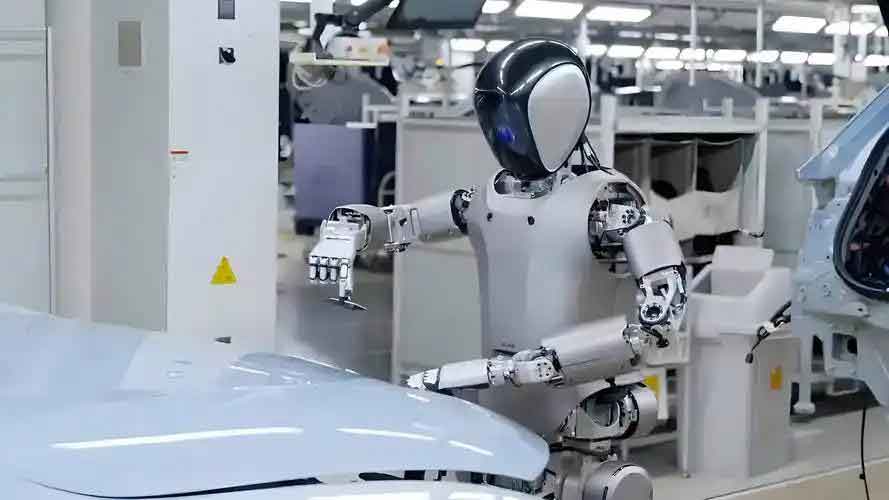
This article presents a comprehensive exploration of implementing a complete object location and grasping pipeline for a humanoid robot using binocular vision. We delve into the mathematical models, calibration procedures, and algorithms required, and demonstrate their integration and efficacy through experimental validation on a popular humanoid robot platform.
The Humanoid Robotic Platform and System Architecture
The choice of robotic platform significantly influences the system design. Modern humanoid robots like NAO, Pepper, or Atlas come with integrated sensors and software frameworks. For our discussion, we consider a platform analogous to NAO, featuring a multi-degree-of-freedom (DoF) upper body suitable for manipulation. The critical hardware components for our task are:
- Binocular Vision Head: Two cameras mounted on the robot’s head with a known baseline (distance between their optical centers). They may be fixed-focus or auto-focus, with known or calibratable intrinsic parameters (focal length, principal point, distortion coefficients).
- Manipulator Arms: Typically two arms with 5-7 DoF each, mimicking the human arm’s kinematics (shoulder, elbow, wrist joints). Precise kinematic and dynamic models are essential for control.
- Processing Unit: An onboard or offboard computer capable of real-time image processing and control algorithm execution.
The software architecture is layered. The low-level layer interfaces with joint motors and camera sensors. The middle layer comprises core algorithms for vision (OpenCV, PCL), kinematics (KDL, ROS MoveIt!), and control. The high-level task planner orchestrates the sequence: capture images, identify target, compute 3D pose, plan arm trajectory, and execute servoed grasp.
Kinematic Modeling of the Manipulator
Before the humanoid robot can reach for an object, we must understand how its arm moves. Kinematic modeling describes the relationship between joint angles and the position and orientation (pose) of the end-effector (the hand or gripper). The Denavit-Hartenberg (D-H) convention is a standard method to assign coordinate frames to each joint and derive the forward kinematics.
For a manipulator with $n$ joints, the pose of the end-effector frame $\{E\}$ relative to the base frame $\{B\}$ is given by the homogeneous transformation matrix $^B_E\mathbf{T}$:
$$^B_E\mathbf{T} = ^0_1\mathbf{T}(\theta_1) \cdot ^1_2\mathbf{T}(\theta_2) \cdot … \cdot ^{n-1}_n\mathbf{T}(\theta_n)$$
where $^{i-1}_i\mathbf{T}(\theta_i)$ is the transformation from frame $\{i-1\}$ to frame $\{i\}$, parameterized by the joint angle $\theta_i$ and the fixed link lengths and twists according to the D-H parameters. For a humanoid robot arm, this model allows us to compute where the hand is given a set of joint angles.
Inverse kinematics (IK) is the reverse problem: finding the set of joint angles $\vec{\theta} = [\theta_1, \theta_2, …, \theta_n]^T$ that places the end-effector at a desired pose $^B_E\mathbf{T}_{desired}$. IK is generally more complex and may have multiple or no solutions. Numerical methods (e.g., Jacobian-based iterative algorithms) are often used for redundant manipulators common in humanoid robots.
Binocular Vision Geometry and Calibration
The foundation of 3D perception with a stereo rig lies in epipolar geometry. Consider two pinhole cameras, the left ($C_l$) and the right ($C_r$). A 3D point $\mathbf{P} = [X, Y, Z]^T$ in the world is projected onto the left image plane at pixel $\mathbf{p}_l = [u_l, v_l]^T$ and the right image at $\mathbf{p}_r = [u_r, v_r]^T$.
The projection equations for the left camera, using its intrinsic matrix $\mathbf{K}_l$ and assuming lens distortion is corrected, are:
$$s_l \begin{bmatrix} u_l \\ v_l \\ 1 \end{bmatrix} = \mathbf{K}_l [\mathbf{R}_l | \mathbf{t}_l] \begin{bmatrix} X \\ Y \\ Z \\ 1 \end{bmatrix} = \mathbf{K}_l \mathbf{P}_l$$
where $s_l$ is a scale factor, and $\mathbf{P}_l$ is the point’s coordinates in the left camera frame. A similar equation holds for the right camera with $\mathbf{K}_r$, $\mathbf{R}_r$, $\mathbf{t}_r$.
The rigid transformation between the two camera frames is crucial. Let the right camera frame be related to the left by a rotation $\mathbf{R}$ and translation $\mathbf{t}$ such that $\mathbf{P}_r = \mathbf{R} \mathbf{P}_l + \mathbf{t}$. The essential matrix $\mathbf{E}$ and fundamental matrix $\mathbf{F}$ encapsulate this relationship:
$$\mathbf{p}_r^T \mathbf{K}_r^{-T} \mathbf{E} \mathbf{K}_l^{-1} \mathbf{p}_l = 0 \quad \text{and} \quad \mathbf{p}_r^T \mathbf{F} \mathbf{p}_l = 0,$$
where $\mathbf{E} = [\mathbf{t}]_\times \mathbf{R}$ and $\mathbf{F} = \mathbf{K}_r^{-T} \mathbf{E} \mathbf{K}_l^{-1}$. The disparity $d = u_l – u_r$ (for aligned horizontal epipolar lines) is inversely proportional to depth $Z$:
$$Z = \frac{f \cdot B}{d},$$
where $f$ is the focal length (assuming identical cameras) and $B = ||\mathbf{t}||$ is the baseline. This is the principle of triangulation.
Stereo Calibration is the process of determining the intrinsic parameters ($\mathbf{K}_l, \mathbf{K}_r$, distortion coefficients) and the extrinsic parameters ($\mathbf{R}, \mathbf{t}$) between the two cameras. This is typically done using a calibration pattern (e.g., a checkerboard). By capturing multiple images of the pattern from different views with both cameras, OpenCV’s `stereoCalibrate` function can solve for all parameters by minimizing the reprojection error. A critical subsequent step is Stereo Rectification, which transforms the images so that corresponding points lie on the same horizontal scanline, simplifying disparity search to a 1D problem. The rectification process computes two perspective transforms that warp the left and right images onto a common image plane where the epipolar lines are horizontal and aligned.
| Parameter Group | Symbol | Description | Typical Output |
|---|---|---|---|
| Left Intrinsics | $\mathbf{K}_l$ | Camera matrix (focal length, principal point) | 3×3 matrix |
| $\vec{dist}_l$ | Radial and tangential distortion coefficients | 1×5 vector | |
| – | Reprojection Error | Scalar (e.g., < 0.5 pixels) | |
| Right Intrinsics | $\mathbf{K}_r$ | Camera matrix | 3×3 matrix |
| $\vec{dist}_r$ | Distortion coefficients | 1×5 vector | |
| – | Reprojection Error | Scalar | |
| Stereo Extrinsics | $\mathbf{R}$ | Rotation from left to right camera | 3×3 matrix |
| $\mathbf{t}$ | Translation from left to right camera ($B = ||\mathbf{t}||$) | 3×1 vector | |
| Rectification Parameters | $\mathbf{R}_l, \mathbf{R}_r, \mathbf{P}_l, \mathbf{P}_r$ | Rectification rotation and projection matrices | 3×3 and 3×4 matrices |
Hand-Eye Calibration for the Humanoid Robot
A pivotal step for a humanoid robot to grasp what it sees is hand-eye calibration. This process determines the fixed spatial transformation between the camera (eye) frame $\{C\}$ and the end-effector (hand) frame $\{E\}$, denoted as $^E_C\mathbf{T}$. This transform allows the robot to convert a target’s 3D coordinates from the camera frame to the robot’s base or world frame, and subsequently to the end-effector frame for motion planning.
The classic hand-eye calibration problem is formulated as solving for $\mathbf{X} = ^E_C\mathbf{T}$ in the equation $\mathbf{A} \mathbf{X} = \mathbf{X} \mathbf{B}$, where:
- $\mathbf{A}$ is the motion of the end-effector (from robot forward kinematics) between two poses: $^B_{E_1}\mathbf{T}^{-1} \cdot ^B_{E_2}\mathbf{T}$.
- $\mathbf{B}$ is the corresponding motion of the camera (observed from camera calibration) between the same two poses: $^C_{1}\mathbf{T}^{-1} \cdot ^C_{2}\mathbf{T}$, often computed by observing a fixed calibration pattern from two different robot/camera poses.
By moving the humanoid robot‘s arm to multiple ($\geq 3$) distinct poses while keeping a calibration pattern stationary in the camera’s view, we collect pairs of $(\mathbf{A}_i, \mathbf{B}_i)$. Algorithms like those by Tsai-Lenz or Park-Martin can then solve for the rotation and translation components of $\mathbf{X}$. Accurate hand-eye calibration is critical; errors here directly translate to reaching inaccuracies.
Visual Recognition, Feature Matching, and 3D Localization
With a calibrated system, the humanoid robot can now perceive and locate objects. The process for a specific target object involves:
1. Object Detection & Recognition: Depending on the task, this could be detecting a predefined object by its color, shape, or texture. For robustness against lighting and viewpoint changes, feature-based methods are preferred. Scale-Invariant Feature Transform (SIFT), Speeded-Up Robust Features (SURF), or Oriented FAST and Rotated BRIEF (ORB) detectors and descriptors can be used to find keypoints on a template image of the object and match them to keypoints in the current scene.
2. Stereo Matching and 3D Triangulation: Once the object is identified in the left image, we need to find its corresponding location in the right image. For a textured object, the same feature matcher can provide matches in both rectified images. For simpler or textureless objects, area-based matching (e.g., Sum of Absolute Differences) within a search window along the epipolar line can be used. The matched pair of image points $(u_l, v)$ and $(u_r, v)$ (note $v$ is the same after rectification) provides the disparity $d = u_l – u_r$. Using the rectified projection matrices $\mathbf{P}_l$ and $\mathbf{P}_r$ from calibration, the 3D point $\mathbf{P}_{rect}$ in the rectified camera coordinate system can be computed via:
$$ \mathbf{P}_{rect} = \begin{bmatrix} X \\ Y \\ Z \\ W \end{bmatrix} = \begin{bmatrix} (u_l – c_x) / f_x \\ (v – c_y) / f_y \\ 1 \\ (u_l – u_r) / (-T_x) \end{bmatrix}, \quad \mathbf{P}_{3D} = \begin{bmatrix} X/W \\ Y/W \\ Z/W \end{bmatrix} $$
where $f_x, f_y, c_x, c_y$ are from the rectified projection matrix and $T_x$ is the horizontal component of the baseline in the rectified system. This point $\mathbf{P}_{3D}$ is in the left camera’s coordinate frame. It is then transformed using the hand-eye calibration result $^E_C\mathbf{T}$ and the robot’s forward kinematics to express the target location relative to the robot’s base or end-effector frame.
| Detector/Descriptor | Invariance Properties | Computational Speed | Suitability for Real-time on Humanoid Robot |
|---|---|---|---|
| SIFT | Scale, Rotation, Illumination (High) | Slow | Low (Offboard processing likely needed) |
| SURF | Scale, Rotation (High) | Moderate | Moderate (Possible with powerful onboard compute) |
| ORB | Rotation (Good), Scale (Limited) | Very Fast | High (Ideal for real-time applications) |
| AKAZE | Scale, Rotation (High) | Moderate-Fast | Moderate-High |
Visual Servoing Control for Grasping
Simply knowing the object’s 3D location is not enough for reliable grasping, especially if the robot or object moves, or due to small calibration errors. Visual servoing closes the control loop by using visual feedback directly to guide the robot’s motion. For a humanoid robot arm, Image-Based Visual Servoing (IBVS) is often employed.
In IBVS, the goal is to minimize an error $\mathbf{e}(t)$ defined in the image space. For a grasp, we might define image feature points on the object (e.g., its corners or center). The desired state is their location in the image when the gripper is correctly positioned for grasping, $\mathbf{s}^*$. The current state is their observed location $\mathbf{s}(t)$. The error is $\mathbf{e}(t) = \mathbf{s}(t) – \mathbf{s}^*$.
The relationship between the velocity of the camera (and thus the end-effector, via hand-eye calibration) $\mathbf{v}_c = [\nu_x, \nu_y, \nu_z, \omega_x, \omega_y, \omega_z]^T$ and the velocity of the features in the image is given by the image Jacobian or interaction matrix $\mathbf{L}_s$:
$$\dot{\mathbf{s}} = \mathbf{L}_s \mathbf{v}_c.$$
To drive the error to zero exponentially ($\dot{\mathbf{e}} = -\lambda \mathbf{e}$), we can compute the required camera velocity as:
$$\mathbf{v}_c = -\lambda \widehat{\mathbf{L}}_s^{+} \mathbf{e}(t),$$
where $\widehat{\mathbf{L}}_s^{+}$ is an estimate of the pseudo-inverse of the interaction matrix. This velocity command, typically in the camera frame, is transformed to the robot’s base frame and executed by the joint-level controllers. This allows the humanoid robot to adjust its arm movement in real-time based on what it sees, compensating for errors and achieving precise pre-grasp positioning.
Experimental Validation and Results Analysis
To validate the integrated pipeline, experiments were conducted on a humanoid robot platform. The setup involved a fixed robot torso, with only the right arm (5-DoF) and the binocular head active. The target objects were colored cubes (2.5 cm sides) placed randomly on a table within the robot’s workspace.
Procedure:
1. System Calibration: Stereo calibration and rectification were performed using a checkerboard pattern, achieving a mean reprojection error of 0.3 pixels. Hand-eye calibration was performed using 15 different arm poses.
2. Object Detection: Simple color thresholding in HSV space was used to segment the target cube (e.g., blue). The centroid of the largest contour was calculated as the target image point $\mathbf{p}_l$ in the left rectified image.
3. Stereo Matching: A correlation-based block matching algorithm (StereoSGBM in OpenCV) was used on the rectified stereo pair to compute a dense disparity map. The disparity $d$ at pixel $\mathbf{p}_l$ was extracted.
4. 3D Localization & Grasp Planning: The 3D coordinates of the cube’s centroid were computed via triangulation. Using the hand-eye transform, this point was mapped to the robot’s base frame. A simple Cartesian path was planned for the end-effector to move above this point and then descend vertically.
5. Execution: The joint trajectories were computed via inverse kinematics and executed. In a second set of experiments, a simple IBVS controller was activated in the final ~10 cm of approach, using the centroid image error to correct the arm’s descent.
| Experiment # | Object True Position (x,y,z) mm* | Measured Position (x,y,z) mm | Position Error (mm) | Grasp Success (Open-Loop) | Grasp Success (IBVS-Assisted) |
|---|---|---|---|---|---|
| 1 | (200, 50, 0) | (198, 52, -3) | 4.7 | No (Tipover) | Yes |
| 2 | (150, -30, 0) | (152, -28, 2) | 3.7 | Yes | Yes |
| 3 | (250, 20, 0) | (247, 22, -5) | 6.2 | No (Miss) | Yes |
| 4 | (180, -50, 0) | (181, -48, 1) | 2.4 | Yes | Yes |
| 5 | (220, 10, 0) | (223, 8, -4) | 5.4 | No (Tipover) | Yes |
| * Coordinates relative to robot base frame. Table surface at z=0. | |||||
Analysis: The results demonstrate the critical importance of each module in the pipeline. The average 3D localization error was approximately 4.5 mm, stemming from camera calibration inaccuracies, disparity estimation noise, and the resolution of the cameras. While this accuracy was sufficient for open-loop grasping in some trials (Experiments 2 & 4), it led to failures in others due to the small size of the object. The introduction of a final IBVS correction phase dramatically improved robustness, successfully compensating for the localization errors and achieving a 100% grasp success rate in the tested scenarios. This underscores that for a humanoid robot operating in the real world, combining a coarse 3D location estimate with a refined, vision-guided servo controller is a highly effective strategy.
Conclusion and Future Directions
This article has presented a detailed technical framework for enabling a humanoid robot to locate and grasp objects using binocular vision. We traversed the complete pipeline from kinematic modeling and rigorous stereo and hand-eye calibration to visual feature matching, 3D triangulation, and visual servoing control. The experimental validation confirms that such a system is viable and that integrating visual feedback directly into the control loop (visual servoing) is essential for robust performance against inevitable calibration and perception errors.
The future for humanoid robot perception and manipulation is geared towards greater autonomy and generalization. Promising directions include the integration of deep learning for more robust and category-level object recognition and pose estimation directly from stereo images. Furthermore, combining binocular vision with other sensors like RGB-D cameras or tactile sensors on the gripper can create a multi-modal perception system, enhancing reliability. Finally, advancing the intelligence of the grasp planner—considering object shape, weight, and fragility—will be key for a humanoid robot to transition from laboratory demonstrations to performing dexterous tasks in human-centric environments.
The journey to create a truly adept and perceptive humanoid robot is ongoing, but the integration of sophisticated binocular vision systems, as outlined here, provides a critical and powerful foundation for this endeavor, bringing us closer to the vision of capable robotic assistants in our everyday lives.