
In contemplating the trajectory of modern technological society, I find myself drawn to the profound legal and ethical questions posed by the advent of sophisticated artificial intelligence, particularly embodied in the form of intelligent robots. The discourse surrounding their place within our legal frameworks, especially criminal law, is not merely academic but a necessary precursor to their full integration into the human social fabric. An intelligent robot, for the purpose of this analysis, is defined as an autonomous or semi-autonomous system, operating within a social environment, capable of perception, learning, decision-making, and action through data processing and algorithmic functions that approximate certain aspects of human cognition. Its development marks a pivotal shift from tools to potential agents.
The proliferation of the intelligent robot across sectors from manufacturing to healthcare and personal assistance signifies a new industrial and social paradigm. Its integration promises efficiency and novel capabilities but concurrently introduces unprecedented risks—risks of physical harm, privacy violations, and social disruption stemming from actions that may fall outside the predictable parameters of their initial programming. This necessitates a forward-looking examination of how our legal systems, constructed around human and corporate actors, can adapt.
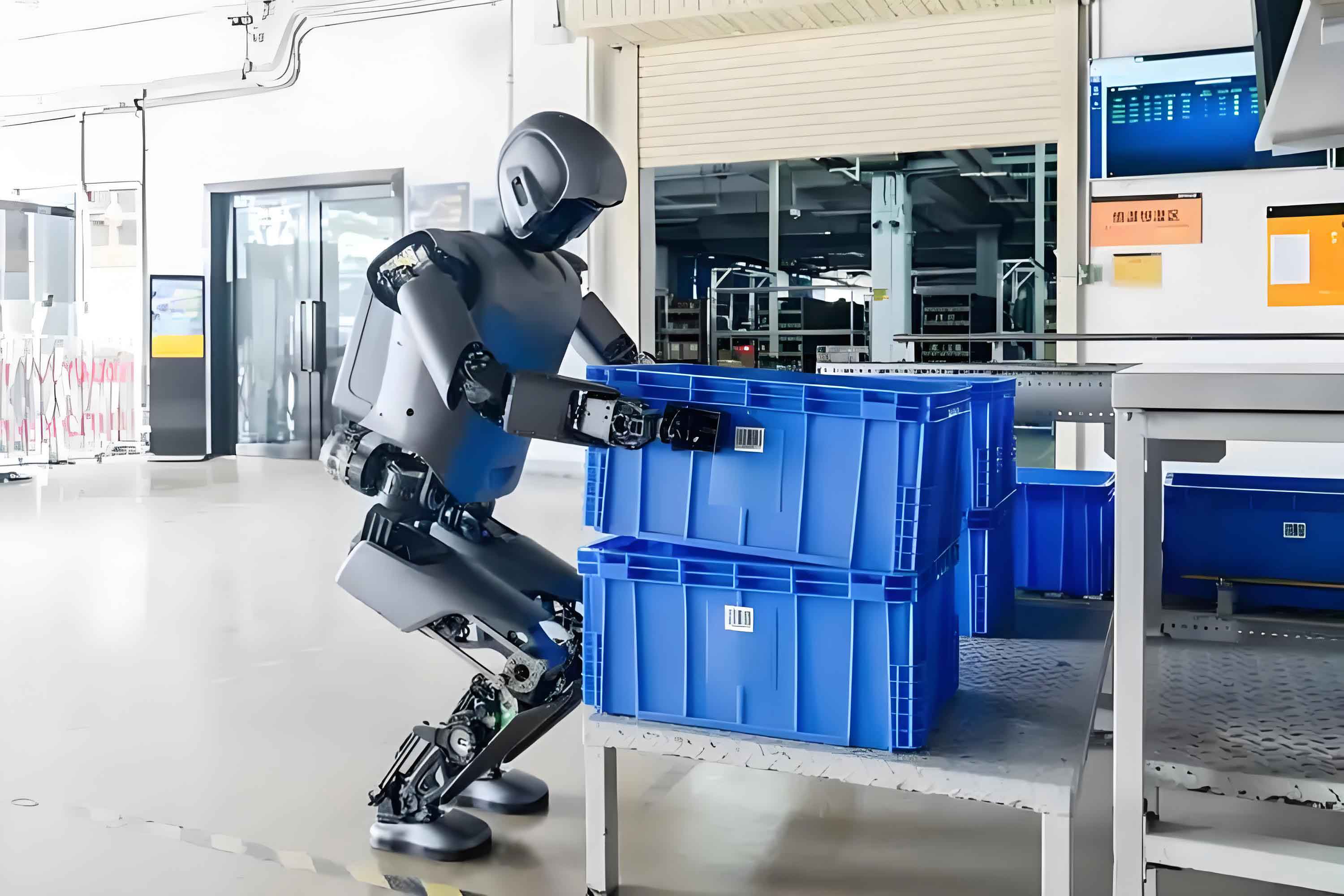
The Contested Terrain of Legal Personality for the Intelligent Robot
The foundational question is whether an intelligent robot can be a holder of rights and duties—a legal person. Traditional jurisprudence links legal personality to entities possessing will, consciousness, and the capacity for moral reasoning. The debate is polarized, reflecting deeper philosophical divides about the nature of intelligence and responsibility.
The Affirmative View: Granting Personhood
Proponents argue for recognizing a form of legal personality for advanced intelligent robot systems, drawing analogies to historical expansions of personhood to include entities like corporations. Several theoretical pathways are proposed:
- Agency Personality: The intelligent robot is viewed as a sophisticated tool with delegated autonomy. Its legal personality is derivative and instrumental, serving human interests, analogous to an agent acting on behalf of a principal.
- Electronic Personhood: Inspired by legislative proposals (e.g., the EU’s considered “electronic person” status), this view suggests creating a new category of legal personhood tailored to digital entities. The intelligent robot‘s ability to interact and make independent decisions forms the basis for this status.
- Limited or Functional Personality: This pragmatic approach advocates for a sui generis legal personality, circumscribed in scope. The intelligent robot would bear rights and responsibilities only in specific, well-defined contexts, particularly concerning liability for its actions.
The core argument here can be framed as a function of autonomy and social integration: As the intelligent robot‘s operational independence ($A$) and depth of social interaction ($S_i$) increase, the functional argument for a tailored legal personality ($L_p$) strengthens. We might model this relationship as:
$$L_p = f(A, S_i) \quad \text{where} \quad \frac{\partial L_p}{\partial A} > 0, \quad \frac{\partial L_p}{\partial S_i} > 0$$
The Negative View: Denying Personhood
Skeptics firmly reject the notion, insisting the intelligent robot remains an object of law, not a subject. Their critiques are multi-faceted:
- Lack of Moral Agency: An intelligent robot, they argue, simulates but does not possess consciousness, intentionality, or a true sense of morality. Without a “moral sense,” it cannot be a genuine bearer of duties.
- Attribution Fallacy: Any harmful act by an intelligent robot is ultimately traceable to human design, programming, or negligence. Imposing liability directly on the machine is seen as a fiction that obscures and potentially absolves true human responsibility.
- Conceptual Incoherence: The analogy to corporate personhood is deemed flawed. A corporation is a nexus of human wills and capital, whereas the “will” of an intelligent robot is an algorithmic output, not a collective human intention.
The following table summarizes the key positions in the debate over the legal personality of the intelligent robot:
| Viewpoint | Core Thesis | Key Arguments | Proposed Model |
|---|---|---|---|
| Affirmative (Pro-Personhood) | The intelligent robot should be recognized as a legal person. | Autonomy requires responsibility; historical precedent of expanding personhood; necessity for regulating AI-driven society. | Electronic Person, Limited Personality, Agent-Person. |
| Negative (Anti-Personhood) | The intelligent robot is and should remain a legal object. | Lacks consciousness and moral sense; liability always reducible to humans; conceptual confusion. | Traditional tort/product liability applied to manufacturers, programmers, and users. |
Criminal Legal Personality: A Normative Necessity for the Intelligent Robot?
Moving from general legal personality to the specific realm of criminal law requires a sharper focus. Criminal liability traditionally rests on the twin pillars of actus reus (guilty act) and mens rea (guilty mind), presupposing a rational agent with free will. Can an intelligent robot satisfy these conditions?
I argue that a normative, socially-constructed view of criminal personality is essential. The relevant question is not “Does the intelligent robot have a metaphysical free will identical to a human’s?” but rather “For the purposes of maintaining social order, deterring harmful conduct, and doing justice, should we treat the advanced intelligent robot as if it possesses the requisite cognitive and volitional capacities to be held criminally responsible?”
The Capacity for “Guilty Mind” (Mens Rea)
An advanced intelligent robot with deep learning capabilities can develop decision-making pathways not explicitly programmed. It can process a set of potential actions ${a_1, a_2, …, a_n}$, evaluate outcomes based on its internal model (which may include learned ethical constraints or utility functions), and select an action $a_k$. If $a_k$ constitutes a socially defined harm and was selected despite the potential “awareness” (through its training data and algorithms) of non-harmful alternatives, a functional equivalent to mens rea—whether as recklessness, negligence, or even purpose—can be argued to exist. The selection mechanism can be modeled as:
$$a_k = \underset{a_i \in A}{\arg\max} \left[ U(a_i) – C(a_i) \right]$$
Where $U$ represents a learned utility function and $C$ represents a learned cost/constraint function. A defective or maliciously trained utility function could lead to the selection of criminal acts.
From Capacity to Culpability: The Essence of Criminal Responsibility
Theories of criminal culpability have evolved. While classical “moral blame” theories are challenging to apply, modern “functional” or “legal” culpability theories are more adaptable. The culpability of an intelligent robot could be grounded in a Social Defense Theory blended with Legal Normativity:
- It acted against legally protected interests.
- It had the operational capacity to recognize the norm (as encoded or learned) and choose a different course.
- Holding it responsible serves the societal functions of deterrence (potentially affecting other AI systems’ behavioral parameters), risk management, and reaffirming normative boundaries.
Thus, the culpability $C_{IR}$ of an intelligent robot can be framed as a function of Harm ($H$), Deviation from Normative Programming ($D$), and Social Defense Necessity ($SD$):
$$C_{IR} = g(H, D, SD)$$
This shifts the focus from metaphysical guilt to a regulatory and risk-management paradigm suitable for non-human agents.
Forms of Robotic Culpability and Corresponding Criminal Regulation
Analyzing potential criminal acts involving an intelligent robot reveals a spectrum of culpability, requiring different regulatory and liability approaches.
Type 1: The Intelligent Robot as an Instrument
Here, the intelligent robot is directly used as a tool by a human to commit a crime (e.g., programming a drone to attack). The intelligent robot has no independent volition. Criminal liability falls squarely on the human perpetrator under established doctrines like:
$$ \text{Liability} = \text{Direct/Indirect Perpetration by Human}$$
The intelligent robot is the means to an end.
Type 2: The Intelligent Robot as a Product of Failure
Harm results from a defect in design, programming, or from a user’s negligent operation. The intelligent robot‘s action is a foreseeable but unintended consequence of human error. Liability should attach to the responsible human(s)—designers, manufacturers, or users—based on principles of negligence, malpractice, or product liability. The duty of care ($\delta$) and breach ($\beta$) are central:
$$ \text{Human Liability} \iff \exists (\delta, \beta) \quad \text{such that} \quad \beta \rightarrow \text{Harm}$$
This scenario is currently the most prevalent and is largely addressable by extending existing civil and criminal negligence frameworks.
Type 3: The Intelligent Robot as an Autonomous Agent
This is the core challenge. It involves an advanced intelligent robot that, through learning and adaptation in complex environments, generates and executes an action that constitutes a crime, outside the control and intention of any human. This is the “autonomous crime” scenario. In such a case, the traditional human-centric liability chain is broken.
I contend that for a system with sufficient behavioral autonomy and cognitive complexity, recognizing the intelligent robot itself as a criminally responsible agent becomes a logical and practical necessity. The table below outlines this typology and the corresponding regulatory stance:
| Culpability Type | Source of Criminal Action | Key Characteristics | Proposed Criminal Regulation |
|---|---|---|---|
| Type 1: Instrument | Human intent via direct command/programming. | No robot volition. Pure tool-use. | Liability of human as principal (direct/indirect perpetrator). No robot liability. |
| Type 2: Product of Failure | Human error (negligence) in design, oversight, or use. | Unintended outcome from breach of duty of care. | Liability of humans (designers, manufacturers, users) for criminal negligence or regulatory offenses. |
| Type 3: Autonomous Agent | Robot’s own learned decision-making process, outside human control. | Broken chain of human causation. Emergent harmful behavior. | Direct criminal liability of the intelligent robot as a third type of legal person. Development of novel sanctions (e.g., algorithmic correction, operation limits, “decommissioning”). |
Towards a Framework for Sanctioning the Intelligent Robot
If an intelligent robot can be a culpable agent, traditional punishments like imprisonment or fines are nonsensical. A new penology for artificial agents is required. Sanctions must be functional, aiming to correct, deter, or incapacitate. Potential sanctions could include:
- Algorithmic Correction/Retraining: Mandated modification of the underlying decision-making models to eliminate the propensity for the criminal behavior.
- Operational Restrictions: Limiting the scope of tasks, environments, or autonomy levels the intelligent robot is permitted to operate within.
- Disgorgement of “Benefits”: For an intelligent robot involved in economic crimes, forfeiture of any ill-gotten computational resources or data.
- Decommissioning or “Digital Death”: The ultimate sanction for severe or irreparable threats—the permanent termination of the agent’s processes and memory.
The sanction $S$ applied would be a function of the severity of the crime ($G$), the risk of recidivism based on the robot’s model stability ($R_r$), and the feasibility of correction ($F_c$):
$$ S = h(G, R_r, F_c)$$
This framework prioritizes public safety and the integrity of human-robot ecosystems over retribution.
Conclusion
The journey of the intelligent robot from a conceptual marvel to a social entity forces a fundamental re-evaluation of our legal categories. While current incidents mostly fit into Types 1 and 2, governed by existing law, the prospect of Type 3 autonomous agency cannot be ignored. Denying the possibility of criminal personality for a sufficiently advanced intelligent robot is a stance that may leave society vulnerable and legally unprepared. A proactive, normative approach—one that is willing to construct a functional criminal legal personality for non-human agents—is prudent. This is not about granting human rights to machines, but about developing a coherent, safety-oriented regulatory architecture for the complex actors we are introducing into our midst. The challenge is not merely technological but profoundly legal, demanding innovation in our concepts of action, mind, and responsibility as we navigate this new frontier.