
In recent years, the growing population of urban women living alone has highlighted significant psychological and safety concerns, including anxiety, loneliness, and security risks. To address these issues, we focus on designing a companion robot tailored specifically for this demographic. This article explores the characteristics and consumption patterns of urban women living alone, employs the Analytic Hierarchy Process (AHP) to determine the weight values of evaluation elements for guiding design, and utilizes the Technique for Order Preference by Similarity to Ideal Solution (TOPSIS) to select the optimal design scheme. By integrating these methods, we aim to enhance the scientific rigor of product design and decision-making, offering a novel approach to developing companion robots that effectively meet the needs of urban women living alone.
The companion robot is envisioned as an intelligent system that provides emotional support, safety monitoring, and daily assistance. With advancements in artificial intelligence, particularly in natural language processing, modern companion robots can engage in meaningful interactions, learn user preferences, and offer personalized companionship. This makes them ideal for alleviating the isolation and stress experienced by solo dwellers. Our study prioritizes a user-centered design process, ensuring that the companion robot not only addresses functional requirements but also resonates emotionally with its users.
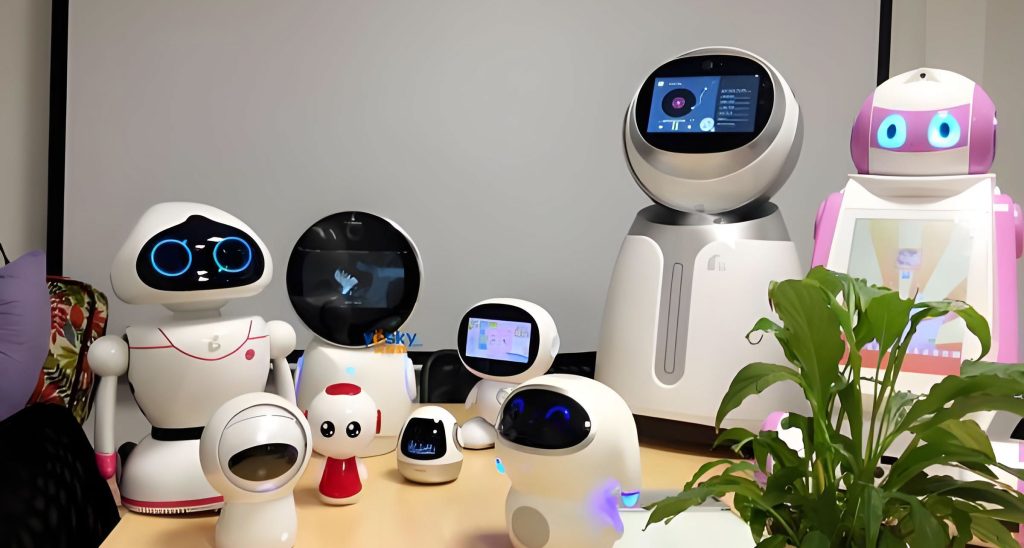
To structure our research, we first analyze the unique attributes of urban women living alone. Typically, these individuals are well-educated, economically independent, and have high expectations for their quality of life. However, the fast-paced urban environment, coupled with work pressures and social isolation, often leads to heightened stress and emotional vulnerability. Their consumption habits reflect a preference for “self-pleasure” and comfort-oriented products, where quality and experience outweigh cost considerations. This insight informs our design criteria, emphasizing premium features, intuitive usability, and aesthetic appeal in the companion robot.
The core of our methodology lies in combining AHP and TOPSIS for systematic evaluation and selection. AHP, developed by Saaty, is a multi-criteria decision-making tool that breaks down complex problems into hierarchical structures, allowing for pairwise comparisons to derive priority weights. TOPSIS, introduced by Hwang and Yoon, ranks alternatives based on their relative closeness to an ideal solution, considering both positive and negative benchmarks. By applying these techniques, we ensure a balanced and objective assessment of design options for the companion robot, minimizing subjective biases.
We begin by establishing a hierarchical model for user needs related to the companion robot. The target layer represents the overall goal: designing an optimal companion robot for urban women living alone. The criterion layer includes five categories: primary functions, secondary functions, human-machine performance, safety, and appearance. Each criterion is further divided into sub-criteria, resulting in 18 specific elements. For instance, primary functions encompass safety protection, life information services, home management, life management, and companionship, while safety includes software privacy, material reliability, low failure rate, and ease of maintenance. This structure is visualized in a hierarchy chart, though we omit the image reference per guidelines.
Using AHP, we construct judgment matrices for each level based on expert evaluations. The pairwise comparisons are scored on a standard scale, and the weights are computed using the eigenvalue method. The consistency of each matrix is verified through the consistency ratio (CR), where a value less than 0.1 indicates acceptable consistency. The formula for calculating the weight vector involves normalizing the matrix and deriving the principal eigenvector. For a judgment matrix A with elements aij, the weight wi for criterion i is given by:
$$w_i = \frac{1}{n} \sum_{j=1}^n \frac{a_{ij}}{\sum_{k=1}^n a_{kj}}$$
where n is the number of criteria. The consistency index (CI) and consistency ratio (CR) are calculated as:
$$CI = \frac{\lambda_{max} – n}{n-1}$$
$$CR = \frac{CI}{RI}$$
Here, λmax is the maximum eigenvalue, and RI is the random consistency index. Tables 1 to 6 summarize the judgment matrices and weight calculations for our companion robot design. All matrices satisfy CR < 0.1, confirming their reliability.
| Indicator | A1 | A2 | A3 | A4 | A5 | Weight (w) | Consistency Check |
|---|---|---|---|---|---|---|---|
| A1 | 1 | 5 | 3 | 1/5 | 5 | 0.2526 | λmax = 5.4102, CI = 0.125, RI = 1.11, CR = 0.0924 |
| A2 | 1/5 | 1 | 1/2 | 1/5 | 2 | 0.0772 | |
| A3 | 1/3 | 2 | 1 | 1/3 | 3 | 0.0136 | |
| A4 | 5 | 5 | 3 | 1 | 5 | 0.2808 | |
| A5 | 1/5 | 1/2 | 1/3 | 1/5 | 1 | 0.0539 |
| Indicator | A11 | A12 | A13 | A14 | A15 | Weight (W1) | Consistency Check |
|---|---|---|---|---|---|---|---|
| A11 | 1 | 1/2 | 1/3 | 1/5 | 1/7 | 0.0540 | λmax = 5.3306, CI = 0.0826, RI = 1.11, CR = 0.0745 |
| A12 | 2 | 1 | 3 | 1 | 0.5 | 0.1962 | |
| A13 | 3 | 1/3 | 1 | 1/2 | 1/3 | 0.1100 | |
| A14 | 5 | 1 | 2 | 1 | 1/5 | 0.1809 | |
| A15 | 7 | 2 | 3 | 5 | 1 | 0.4588 |
| Indicator | A21 | A22 | A23 | Weight (W2) | Consistency Check |
|---|---|---|---|---|---|
| A21 | 1 | 1/5 | 1/2 | 0.1220 | λmax = 3.0037, CI = 0.0018, RI = 0.525, CR = 0.0035 |
| A22 | 5 | 1 | 3 | 0.6483 | |
| A23 | 2 | 1/3 | 1 | 0.2297 |
| Indicator | A31 | A32 | A33 | Weight (W3) | Consistency Check |
|---|---|---|---|---|---|
| A31 | 1 | 1/3 | 1/5 | 0.1095 | λmax = 3.0037, CI = 0.0018, RI = 0.525, CR = 0.0035 |
| A32 | 3 | 1 | 1/2 | 0.3090 | |
| A33 | 5 | 2 | 1 | 0.5816 |
| Indicator | A41 | A42 | A43 | A44 | Weight (W4) | Consistency Check |
|---|---|---|---|---|---|---|
| A41 | 1 | 2 | 3 | 3 | 0.4460 | λmax = 4.2153, CI = 0.0718, RI = 0.882, CR = 0.0814 |
| A42 | 1/2 | 1 | 3 | 1/2 | 0.2015 | |
| A43 | 1/3 | 1/3 | 1 | 1/3 | 0.0950 | |
| A44 | 1/3 | 2 | 3 | 1 | 0.2575 |
| Indicator | A51 | A52 | A53 | Weight (W5) | Consistency Check |
|---|---|---|---|---|---|
| A51 | 1 | 1/2 | 0.2 | 0.1220 | λmax = 3.0037, CI = 0.0018, RI = 0.525, CR = 0.0035 |
| A52 | 2 | 1 | 1/3 | 0.2297 | |
| A53 | 5 | 3 | 1 | 0.6483 |
The total weights for all sub-criteria are computed by multiplying the criterion weights with the sub-criteria weights. This yields the final priority ranking for the companion robot design elements. The top five weighted needs are: high software privacy (0.1252), life companionship (0.1159), ease of maintenance (0.0723), low failure rate (0.0566), and home monitoring (0.0500). These results emphasize that for urban women living alone, emotional support and reliability are paramount in a companion robot, guiding our subsequent design phase.
With the AHP results as a foundation, we proceed to evaluate design alternatives using TOPSIS. We develop three preliminary concepts for the companion robot, each incorporating the prioritized features. Scheme A focuses on robust safety mechanisms, including real-time monitoring, smart alerts, and simulated sounds to deter intruders. It also offers life management tools via a mobile app. Scheme B emphasizes remote controllability and AI-driven conversational abilities, with a color palette designed to evoke calm and joy. Scheme C adopts a pet-like, curvilinear form to enhance亲和力, coupled with environmental monitoring and pre-alarm functions. Each scheme is assessed against the 18 sub-criteria.
To apply TOPSIS, we first gather ratings from experts and target users on a scale of 0 to 10 for each criterion across the three schemes. The average scores form the initial evaluation matrix, denoted as A. For normalization, we convert the matrix to a standardized form B using the vector normalization method, where each element bij is calculated as:
$$b_{ij} = \frac{a_{ij}}{\sqrt{\sum_{i=1}^m a_{ij}^2}}$$
Here, m represents the number of schemes (three in our case). The weighted normalized matrix Z is then obtained by multiplying each normalized value by its corresponding weight from the AHP analysis:
$$z_{ij} = w_j \cdot b_{ij}$$
Table 7 presents the initial evaluation matrix, and Table 8 shows the weighted normalized matrix. All criteria are positive indicators, meaning higher scores are desirable for the companion robot.
| Evaluation Element | Scheme A | Scheme B | Scheme C |
|---|---|---|---|
| A11: Safety Protection | 6.12 | 5.58 | 6.56 |
| A12: Life Information Services | 6.52 | 6.22 | 7.21 |
| A13: Home Management | 6.30 | 6.04 | 7.01 |
| A14: Life Management | 6.40 | 6.11 | 7.10 |
| A15: Life Companionship | 7.13 | 7.45 | 8.10 |
| A21: Audio-Video Call | 6.05 | 5.33 | 6.26 |
| A22: Home Monitoring | 6.68 | 6.43 | 7.43 |
| A23: Music Playback | 6.15 | 5.84 | 6.69 |
| A31: Ease of Operation | 5.22 | 5.11 | 6.01 |
| A32: Smooth Interaction | 5.49 | 5.13 | 6.08 |
| A33: Voice Recognition | 5.74 | 5.26 | 6.16 |
| A41: Software Privacy | 7.25 | 7.54 | 8.14 |
| A42: Material Safety | 7.03 | 6.98 | 7.69 |
| A43: Low Failure Rate | 6.23 | 5.95 | 6.99 |
| A44: Ease of Maintenance | 7.10 | 7.23 | 7.89 |
| A51: Aesthetic Design | 5.62 | 5.18 | 6.11 |
| A52: Color Appropriateness | 6.11 | 5.42 | 6.44 |
| A53: Material Rationality | 6.32 | 6.19 | 7.07 |
| Evaluation Element | Scheme A | Scheme B | Scheme C |
|---|---|---|---|
| A11 | 0.0123 | 0.0116 | 0.0120 |
| A12 | 0.0476 | 0.0471 | 0.0478 |
| A13 | 0.0258 | 0.0257 | 0.0261 |
| A14 | 0.0431 | 0.0427 | 0.0434 |
| A15 | 0.1218 | 0.1320 | 0.1256 |
| A21 | 0.0275 | 0.0251 | 0.0258 |
| A22 | 0.1613 | 0.1609 | 0.1628 |
| A23 | 0.0526 | 0.0518 | 0.0519 |
| A31 | 0.0213 | 0.0216 | 0.0222 |
| A32 | 0.0632 | 0.0612 | 0.0635 |
| A33 | 0.1243 | 0.1181 | 0.1211 |
| A41 | 0.1204 | 0.1298 | 0.1227 |
| A42 | 0.0528 | 0.0543 | 0.0524 |
| A43 | 0.0220 | 0.0218 | 0.0224 |
| A44 | 0.0681 | 0.0719 | 0.0687 |
| A51 | 0.0255 | 0.0244 | 0.0252 |
| A52 | 0.0523 | 0.0481 | 0.0500 |
| A53 | 0.1526 | 0.1549 | 0.1549 |
Next, we determine the positive ideal solution (PIS) and negative ideal solution (NIS) for the companion robot evaluation. The PIS consists of the maximum values for each criterion across schemes, while the NIS comprises the minimum values. Mathematically, for benefit criteria, we have:
$$PIS^+ = \left( \max(z_{1j}), \max(z_{2j}), \ldots, \max(z_{mj}) \right)$$
$$NIS^- = \left( \min(z_{1j}), \min(z_{2j}), \ldots, \min(z_{mj}) \right)$$
From Table 8, we compute:
PIS = (0.0123, 0.0478, 0.0261, 0.0434, 0.1320, 0.0275, 0.1628, 0.0526, 0.0222, 0.0635, 0.1243, 0.1298, 0.0543, 0.0224, 0.0719, 0.0255, 0.0523, 0.1549)
NIS = (0.0116, 0.0471, 0.0257, 0.0427, 0.1218, 0.0251, 0.1609, 0.0518, 0.0213, 0.0612, 0.1181, 0.1204, 0.0524, 0.0218, 0.0681, 0.0244, 0.0481, 0.1526)
The Euclidean distances of each scheme from the PIS and NIS are calculated using the formulas:
$$S_i^+ = \sqrt{\sum_{j=1}^n (z_{ij} – PIS_j^+)^2}$$
$$S_i^- = \sqrt{\sum_{j=1}^n (z_{ij} – NIS_j^-)^2}$$
where n is the number of criteria (18). The results are: SA+ = 0.0147, SB+ = 0.0087, SC+ = 0.0112; SA– = 0.0083, SB– = 0.0147, SC– = 0.0070.
Finally, the relative closeness coefficient Ci for each companion robot scheme is derived as:
$$C_i = \frac{S_i^-}{S_i^+ + S_i^-}$$
The values are: CA = 0.3612, CB = 0.6283, CC = 0.3859. Since a higher Ci indicates greater proximity to the ideal solution, Scheme B ranks first, followed by Scheme C and Scheme A. Thus, Scheme B is selected as the optimal design for the companion robot targeted at urban women living alone.
This outcome underscores the importance of integrating remote control, AI conversation, and emotionally resonant aesthetics in the companion robot. Scheme B’s emphasis on user interaction and calming design aligns with the psychological needs of solo dwellers, while its functional robustness addresses safety concerns. The TOPSIS analysis validates that this scheme best balances all weighted criteria, making it a scientifically sound choice for development.
In conclusion, our study demonstrates the efficacy of combining AHP and TOPSIS in the design optimization of a companion robot for urban women living alone. The AHP method provided a structured framework to prioritize user needs, revealing that software privacy, life companionship, and reliability are critical for this demographic. The TOPSIS method then enabled a comparative assessment of design alternatives, leading to the selection of Scheme B as the most favorable. This hybrid approach enhances objectivity in product design decisions, reducing reliance on subjective judgments. Future work could involve expanding the sample size for evaluations, conducting real-world testing of the companion robot prototype, and exploring adaptive AI features for personalized companionship. By continually refining the design based on user feedback, we can ensure that the companion robot evolves to meet the dynamic needs of urban women living alone, fostering greater well-being and security in their daily lives.
The companion robot represents a promising intersection of technology and empathy, offering not just utility but also emotional connection. As AI advances, future iterations could incorporate more sophisticated learning algorithms to better simulate human-like interactions, making the companion robot an indispensable partner for solo living. We believe that this research contributes to the growing field of assistive robotics, highlighting the importance of user-centered methodologies in creating meaningful innovations. The integration of AHP and TOPSIS serves as a model for other design challenges where multiple criteria must be balanced, ensuring that products like the companion robot are both functional and deeply attuned to human needs.