
The automated transplanting of succulent plants represents a significant advancement in modern horticulture, aiming to address the challenges of low efficiency, high labor intensity, and elevated costs associated with manual operations. Central to any automated transplanting system is the end effector, the device responsible for the precise and gentle extraction of seedlings from their source trays and their subsequent placement into target cells. The performance of this end effector directly dictates the overall success rate, seedling integrity, and operational efficiency of the transplanting robot. This paper presents the design, analysis, and experimental validation of a novel, dynamically adjustable-spacing end effector specifically engineered for the automated transplanting of succulent plants from high-density to lower-density trays.
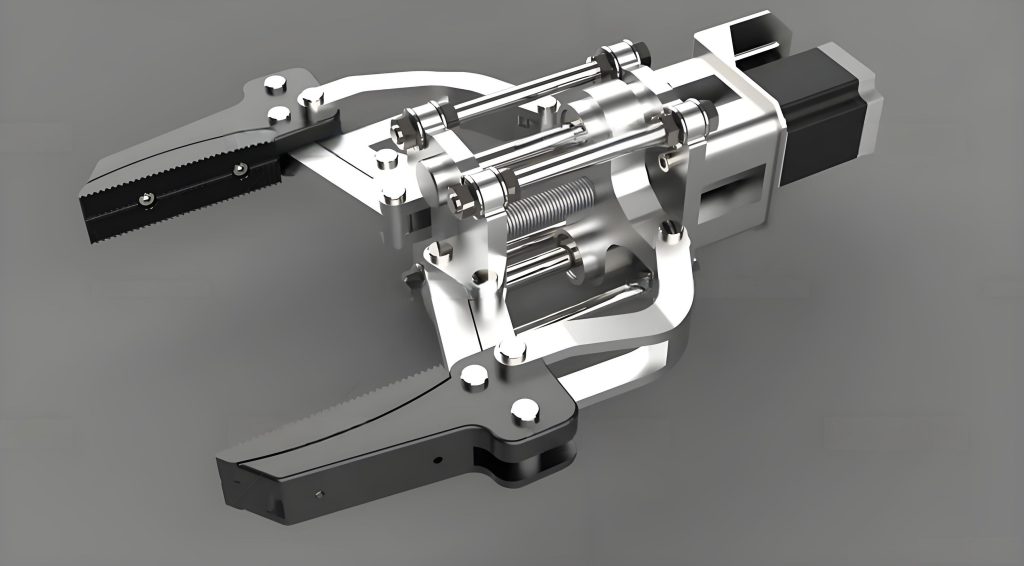
Succulent plants are typically cultivated in standardized plug trays, with common configurations being 128, 72, and 32 cells per tray. A fundamental requirement for an automated system is the ability to handle this transition between different tray densities. A fixed-spacing end effector would be insufficient, necessitating a design that can actively adjust the distance between its gripping units, or “fingers,” to match both the source and target tray configurations during a single pick-and-place cycle. The primary challenges involve achieving precise spacing adjustment, ensuring reliable seedling extraction without damage to the delicate root ball (plug), and maintaining high-speed operation.
The core innovation of our work lies in the development of an end effector whose finger spacing is dynamically controlled via a linkage mechanism actuated by a pneumatic cylinder. Furthermore, to enhance the precision and responsiveness of this spacing adjustment, a fuzzy PID control strategy is implemented. The mechanical design, pneumatic system analysis, control methodology, and comprehensive performance testing under various operational parameters form the basis of this research.
System Architecture and Working Principle
The designed end effector is a modular assembly mounted onto the manipulator of a transplanting robot. Its primary function is to execute the pick-and-place operation for succulent plugs. The key specifications of the target plug trays, which directly informed the dimensional parameters of the end effector, are summarized below.
| Tray Specification | Cell Pitch (mm) | Top Diameter, $D_1$ (mm) | Bottom Diameter, $D_2$ (mm) | Cell Height, $H_1$ (mm) | Cell Wall Angle, $\beta$ (°) |
|---|---|---|---|---|---|
| 128-cell | 37 | 30 | 16 | 36 | 13.82 |
| 72-cell | 51 | 40 | 20 | 45 | 14.78 |
| 32-cell | 65 | 60 | 30 | 50 | 16.70 |
The end effector consists of several integrated subsystems: the adjustable finger assembly, the insertion-type gripping mechanism for each finger, the pneumatic actuation system for both spacing adjustment and gripping, and the electronic control unit. The fingers are arranged in a row, with one fixed reference finger and the others connected to a sliding block via a symmetric linkage mechanism. A double-acting pneumatic cylinder, termed the “adjustment cylinder,” drives this sliding block. As the adjustment cylinder extends or retracts, the linkage transforms this linear motion into a synchronized change in the distance between the movable fingers, allowing the end effector to adapt its spacing from that of a 128-cell tray to a 32-cell tray, for example.
Each finger unit is an independent insertion-type gripper. It comprises a small pneumatic cylinder (“gripper cylinder”) connected to a set of four slender, inclined needles. A fixed plate acts as a stripper plate. The working cycle of the end effector is as follows:
1. Positioning & Spacing Adjustment (Pick): The robot arm positions the end effector over the source (e.g., 128-cell) tray. The fuzzy PID controller activates the adjustment cylinder to set the finger spacing precisely to the source tray’s cell pitch.
2. Insertion & Extraction: The gripper cylinders on all fingers extend simultaneously, driving the needles into the succulent plugs at a defined angle. The entire end effector then lifts vertically, extracting the plugs from the source tray.
3. Transfer & Spacing Adjustment (Place): The robot arm moves the end effector, now carrying the plugs, over the target (e.g., 32-cell) tray. The adjustment cylinder is activated again to reconfigure the finger spacing to the larger pitch of the target tray.
4. Placement & Release: The end effector descends, inserting the plugs into the target cells. The gripper cylinders retract. As the needles withdraw, the fixed stripper plate prevents the plug from being lifted again, ensuring clean release. The end effector then returns to the start position for the next cycle.
Detailed Design and Analysis of Key Components
Insertion-Type Gripper (Finger) Design
The choice of an insertion-type gripper over a clamping-type is critical for succulent plants. Insertion minimizes stress on the plant’s stem and leaves, instead using the cohesion of the growing medium (plug) for holding. The key design parameters for the needle assembly are derived from the tray geometry to ensure reliable extraction without damaging the tray cell walls.
Needle Inclination Angle ($\phi$): To prevent the needles from scraping or piercing the tapered wall of the tray cell during insertion, the needle inclination angle must be greater than the cell wall angle $\beta$.
$$ \phi \ge \arctan\left(\frac{D_1 – D_2}{2H_1}\right) = \beta $$
Using the largest cell angle from our table (16.70° for the 32-cell tray), we select a design angle of $\phi = 17^\circ$ to provide a safe margin for all tray types.
Needle Length ($H$): The needle must penetrate sufficiently to secure the plug but must not breach the bottom of the tray cell. The maximum insertion depth is limited by the cell height.
$$ \frac{H}{\cos \phi} \leq H_1 $$
The smallest $H_1$ is 36 mm (128-cell tray). Therefore, the needle length along its axis is chosen as $H = 36$ mm. The effective vertical penetration is $H \cdot \cos(17^\circ) \approx 34.4$ mm, which is safe for the 36 mm cell.
Needle Arrangement and Diameter: A four-needle configuration in a symmetric pattern provides optimal grip on the cylindrical plug. Needle diameter is a trade-off between rigidity and plug damage. Thin needles (<2 mm) may bend, while thick needles (>4 mm) cause excessive medium disruption. A diameter of 3 mm was selected, offering sufficient stiffness and minimal damage based on preliminary tests. The spread of the needles at the top ($D_3$) and bottom ($D_4$) is designed to be less than the top and bottom cell diameters, respectively, of the smallest cell (128-cell: $D_1=30$ mm, $D_2=16$ mm). We selected $D_3 = 28$ mm and $D_4 = 15$ mm.
Pneumatic System Design and Simulation
The end effector utilizes a pneumatic system for its simplicity, reliability, and cost-effectiveness. Two distinct actions require pneumatic control: the adjustment of finger spacing (powered by the adjustment cylinder) and the insertion/retraction of the needles (powered by multiple gripper cylinders). A central air compressor supplies pressure, and solenoid valves controlled by the system’s PLC regulate the cylinder actions according to the programmed cycle.
The required operating pressure ($p$) was determined through force analysis and preliminary tests to be 0.2 MPa. The air consumption, which dictates compressor sizing, depends on the cylinder dimensions and operational frequency. The average air flow $ \bar{Q} $ for a cylinder can be estimated as:
$$ \bar{Q} = \frac{\pi D^2}{2} z s \frac{p + 0.1}{0.1} \times 10^{-6} $$
where $D$ is the cylinder bore diameter (mm), $z$ is the cycling frequency (cycles/min), $s$ is the stroke (mm), and $p$ is the gauge pressure (MPa). For a target maximum transplanting speed of 70 plants/min and the chosen cylinder parameters, the total calculated flow was approximately 20.36 L/min. A compressor with a rated capacity of 30 L/min was therefore selected to ensure adequate supply.
| Cylinder Function | Stroke, $s$ (mm) | Bore Area, $A_1$ (cm²) | Rod-side Area, $A_2$ (cm²) |
|---|---|---|---|
| Gripper Cylinder | 30 | 0.31 | 0.24 |
| Adjustment Cylinder | 180 | 2.24 | 1.18 |
A simulation of the pneumatic circuit was conducted using FluidSIM software to verify the system’s dynamic response and timing sequence. The simulation confirmed that the gripper and adjustment cylinders could actuate sequentially within the required timeframes for a smooth pick-and-place cycle, validating the feasibility of the designed pneumatic system.
Precision Spacing Control Using Fuzzy PID
The accuracy of the finger spacing adjustment is paramount for successful plug pickup and placement. A conventional PID controller might struggle with the non-linearities inherent in the pneumatic system and mechanical linkage, such as air compressibility, friction, and backlash. To achieve superior positioning performance—characterized by fast response, minimal overshoot, and robustness—a fuzzy PID control strategy was developed for the adjustment cylinder.
The control system uses a high-precision optical linear encoder (grating scale) attached to the end effector’s slide mechanism to provide real-time feedback on the actual finger position. The control schematic is as follows: The desired spacing (setpoint) is compared to the actual measured spacing to generate a position error ($E$) and its rate of change ($E_c$). These two variables serve as inputs to the fuzzy inference system.
The fuzzy controller is designed with two inputs ($E$ and $E_c$) and three outputs: the correction values for the PID gains ($\Delta K_p$, $\Delta K_i$, $\Delta K_d$). Seven linguistic variables are defined for each fuzzy set: {Negative Big (NB), Negative Medium (NM), Negative Small (NS), Zero (Z), Positive Small (PS), Positive Medium (PM), Positive Big (PB)}. Triangular membership functions are used for both input and output variables. The core of the controller is a rule base, formulated from expert knowledge and system dynamics, that maps the error conditions to appropriate adjustments in the PID parameters. A subset of the fuzzy rule base for $\Delta K_p$ is shown below.
| $E$ \ $E_c$ | NB | NM | NS | Z | PS | PM | PB |
|---|---|---|---|---|---|---|---|
| NB | PB | PB | PM | PM | PS | PS | Z |
| NM | PB | PB | PM | PM | PS | Z | Z |
| NS | PM | PM | PM | PS | Z | NS | NM |
| Z | PM | PS | PS | Z | NS | NM | NM |
| PS | PS | PS | Z | NS | NS | NM | NM |
| PM | Z | Z | NS | NM | NM | NM | NB |
| PB | Z | NS | NS | NM | NM | NB | NB |
The final PID parameters are continuously updated online:
$$ K_p = K_{p0} + \Delta K_p, \quad K_i = K_{i0} + \Delta K_i, \quad K_d = K_{d0} + \Delta K_d $$
where $K_{p0}, K_{i0}, K_{d0}$ are the initial PID gains. The control output $u(t)$ is:
$$ u(t) = u_0 + K_p E(t) + K_i \int E(t) dt + K_d \frac{dE(t)}{dt} $$
A comparative simulation in MATLAB/Simulink was conducted between the fuzzy PID controller and a conventional fixed-gain PID controller for a step input simulating a spacing change from a 128-cell to a 32-cell pitch at 60 plants/min. The performance metrics are compared below.
| Control Method | Rise Time (s) | Overshoot (%) | Settling Time (s) |
|---|---|---|---|
| Conventional PID | 0.48 | 2.35 | 0.15 |
| Fuzzy PID | 0.41 | 0.51 | 0.06 |
The results clearly demonstrate the superiority of the fuzzy PID controller, offering a 14.6% faster rise time, a 78% reduction in overshoot, and a 60% faster settling time. This enhanced dynamic performance ensures the end effector can adjust spacing rapidly and accurately between each pick-and-place operation, which is crucial for high-speed, reliable transplanting.
Experimental Platform and Performance Optimization
To evaluate the practical performance of the developed end effector, a dedicated succulent plant automatic transplanting test platform was constructed. This platform integrated the end effector, a 3-axis Cartesian robot for positioning, the pneumatic system, and the fuzzy PID-based control system. Mature succulent seedlings in 128-cell trays were used as the source material, with empty 32-cell trays as the target.
The primary performance indicators for the end effector are:
1. Pick-and-Place Success Rate ($Y_1$): The percentage of seedlings successfully extracted from the source tray and deposited into the target tray without failure.
$$ Y_1 = \frac{W_1 – W_2}{W_1} \times 100\% $$
where $W_1$ is the total number of attempts, and $W_2$ is the number of failed attempts (e.g., dropped, misaligned).
2. Plug Integrity Rate ($Y_2$): The percentage of the original plug medium that remains attached to the seedling root after transplanting, indicating minimal damage.
$$ Y_2 = \frac{m_1 – m_2}{m_1} \times 100\% $$
where $m_1$ is the total mass of plugs before transplanting, and $m_2$ is the mass of medium dislodged during the process.
Three critical operational parameters were identified for optimization: Working Air Pressure ($x_1$), Substrate Moisture Content ($x_2$), and Pick-and-Place Frequency ($x_3$). A three-factor, three-level $L_9(3^4)$ orthogonal experimental design was employed to systematically study their effects on $Y_1$ and $Y_2$.
| Level | Pick-and-Place Frequency, $x_1$ (plants/min) | Working Air Pressure, $x_2$ (MPa) | Substrate Moisture Content, $x_3$ (%) |
|---|---|---|---|
| 1 | 50 | 0.2 | 50 |
| 2 | 60 | 0.3 | 60 |
| 3 | 70 | 0.4 | 70 |
The results of the orthogonal experiments were analyzed using range analysis to determine the primary and secondary order of influencing factors and to identify the optimal level combination within the tested range.
| Exp. No. | $x_1$ | $x_2$ | $x_3$ | Success Rate $Y_1$ (%) | Integrity Rate $Y_2$ (%) |
|---|---|---|---|---|---|
| 1 | 1 | 1 | 1 | 90.76 | 90.48 |
| 2 | 1 | 2 | 2 | 89.48 | 93.52 |
| 3 | 1 | 3 | 3 | 87.61 | 90.38 |
| 4 | 2 | 1 | 2 | 93.66 | 93.57 |
| 5 | 2 | 2 | 3 | 91.21 | 92.18 |
| 6 | 2 | 3 | 1 | 91.42 | 90.49 |
| 7 | 3 | 1 | 3 | 89.39 | 88.13 |
| 8 | 3 | 2 | 1 | 89.15 | 92.23 |
| 9 | 3 | 3 | 2 | 87.63 | 87.84 |
Range Analysis for $Y_1$:
$K_1$ (Avg. for level 1) = 89.28, $K_2$ = 92.10, $K_3$ = 88.72. Range $R$ = 3.38.
The optimal combination from the analysis was $A_2B_1C_2$ (Frequency: 60, Pressure: 0.2 MPa, Moisture: 60%). The order of influence was Pressure $(x_2)$ > Frequency $(x_1)$ > Moisture $(x_3)$.
Range Analysis for $Y_2$:
$K_1$ = 91.27, $K_2$ = 89.95, $K_3$ = 88.89. Range $R$ = 2.38.
The optimal combination was also $A_2B_1C_2$. The order of influence was Frequency $(x_1)$ > Pressure $(x_2)$ > Moisture $(x_3)$.
To refine the optimal parameters further, response surface methodology (RSM) was applied to the experimental data. The interaction effects between factors were modeled, and a numerical optimization was performed using Design-Expert software, targeting maximum values for both $Y_1$ and $Y_2$. The software-predicted global optimum parameters were: Pick-and-Place Frequency = 61 plants/min, Working Air Pressure = 0.22 MPa, Substrate Moisture Content = 58%.
Verification Test: A final confirmatory experiment was conducted using this optimized parameter set. Three full trays of 128-cell succulent seedlings were transplanted. The average performance results were:
| Performance Metric | Optimized End Effector | Typical Manual Operation* | Improvement |
|---|---|---|---|
| Operating Speed (plants/min) | 61 | ~37 | +23.72 plants/min |
| Pick-and-Place Success Rate, $Y_1$ | 94.41% | ~88.37% | +6.04 percentage points |
| Plug Integrity Rate, $Y_2$ | 93.66% | ~86.23% | +7.43 percentage points |
*Estimated baseline for manual operation.
The verification test results conclusively demonstrate that the developed end effector, operating under fuzzy PID control and optimized parameters, significantly outperforms manual methods in both speed and quality, achieving high success and integrity rates.
Conclusion
This research successfully developed and validated a high-performance, dynamically adjustable-spacing end effector for the automated transplanting of succulent plants. The mechanical design, based on a linkage mechanism, allows the end effector to seamlessly adapt to different tray densities (e.g., from 128-cell to 32-cell) within a single operation cycle. The insertion-type finger design, with carefully calculated needle geometry, ensures gentle and reliable handling of the delicate succulent plugs.
The implementation of a fuzzy PID control strategy for the spacing adjustment mechanism proved to be a critical enhancement. It provided superior dynamic performance—faster response, minimal overshoot, and precise positioning—compared to a conventional PID controller, which is essential for high-speed, accurate operation.
Through systematic orthogonal testing and response surface optimization, the key operational parameters were fine-tuned. The end effector achieved an optimal performance of 94.41% pick-and-place success rate and 93.66% plug integrity rate at a speed of 61 plants/min, under conditions of 0.22 MPa working pressure and 58% substrate moisture content. This represents a substantial improvement in efficiency and consistency over manual transplanting methods.
The designed end effector demonstrates strong potential for integration into commercial succulent plant transplanting robots. Future work may focus on further increasing the operation speed, incorporating machine vision for seedling quality inspection and precise positioning, and expanding the design to handle a wider variety of plant species and tray sizes. The core principles of adjustable spacing and intelligent control presented here are broadly applicable to the field of agricultural robotics and automated transplanting systems.