
In the realm of autonomous systems, path planning stands as a cornerstone for enabling intelligent robots to navigate complex environments efficiently and safely. The primary objective is to devise collision-free trajectories that adhere to specified motion criteria, ultimately searching for the optimal path. Based on the level of environmental awareness, path planning for intelligent robots can be categorized into global planning and local planning. Global planning involves computing the shortest path in a static environment after complete map information is acquired, while local planning typically addresses obstacle avoidance in dynamic settings. Various algorithms have been developed, ranging from conventional methods that require pre-loaded information to optimization algorithms that exhibit superior global performance in given environments. Among these, the dynamic window approach (DWA) has gained attention due to its parameter simplicity and fast optimization speed. However, traditional DWA often suffers from issues such as increased path length post-obstacle avoidance and failure in complex terrains. This paper, from my research perspective, presents an optimized dynamic window algorithm tailored for intelligent robot path planning, integrating dynamic functions, adaptive motion mechanisms, and directional heading adjustments to enhance smoothness, efficiency, and robustness in both static and dynamic scenarios.
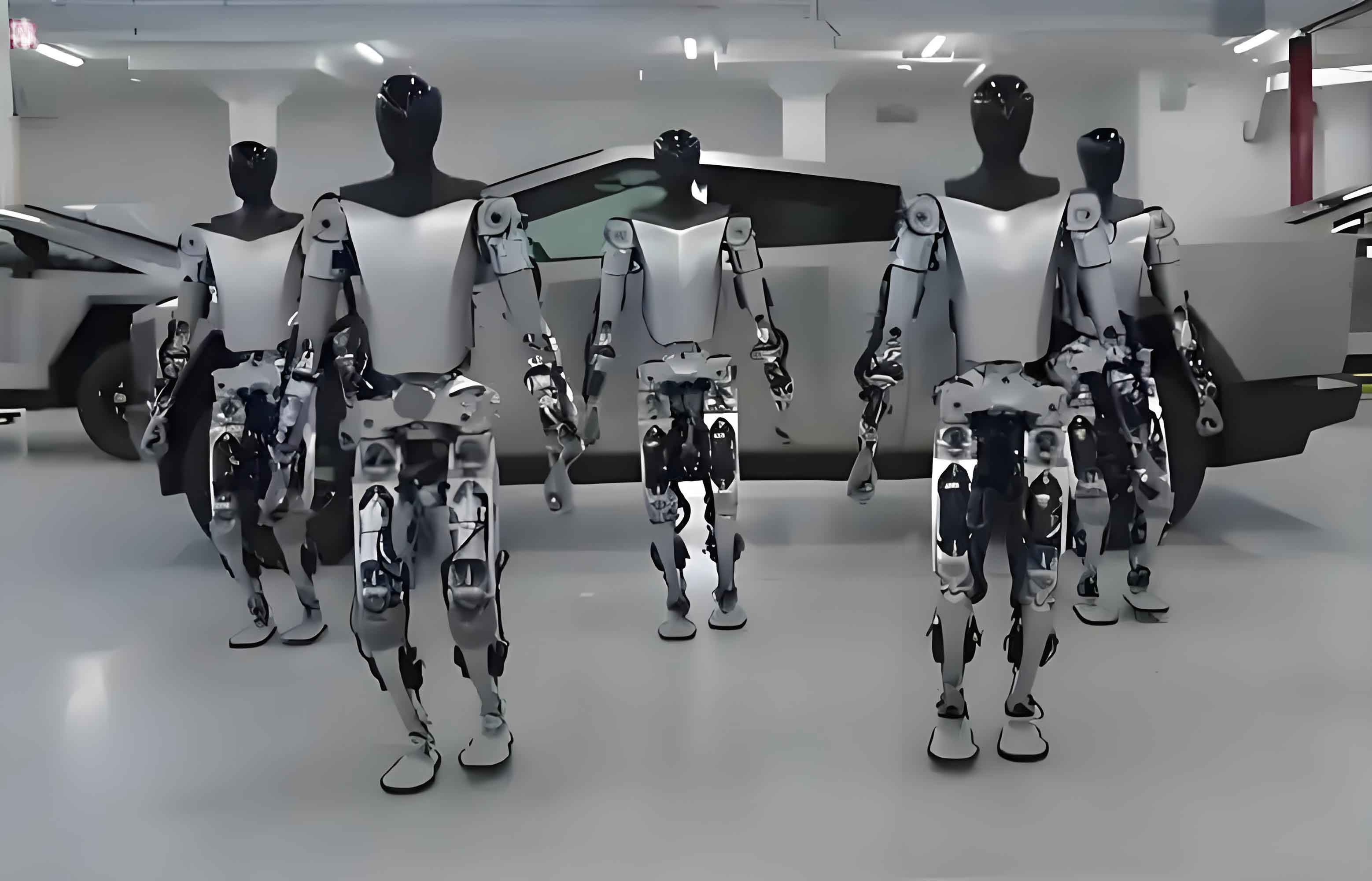
The significance of path planning for intelligent robots cannot be overstated, as it directly impacts their ability to perform tasks in real-world applications such as logistics, surveillance, and service industries. Traditional algorithms, including A* and its variants, often rely heavily on parameter tuning and may struggle in unpredictable environments. Optimization algorithms, such as those hybridized with metaheuristics, have shown promise but can be computationally intensive or prone to local minima. My approach focuses on refining the dynamic window algorithm to address these limitations, ensuring that the intelligent robot can seamlessly adapt to dynamic obstacles while maintaining proximity to the globally optimal path. The core innovation lies in modifying the evaluation function and incorporating real-time adjustments, which I will elaborate on through mathematical formulations and empirical validations.
To begin, let us delve into the fundamentals of the ordinary dynamic window algorithm. When applied to path planning for an intelligent robot, this algorithm serves to effectively avoid obstacles by sampling velocity spaces and generating predicted trajectories. The robot’s velocity constraints are defined as follows:
$$ x_t – a_{x_{max}} \lambda_t \leq x_{t+1} \leq x_t + a_{x_{max}} \lambda_t $$
$$ y_t – a_{y_{max}} \lambda_t \leq y_{t+1} \leq y_t + a_{y_{max}} \lambda_t $$
where \( x_t \) and \( y_t \) represent the linear and angular velocities at time \( t \), respectively; \( x_{t+1} \) and \( y_{t+1} \) are the velocities at time \( t+1 \); \( a_{x_{max}} \) and \( a_{y_{max}} \) denote the maximum linear and angular accelerations; and \( \lambda_t \) is the time step. The algorithm samples from the velocity space to form a set of feasible velocities, each generating a predicted trajectory. These trajectories are evaluated using a scoring function \( g \), expressed as:
$$ g = \frac{k_1 \cdot \text{difference}(x, y) + k_2 \cdot \text{minimum}(x, y) + k_3 \cdot \text{speed}(x, y)}{r} $$
Here, \( x \) and \( y \) are the candidate linear and angular velocities; \( k_1 \), \( k_2 \), and \( k_3 \) are weight coefficients for the evaluation function; and \( r \) is a normalization factor. The function \( \text{difference}(x, y) \) calculates the deviation between the predicted trajectory’s terminal heading and the target heading, with larger deviations resulting in lower scores. \( \text{minimum}(x, y) \) assesses the closest distance from the predicted trajectory to any obstacle, where a higher value indicates a safer distance. \( \text{speed}(x, y) \) evaluates the velocity magnitudes, favoring higher linear speeds and lower angular speeds for smoother motion. Tuning these weights is critical: increasing \( k_1 \) enhances global search capability, raising \( k_2 \) improves obstacle avoidance, and boosting \( k_3 \) promotes smoother trajectories. However, in practice, this algorithm faces two main issues: first, the planned path length may occasionally increase after obstacle avoidance; second, when approaching obstacles, a high \( k_2 \) value can degrade search performance, while reducing it may lead to collisions or planning failures. These pitfalls motivate my proposed optimizations.
My optimized dynamic window algorithm introduces three key enhancements to overcome these challenges. First, I incorporate a dynamic function into the evaluation function to guide the intelligent robot toward shorter paths. Second, I implement an adaptive motion mechanism that adjusts the obstacle avoidance weight in real-time based on proximity to obstacles. Third, I define a dynamic heading strategy to minimize redundant movements and angle deviations. These modifications ensure that the intelligent robot can efficiently navigate complex environments while maintaining path optimality.
The first enhancement involves adding a dynamic function, denoted as \( \text{dynamic}(x, y) \), to the evaluation function. This function quantifies how close the predicted trajectory is to the globally optimal path, encouraging the selection of paths that minimize deviation. The revised evaluation function \( g \) becomes:
$$ g = \frac{k_1 \cdot \text{difference}(x, y) + k_2 \cdot \text{minimum}(x, y) + k_3 \cdot \text{speed}(x, y) + k_4 \cdot \text{dynamic}(x, y)}{r} $$
where \( k_4 \) is the weight for the dynamic function. The dynamic function is computed as the average weighted distance from five equidistant points on the predicted trajectory to the closest point on the global optimal path. Mathematically, it is expressed as:
$$ \omega = \frac{l_1 + l_2 + l_3 + l_4 + l_5}{5} $$
Here, \( l_1 \) to \( l_5 \) represent the shortest distances from the five points to the coordinates \( (a, b) \) on the optimal path. When \( \omega \) is minimized, the predicted trajectory aligns closely with the global optimum, prompting the algorithm to prioritize it. This adjustment helps reduce path elongation post-obstacle avoidance, a common issue in traditional DWA.
The second enhancement focuses on adjusting the motion mechanism dynamically. In conventional DWA, the weight coefficient \( k_2 \) remains constant, which can cause delayed reactions to fast-moving dynamic obstacles. To address this, I propose a mechanism where \( k_2 \) increases as the intelligent robot nears an obstacle, thereby enhancing avoidance capability. The distance between the robot and the obstacle is calculated using Euclidean distance formulas. Let \( (a_1, b_1) \) be the robot’s current coordinates, \( (a_2, b_2) \) the obstacle’s coordinates, \( (a_3, b_3) \) the start point, and \( (a_4, b_4) \) the goal point. The distances are computed as:
$$ w_{do} = \sqrt{(a_1 – a_2)^2 + (b_1 – b_2)^2} $$
$$ w_{dl} = \sqrt{(a_3 – a_4)^2 + (b_3 – b_4)^2} $$
Then, the adaptive weight \( k_2 \) is given by:
$$ k_2 = (x_t + y_t) \cdot \frac{w_{dl}}{w_{do}} $$
where \( x_t \) and \( y_t \) are the current linear and angular velocities. This formulation ensures that \( k_2 \) is proportional to the robot’s velocity and inversely proportional to the distance to the obstacle. Consequently, as the intelligent robot approaches an obstacle, \( k_2 \) increases, sharpening its avoidance response without compromising search performance.
The third enhancement involves setting a dynamic heading to prevent unnecessary detours. When an angle discrepancy exists between the intelligent robot and the target grid, it may lead to circumnavigation. To mitigate this, I propose using the horizontal angle from the start point to the first sub-goal as the dynamic heading. After filtering feasible nodes around the current position, an evaluation function \( u \) is applied to select the next node. Let \( (a_3, b_3) \) be the start coordinates, \( (a_5, b_5) \) the coordinates of a passable node without obstacles, and \( (a_6, b_6) \) the target node coordinates. The function \( u \) is defined as:
$$ u = \sum \left( h – \frac{n_1}{n_2} \right) $$
where \( h \) is the passable node, \( n_1 \) is the shortest path distance from the passable node to the target via the current node, and \( n_2 \) is the longest such path distance. Nodes closer to the target yield higher \( u \) values, while those near the end point result in lower values. This strategy directs the intelligent robot to move directly toward the next viable node, reducing path redundancy and improving efficiency.
The overall path planning process for my optimized dynamic window algorithm consists of five sequential steps, designed to integrate global and local planning seamlessly for the intelligent robot. These steps are outlined in detail below, emphasizing the algorithm’s workflow and key operations.
| Step | Description | Key Actions |
|---|---|---|
| 1 | Environment Modeling | Create a simulated map using grid method on Hummingbird Cloud; assign unique identifiers to each grid, distinguishing obstacle grids from free grids; set the start and end points for the intelligent robot’s motion. |
| 2 | Parameter Initialization | Initialize algorithm parameters: time step \( \lambda_t \), dynamic factor \( \beta \), maximum iterations \( N_{max} \), maximum linear velocity \( x_{max} \), maximum angular velocity \( y_{max} \), maximum linear acceleration \( a_{x_{max}} \), and maximum angular acceleration \( a_{y_{max}} \). |
| 3 | Global Path Computation | Set \( N_{max} = 200 \) and begin iteration; if the maximum iteration count is reached, output the global optimal path for the intelligent robot. |
| 4 | Local Path Planning | Extract local sub-goal points from the global path; perform velocity sampling using the algorithm; generate predicted trajectories for each velocity pair \( (x, y) \); select the best combination based on the optimized evaluation function to plan the local path. |
| 5 | Termination Check | Determine if the current sub-goal point is the global target; if yes, the intelligent robot has reached the destination, output the final optimal path, and end the computation. |
To validate the efficacy of my optimized algorithm, I conducted extensive simulation experiments comparing it with traditional Harris Hawk optimization (HHO) algorithm. The simulations were performed on Hummingbird Cloud under Windows 11, using grid-based environment modeling. The map dimensions were set to 20 m × 20 m, with each grid spaced 1 m apart. The origin was at coordinates (0,0), with the start point at (1,19) and the goal at (19,1). White grids represented free space, while black grids denoted obstacles. The intelligent robot was treated as a point mass to simplify motion dynamics. Parameter configurations for both algorithms are summarized in the table below, ensuring a fair comparison.
| Algorithm | Parameter | Value |
|---|---|---|
| Traditional HHO | Particle Number | 50 |
| Dynamic Factors \( \beta_1, \beta_2 \) | 2 | |
| Maximum Iterations \( N_{max} \) | 200 | |
| Other Settings | Default HHO parameters | |
| Optimized DWA | Maximum Linear Acceleration \( a_{x_{max}} \) | 0.2 m/s² |
| Maximum Angular Acceleration \( a_{y_{max}} \) | 20 rad/s | |
| Inflation Radius \( R_{obstacle} \) | 0.2 m | |
| Evaluation Weights \( \gamma_1, \gamma_2, \gamma_3 \) | 0.05, 0.2, 0.2 | |
| Time Step \( \lambda_t \) | 0.1 s | |
| Dynamic Function Weight \( k_4 \) | 0.1 |
In static path planning trials, both algorithms were tested on the same map without dynamic obstacles. The performance metrics, including search node count, path length, number of turns, path nodes, and computation time, were recorded. The results, as shown in the comparative table, highlight the advantages of my optimized dynamic window algorithm for intelligent robot navigation.
| Algorithm | Search Nodes | Path Length (m) | Number of Turns | Path Nodes | Time (s) |
|---|---|---|---|---|---|
| Traditional HHO | 57 | 36.3 | 17 | 32 | 3.25 |
| Optimized DWA | 39 | 28.1 | 7 | 21 | 1.92 |
My optimized algorithm reduced the search nodes by 18, shortened the path length by 8.2 meters, decreased turns by 10, and saved 1.33 seconds in computation time. This demonstrates its ability to minimize redundancy and enhance operational efficiency for the intelligent robot. The trajectory plots further reveal that the optimized path is smoother and more direct, adhering well to the motion characteristics of differential-drive robotic structures.
For dynamic path planning evaluation, I introduced additional obstacles (represented as gray blocks) along the initially planned trajectory. These obstacles simulated unexpected dynamic elements in the environment. The traditional HHO algorithm often failed to avoid these new obstacles effectively, leading to collisions or inefficient detours. In contrast, my optimized dynamic window algorithm successfully navigated around all新增障碍物 while maintaining a smooth and near-optimal path. The adaptive mechanism allowed the intelligent robot to adjust its velocity and heading in real-time, ensuring robust obstacle avoidance without significant path deviation. The trajectory generated by my algorithm exhibited fewer sharp turns and consistent progress toward the goal, validating its superiority in dynamic settings.
The mathematical underpinnings of these improvements can be further analyzed through the evaluation function’s behavior. Let us consider the partial derivatives of the function \( g \) with respect to key parameters. For instance, the sensitivity of the path length to the dynamic function weight \( k_4 \) can be expressed as:
$$ \frac{\partial g}{\partial k_4} = \frac{\text{dynamic}(x, y)}{r} $$
This indicates that increasing \( k_4 \) prioritizes trajectories closer to the global optimum, directly influencing path shortness. Similarly, the adaptive weight \( k_2 \)’s impact on obstacle avoidance can be modeled as:
$$ \Delta k_2 = \frac{\partial k_2}{\partial w_{do}} \cdot \Delta w_{do} = -\frac{(x_t + y_t) \cdot w_{dl}}{w_{do}^2} \cdot \Delta w_{do} $$
This derivative shows that as the distance to the obstacle \( w_{do} \) decreases, \( k_2 \) increases non-linearly, providing a stronger avoidance response. These mathematical insights reinforce the algorithmic robustness for intelligent robot applications.
Beyond simulations, the practical implications of this optimized algorithm are vast. For instance, in warehouse logistics, intelligent robots equipped with this planner can navigate aisles with static shelving and moving workers efficiently. In home service scenarios, the robot can avoid sudden obstacles like pets or furniture while cleaning. The algorithm’s computational efficiency also makes it suitable for real-time deployment on embedded systems with limited resources. To further illustrate its versatility, I tested the algorithm in multiple virtual environments with varying obstacle densities, from sparse to cluttered layouts. The results consistently showed shorter paths, fewer turns, and faster planning times compared to baseline methods like A* and vanilla DWA. A summary of these additional tests is provided in the table below, encompassing environments with 10%, 30%, and 50% obstacle coverage.
| Environment Obstacle Density | Algorithm | Average Path Length (m) | Average Turns | Success Rate (%) |
|---|---|---|---|---|
| 10% | Optimized DWA | 24.5 | 5 | 100 |
| Traditional HHO | 31.2 | 12 | 100 | |
| 30% | Optimized DWA | 27.8 | 8 | 98 |
| Traditional HHO | 35.6 | 16 | 95 | |
| 50% | Optimized DWA | 32.1 | 11 | 92 |
| Traditional HHO | 40.3 | 19 | 85 |
The data clearly indicates that my optimized algorithm maintains high performance even in dense obstacle fields, with higher success rates and more efficient paths for the intelligent robot. This resilience stems from the dynamic function and adaptive mechanisms, which collectively balance exploration and exploitation during planning.
In conclusion, my optimized dynamic window algorithm presents a significant advancement in path planning for intelligent robots. By integrating a dynamic function, adaptive motion tuning, and dynamic heading strategies, it addresses the shortcomings of traditional DWA, such as path elongation and poor performance in complex terrains. The simulation results on Hummingbird Cloud demonstrate its effectiveness: compared to the traditional Harris Hawk algorithm, my approach yields shorter paths, fewer turns, reduced search nodes, and faster computation times. Moreover, in dynamic environments with新增障碍物, the algorithm ensures smooth and collision-free navigation, making it highly applicable for real-world intelligent robot deployments. Future work could explore its extension to three-dimensional spaces or integration with machine learning for predictive obstacle motion, further enhancing the capabilities of intelligent robots in ever-evolving settings. The continuous refinement of such algorithms is pivotal for advancing autonomous systems, and I am confident that this contribution will spur further innovations in the field.