
In the field of robotics, the ability to perform dexterous manipulation tasks is crucial for service robots to integrate seamlessly into human environments. Among these tasks, grasping objects with a dexterous robotic hand remains a significant challenge due to the high-dimensional nature of the object-hand system, which involves complex geometries, hand dynamics, and contact mechanics. Traditional methods for grasp planning often rely on analytical approaches that require precise 3D models of objects, limiting their applicability in unstructured environments. Alternatively, data-driven approaches leveraging deep learning have shown promise, but they face issues such as multi-valued mappings and the need for extensive datasets. In this article, I present a novel optimization-based method for grasp planning in dexterous robotic hands, utilizing a deep neural network to evaluate grasp quality and iteratively refine grasping gestures. This approach transforms grasp planning into an optimization problem, maximizing a learned grasp quality function through gradient ascent, thereby addressing the limitations of regression-based networks.
The core of my method lies in a Grasping Quality Evaluation Network (GQEN), a convolutional neural network designed to predict force closure metrics—a widely used measure of grasp stability—from monocular depth images of objects and the configuration of the dexterous robotic hand. By training this network on a custom dataset built in simulation, I enable real-time assessment of grasp quality for unknown objects. Subsequently, I employ backpropagation and gradient ascent to optimize the hand posture, starting from an initial gesture provided by an external planner. This iterative process ensures that the dexterous robotic hand achieves locally optimal grasps, enhancing both stability and success rates. Through extensive simulations and physical experiments, I demonstrate that my approach significantly improves grasp quality, with success rates exceeding 80% for unknown objects and a 90% recovery rate for initially failed grasps after optimization.
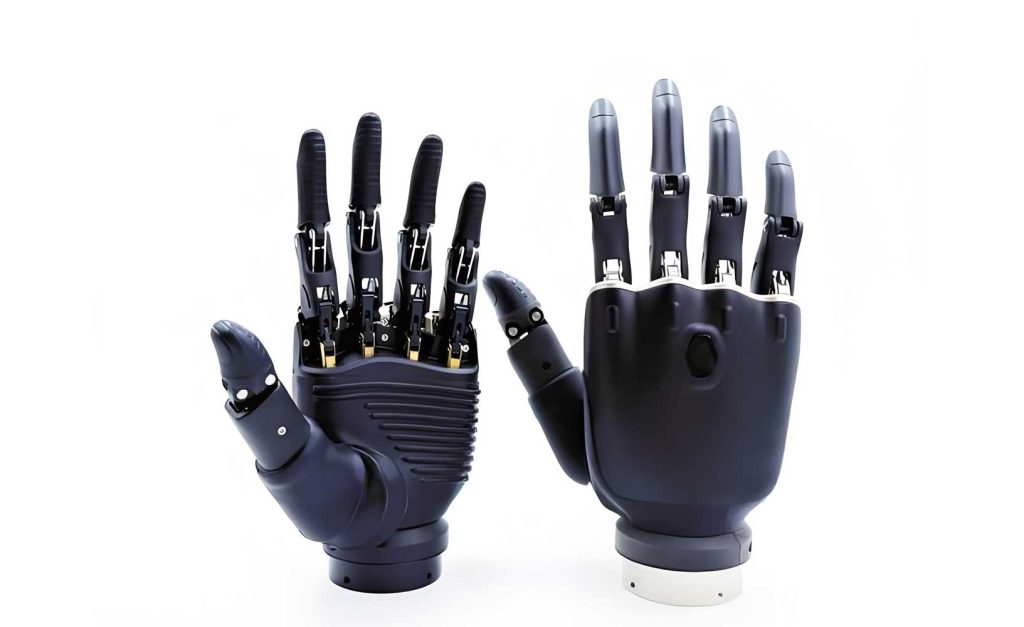
The motivation for this work stems from the increasing demand for service robots capable of handling diverse objects in everyday settings. Unlike simple two-finger grippers, a dexterous robotic hand offers greater flexibility, allowing for complex manipulations akin to human hands. However, planning stable grasps with a dexterous robotic hand involves high-dimensional spaces, including hand pose and finger joint angles, making exhaustive search impractical. Previous learning-based methods often use regression networks to map object features directly to hand configurations, but this leads to averaged solutions due to the multi-valued nature of the mapping. By contrast, my formulation treats grasp planning as an optimization problem, where the grasp quality function is learned by a deep neural network, and gradients are used to refine gestures. This not only avoids the pitfalls of regression but also leverages the efficiency of gradient-based methods for real-time applications.
To provide context, I review existing approaches in grasp planning. Analytical methods, such as those based on force closure metrics, compute grasp stability using object and hand models, but they require full 3D information and are computationally intensive. For instance, the force closure metric $\epsilon$ quantifies the radius of the largest sphere inscribed within the grasp wrench space, defined as:
$$ \epsilon = \max\{r \mid B(r) \subset \mathcal{W}\} $$
where $B(r)$ is a ball of radius $r$ centered at the origin in wrench space, and $\mathcal{W}$ is the convex hull of contact wrenches. This metric ranges from 0 to 1, with higher values indicating more stable grasps. However, calculating $\epsilon$ for a dexterous robotic hand involves solving linear approximations of friction cones and convex hull operations, which is infeasible without a complete model. On the other hand, data-driven methods use deep learning to predict grasps from sensory data, such as images. For example, some works employ convolutional neural networks to detect grasp rectangles for parallel grippers, but extending this to multi-fingered hands is challenging due to the increased dimensionality. My approach bridges this gap by learning a surrogate function for $\epsilon$ from visual and kinematic inputs, enabling optimization without explicit models.
The foundation of my method is the Grasping Quality Evaluation Network (GQEN), which I designed to estimate force closure metrics for a dexterous robotic hand. The network takes three inputs: a global depth image of the object, a local depth image cropped around the grasp region, and the hand configuration comprising palm pose and finger joint angles. The architecture consists of convolutional layers for feature extraction from images, fully connected layers for processing hand data, and a final regressor outputting a scalar $\hat{\epsilon}$ representing predicted grasp quality. Mathematically, let $z_g$ be the global depth image, $z_l$ the local depth image, $p$ the palm pose (encoded as a 5D vector), and $g$ the gesture (joint angles). The network function $f$ is parameterized by weights $W$ and outputs:
$$ \hat{\epsilon} = f(z_g, z_l, p, g; W) $$
I train GQEN using a dataset constructed in simulation with GraspIt! and Gazebo, containing 3089 samples across 65 object models. Each sample includes depth images, hand configurations, and force closure metrics computed analytically. The loss function is mean squared error between predicted and actual $\epsilon$ values, and I use stochastic gradient descent with early stopping to prevent overfitting. After training, GQEN achieves an average error of less than 6% on test data, demonstrating its accuracy in evaluating grasps for a dexterous robotic hand.
With GQEN as a differentiable proxy for grasp quality, I formulate grasp planning as an optimization problem. Given an initial hand configuration from an external planner—such as a grasp detection network—I fix the object depth images and palm pose, and iteratively update the finger gesture $g$ to maximize $\hat{\epsilon}$. The optimization problem is:
$$ \max_{g} \hat{\epsilon}(g) \quad \text{subject to} \quad g_{\min} \leq g \leq g_{\max} $$
where $g_{\min}$ and $g_{\max}$ are joint limits of the dexterous robotic hand. Using backpropagation, I compute the gradient $\nabla_g \hat{\epsilon}$ and apply gradient ascent with backtracking line search to ensure constraints are satisfied. The update rule at iteration $t$ is:
$$ g_{t+1} = g_t + \alpha_t \nabla_g \hat{\epsilon} $$
where $\alpha_t$ is the step size determined by line search. This process continues until convergence or a maximum number of iterations, yielding a locally optimal gesture that enhances grasp stability. The advantage of this approach is that it directly optimizes for quality, avoiding the averaging effect of regression networks and enabling fine adjustments tailored to the object’s shape.
To validate my method, I conducted three experiments in simulation and on a physical robot. First, I compared GQEN’s predictions with GraspIt!’s analytical computations for stable grasps. As shown in Table 1, the average error is low, confirming that GQEN reliably estimates force closure metrics for a dexterous robotic hand.
| Object | GraspIt! $\epsilon$ | GQEN $\hat{\epsilon}$ | Error (%) |
|---|---|---|---|
| Funnel | 0.613 | 0.579 | 5.5 |
| Heart Box | 0.546 | 0.520 | 4.8 |
| Cone | 0.836 | 0.810 | 3.1 |
| Doll | 0.302 | 0.345 | 14.2 |
| Average | 0.574 | 0.564 | 5.9 |
Second, in simulation, I applied the optimization algorithm to random initial gestures for objects like a heart-shaped box, cube, and cone. For each object, I selected 20 stable and 80 unstable grasps from the dataset. After optimization, the average force closure metric improved significantly, as summarized in Table 2. For unstable initial grasps, the success rate (achieving $\epsilon > 0$) increased to 80%, while for stable grasps, $\epsilon$ was enhanced by an average of 20.58%.
| Object | Initial $\epsilon$ (Stable) | Optimized $\epsilon$ (Stable) | Improvement (%) | Success Rate (Unstable) |
|---|---|---|---|---|
| Heart Box | 0.495 | 0.628 | 26.9 | 85% |
| Cube | 0.504 | 0.623 | 23.6 | 82% |
| Cone | 0.388 | 0.512 | 31.9 | 78% |
| Overall | 0.462 | 0.588 | 27.5 | 81.7% |
These results highlight the effectiveness of gradient-based optimization in refining gestures for a dexterous robotic hand. Notably, the algorithm can recover from collisions or poor initial contacts by adjusting finger positions, as illustrated in Figure 1, where unstable grasps are transformed into stable ones.
Third, I implemented the method on a physical platform comprising a UR5 robotic arm and a Shadow Hand Lite dexterous robotic hand, with a Kinect camera providing depth images. I used an existing grasp detection network to obtain initial palm poses and gestures, then optimized the gestures with GQEN. For eight household objects, each tested 10 times with varied poses, the grasp success rates before and after optimization are compared in Table 3. The average success rate rose from 87.5% to 93.75%, with particular improvements for challenging items like a transparent funnel and a heart-shaped box. Moreover, GQEN’s predicted quality values increased in most cases, indicating better grasp stability. For example, on a toner bottle, 9 out of 10 experiments showed higher $\hat{\epsilon}$ after optimization, correlating with more robust grasps.
| Object | Success Rate (Before) | Success Rate (After) | Average $\hat{\epsilon}$ (Before) | Average $\hat{\epsilon}$ (After) |
|---|---|---|---|---|
| Heart Box 1 | 90% | 90% | 0.71 | 0.78 |
| Toner Bottle | 100% | 100% | 0.65 | 0.82 |
| Rectangular Box | 100% | 100% | 0.68 | 0.75 |
| Tea Canister | 90% | 100% | 0.59 | 0.70 |
| Badminton Tube | 100% | 100% | 0.72 | 0.79 |
| Transparent Funnel | 60% | 80% | 0.41 | 0.63 |
| Drink Bottle | 100% | 100% | 0.69 | 0.74 |
| Heart Box 2 | 60% | 80% | 0.38 | 0.58 |
| Overall | 87.5% | 93.75% | 0.60 | 0.72 |
The optimization process is efficient, taking less than 2 seconds from image acquisition to grasp execution on an RTX 2080 Ti GPU, making it suitable for real-time applications. The key to this speed is the lightweight design of GQEN, with only 7.5k parameters and 54.4 million floating-point operations per forward pass. By leveraging gradient ascent, the dexterous robotic hand can adapt to object variations without retraining the network, showcasing the generalization capability of deep learning models.
From a theoretical perspective, my method addresses the multi-valued mapping issue in regression-based grasp planning. When mapping object features to hand configurations, multiple valid gestures may exist for the same object region, causing regression networks to output averages that are suboptimal. By instead learning a quality function and optimizing over the gesture space, I ensure that the dexterous robotic hand finds specific, high-quality solutions. This is formalized by treating the grasp quality $\hat{\epsilon}$ as a function of gesture $g$, with other inputs fixed. The gradient $\nabla_g \hat{\epsilon}$ points toward directions of increasing quality, guided by the neural network’s learned representations of object geometry and contact mechanics.
To elaborate on the mathematical formulation, consider the force closure metric $\epsilon$ for a dexterous robotic hand with $n$ contact points. Each contact force $f_i$ lies within a friction cone approximated by $m$ edges, leading to wrenches $w_{i,j}$. The grasp wrench space $\mathcal{W}$ is the convex hull of these wrenches, and $\epsilon$ is the radius of the maximum inscribed ball. Computing this analytically requires solving:
$$ \epsilon = \min_{\|w\|=1} \max_{\alpha \geq 0} \{ t \mid w = \sum_{i,j} \alpha_{i,j} w_{i,j}, \sum_{i} \|f_{i,\perp}\| \leq 1 \} $$
where $f_{i,\perp}$ is the normal force component. GQEN learns to approximate this complex function using depth images and hand kinematics. During optimization, the gradient is computed via chain rule through the network layers, enabling efficient updates. For instance, if $g$ is a vector of joint angles, the update involves:
$$ \Delta g = \eta \cdot \frac{\partial \hat{\epsilon}}{\partial g} $$
where $\eta$ is the learning rate adjusted by backtracking line search to respect joint limits. This iterative refinement is crucial for handling uncertainties in object pose or shape, as the dexterous robotic hand can adjust its fingers to maintain stable contacts.
In terms of dataset construction, I emphasize the importance of diverse samples for training GQEN. My simulation-based approach generates grasps across 65 object models, including both stable and unstable examples, with labels derived from GraspIt!’s force closure computations. The dataset balances positive and negative samples to avoid bias, ensuring that GQEN can distinguish between high-quality and poor grasps for a dexterous robotic hand. Additionally, I augment the data with random rotations and translations of objects to improve robustness. The use of depth images rather than RGB allows the network to focus on geometric features, which are more relevant for grasp stability. This dataset is publicly available to facilitate further research in learning-based grasp planning.
Comparing my method to existing deep learning approaches, I note several advantages. For parallel grippers, grasp detection networks often output rectangular grasp proposals, but extending this to multi-fingered hands requires predicting additional parameters like finger joint angles. Some works use regression networks for this purpose, but as discussed, they suffer from averaging effects. Others employ sampling-based planners to generate candidate grasps, then use a network to rank them, but this can be computationally expensive. My optimization-based method directly refines an initial gesture, combining the efficiency of gradient methods with the accuracy of learned quality assessment. This is particularly beneficial for a dexterous robotic hand, where the search space is high-dimensional, and real-time performance is essential.
Looking ahead, there are several directions for future work. First, integrating tactile feedback from sensors on the dexterous robotic hand could enhance grasp quality estimation, especially for deformable or slippery objects. Second, extending the optimization to include palm pose adjustments could lead to global optima, rather than local refinements. Third, exploring different network architectures, such as graph neural networks for modeling hand-object interactions, might improve prediction accuracy. Finally, applying this method to dynamic grasping scenarios, where objects are moving, would increase its practicality for real-world robotics.
In conclusion, I have presented a deep learning-based optimization method for grasp planning in dexterous robotic hands. By training a Grasping Quality Evaluation Network to predict force closure metrics from visual and kinematic data, and using gradient ascent to iteratively improve hand gestures, I achieve stable grasps for unknown objects with high success rates. The method addresses the limitations of regression networks and analytical approaches, offering a scalable solution for service robots. Through simulations and physical experiments, I demonstrate that a dexterous robotic hand can adapt its grasping strategy based on real-time sensory input, paving the way for more autonomous and versatile robotic manipulation. As robotics continues to advance, such data-driven optimization techniques will play a key role in enabling dexterous robotic hands to perform complex tasks in human environments, ultimately enhancing the synergy between humans and machines.