
In today’s rapidly evolving global landscape, the intelligent robot industry stands as a pivotal measure of national technological prowess and manufacturing capabilities. As a key driver of industrial upgrading and new productive forces, it has become a strategic focus in international competition. From my perspective, the domestic intelligent robot sector has made notable strides in research and development, yet it faces persistent challenges in translating technological breakthroughs into practical applications. Issues such as fragmented regulatory standards, high compliance costs, and uneven market competition hinder the cultivation of autonomous brands and international expansion. Through this analysis, I aim to demonstrate how optimizing market regulation can serve as a critical enabler, fostering a cohesive framework that supports domestic intelligent robot brands in achieving global competitiveness. By integrating standardized oversight, fair competition mechanisms, and international collaboration, we can unlock the full potential of this industry, ensuring its contribution to economic growth and innovation.
The intelligent robot industry is at the forefront of the global shift toward intelligent and automated manufacturing. These advanced systems enhance production efficiency, perform high-risk tasks, and execute precision operations, making them indispensable in sectors like automotive, electronics, and logistics. In my view, demographic changes, such as aging populations and labor shortages, have amplified the demand for intelligent robots, creating expansive market opportunities. Concurrently, breakthroughs in technologies like 5G, artificial intelligence, and big data have significantly improved the perception, decision-making, and interaction capabilities of intelligent robots, propelling the industry into a high-growth phase. However, this rapid advancement necessitates more precise and forward-looking market regulation to address emerging complexities. For instance, the lack of unified standards across regions can stifle innovation and slow down adoption. As I explore this topic, I will emphasize how regulatory optimization can bridge these gaps, facilitating a smoother transition from lab to market for intelligent robot technologies.
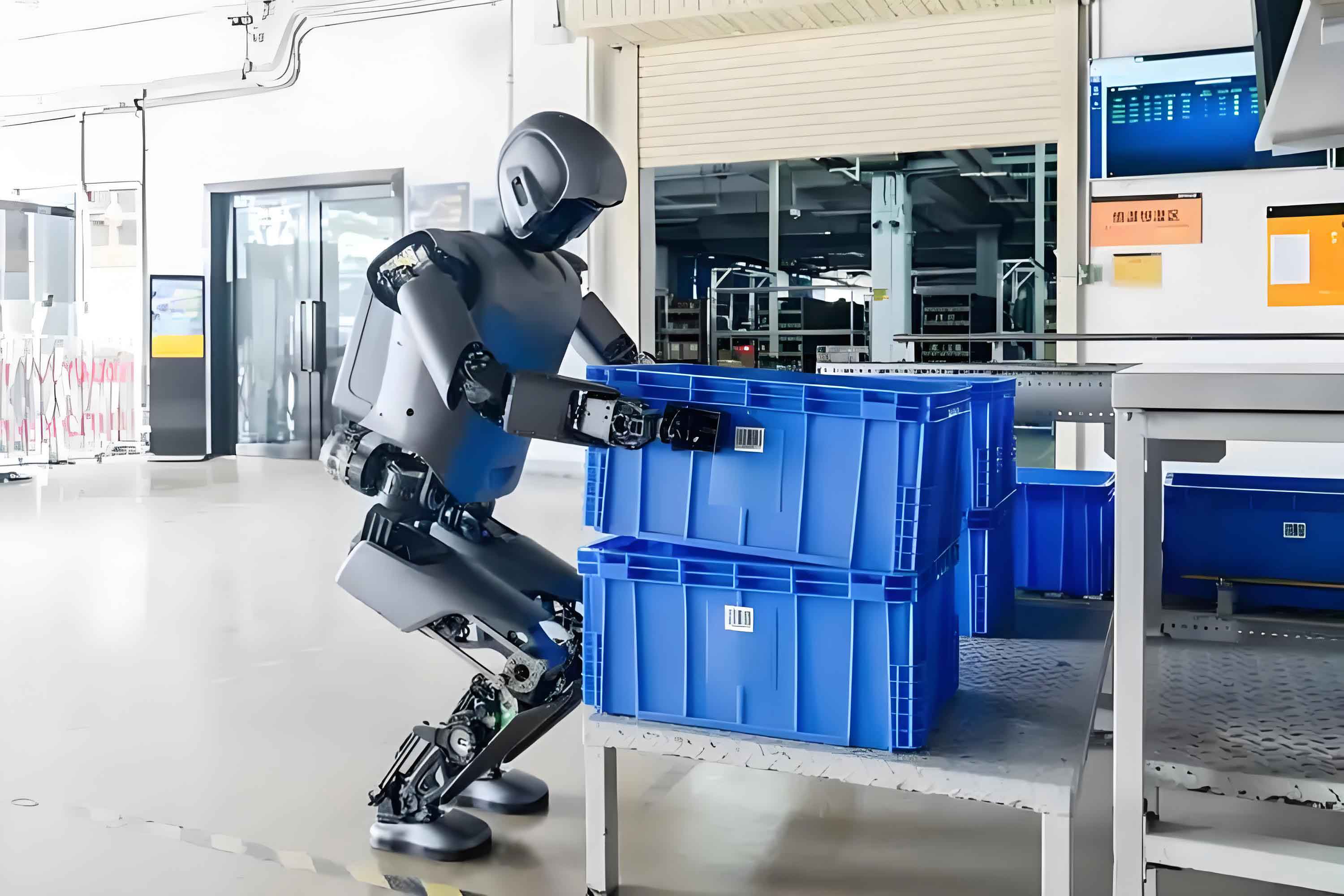
Domestically, the intelligent robot industry has built a solid foundation, with clusters in regions like the Yangtze River Delta, Pearl River Delta, and Beijing-Tianjin-Hebei area. These hubs focus on R&D, manufacturing, and application integration, supporting the growth of enterprises with independent innovation capabilities. In industrial robotics, for example, some companies have developed high-precision reducers and servo motors, reducing reliance on imports and gaining market share in automotive assembly and electronics. Similarly, service and consumer-oriented intelligent robots are expanding into education, healthcare, and agriculture. Despite these achievements, I observe that regional disparities in regulatory standards and insufficient collaborative mechanisms impede overall industry efficiency. Market regulation, in this context, must act as both a规范者 (regulator) and赋能者 (enabler), establishing clear technical standards, safeguarding fair competition, and facilitating international alignment. By doing so, it can accelerate the maturation of domestic intelligent robot brands and their global reach.
Currently, the cultivation of autonomous brands for intelligent robots is in its nascent stages. A framework encompassing technology R&D, quality control, and brand promotion has been初步形成 (initially established), with some enterprises leveraging core technological innovations to build brand influence. Government-led initiatives, such as quality certification systems and brand cultivation projects, provide essential support through testing,宣传 (promotion), and funding. However, I identify several bottlenecks: inadequate监管协同 (regulatory coordination) during technology transfer often results in products that fail to meet market stability requirements, while inconsistent quality standards across pilot and mass production phases lead to performance fluctuations that damage brand reputation. Internationally, export channels have diversified, with intelligent robots making inroads into Belt and Road countries through infrastructure and民生 (livelihood) projects. Platforms facilitating industry applications have spurred collaborations, adding new scenarios in education, tourism, and agriculture. Yet, compliance challenges remain daunting; divergent international standards and technical trade barriers increase costs and delay market entry, limiting the global footprint of domestic intelligent robot brands.
To quantify the impact of regulatory measures, I propose a formula that models the relationship between market regulation optimization and brand growth for intelligent robots. Let \( B(t) \) represent the brand value at time \( t \), which can be expressed as:
$$ B(t) = B_0 + \int_0^t \left( \alpha R(s) + \beta S(s) – \gamma C(s) \right) ds $$
Here, \( B_0 \) is the initial brand value, \( R(s) \) denotes regulatory standardization efforts, \( S(s) \) signifies support services like certification, and \( C(s) \) represents compliance costs. The coefficients \( \alpha \), \( \beta \), and \( \gamma \) reflect the effectiveness of each factor. For instance, higher \( \alpha \) values indicate that robust regulatory frameworks directly enhance brand equity for intelligent robots by ensuring quality and reliability. In practice, this translates to a need for continuous adjustment of regulatory parameters to maximize \( B(t) \) over time.
When examining the current pathways for brand cultivation and international expansion, I note mixed outcomes. On one hand, enhanced regulatory standards and quality certifications have enabled some intelligent robot products to penetrate高端 (high-end) markets in Europe and America, breaking long-standing monopolies and boosting market discourse. Domestically, efforts to curb homogenous competition and规范 (standardize) market order have allowed brands to enter premium segments like automotive welding and semiconductor inspection. Internationally, compliance services have reduced the time and cost for certifications like CE and UL, fostering overseas revenue growth. However, deeper issues persist: the disconnection between technology R&D and quality oversight means that research often prioritizes theoretical gains over practical stability, while international regulatory misalignment forces重复检测 (repeated testing), increasing barriers for intelligent robot exports. The table below summarizes these challenges and their implications:
| Challenge Area | Specific Issue | Impact on Intelligent Robot Industry |
|---|---|---|
| Technology Transfer | Lack of integrated监管标准 (regulatory standards) in R&D and production | Reduced product reliability and brand trust |
| International Expansion | Divergent international standards and lack of监管互认 (regulatory mutual recognition) | Increased compliance costs and delayed market entry |
| Market Competition | Homogeneous low-end competition and intellectual property infringements | Erosion of brand profitability and innovation incentives |
Addressing these problems requires a multifaceted approach to market regulation optimization. For autonomous brand cultivation, I advocate for a standards-led technical transformation system. This involves establishing comprehensive监管标准 (regulatory standards) that cover the entire lifecycle of intelligent robot development—from R&D and pilot testing to mass production. By setting clear benchmarks for core components, algorithm performance, and safety protocols, regulators can guide universities and enterprises toward market-oriented innovations. Additionally, specialized pilot platforms with advanced detection tools can enforce stability and compatibility checks, issuing authoritative reports that bridge the gap between research and commercialization. To reinforce this, quality traceability systems should mandate data recording throughout production, enabling prompt issue resolution and enhancing the credibility of intelligent robot brands.
Another critical aspect is strengthening fair competition监管 (regulation). In my assessment, combating counterfeit products and malicious pricing is essential to protect the interests of autonomous intelligent robot brands. Regulatory bodies should impose stringent penalties for IP violations and promote a保护名录 (protection catalog) for technologically advanced brands, giving them priority in government procurement and projects. This not only safeguards brand equity but also stimulates healthy market dynamics. Furthermore, I recommend the creation of a quality certification service platform that offers一站式 (one-stop) solutions for domestic and international certifications, such as 3C, CE, and ISO. By simplifying processes and reducing costs, this platform can elevate brand recognition through official ratings and promotions, addressing the current trust deficit in intelligent robot markets.
For international expansion, optimizing market regulation entails proactive standard alignment and risk management. I emphasize the importance of converging domestic standards with international ones, like ISO and IEC, to minimize redundant testing for intelligent robots. Engaging in global standard-setting forums allows domestic expertise to influence norms, reducing adaptation hurdles. Simultaneously, establishing监管互认 (regulatory mutual recognition) agreements with key trade partners can facilitate cross-border acceptance of certifications, shortening the time-to-market. To mitigate risks, a dedicated预警机制 (early warning mechanism) should monitor overseas regulatory changes and technical barriers, providing timely alerts and support. For example, a risk assessment formula could be applied:
$$ R_{risk} = \frac{\sum (W_i \cdot D_i)}{\tau} $$
Where \( R_{risk} \) represents the overall risk level, \( W_i \) denotes the weight of various risk factors (e.g., standard divergence, trade barriers), \( D_i \) indicates the degree of impact, and \( \tau \) is a time-based adjustment factor. This helps enterprises anticipate and respond to challenges in intelligent robot exports. Complementing this, international compliance service centers can offer training, consulting, and financial subsidies, easing the burden on small and medium-sized enterprises as they navigate complex global landscapes.
In conclusion, I believe that optimizing market regulation is indispensable for nurturing domestic intelligent robot brands and expanding their international presence. By implementing cohesive strategies—such as standard integration, competition enforcement, and global collaboration—we can overcome existing bottlenecks in technology transfer and market access. The intelligent robot industry, supported by dynamic regulatory frameworks, will not only achieve higher autonomy and competitiveness but also drive broader economic advancements. As this sector evolves, continuous refinement of监管政策 (regulatory policies) will be crucial to adapt to technological iterations and shifting global demands, ultimately solidifying the role of intelligent robots in sustainable development and industrial transformation.
To illustrate the proposed regulatory strategies and their expected outcomes, the following table provides a comparative overview of key measures and their potential impacts on the intelligent robot industry:
| Regulatory Strategy | Key Actions | Expected Impact on Intelligent Robots |
|---|---|---|
| Standards-Led Technical Transformation | Develop full-cycle standards; establish pilot testing platforms; implement quality traceability | Improved product stability and faster technology adoption |
| Fair Competition Enforcement | Combat IP infringement; regulate pricing; create brand protection catalogs | Enhanced brand equity and market share for intelligent robots |
| International Standard Alignment | Participate in global standard-setting; negotiate mutual recognition agreements | Reduced compliance costs and accelerated international expansion |
| Risk预警 and Compliance Services | Set up early warning systems; offer training and subsidies for certifications | Lowered export risks and increased resilience in global markets |
Through these concerted efforts, the intelligent robot sector can achieve a virtuous cycle of innovation and growth. As I reflect on this analysis, it is clear that the synergy between regulation and industry dynamics will define the future trajectory of intelligent robots, empowering them to meet diverse application needs while contributing to national strategic goals.