
The 2025 World Artificial Intelligence Conference (WAIC) concluded its exhibition on July 29, drawing widespread attention to the unprecedented gathering of more than 150 embodied robots. Unlike last year’s event, which faced scorching temperatures near 40°C, this year’s milder weather did little to cool the fervor inside the venues, particularly at the H3 terminal exhibition hall. Crowds flocked to witness these embodied robots in action, signaling a pivotal moment for the industry as it navigates a “period of accelerated technological breakthroughs” and a “critical phase for industrial adoption.” The display underscored the evolution from specialized to general-purpose robots, fueled by the surge in Artificial General Intelligence (AGI), with embodied intelligence taking center stage as a transformative force.
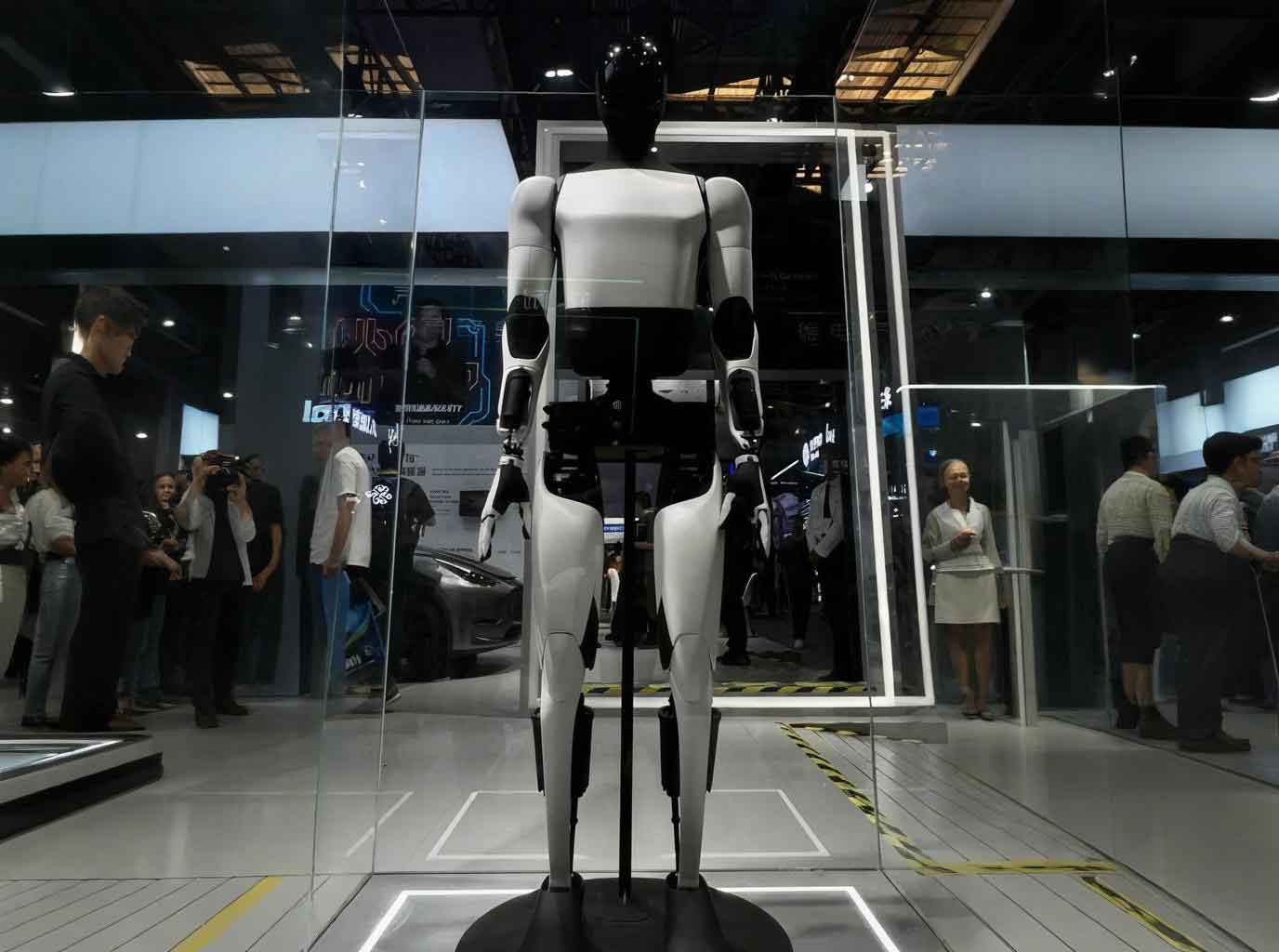
The scale and quality of embodied robots at this year’s WAIC marked a significant leap from the “18 Arhats” showcased in 2024, with participants including the National and Local Co-built Humanoid Robot Innovation Center (referred to as the National Center), Shanghai Zhiyuan Robot, Beijing Humanoid Robot Innovation Center, Beijing Galaxy General Robot, Yushu, and Fourier. These entities presented their flagship embodied robots, engaging in interactive demonstrations that highlighted skills ranging from simple object sorting to complex tasks like playing drums, calligraphy, cooking skewers, and peeling eggs. The event not only showcased hardware advancements but also emphasized the integration of embodied intelligence into practical scenarios, such as commercial retail and urban services.
1. Collaborative Initiatives and Technological Milestones in Embodied Intelligence
In a move to accelerate progress, the China Humanoid Robot Hundred People Association, together with the National Center and the National and Local Co-built Embodied Intelligent Robot Innovation Center, released the “Humanoid Robot and Embodied Intelligence Data Collection Cooperation Initiative” on July 26. This initiative aims to foster mutual recognition of data standards, sharing of data and toolchains, and opening of data training grounds, thereby driving rapid development in embodied robots and embodied intelligence. The collaborative effort reflects a broader industry push to overcome data fragmentation and enhance model training for more adaptive embodied intelligence systems.
Concurrently, the National Center unveiled its Qinglong series of embodied robots, including the Qinglong Pro, Qinglong Lite, and Qinglong Wheel. This product matrix spans two technical pathways: bipedal humanoid robots and wheeled-arm humanoid robots, designed to meet diverse demands in industrial, security, service, education, and smart city applications. Jiang Lei, Chief Scientist at the National Center, explained that while current embodied robots may perform basic tasks like sorting materials, the underlying technology has evolved dramatically. “In the past, it was driven by small models, but now we’ve shifted to large-scale datasets and computational intelligence,” he said. “This year, our embodied robots have achieved centimeter-level precision in operations. Though not yet ready for factory floors, they can serve in unmanned supermarkets. The next step involves deepening high-precision sensors once data collection processes are streamlined.”
At the core “WAIC Lane” theme area in the Expo Center, embodied robots took on roles reminiscent of old Shanghai alley life, demonstrating high-precision operations in settings like literary stations, repair shops, and snack streets. These scenarios highlighted the cognitive, motor, and interactive intelligence underpinning embodied intelligence. For instance, Galaxy General Robot’s setup of a simulated convenience store attracted considerable foot traffic, where their embodied robot, Galbot, operated autonomously in a 1:1 replicated commercial environment, showcasing potential retail applications.
2. Innovations in Embodied Intelligence Operating Systems and Open-Source Frameworks
One of the most anticipated exhibitors, Zhiyuan Robot, saw its co-founder and CTO Peng Zhihui engage in a dialogue with their embodied robot, Lingxi X2, at the WAIC 2025 main forum. During the session, Peng announced the “Zhiyuan Lingqu OS” open-source plan—described as the industry’s first reference framework for an embodied intelligence operating system. This initiative seeks to integrate current robot system ecosystems and spur breakthroughs in embodied intelligence technologies, emphasizing interoperability and scalability for future embodied robots. The move aligns with growing calls for standardized platforms to reduce development barriers and accelerate the commercialization of embodied intelligence.
Beyond hardware, the focus on embodied intelligence software was evident across panels and demonstrations. Experts highlighted how embodied intelligence enables robots to perceive, learn, and adapt in dynamic environments, moving beyond pre-programmed tasks. For example, in the WAIC Lane, embodied robots performed intricate activities like drumming and calligraphy, which require real-time decision-making and fine motor control—capabilities driven by advances in embodied intelligence algorithms. These developments point to a future where embodied robots can seamlessly interact with humans in unstructured settings, from homes to public spaces.
3. Market Projections and Investment Outlook for Embodied Robots and Embodied Intelligence
The potential economic impact of embodied robots is substantial, with Goldman Sachs forecasting the global humanoid robot market to reach $154 billion by 2035. This projection underscores the blue-ocean opportunities in embodied intelligence, though realizing this potential hinges on overcoming technical and operational hurdles. At the Qiming Venture Capital forum titled “Venture Investing Ignites the Resonance Cycle of AI Technology and Applications,” Qiming Venture Partner Zhou Zhifeng outlined ten key trends, one of which centered on embodied intelligence. The trend emphasized that embodied robots will first achieve scaled deployment in scenarios such as sorting, transporting, and assembly, accumulating vast amounts of first-person perspective data and tactile operation data. This, in turn, will create a “model-ontology-scenario data” closed-loop flywheel, driving iterative model improvements and ultimately paving the way for widespread adoption of general-purpose robots.
Investment in embodied intelligence is gaining momentum, as venture capitalists recognize its role in bridging AI and physical world applications. Zhou’s outlook noted that the accumulation of robot-specific data—particularly through embodied robots—will be crucial for refining embodied intelligence models. This data-driven approach is expected to lower costs and enhance reliability, making embodied robots more accessible for industrial and consumer use. However, investors caution that the path to profitability requires careful navigation of technological risks and market readiness, with embodied intelligence serving as the core differentiator in a competitive landscape.
4. Challenges in Commercializing Embodied Robots and Embodied Intelligence
Despite the enthusiasm surrounding embodied robots, practical adoption faces significant challenges. At the “Embodied Intelligence: Exploration and Innovation from Science to Industry” forum, Liu Jie, Dean of the Artificial Intelligence Research Institute at Harbin Institute of Technology, described embodied intelligence as a critical opportunity and抓手 for AI development. “Once embodied intelligence matures, it will generalize intelligence, deepen understanding of the physical world, and enable more proactive action planning,” Liu stated. “This will transform robot brains into platforms for developing diverse applications, highlighting the immense value of embodied intelligence for the future robot industry and AI implementation.” He added that while embodied intelligence is in its nascent stages, its potential to integrate smart technologies with the physical world will profoundly impact various sectors, though the timeline for widespread impact remains uncertain.
Technical debates also persist, particularly around data strategies for training embodied intelligence models. Wang He, Assistant Professor at Peking University and Founder and CTO of Galaxy General Robot, advocated for a synthetic data-led approach supplemented by real data during a WAIC session at the “Light Source AI Industry Integration Forum.” He argued that this method keeps embodied data costs manageable while enabling large-scale generalization. Addressing concerns about industry “bubbles,” Wang remarked, “Bubbles are inevitable in any emerging industry, but after the dust settles, true gold remains. Our focus is on rapidly integrating technology with industry to achieve the first large-scale, replicable business model for embodied intelligence under capital propulsion.”
Jiang Lei of the National Center offered a balanced perspective on the simulation versus real-data controversy, asserting that both are complementary. “In my view, real-machine data and simulation data are equally important. Theoretically, real data accounts for just one-tenth or even one-hundredth of simulation data, with the bulk of expansion done through simulation,” he explained. “The entire industry chain has gaps here—it’s one-sided to claim simulation is good but实体 isn’t, or vice versa. We need a integrated, soft-hardware approach.” He projected that within 3–5 years, as data production ramps up, embodied robots could achieve millimeter-level operation accuracy, approaching sub-millimeter precision. “Robots have industrial attributes, but that’s not the main point. We want them to run, jump, and interact productively, eventually entering households—which may take another 5–10 years,” Jiang added, underscoring the long-term vision for embodied intelligence.
5. Future Trajectory and Global Implications of Embodied Intelligence
The progression of embodied robots and embodied intelligence is poised to reshape global industrial landscapes. Du Guangda, Deputy Director of the Ministry of Industry and Information Technology’s Science and Technology Department, emphasized at the “2025 Humanoid Robot and Embodied Intelligent Innovation Development Sub-forum” that humanoid robots represent a typical future industry capable of revolutionizing production methods and reshaping global industrial structures. He outlined the ministry’s strategy to accelerate innovation through “intelligent driving, scenario driving, and ecological coordination,” using humanoid robots as a small切口 to propel embodied intelligence and the broader AI industry, thereby empowering new industrialization efforts.
Globally, the race to dominate embodied intelligence is intensifying, with countries and companies investing heavily in R&D. The WAIC demonstrations illustrated how embodied robots are transitioning from labs to real-world testing grounds, such as the Galaxy General Robot’s retail scenario and Zhiyuan’s open-source OS. These steps are critical for building trust and scalability. As embodied intelligence evolves, experts anticipate a shift from task-specific robots to general-purpose assistants capable of learning and adapting across environments. This will require continued advances in AI models, sensor technology, and energy efficiency—all areas where embodied intelligence plays a pivotal role.
In summary, the 2025 WAIC served as a testament to the rapid advancements in embodied robots and embodied intelligence. With over 150 units on display, the event highlighted both the excitement and the challenges ahead. As the industry moves forward, collaboration on data standards, open-source frameworks, and cross-sector integration will be essential to unlock the full potential of embodied intelligence, ultimately bringing robots closer to human-like capabilities in everyday life.
| Year | Market Size (USD Billion) | Key Drivers |
|---|---|---|
| 2035 | 154 | Advances in embodied intelligence, data accumulation, and industrial adoption |
The above table summarizes the optimistic outlook for embodied robots, driven by continuous improvements in embodied intelligence. As these technologies mature, they are expected to penetrate sectors like manufacturing, logistics, and services, creating new economic opportunities while addressing labor shortages and efficiency demands. The integration of embodied intelligence will be crucial for achieving this growth, enabling robots to perform complex, unstructured tasks with minimal human intervention.
- Data Standardization: Initiatives like the data collection cooperation are vital for harmonizing embodied intelligence development across entities.
- Technical Pathways: Diversity in approaches, such as bipedal vs. wheeled designs, allows embodied robots to cater to varied application needs.
- Investment Focus: Venture capital is increasingly channeled into embodied intelligence startups, aiming for early market leadership.
In conclusion, the 2025 WAIC not only showcased the current state of embodied robots but also set the stage for future innovations in embodied intelligence. The collaboration between academia, industry, and government, as seen in data initiatives and open-source projects, will be instrumental in overcoming adoption barriers. As embodied intelligence continues to evolve, it promises to redefine human-robot interaction, making embodied robots an integral part of society in the decades to come.