
In modern mechanical transmission systems, the demand for high-precision, high-load, and high-efficiency components has driven significant advancements in technology. Among these, the planetary roller screw stands out as a critical innovation, offering superior performance compared to traditional ball screws. As a researcher in this field, I have extensively analyzed the manufacturing processes for rollers in planetary roller screw assemblies, focusing on plastic forming techniques. This article delves into the existing production methods, introduces a novel synchronous rolling process for precise plastic forming, and explores its feasibility through numerical simulations. The planetary roller screw, with its unique design, enables enhanced load capacity and durability, making it indispensable in applications such as aerospace, robotics, and precision machinery. Throughout this discussion, the term planetary roller screw will be emphasized to highlight its centrality in this research.
The planetary roller screw is a mechanical actuator that converts rotational motion into linear motion, similar to ball screws but with distinct advantages. It consists of a central screw, multiple rollers arranged in a planetary configuration, and a nut. The rollers, which are key load-bearing elements, feature complex geometries including threaded sections and splined or geared ends. This design allows for simultaneous load distribution across multiple rollers, reducing stress concentrations and improving efficiency. The planetary roller screw mechanism ensures that rolling friction replaces sliding friction, leading to higher transmission efficiency, often exceeding 90%. In this context, the planetary roller screw has become a preferred choice for high-speed and heavy-duty applications, where precision and reliability are paramount.
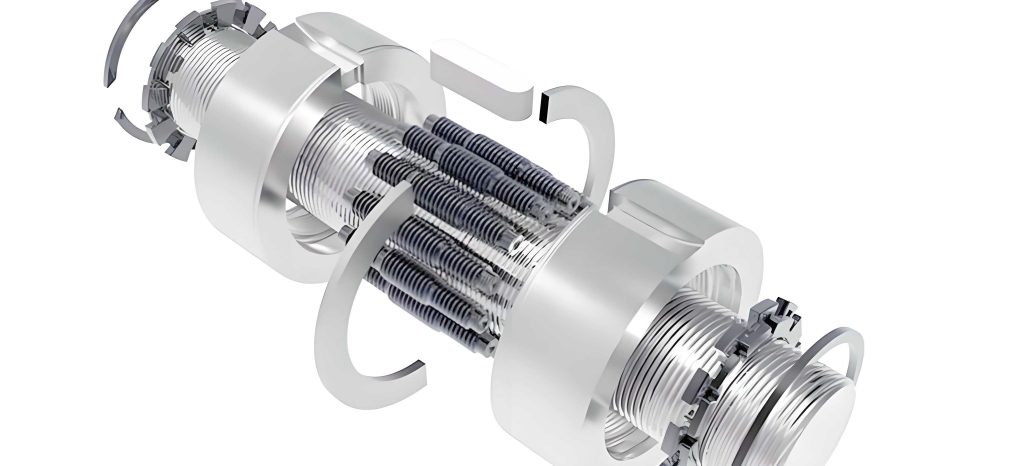
To understand the importance of advanced manufacturing for planetary roller screw rollers, it is essential to compare planetary roller screws with ball screws. The following table summarizes key performance metrics, highlighting the advantages of planetary roller screws in various aspects. This comparison underscores why optimizing roller production is critical for leveraging the full potential of planetary roller screw systems.
| Parameter | Ball Screw | Planetary Roller Screw |
|---|---|---|
| Relative Load Capacity | 1 (Baseline) | ≥3 |
| Relative Rotational Speed | 1 (Baseline) | 2 |
| Relative Lifetime | 1 (Baseline) | 15 |
| Minimum Lead | Limited by ball diameter (>0.5 mm) | Can be less than 0.5 mm |
| Load Distribution | Small contact area,轮流受载 | Large contact area, simultaneous loading |
| Centrifugal Forces | Significant at high speeds | Minimized by planetary arrangement |
The structural complexity of rollers in a planetary roller screw poses significant manufacturing challenges. Each roller typically includes a central threaded segment and splined or geared ends, which must be precisely formed to ensure proper meshing with the nut or screw. In standard planetary roller screw designs, the rollers engage with a fixed internal gear ring in the nut, while in reverse-type planetary roller screws, they mesh with gears on the screw ends. This dual functionality necessitates high accuracy in geometry and alignment to avoid phase conflicts during assembly, which can compromise the performance of the planetary roller screw. Therefore, developing efficient and precise manufacturing methods for these rollers is crucial for the widespread adoption of planetary roller screw technology.
Existing production processes for planetary roller screw rollers primarily rely on machining techniques, such as turning for threads and gear cutting for splines. However, these subtractive methods are inefficient, material-wasteful, and can degrade mechanical properties by severing metal fibers. Alternative plastic forming processes, like cold rolling, offer advantages in terms of efficiency, material savings, and enhanced surface strength. Yet, current rolling approaches still involve sequential forming of threads and splines, leading to prolonged production times and potential inconsistencies. To address these limitations, I propose a novel synchronous rolling process that forms both thread and spline features simultaneously in a single operation. This method aims to streamline production, improve accuracy, and ensure consistent relative positioning between threads and splines, which is vital for the reliable operation of planetary roller screw assemblies.
The synchronous rolling process for planetary roller screw rollers is based on the principle of simultaneous deformation using a pair of rolling dies. Each die incorporates both thread and spline profiles, and they are mounted on synchronized rotating spindles. The workpiece is rotated in the opposite direction while the dies undergo radial feed motion. The key to this process lies in maintaining kinematic compatibility between the thread and spline formations. By treating thread engagement as equivalent to helical gear meshing, the relationship between the number of spline teeth on the roller, the number of thread starts, and corresponding die parameters can be expressed mathematically. For a planetary roller screw roller, if the spline section has \(Z\) teeth and the thread section has \(n\) starts, while the die has \(Z_2\) spline teeth and \(n_2\) thread starts, the following equation must hold to ensure proper synchronization:
$$ \frac{Z_2}{Z} = \frac{n_2}{n} $$
This equation ensures that the rotational motions of the dies and workpiece are harmonized, allowing for precise simultaneous forming. The process leverages existing rolling equipment with modifications to accommodate the combined profiles, making it a cost-effective solution for mass production of planetary roller screw rollers. Additionally, the thread engagement during rolling can enhance workpiece rotation, improving the accuracy of spline formation. This synchronous approach not only reduces production time but also minimizes energy consumption and material waste, aligning with sustainable manufacturing goals for planetary roller screw components.
To evaluate the feasibility of the synchronous rolling process for planetary roller screw rollers, numerical simulations using finite element analysis (FEA) were conducted. A full 3D model of the roller and dies was developed, considering cold forming conditions at room temperature. The material selected was AISI-1045 steel, with a friction factor of 0.12 to simulate contact conditions. The FEA model accounted for the discontinuous contact and fluctuating loads typical in spline rolling processes, which are also relevant for planetary roller screw applications. The simulation focused on stress and strain distributions, rolling forces, and final geometry accuracy. The results provided insights into the deformation behavior and validated the process design for planetary roller screw roller manufacturing.
The rolling forces during the synchronous forming process were analyzed, revealing significant fluctuations due to the intermittent contact between dies and workpiece. The radial force component was predominant, driving the plastic deformation, while tangential forces were smaller. After the radial feed phase, the forces decreased during the sizing stage, indicating proper material flow. The strain distribution in the formed planetary roller screw roller showed that plastic deformation was localized to the thread and spline regions, with severe strains confined to the surface layers. This aligns with the desired outcome for high-strength components, as work hardening improves surface durability. The following table summarizes key simulation parameters and outcomes, emphasizing the effectiveness of the synchronous rolling process for planetary roller screw rollers.
| Simulation Parameter | Value or Observation |
|---|---|
| Material | AISI-1045 Steel |
| Friction Factor | 0.12 |
| Radial Force Amplitude | High, with fluctuations |
| Tangential Force | Low relative to radial force |
| Strain Concentration | Surface layers of thread and spline |
| Deformation Depth | Shallow, minimal in core |
| Geometric Accuracy | High, with consistent thread-spline alignment |
The numerical simulation confirmed that the synchronous rolling process can successfully form both thread and spline features on a planetary roller screw roller in a single operation. The strain fields indicated no significant deformation in non-critical areas, preserving the structural integrity of the roller. This is crucial for maintaining the load-bearing capacity of planetary roller screw assemblies, where rollers must withstand high stresses without failure. Additionally, the process demonstrated the ability to maintain precise relative positions between threads and splines, addressing the phase conflict issue common in planetary roller screw assembly. By ensuring this alignment, the synchronous rolling method enhances the reliability and performance of planetary roller screw systems, making it a viable alternative to traditional manufacturing techniques.
Beyond rollers, the synchronous rolling process has potential applications in other shaft-like components with combined thread and spline features, such as those used in automotive steering systems or transmission shafts. For instance, reverse-type planetary roller screws also involve screws with integrated threads and splines, which could benefit from this efficient forming approach. The process principles can be extended to various materials and geometries, enabling high-precision, low-waste production for a range of mechanical parts. By adapting the die designs and kinematic parameters, manufacturers can leverage this technology to produce complex components for planetary roller screw and similar systems, driving advancements in multiple industries.
In terms of mathematical modeling, the synchronous rolling process for planetary roller screw rollers can be further analyzed using plasticity theory. The deformation mechanics involve complex stress states, but simplified models can provide insights. For example, the rolling force \(F_r\) during thread formation can be approximated using slab analysis, considering the material yield strength \(\sigma_y\) and contact area \(A_c\):
$$ F_r \approx \sigma_y \cdot A_c $$
Similarly, for spline formation, the torque \(T\) required can be related to the tangential force \(F_t\) and pitch radius \(r_p\):
$$ T = F_t \cdot r_p $$
These equations help in designing dies and optimizing process parameters for planetary roller screw roller production. Additionally, the total energy consumption \(E\) during synchronous rolling can be estimated by integrating the power over time, contributing to efficiency assessments for planetary roller screw manufacturing.
The advantages of the synchronous rolling process for planetary roller screw rollers are multifaceted. Compared to sequential methods, it reduces production time by up to 50%, based on simulation estimates. Material utilization is improved, as near-net-shape forming minimizes scrap. The mechanical properties of rollers are enhanced due to grain flow alignment and work hardening, which increase fatigue resistance—a critical factor for planetary roller screw longevity. Furthermore, the process consistency ensures that each roller meets tight tolerances, facilitating easier assembly of planetary roller screw units. The following table contrasts the synchronous rolling method with conventional approaches, highlighting its benefits for planetary roller screw applications.
| Aspect | Conventional Machining | Sequential Rolling | Synchronous Rolling |
|---|---|---|---|
| Production Time | Long | Moderate | Short |
| Material Waste | High | Low | Very Low |
| Mechanical Strength | Reduced due to fiber cutting | Improved | Significantly Improved |
| Thread-Spline Alignment | Variable | Variable | Consistent |
| Equipment Complexity | Multiple machines | Single machine with multiple setups | Single machine with integrated dies |
| Energy Consumption | High | Moderate | Low |
Future research directions for planetary roller screw roller manufacturing include optimizing die materials and coatings to reduce wear, exploring warm rolling techniques for higher-strength alloys, and integrating real-time monitoring systems for quality control. The synchronous rolling process could also be adapted for miniaturized planetary roller screw used in micro-mechanical devices, expanding its applicability. By continuing to refine this technology, the planetary roller screw industry can achieve greater efficiency and performance, meeting evolving demands in advanced engineering sectors.
In conclusion, the synchronous rolling process represents a significant advancement in the plastic forming of rollers for planetary roller screw assemblies. It addresses the limitations of existing methods by enabling simultaneous formation of threads and splines, ensuring precision, efficiency, and enhanced mechanical properties. Numerical simulations have validated its feasibility, demonstrating that planetary roller screw rollers can be produced with high accuracy and consistency. This process not only benefits planetary roller screw manufacturing but also holds promise for other complex shaft components, contributing to broader advancements in precision engineering. As the demand for high-performance planetary roller screw systems grows, innovative manufacturing techniques like this will play a pivotal role in driving technological progress.
To further illustrate the mathematical foundations, consider the kinematics of the planetary roller screw mechanism itself. The relationship between the linear displacement \(L\) of the nut and the rotational angle \(\theta\) of the screw can be expressed as:
$$ L = \frac{P}{2\pi} \cdot \theta $$
where \(P\) is the lead of the planetary roller screw. For rollers, the planetary motion introduces additional geometric constraints, which can be modeled using transformation matrices. If the roller has a pitch diameter \(d_r\) and the screw has a pitch diameter \(d_s\), the contact condition during rolling ensures no slippage, leading to velocity compatibility equations. These principles underpin the design of synchronous rolling dies for planetary roller screw rollers, ensuring that formed profiles match operational requirements.
In summary, this article has explored the plastic forming of rollers for planetary roller screw through a novel synchronous rolling method. By emphasizing the planetary roller screw throughout, I have highlighted its importance in modern machinery and the need for advanced manufacturing solutions. The proposed process offers a sustainable, efficient, and precise approach to producing these critical components, paving the way for improved performance in applications ranging from aerospace to robotics. As research continues, the integration of such techniques will undoubtedly enhance the capabilities of planetary roller screw systems, solidifying their role in next-generation mechanical designs.