
In modern warfare, the integration of intelligent unmanned systems has become a critical factor in determining battlefield superiority. Among these systems, the quadruped robot, often referred to as a robot dog, represents a significant advancement in ground-based autonomous platforms. These robot dog units are designed to operate in complex terrains, performing tasks such as reconnaissance, logistics, and combat support. However, their increased deployment necessitates a thorough understanding of their vulnerabilities to various threats, particularly from lethal blast warheads. Traditional damage assessment methods often rely on simplified geometric models and linear fragment trajectories, which may not accurately capture the intricate interactions between warhead effects and the complex structures of a quadruped robot. This paper addresses these limitations by developing a high-fidelity damage assessment system using Unreal Engine, which leverages precise collision detection and realistic visual simulation to evaluate the damage efficacy of lethal blast warheads on quadruped robots.
The primary motivation for this research stems from the need for accurate and efficient damage assessment tools that can handle the sophisticated design of modern quadruped robots. Unlike conventional targets, a robot dog comprises numerous small, interconnected components, including sensors, actuators, and electronic systems, which require detailed modeling to assess vulnerabilities accurately. Previous approaches often simplified these structures into basic shapes, leading to potential inaccuracies in damage prediction. By utilizing Unreal Engine’s advanced graphics and physics capabilities, we have created a system that not only models the quadruped robot at a component level but also simulates the dynamic interactions between warhead-generated fragments, shockwaves, and the target. This allows for a more precise evaluation of damage probabilities across different functional levels of the robot dog, from mobility impairment to complete incapacitation.
In this study, we first establish a comprehensive vulnerability model for the quadruped robot, analyzing its functional hierarchy and identifying key components that contribute to various damage levels. We then develop parametric models for lethal blast warheads, incorporating physical calculations for fragment velocity, mass distribution, and shockwave overpressure. A novel intersection detection method based on Unreal Engine’s collision system is introduced, replacing traditional ray-casting techniques to improve accuracy in multi-layered target scenarios. The system also integrates visualizations of the warhead’s power field and damage effects, providing an intuitive interface for users to analyze outcomes. Through an illustrative example, we demonstrate the system’s capability to compute damage probabilities and render realistic damage scenarios, highlighting its potential applications in military strategy and robotic design optimization.
The remainder of this paper is organized as follows: Section 2 details the vulnerability modeling of the quadruped robot, including functional analysis, damage level classification, and 3D model reconstruction. Section 3 covers the parametric modeling and power field calculations for lethal blast warheads. Section 4 explains the intersection detection methodology and damage probability computations. Section 5 outlines the system architecture and functional modules. Section 6 presents a validation case study, and Section 7 concludes with key findings and future research directions.
Vulnerability Modeling of the Quadruped Robot
The quadruped robot, or robot dog, is a highly integrated system designed for autonomous operations in diverse environments. To assess its vulnerability accurately, we begin by analyzing its functional architecture. The robot dog typically exhibits three core functions: mobility, communication, and perception. Mobility enables the quadruped robot to navigate terrains using leg actuators and control systems; communication involves data transmission via antennas and processors; and perception relies on sensors such as cameras and LiDAR for environmental awareness. Loss of any these functions can compromise the robot dog’s mission effectiveness, necessitating a detailed breakdown of its physical components.
Based on this functional analysis, we classify damage into four levels: M-level (mobility loss), X-level (communication loss), A-level (perception loss), and K-level (complete functional loss). The M-level is further divided into M1 (partial mobility damage) and M2 (total mobility loss). Each damage level is associated with specific key components, identified through a damage tree analysis. For instance, the K-level damage tree shows that destruction of the main processor or power system leads to total failure, while the M-level tree highlights leg actuators and drive systems as critical elements. Components are categorized as key or inert based on their impact on functionality; for example, a sensor unit may be key for A-level damage but inert for M-level.
To quantify component vulnerability, we employ probabilistic damage criteria based on the type of damaging element (fragments or shockwaves) and the component’s characteristics. For fragments, we use three probability functions: a 0-1 distribution for fragile electronic parts (e.g., circuit boards), where damage occurs if the number of penetrating fragments exceeds a threshold; a linear distribution for mechanical components (e.g., harmonic drive elements), where damage probability increases with the impacted area; and a Poisson distribution for structural parts (e.g., screws and nuts), based on the ratio of vulnerable area to total exposed area. For shockwaves, a 0-1 distribution is applied with an overpressure threshold of 0.10 MPa for K-level damage, derived from empirical studies on similar targets.
The physical representation of the quadruped robot is crucial for accurate damage assessment. Using Autodesk Inventor, we created a high-fidelity 3D model of the robot dog, comprising over 90 individual components that replicate the actual structure, including joints, sensors, and internal circuitry. This detailed model allows for precise simulation of fragment impacts and shockwave effects, as opposed to simplified geometric approximations used in prior research. The model is exported to Unreal Engine via FBX format, where it serves as the basis for collision detection and visual rendering. This approach ensures that the damage assessment reflects real-world scenarios, accounting for the robot dog’s complex anatomy.
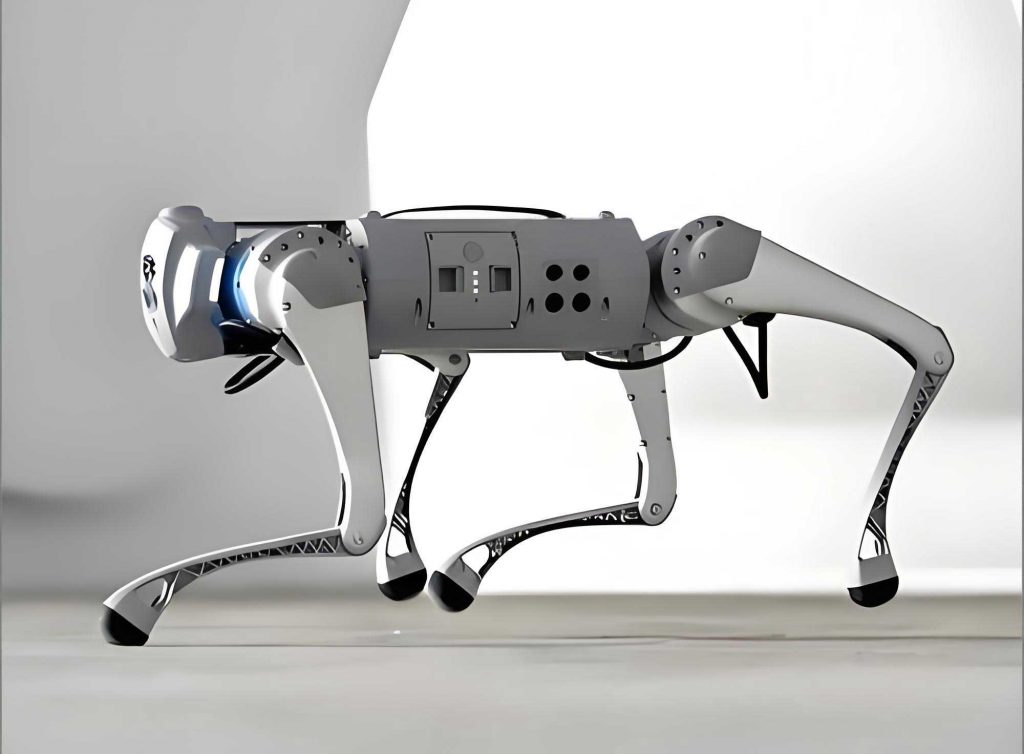
Table 1 summarizes the key parameters used in the vulnerability model for the quadruped robot, including damage levels, associated components, and damage criteria. This structured approach enables systematic evaluation of how different warhead effects impair the robot dog’s functionality.
| Damage Level | Key Components | Damage Criteria | Probability Function |
|---|---|---|---|
| K-level | Main processor, Power system | Shockwave overpressure ≥ 0.10 MPa | 0-1 distribution |
| X-level | Communication modules, Antennas | Fragment penetration count | 0-1 distribution |
| A-level | Sensors (e.g., cameras, LiDAR) | Impact area on components | Linear distribution |
| M-level | Leg actuators, Drive systems | Vulnerable area ratio | Poisson distribution |
Lethal Blast Warhead Modeling and Power Field Calculation
The lethal blast warhead is designed to generate fragments and shockwaves that can inflict damage on targets like the quadruped robot. Our system incorporates a parametric modeling approach, allowing users to input warhead specifications—such as charge dimensions, fragment shape, and initiation type—through a graphical interface in Unreal Engine. Based on these inputs, the system automatically generates a 3D model of the warhead, including the spatial distribution of fragments. For example, cylindrical warheads with cubic fragments of size 4mm × 4mm × 4mm can be modeled, as shown in the user interface. This flexibility supports the simulation of various warhead configurations, enhancing the system’s applicability to different scenarios.
The power field of the warhead is characterized by fragment dynamics and shockwave propagation. Fragment initial velocity is calculated using an axial distribution formula that accounts for charge geometry and initiation method. The velocity \( V(x) \) at axial distance \( x \) is given by:
$$ V(x) = \sqrt{2E \left[1 – \exp\left(-\frac{A + Bx}{d(x)}\right)\right] \left[1 – \exp\left(-\frac{C + D(L – x)}{d(x)}\right)\right] \left(1 + \beta(x)\right)} $$
where \( E \) is the energy constant, \( A, B, C, D \) are experimentally determined coefficients, \( d(x) \) is the charge diameter at \( x \), \( L \) is the charge length, and \( \beta(x) \) is the mass ratio of charge to casing at \( x \). The fragment dispersion angle \( \phi \) relative to the warhead axis is derived as:
$$ \phi = \arcsin\left(\frac{V_0}{2D}\right) + A_e T_e v_{0x}’ $$
with \( V_0 \) as initial fragment velocity, \( D \) as detonation velocity, \( A_e \) as incident angle, \( T_e \) as characteristic acceleration time, and \( v_{0x}’ \) as axial velocity derivative. For preformed fragments, mass is constant, whereas for natural fragments, mass distribution follows a statistical model based on casing properties:
$$ \mu_0 = B_1 \delta_0^{3/2} d_a^{1/2} (1 + \delta_0) $$
$$ B_1 = \lambda_1 \lambda_2^{3/2} \lambda_3^{-1} \rho_s \sigma_b^{1/2} \omega \rho_c^{-1} D^{-1} $$
$$ P(M > m) = \exp\left(-\frac{(m – \mu)^2}{2\sigma^2}\right) $$
where \( \mu_0 \) is the initial mass parameter, \( \delta_0 \) is casing thickness, \( d_a \) is inner diameter, \( \rho_s \) and \( \rho_c \) are densities of casing and charge, \( \sigma_b \) is material strength, and \( \lambda_1, \lambda_2, \lambda_3 \) are fragmentation constants.
Fragment trajectory is influenced by gravity and air resistance, which are often neglected in simpler models. We implement an iterative calculation method to simulate curved paths, enhancing realism. The equations of motion for a fragment are:
$$ m \frac{dv}{dt} = -\frac{1}{2} C_D \rho_a S v^2 $$
$$ \frac{dv_z}{dt} = -g $$
where \( m \) is fragment mass, \( v \) is velocity, \( C_D \) is drag coefficient, \( \rho_a \) is air density, \( S \) is cross-sectional area, and \( g \) is gravitational acceleration. Shockwave overpressure \( \Delta p \) at distance \( R \) from the explosion center is computed using piecewise equations based on scaled distance \( \bar{R} = R / \omega_{\text{TNT}}^{1/3} \), with \( \omega_{\text{TNT}} \) being the TNT equivalent mass:
$$ \Delta p =
\begin{cases}
1.40717 + 0.55397\bar{R} – 0.03572\bar{R}^2 + 0.000625\bar{R}^3, & 0.05 \leq \bar{R} \leq 0.3 \\
0.61938 – 0.03262\bar{R} + 0.21324\bar{R}^2, & 0.3 < \bar{R} \leq 1 \\
0.0662 + 0.405\bar{R} + 0.3288\bar{R}^2, & 1 < \bar{R} \leq 10
\end{cases} $$
These calculations are integrated into Unreal Engine, where the warhead’s power field is visualized in real-time. Users can set explosion parameters—such as position and velocity vector—in a coordinate system centered on the robot dog. The system then generates fragments and shockwaves, applying the physical models to simulate their evolution over time. Visual effects include fragment spread and expanding spherical shockwaves, with a simulation time step of 1 ms to balance accuracy and performance. This comprehensive approach allows for dynamic assessment of how the warhead’s power field interacts with the quadruped robot.
| Parameter | Symbol | Formula/Value |
|---|---|---|
| Fragment initial velocity | \( V(x) \) | $$ V(x) = \sqrt{2E \left[1 – \exp\left(-\frac{A + Bx}{d(x)}\right)\right] \left[1 – \exp\left(-\frac{C + D(L – x)}{d(x)}\right)\right] \left(1 + \beta(x)\right)} $$ |
| Dispersion angle | \( \phi \) | $$ \phi = \arcsin\left(\frac{V_0}{2D}\right) + A_e T_e v_{0x}’ $$ |
| Shockwave overpressure | \( \Delta p \) | Piecewise function based on \( \bar{R} \) |
| Fragment mass distribution | \( P(M > m) \) | $$ P(M > m) = \exp\left(-\frac{(m – \mu)^2}{2\sigma^2}\right) $$ |
Intersection Detection and Damage Probability Computation
Accurate intersection detection between warhead-generated elements and the quadruped robot is essential for reliable damage assessment. Traditional methods, such as ray-casting, often struggle with multi-layered targets like the robot dog, as they only detect the first surface encountered. To overcome this, we leverage Unreal Engine’s collision detection system, which handles complex geometries more effectively. In this approach, each component of the quadruped robot is set to “Overlap” for fragments, allowing penetration and triggering events during collisions. When a fragment overlaps with a component, the “Begin Overlap” event records key data: impact point coordinates, surface normal, fragment velocity, mass, area, and material properties. The fragment then continues along a straight path through the component—ignoring mid-flight forces for simplicity—until the “End Overlap” event marks the exit point. Using this data, we compute the impact angle \( \theta \) and penetration thickness, which are inputs for the THOR equation to determine residual fragment velocity \( V_r \):
$$ V_r = V_s – 0.3048 \times 10^{c_1} (61023.75 h A)^{c_2} (15432.1 m)^{c_3} (\sec \theta)^{c_4} (3.28084 V_s)^{c_5} $$
where \( V_s \) is impact velocity, \( h \) is thickness, \( A \) is fragment area, and \( c_1 \) to \( c_5 \) are material-specific coefficients. If \( V_r > 0 \), the fragment penetrates and proceeds to other components; otherwise, it is destroyed. This method efficiently handles the robot dog’s layered structure, providing a more precise assessment than ray-based techniques.
For shockwaves, intersection detection occurs when the spherical shockwave overlaps with robot components. The “Begin Overlap” event calculates the overpressure peak based on the current shockwave radius and records it in the component’s data. This allows for simultaneous evaluation of fragment and shockwave damage, covering all aspects of the warhead’s effects on the quadruped robot.
Damage probability computation aggregates data from all components after the simulation. Each component’s damage probability is evaluated using its respective criteria: for fragments, probabilities are derived from the 0-1, linear, or Poisson distributions based on penetration counts, impact areas, or vulnerable ratios; for shockwaves, the 0-1 distribution applies if overpressure exceeds the threshold. The system then traverses the damage trees for each damage level (K, X, A, M) to compute the overall probability of the robot dog sustaining that level of damage. Results are displayed in a user interface, highlighting damaged components in red for visual analysis. This integrated process ensures a comprehensive assessment of the quadruped robot’s vulnerability to lethal blast warheads.
| Aspect | Method | Key Equations |
|---|---|---|
| Fragment penetration | Collision-based overlap detection | $$ V_r = V_s – 0.3048 \times 10^{c_1} (61023.75 h A)^{c_2} (15432.1 m)^{c_3} (\sec \theta)^{c_4} (3.28084 V_s)^{c_5} $$ |
| Shockwave effect | Spherical overlap detection | 0-1 distribution for \( \Delta p \geq 0.10 \) MPa |
| Damage probability | Component-wise aggregation | Based on damage trees and probability functions |
System Architecture and Functional Design
The damage assessment system is built on Unreal Engine, utilizing its high-fidelity graphics and physics engine for realistic simulations. The architecture comprises four main modules: the quadruped robot vulnerability module, the lethal blast warhead design and power calculation module, the damage assessment module, and the data management module. The vulnerability module handles the robot dog’s 3D model, damage trees, and component properties. The warhead module enables parametric modeling and power field computations, as described earlier. The damage assessment module integrates intersection detection and probability calculations, while the data module manages input parameters, material databases, and output results.
Functionally, the system supports a streamlined workflow: users input warhead parameters and explosion details through graphical interfaces; the system generates the warhead model and computes the power field; simulations run with real-time visualization of fragments and shockwaves interacting with the quadruped robot; and finally, damage probabilities are computed and displayed. This workflow ensures that users can efficiently analyze different scenarios, such as varying warhead types or explosion positions, to optimize strategies for engaging robot dog units. The system’s design emphasizes usability and accuracy, making it a valuable tool for military planners and robotic engineers.
Key features include the ability to model complex warhead configurations, simulate curved fragment trajectories under gravity, and perform precise collision detection on multi-component targets. The use of Unreal Engine also allows for immersive visualizations, where users can rotate, zoom, and pan the scene to observe damage from multiple angles. This enhances the understanding of how lethal blast warheads affect the intricate structures of a quadruped robot, providing insights that are not possible with traditional assessment methods.
Validation Case Study
To validate the system, we conducted a case study using a hypothetical lethal blast warhead with parameters summarized in Table 4. The warhead had a cylindrical charge of TNT with dimensions Φ30 mm × 50 mm, preformed cubic fragments of 4 mm side length, and was initiated at one end. The explosion was set at coordinates (-1.0 m, -0.2 m, -0.1 m) relative to the quadruped robot’s center, with a velocity vector of (0, 1, -0.1) and speed of 200 m/s. This scenario aimed to assess the damage probability on the robot dog under realistic conditions.
| Parameter | Value |
|---|---|
| Charge dimensions | Φ30 mm × 50 mm |
| Charge type | TNT |
| Fragment size | 4 mm × 4 mm × 4 mm (cubic) |
| Initiation method | One-end center initiation |
| Explosion position | (-1.0 m, -0.2 m, -0.1 m) |
| Velocity vector | (0, 1, -0.1) |
| Velocity magnitude | 200 m/s |
The simulation generated 276 fragments and a shockwave, which propagated and interacted with the quadruped robot’s components. The intersection detection method recorded multiple impacts on leg actuators, sensors, and communication modules. After the simulation, damage probabilities were computed: for instance, the K-level probability was 0.85, indicating a high likelihood of complete functional loss, while M-level probabilities showed partial mobility damage in specific legs. Visual inspection revealed red-highlighted components, such as damaged sensors and actuators, allowing users to identify vulnerable areas of the robot dog. The simulation took approximately 1 minute on a standard computer (Intel i7-8750H, 8 GB RAM), demonstrating the system’s efficiency despite the complexity of the quadruped robot model.
This case study confirms the system’s capability to handle high-fidelity models and curved fragment trajectories, providing more accurate damage assessments than methods using simplified geometries or linear paths. The results underscore the importance of detailed modeling for modern targets like the quadruped robot, where component-level accuracy is crucial for effective damage evaluation.
Conclusion
In this paper, we presented a precise damage assessment system for evaluating the effects of lethal blast warheads on quadruped robots using Unreal Engine. Our approach addresses key limitations of existing methods by incorporating high-fidelity 3D models of the robot dog, parametric warhead modeling, and advanced intersection detection based on collision physics. The system accurately simulates fragment trajectories with gravity and shockwave propagation, enabling component-level damage probability calculations through probabilistic criteria and damage trees. A case study validated the system’s performance, showing its ability to compute damage probabilities and visualize effects in realistic scenarios.
The main contributions of this work include the development of a detailed vulnerability model for the quadruped robot, the introduction of a collision-based detection method that outperforms ray-casting for multi-layered targets, and the integration of these elements into a user-friendly simulation environment. This system not only supports military applications in assessing threats to robot dog units but also aids in the design of more resilient quadruped robots by identifying critical components. Future research could extend this framework to multiple targets or swarm scenarios, incorporate more complex material behaviors, and explore machine learning techniques for faster damage prediction. Overall, this study advances the field of damage assessment by leveraging modern game engine technologies to achieve unprecedented accuracy and realism in evaluating warhead effects on intelligent autonomous systems.