
The humanoid robot represents a pinnacle of ambition in robotics and artificial intelligence, embodying the convergence of advanced mechanics, sensing, and cognitive computing. As a form of general-purpose intelligent terminal and high-end equipment, its evolution is poised to reshape numerous sectors. For telecom operators, particularly those transitioning into integrated digital service providers, the nascent humanoid robot industry presents a strategic frontier brimming with both challenges and transformative opportunities during the “15th Five-Year Plan” period (2026-2030).
Defining the Humanoid Robot and Its Strategic Significance
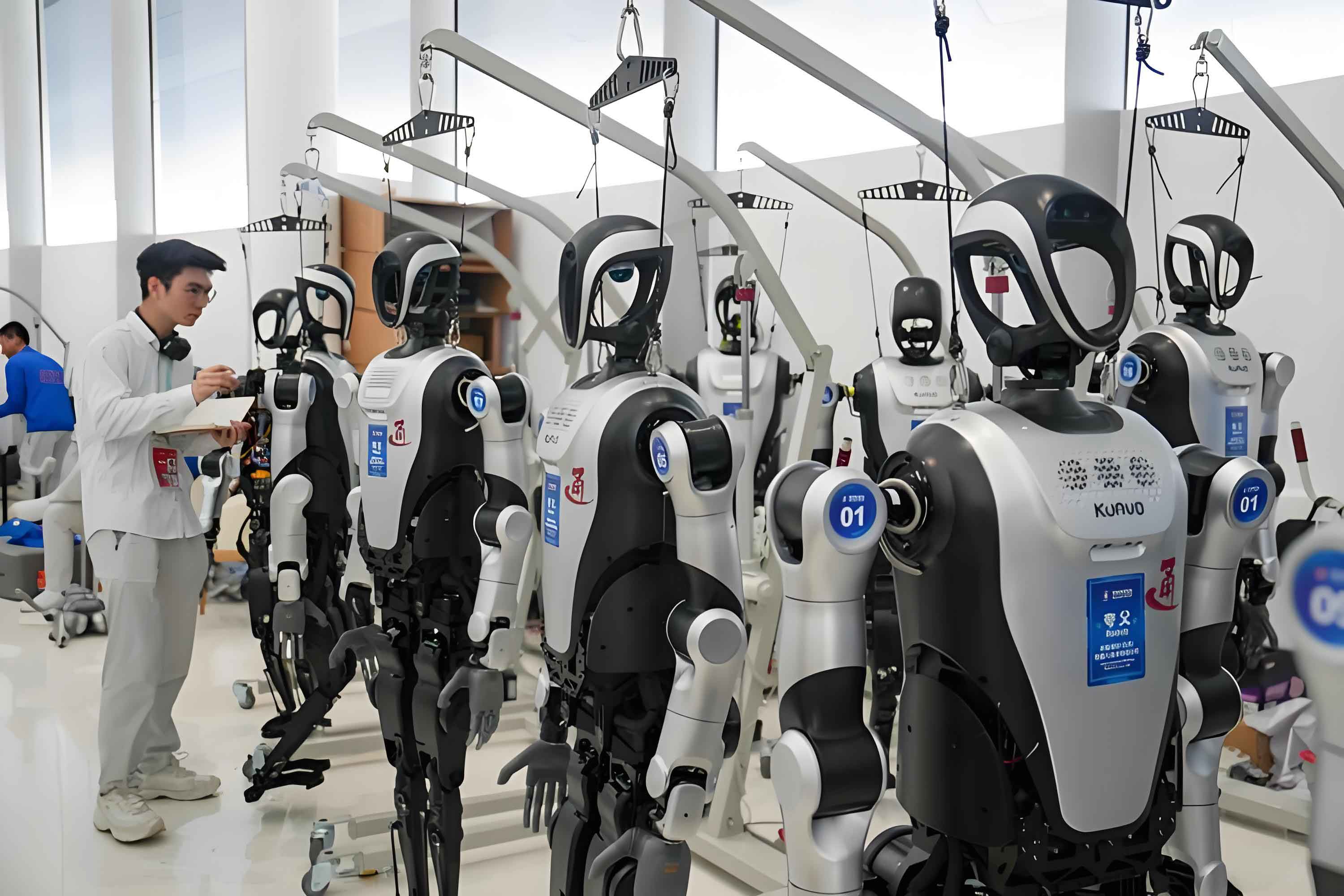
While a universal international standard definition remains elusive, the core concept is widely understood. A humanoid robot is a robot designed to mimic human morphology and behavior, possessing a degree of human-like features such as a torso, head, limbs, and the capacity for language, motion, and intelligent interaction. Its advanced architecture is often described as comprising three key systems: a “brain” for high-level cognition and decision-making, a “cerebellum” for real-time motion coordination and balance, and “limbs” for physical interaction with the environment.
This pursuit of a humanoid form factor is not merely aesthetic. The fundamental rationale is universal adaptability. Human society, its tools, infrastructure, and environments, are built to a human scale and for human interaction. A successfully realized humanoid robot, therefore, holds the potential to seamlessly integrate into existing workflows, spaces, and social contexts without requiring extensive and costly environmental retrofitting. This universality is the key driver behind its projected economic impact and the intense global competition in this field, marking it as a critical domain in the broader race for technological supremacy in AI and embodied intelligence.
Market Forecasts: A Spectrum of Potential
Projections for the humanoid robot market vary significantly, reflecting uncertainties around technological breakthroughs, cost reduction curves, and the pace of commercial adoption. Analyses present a range of scenarios from conservative to optimistic.
Global Market Projections
Globally, financial institutions like Goldman Sachs have outlined scenarios based on different adoption timelines. Their models suggest that as the industry potentially enters a mass production phase, the market size could expand dramatically.
| Scenario | 2035 Projected Market Size (USD) | Key Assumptions |
|---|---|---|
| Base Case | $38 Billion | Gradual adoption in structured industrial and commercial settings. |
| Optimistic Case | $205 Billion | Rapid technological maturation, significant cost declines, and broader consumer uptake. |
China Market Forecasts and Analysis
Chinese research institutions provide more granular forecasts for the domestic market, which is expected to be a major contributor to global growth. The variance in predictions highlights different focal points: some emphasize total industry output value including services, while others focus on the整机 (whole machine) market.
| Source & Report | 2025 Forecast | 2030 Forecast | 2035 Forecast | Notes |
|---|---|---|---|---|
| GGII Blue Book (2025) | ~¥2.4B (7.3k units) | ~¥25B (162.5k units) | ~¥140B (2M units) | Focus on unit sales and整机market. Average Unit Value (AUV) in 2030 ≈ ¥154k. |
| CAICT Report (2024) | N/A (Part of 20-50B range for 2024-2028) | ~¥10B (Estimated from 2028-2035整机range) | ¥50-500B (整机market range) | Focus on整机market value. Suggests later, more cautious ramp-up. |
To reconcile these views and estimate the total addressable market for operators (including services, connectivity, and ecosystem value), we can model the industry value. Using GGII’s unit forecast and a simplified cost model, we can project the整机market value. Furthermore, industry experience suggests that every unit of terminal value can drive 1.3 to 1.5 times its worth in supporting services, connectivity, and ecosystem development.
Let \( U_{t} \) represent the unit sales in year \( t \), and \( P_{t} \) represent the average unit price. The整机market value \( V_{t}^{整机} \) is:
$$ V_{t}^{整机} = U_{t} \times P_{t} $$
The total industry market size \( I_{t} \), including associated services, can be estimated as:
$$ I_{t} \approx V_{t}^{整机} \times \alpha $$
where \( \alpha \) is the ecosystem multiplier, typically between 1.3 and 1.5.
Applying this to 2030 estimates:
$$ V_{2030}^{整机} \text{(from GGII)} \approx ¥25 \text{ billion} $$
$$ I_{2030} \approx ¥25 \text{ billion} \times 1.4 \approx ¥35 \text{ billion} $$
Considering CAICT’s more conservative整机estimate of ~¥10 billion for 2030, the total industry size would be:
$$ I_{2030} \approx ¥10 \text{ billion} \times 1.4 \approx ¥14 \text{ billion} $$
A reasonable synthesis points to a Chinese humanoid robot industry scale growing from approximately ¥2.4 billion in 2025 to an estimated range of ¥14-35 billion by 2030. This represents a compound annual growth rate (CAGR) well exceeding 40%, highlighting the explosive growth potential during the “15th Five-Year Plan.”
Application Scenarios: From Niche to Normal
The theoretical universality of the humanoid robot suggests eventual application across all domains of human activity—production, daily life, and public governance. However, the path to commercialization is constrained by significant hurdles that will dictate the sequence of adoption.
Primary Application Categories
| Category | Example Scenarios |
|---|---|
| Production | Industrial manufacturing (assembly, quality inspection), logistics handling, high-risk operations (chemical plants, electrical grids), scientific exploration. |
| Daily Life | Domestic assistance (cleaning, care), commercial services (reception, retail, entertainment), education and training, healthcare support. |
| Public Governance | Emergency response and disaster rescue, public security patrols, inspection of critical infrastructure. |
Key Challenges to Widespread Adoption
- Commercial Viability (Cost vs. Performance): The current high cost of humanoid robots is prohibitive for most applications. In industrial settings, they cannot yet compete with dedicated, single-purpose robots on efficiency or return on investment. The cost decline is tied to production scale, often modeled by a learning curve. If cost decreases by a fraction \( b \) for every doubling of cumulative production \( N \), the cost \( C \) can be expressed as:
$$ C(N) = C_0 \times \left(\frac{N}{N_0}\right)^{-\log_2(1-b)} $$
where \( C_0 \) is the cost at initial cumulative production \( N_0 \). A 15% cost reduction per doubling (b=0.15) requires massive scale to reach consumer-affordable levels. - Intelligence Bottleneck: While large AI models provide a cognitive framework, they require vast, high-quality, task-specific datasets for embodiment—teaching the humanoid robot *how* to physically interact with the world. Curation of this data is a major bottleneck.
- Hardware & Engineering Hurdles: Achieving human-like dexterity, strength, balance, and endurance with reliable, lightweight, and affordable hardware remains a profound challenge. Critical components like high-torque actuators, multi-degree-of-freedom dexterous hands with tactile sensing, and robust bipedal locomotion systems are areas of intense R&D.
- Ethics, Safety, and Regulation: Establishing frameworks for liability in case of malfunction or misuse, ensuring data privacy, and preventing physical harm are prerequisites for social acceptance and large-scale deployment.
Expected Adoption Timeline During the 15th Five-Year Plan
Given the challenges, adoption will be phased. The humanoid robot‘s advantages—its form factor enabling easier social acceptance and its flexibility—are most valuable in scenarios where cost sensitivity is lower and interaction is key.
- Early Phase (2026-2027): Primary adoption in commercial services (e.g., interactive guides, promoters in malls, theme parks), scientific research, and advanced education. These are “showcase” or limited-batch applications where the value is in demonstration, data collection, or specialized interaction rather than pure labor economics.
- Mid-to-Late Phase (2028-2030): Gradual entry into structured industrial and logistics environments for specific, semi-structured tasks. Pilot programs in domestic settings for limited functions (elderly companionship, home monitoring) may also emerge, though mass consumer adoption remains post-2030.
Strategic Pathways for Telecom Operators
Telecom operators can engage with the humanoid robot ecosystem through multiple roles, addressing the needs of different stakeholder groups and leveraging their core competencies in connectivity, cloud, AI, and scalable service platforms.
Role 1: Technology Enabler for Manufacturers & Developers
Operators can provide critical infrastructure and platform services that augment the capabilities of the humanoid robot itself.
| Operator Capability | Application in Humanoid Robot Development |
|---|---|
| Compute & Network Power (Compute-Network Integration) | Provisioning GPU/accelerated computing clusters for training the robot’s “brain” (AI models). Low-latency, high-reliability networks for cloud-assisted control and real-time data offloading. |
| High-Precision Positioning & Spatial Computing | Integrating GNSS (e.g., BeiDou) with 5G/6G network positioning and edge computing to provide centimeter-level location and 3D environmental mapping for navigation. |
| AI Interaction Platform | Offering multi-modal AI agent APIs (voice, vision, dialogue) that robot developers can integrate to handle human-robot interaction, reducing development complexity. |
| Simulation & Digital Twin Services | Providing cloud-based simulation environments where thousands of humanoid robot “digital twins” can be trained simultaneously on vast arrays of virtual tasks, accelerating learning and testing. |
Role 2: Integrated Solution Provider for Enterprise Clients
For businesses seeking to pilot or deploy humanoid robots, operators can act as system integrators. They can combine robotics hardware (from partners), custom application software, dedicated network slices, data analytics, and ongoing maintenance into a turnkey “Robotics-as-a-Service” (RaaS) offering. This is particularly relevant for:
- Industrial & Logistics Pilots: Designing solutions for specific assembly or handling tasks.
- Commercial Service Innovation: Deploying interactive robot greeters or entertainers for retailers, hotels, or tourism boards.
- Specialized/High-Risk Operations: Partnering with energy or utility companies for remote inspection and emergency response solutions.
Role 3: Retailer & Managed Service Provider for Consumers
While mass-market adoption is later-stage, operators should prepare a platform for future consumer humanoid robot services. This model, akin to mobile service bundling, could involve:
- Subsidized or financed hardware sales bundled with connectivity/data plans.
- Recurring revenue from premium cloud services: enhanced AI features, exclusive content (educational, entertainment) streamed to the robot, family monitoring services, and remote diagnostics.
- Value-added services like insurance, security response packages, and technical support.
The lifetime value \( LTV \) of a consumer humanoid robot subscriber could be modeled as:
$$ LTV = (H_{sub} + M_{avg}) \times T_{avg} $$
where \( H_{sub} \) is the hardware subsidy recouped via contract, \( M_{avg} \) is the average monthly service fee, and \( T_{avg} \) is the average customer lifespan in months.
Role 4: Platform Provider for Public Governance & Safety
As with drones and connected vehicles, the proliferation of humanoid robots in public and private spaces will necessitate regulatory oversight. Operators are uniquely positioned to build and operate mandated regulatory platforms. These platforms could provide:
- Real-Time Registry & Monitoring: A central system registering each humanoid robot, its owner, and its operational status, leveraging the operator’s ubiquitous network for connectivity.
- Geofencing & Compliance Control: Remotely enforcing operational zones (no-go areas, speed limits) via network commands.
- Emergency Response Channel: A secure, prioritized network channel for authorities to assume control or issue shutdown commands in case of a security threat or malfunction.
Engaging in this role allows operators to address a critical societal need, align with national regulatory goals, and secure a pivotal, sticky position in the ecosystem’s governance layer.
In conclusion, the “15th Five-Year Plan” period will be a critical formative phase for the humanoid robot industry. Market growth, while starting from a small base, is projected to be exceptionally rapid. Commercial applications will evolve from niche demonstrations to initial industrial and specialized service deployments. For telecom operators, proactive engagement is not merely an option but a strategic imperative. By leveraging their strengths in connectivity, cloud, AI, integration, and scalable service management, they can transition from passive connectivity providers to active enablers and shapers of the humanoid robot revolution, building new revenue streams and securing relevance in the next era of intelligent computing.