
The field of embodied AI robot intelligence, which focuses on creating artificial systems that can perceive, reason, and act within physical environments, is undergoing a transformative shift. A critical component of this shift is the development of robust policy learning methods that enable robots to acquire complex skills efficiently. Among these, imitation learning (IL) stands out for its ability to learn policies directly from expert demonstrations, offering a data-efficient and often more stable alternative to reinforcement learning, which can suffer from reward engineering challenges and high sample complexity. However, traditional IL methods, such as Behavior Cloning (BC) and Adversarial Imitation Learning (AIL), face significant hurdles in modeling multi-modal action distributions, handling high-dimensional action spaces, and generalizing to unseen scenarios.
In parallel, diffusion models have emerged as a dominant class of generative models, particularly renowned in image and video synthesis for their ability to model complex, high-dimensional data distributions through a progressive denoising process. Their theoretical solidity, training stability, and exceptional capacity to capture multi-modality present a compelling solution to the core challenges in imitation learning. This synergy has led to the development of Diffusion Policies, a novel paradigm that re-frames robot policy learning as a conditional denoising diffusion process. This article provides a comprehensive survey of this rapidly evolving field, analyzing the principles, architectural improvements, applications, and future challenges of integrating diffusion models into embodied AI robot learning.
1. Foundational Principles of Diffusion Models
Diffusion models are latent variable generative models that learn to generate data by reversing a gradual noising process. The core idea involves two Markov chains: a fixed forward process that systematically adds Gaussian noise to data, and a learned reverse process that recovers the data from noise.
The Forward Process: Given a data sample $\mathbf{x}_0 \sim q(\mathbf{x}_0)$, the forward process produces a sequence of increasingly noisy latent variables $\mathbf{x}_1, …, \mathbf{x}_T$ through a fixed variance schedule $\beta_1, …, \beta_T$:
$$q(\mathbf{x}_t | \mathbf{x}_{t-1}) = \mathcal{N}(\mathbf{x}_t; \sqrt{1-\beta_t}\mathbf{x}_{t-1}, \beta_t \mathbf{I})$$
A notable property is that we can sample $\mathbf{x}_t$ at any timestep directly from $\mathbf{x}_0$:
$$q(\mathbf{x}_t | \mathbf{x}_0) = \mathcal{N}(\mathbf{x}_t; \sqrt{\bar{\alpha}_t}\mathbf{x}_0, (1-\bar{\alpha}_t)\mathbf{I})$$
where $\alpha_t = 1 – \beta_t$ and $\bar{\alpha}_t = \prod_{s=1}^{t} \alpha_s$.
The Reverse Process: Generation is performed by learning a parameterized model $p_\theta(\mathbf{x}_{t-1} | \mathbf{x}_t)$ that approximates the true posterior $q(\mathbf{x}_{t-1} | \mathbf{x}_t, \mathbf{x}_0)$. This reverse process is also defined as a Gaussian:
$$p_\theta(\mathbf{x}_{t-1} | \mathbf{x}_t) = \mathcal{N}(\mathbf{x}_{t-1}; \boldsymbol{\mu}_\theta(\mathbf{x}_t, t), \boldsymbol{\Sigma}_\theta(\mathbf{x}_t, t))$$
The model is typically trained by optimizing a simplified variational bound, leading to a denoising objective where a neural network $\epsilon_\theta$ predicts the noise $\epsilon$ added to $\mathbf{x}_0$:
$$L_{\text{simple}} = \mathbb{E}_{t, \mathbf{x}_0, \epsilon} [|| \epsilon – \epsilon_\theta(\sqrt{\bar{\alpha}_t}\mathbf{x}_0 + \sqrt{1-\bar{\alpha}_t}\epsilon, t) ||^2]$$
where $\epsilon \sim \mathcal{N}(0, \mathbf{I})$. For conditional generation, such as in an embodied AI robot policy, the noise predictor is also conditioned on an observation $\mathbf{o}$, i.e., $\epsilon_\theta(\mathbf{x}_t, t, \mathbf{o})$.
Improved Sampling with Differential Equations: The discrete-time diffusion process can be viewed as the discretization of a continuous-time Stochastic Differential Equation (SDE). This perspective allows for the use of advanced ODE solvers and has led to methods like DDIM and Consistency Models that dramatically accelerate sampling. The Probability Flow ODE offers a deterministic sampling trajectory:
$$d\mathbf{x} = \left[ \mathbf{f}(\mathbf{x}, t) – \frac{1}{2}g(t)^2 \nabla_{\mathbf{x}} \log p_t(\mathbf{x}) \right] dt$$
where $\nabla_{\mathbf{x}} \log p_t(\mathbf{x})$ is the score function, approximated by the noise predictor. These advances are crucial for making diffusion models viable for the real-time control loops required in embodied AI robot applications.
2. From Imitation Learning Challenges to Diffusion Policies
Traditional IL methods struggle with key issues that diffusion models are inherently suited to address. BC suffers from compounding errors and distribution shift, failing to model the multi-modality inherent in expert demonstrations. IRL and AIL methods are more robust but can be sample-inefficient, unstable, and complex to train.
Diffusion models offer a direct solution: their iterative denoising process naturally captures complex, multi-modal distributions without explicit modeling (unlike Mixture of Gaussians) and offers more stable training than GAN-based AIL. The concept of a Diffusion Policy formalizes this application. At each control cycle, the embodied AI robot’s policy takes a history of observations $\mathbf{O}_t$ and generates an action sequence $\mathbf{A}_t = \{\mathbf{a}_{t+1}, …, \mathbf{a}_{t+T}\}$ through a conditional denoising process. Starting from pure noise $\mathbf{A}_t^K$, the policy iteratively refines it over $K$ steps:
$$\mathbf{A}_t^{k-1} = \alpha (\mathbf{A}_t^{k} – \gamma \epsilon_\theta(\mathbf{O}_t, \mathbf{A}_t^{k}, k)) + \mathcal{N}(0, \sigma^2 \mathbf{I})$$
where $\epsilon_\theta$ is the conditioned noise predictor. Crucially, only the first $E$ steps of the predicted sequence are executed before replanning, a method known as receding horizon control, which enhances robustness to model errors and environmental changes.
3. Architectural Improvements and Variants of Diffusion Policies
The basic diffusion policy framework has been extensively refined across several dimensions to improve its performance, efficiency, and applicability for embodied AI robots. Key improvements are summarized in Table 1 and elaborated below.
| Component | Improved Aspect | Methods & Technologies |
|---|---|---|
| Conditional Input | Observation Modality | RGB/Depth, 3D Point Clouds, Proprioceptive State, Audio, Tactile, Latent Representations |
| Task Specification | Natural Language (via LLMs/VLMs), Goal Images, Keyframes | |
| Multi-Modal Fusion | Early/Late Fusion, Cross-Attention, FiLM Conditioning | |
| Policy Output | Action Representation | Joint Positions/Torques, End-Effector Poses (Absolute/Relative), Discrete Skill Codes |
| Prediction Horizon | Single-Step, Multi-Step Sequence, Hierarchical (Skill-Chaining) | |
| Network Architecture | Encoder Backbone | 2D CNN/ViT/CLIP, 3D PointNet++, Transformer-based Fusion |
| Noise Predictor Backbone | U-Net (Temporal Conv), Diffusion Transformer (DiT), Mixture of Experts (MoE) | |
| Unified Models | Vision-Language-Action (VLA) Models, World Models with Diffusion Decoders | |
| Training & Inference | Efficiency & Scaling | Large-Scale Multi-Robot Pre-training, Parameter-Efficient Fine-tuning (LoRA) |
| Fast Sampling | DDIM, Consistency Distillation, Flow Matching (Rectified Flow), One-Step Distillation |
3.1 Enhancing Conditional Inputs
The performance of an embodied AI robot policy is fundamentally tied to its perception. Modern diffusion policies have moved beyond simple RGB inputs to incorporate rich, multi-modal conditioning:
- 3D Scene Representations: Integrating 3D point clouds or latent 3D features provides explicit geometric reasoning, crucial for manipulation and navigation. Policies conditioned on 3D representations demonstrate superior generalization to novel viewpoints and object configurations.
- Proprioception and Force/Torque Sensing: Low-dimensional robot state (joint angles, velocities) and contact force feedback are critical for precise, contact-rich manipulation. Diffusion policies can fuse this proprioceptive data with visual input to generate compliant and accurate actions.
- Language and High-Level Planning: Large Language Models (LLMs) and Vision-Language Models (VLMs) are used to process natural language instructions, outputting high-level plans or semantic goal descriptions that condition the low-level diffusion policy. This enables open-vocabulary task specification for the embodied AI robot.
3.2 Optimizing Network Architecture
The choice of architecture for the noise predictor $\epsilon_\theta$ is pivotal. Two primary backbones dominate:
- Temporal Convolutional U-Nets: The original diffusion policy used a 1D temporal U-Net with FiLM conditioning. Its inductive bias towards local temporal patterns makes it simple and effective for many tasks, particularly those with predictable, smooth motions.
- Diffusion Transformers (DiT): Transformer-based architectures, employing self-attention and cross-attention mechanisms, excel at modeling long-range dependencies in both the action sequence and across multi-modal inputs (e.g., relating visual patches to future actions). They are particularly powerful for long-horizon tasks and form the backbone of large-scale VLA models.
To manage computational cost, Mixture of Expert (MoE) denoisers have been proposed, where different expert networks are sparsely activated based on the task or input context. Furthermore, the emerging paradigm of Vision-Language-Action (VLA) Models seeks to unify perception, reasoning, and action generation in a single, often diffusion-based, architecture pre-trained on massive datasets.
3.3 Accelerating Training and Sampling
The iterative nature of diffusion sampling is a bottleneck for real-time control of an embodied AI robot. Significant research focuses on distillation and alternative formulations:
- Consistency Models & Distillation: A consistency model is distilled from a pre-trained diffusion policy to map any point on the diffusion trajectory directly to the denoised output, enabling one or few-step generation while preserving multi-modality.
- Flow Matching (Rectified Flow): This method learns a deterministic straight path (a flow) from noise to data, bypassing the stochastic denoising process. It offers faster training and sampling and is increasingly used in the action heads of VLA models.
- Training Strategy: The standard paradigm involves large-scale pre-training on diverse, multi-robot datasets (e.g., Open X-Embodiment) to learn foundational robotic skills, followed by parameter-efficient fine-tuning (e.g., using LoRA) on specific downstream tasks for the target embodied AI robot.
4. Applications in Embodied AI Robot Domains
Diffusion policies have been successfully applied across a wide spectrum of robotic tasks, demonstrating their versatility. Table 2 contrasts their application in two primary domains.
| Domain | Task Type | Core Contribution | Key Challenge Addressed |
|---|---|---|---|
| Robotic Manipulation | Dexterous In-Hand Manipulation | Generates diverse, multi-finger grasps and in-hand re-orientation trajectories from point clouds. | Modeling high-DOF, contact-rich, multi-modal action spaces. |
| Long-Horizon Task & Assembly | Chains multiple diffusion-based skill models or plans over extended sequences using factor graphs or LLM guidance. | Error accumulation, temporal consistency in multi-step tasks. | |
| Multi-Modal Manipulation | Fuses visual, tactile, and auditory feedback to perform tasks like insertion or cloth manipulation under uncertainty. | Robust operation in low-visibility or contact-critical scenarios. | |
| Language-Driven Manipulation | Uses VLMs/LLMs to interpret “tidy the table” into a sequence of sub-goals for a diffusion policy to execute. | Bridging abstract human intent to low-level robot motions. | |
| Sim-to-Real Transfer | Serves as a robust policy representation that, when combined with domain randomization, transfers effectively from simulation to real embodied AI robots. | Bridging the Sim2Real gap. | |
| Mobile Navigation & Planning | Global Path Planning | Generates smooth, collision-free paths in metric maps, often using a diffusion model over a 2D grid or graph. | Finding globally optimal/near-optimal paths in complex static environments. |
| Local Motion Planning & Obstacle Avoidance | Produces local velocity commands or short-term trajectories conditioned on local sensor data (LiDAR, RGB-D). | Reacting dynamically to unmapped or moving obstacles in real-time. | |
| Multi-Robot Coordination | Generates joint collision-free trajectories for a fleet of embodied AI robots by modeling the joint action space. | Scalable, decentralized coordination. | |
| Goal-Conditioned Navigation | Given a goal image or description, the policy outputs navigation actions to reach the goal, often leveraging vision transformers and diffusion. | Visual grounding and long-horizon planning in unseen environments. |
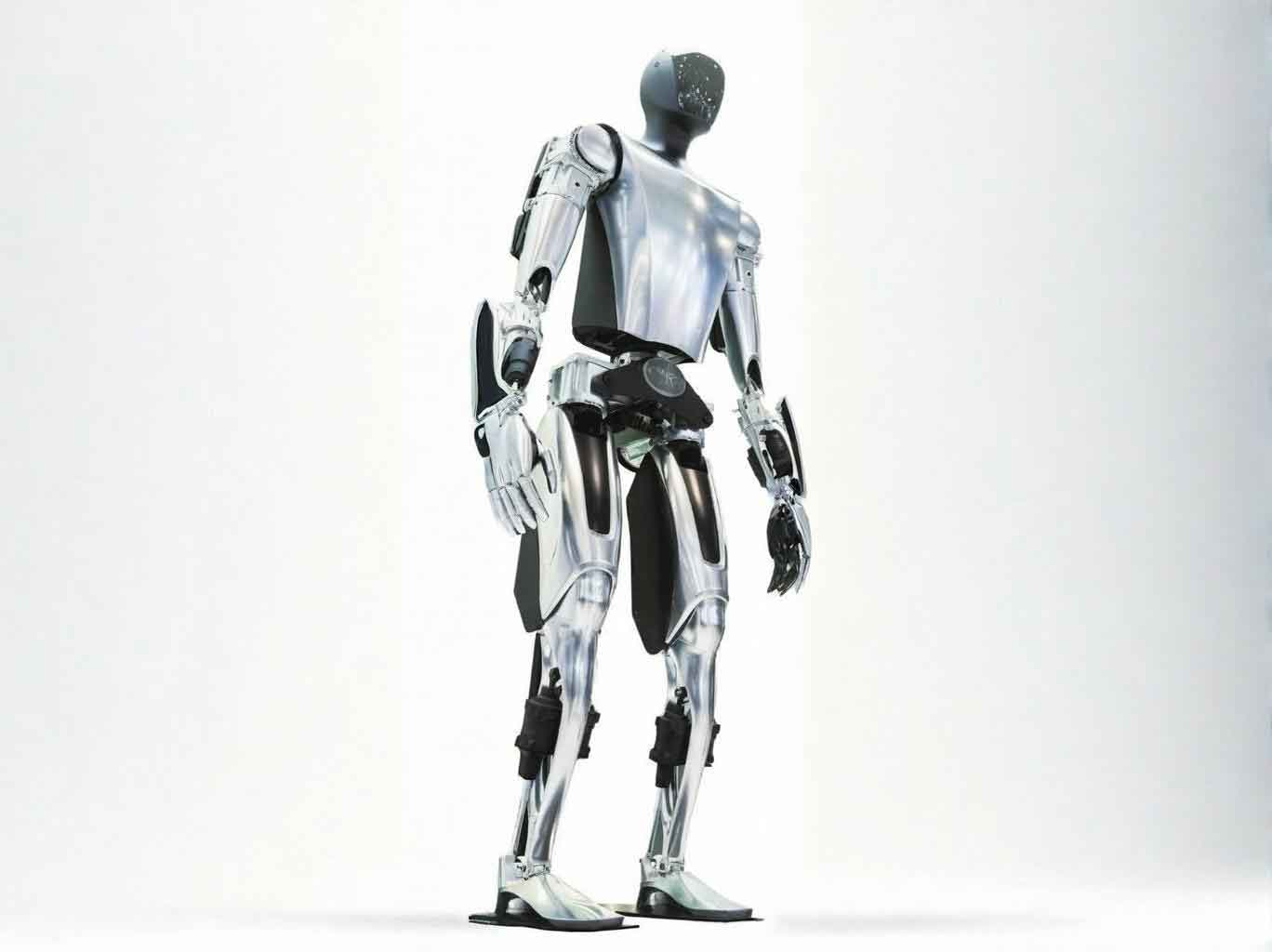
The image above illustrates the integrated hardware and intelligence stack necessary for deploying advanced policies, including diffusion-based ones, on real-world embodied AI robot platforms. This transition from simulation and algorithm to physical deployment represents the ultimate goal of this research.
5. Datasets, Benchmarks, and Evaluation
The progress in diffusion policies for embodied AI robots is underpinned by large-scale, diverse datasets and standardized benchmarks. Key resources include:
- Open X-Embodiment: A collation of over 1 million trajectories from 22 different robot morphologies, enabling foundational model pre-training.
- DROID & RH20T: Large-scale in-the-wild manipulation datasets with rich multi-modal sensing (RGB-D, proprioception, force, audio).
- ManiSkill & RoboCasa: Simulation benchmarks providing standardized environments for evaluating manipulation policies, with support for GPU-parallelized rendering crucial for diffusion model training.
- Navigation Benchmarks (e.g., Habitat, iGibson): Provide photorealistic simulated environments for training and evaluating mobile navigation policies.
Evaluation metrics remain task-specific but commonly include task success rate, completion time, path smoothness/length (for navigation), and robustness metrics like success rate under domain shift. A significant open challenge is establishing unified evaluation protocols that fairly compare diffusion policies against other IL and RL methods across diverse embodied AI robot platforms and tasks.
6. Current Challenges and Future Directions
Despite remarkable progress, several fundamental challenges must be overcome to realize the full potential of diffusion-based policies for general-purpose embodied AI robots.
1. Real-Time Inference Efficiency: While distillation and flow matching have made great strides, achieving high-frequency (e.g., >30 Hz) control with the full expressivity of a diffusion model remains difficult. Future work may involve specialized hardware acceleration or novel, inherently faster generative architectures inspired by diffusion.
2. Generalization and Compositionality: Although pre-training on vast datasets improves generalization, embodied AI robots still struggle with truly novel objects, environments, or task compositions not seen during training. Future directions include:
- Tighter integration with world models that can predict the outcomes of actions, enabling internal simulation and planning.
- Developing more structured and compositional policy representations that can recombine learned skills in novel ways, guided by LLMs.
3. Safety and Controllability: The stochastic and generative nature of diffusion models can produce unexpected, potentially unsafe actions. Ensuring safety is paramount. Research is needed on:
- Safe Diffusion Policies: Integrating control barrier functions (CBFs) or other safety constraints directly into the denoising sampling process to guarantee collision-free or force-limited outputs.
- Improved Controllability: Developing finer-grained methods to steer the diffusion process, allowing users to specify constraints (e.g., “avoid this region,” “apply less force”) without re-training.
4. Sample Efficiency and Data Curation: While diffusion policies can learn from offline data, their performance still scales with data quality and quantity. Reducing reliance on massive, human-collected datasets is crucial. Promising avenues include:
- Generative Data Augmentation: Using the diffusion model itself, or a companion model, to synthesize useful, novel training scenarios.
- Learning from Videos (LV): Leveraging the vast amounts of human video data available online by learning action models through inverse graphics or video prediction models.
5. Unified Embodied AI Robot Foundations: The ultimate goal is a single, generalist model that can control diverse embodied AI robot embodiments (arms, legs, hands, mobile bases) across a vast array of tasks. The path forward involves scaling VLA-like architectures with diffusion-based action heads on ever-larger and more diverse datasets of robot experience, while solving the aforementioned challenges in efficiency, safety, and generalization.
In conclusion, the integration of diffusion models into imitation learning has catalyzed a significant leap forward for embodied AI robot intelligence. By providing a robust framework for learning complex, multi-modal action distributions, diffusion policies have unlocked new levels of dexterity and generalization. While challenges in speed, safety, and data efficiency persist, the rapid pace of innovation in this interdisciplinary field suggests a future where capable, adaptive, and general-purpose embodied AI robots, guided by powerful generative models, become an integral part of our physical world.