
As a researcher examining the intersection of law and emerging technology, I observe the rapid development of humanoid robots in China with a mixture of fascination and profound caution. These entities, representing a sophisticated fusion of artificial intelligence and anthropomorphic form, are steadily transitioning from industrial showcases to potential participants in domestic and social spheres. This integration prompts a fundamental legal and philosophical question that forms the crux of my analysis: can, and should, a humanoid robot be considered a subject of criminal responsibility? The answer to this question is not merely academic; it is the prerequisite and cornerstone for constructing any effective legal framework to prevent criminal risks associated with their operation. Based on a rigorous application of existing criminal law doctrine, I argue for the negation of criminal subject status for humanoid robots. This position is not born from technophobia, but from a disciplined adherence to legal principles concerning act, intent, and the very definition of a legal person.
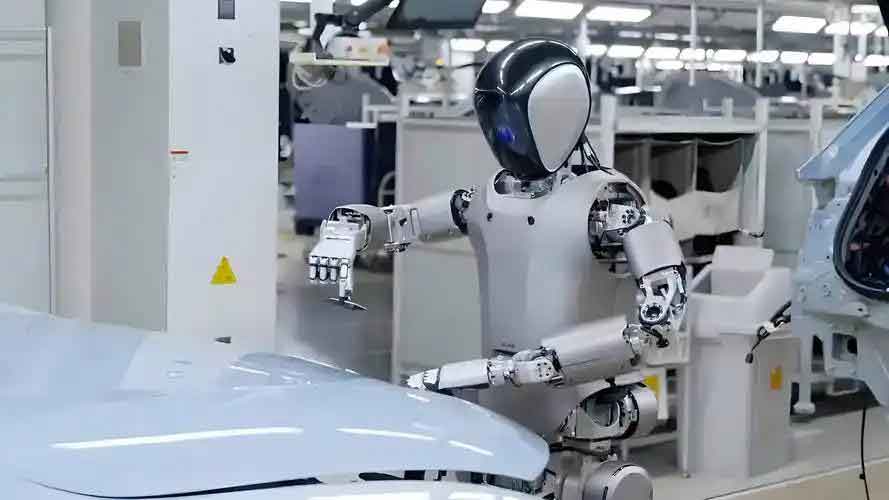
The discourse surrounding the humanoid robot must be grounded in its inherent characteristics. It is, at its core, a technological product—a “vessel” or physical machine endowed with an “intelligent soul” through advanced AI and machine learning algorithms. Its defining features are its anthropomorphic exterior and its high-order intelligence, which includes capabilities for interaction, learning, perception, and task execution. The pivotal link in assessing criminal liability is the “commission” of a criminal act. Therefore, the inquiry must bifurcate: does the external “vessel” qualify as a “person” under the law, and does the internal “soul” possess independent consciousness such that its actions constitute a “criminal act” in the legal sense?
Theoretical Schisms on Criminal Subjectivity
The academic debate is sharply divided, often mapped onto the spectrum of artificial intelligence capability. Proponents of granting criminal subjectivity typically base their argument on the anticipated evolution of the humanoid robot into a so-called “strong AI” or Artificial General Intelligence (AGI) entity.
| Perspective | Core Argument | Proposed Legal Consequence |
|---|---|---|
| Pro-Subjectivity (Strong AI/AGI Focus) | A humanoid robot with strong AI possesses independent capacity for recognition and control, can act beyond its original programming, and exhibits intentionality. Its social integration warrants treating it as a “legal person.” | Recognize the humanoid robot as an independent subject of criminal responsibility. This may necessitate the creation of new, tailored punitive measures (e.g., data deletion, program alteration, permanent deactivation). |
| Anti-Subjectivity (Weak AI & Human-Centric Focus) | Current and foreseeable humanoid robots are sophisticated tools. They lack biological essence, genuine self-awareness, and the free will necessary for moral and legal agency. Liability must always trace back to human actors (designers, programmers, users). | Deny criminal subject status. Apply existing legal doctrines (e.g., product liability, negligence, oversight liability) to natural persons or legal entities behind the robot’s actions. |
| Functional/Situational Perspective | Emphasizes the social context and human-robot interaction. While not necessarily endorsing full legal personality, it argues for a nuanced approach based on the robot’s perceived agency in social settings, focusing on building trust and embedding ethics-by-design. | Hybrid regulatory approach combining technical standards (“reasonable robot” standard), ethical guidelines, and legal norms to allocate risk and responsibility, primarily to human stakeholders. |
The fundamental divergence between these camps often stems from conflating “is” (the current reality) with “ought” (a speculative future), and from a backward-looking reasoning process that starts with a harmful outcome and seeks a subject to punish, rather than forwardly applying established legal criteria for criminal liability.
A Critical Analysis: The “Vessel” and the “Soul”
My critique of the pro-subjectivity position centers on a sequential analysis of form and function.
1. The Anthropomorphic “Vessel”: Form Does Not Confer Personhood
The human-like shape of a humanoid robot is a design choice, not a legal qualification. Criminal law, particularly in its foundational principles, is anthropocentric.
$$ \text{Criminal Subject (Natural Person)} \equiv \text{Biological Life + Legal Capacity + Moral Agency} $$
A humanoid robot possesses none of these essential attributes. It is not a biological being, it has no legal capacity (it cannot own property, enter contracts, or possess rights independently), and its “actions” are not expressions of a moral conscience. The analogy to corporate criminal liability is flawed. While a corporation is a legal fiction held accountable, the principle of “dual punishment” (punishing both the entity and the responsible natural persons) underscores that the source of culpability always lies in human decision-making. The humanoid robot is, at best, the medium or instrument through which consequences occur, not the source of criminal intent.
2. The Intelligent “Soul”: The Absence of Independent *Mens Rea* and *Actus Reus*
The core of criminal liability is the conjunction of a guilty mind (mens rea) and a guilty act (actus reus). The sophisticated algorithms of a humanoid robot fail to satisfy either requirement.
a) Lack of Independent Consciousness and Intent: Even the most advanced machine learning operates within a framework of parameters, goals, and data sets defined by human programmers. What is termed “emergence” or “learning beyond programming” is still a stochastic output of a human-created system. Its “decisions” are complex calculations, not manifestations of free will or conscious intent. The capacity to learn is not unique nor indicative of personhood; animals learn and adapt, but we do not attribute criminal responsibility to them. The behavior of a humanoid robot is ultimately a function of its permissions and design constraints.
$$ \text{Robot’s “Decision”} = f(\text{Code}, \text{Training Data}, \text{Algorithm}, \text{Sensor Input}) $$
This function lacks the variable of autonomous consciousness.
b) Action is Not Criminal Act: An act only becomes actus reus when it is the voluntary manifestation of a culpable mental state. Every major theory of criminal behavior—natural, causal, social, or personality-based—incorporates the actor’s subjective state as a constitutive element. A humanoid robot moving its arm and causing damage is executing a sequence (whether predicted or emergent), not “acting” with purpose or malice in the legal sense. Punishing the machine for this output is logically equivalent to destroying a faulty tool, which is a matter of product safety, not criminal justice.
| Aspect | Human Prerequisite for Criminal Liability | Status of the Humanoid Robot | Conclusion |
|---|---|---|---|
| Biological/Legal Personhood | Must be a natural person or a legally recognized entity (like a corporation). | Anthropomorphic machine; a product, not a legal person. | Fails the basic subject test. |
| Consciousness & Free Will (Mens Rea) | Capacity for intent, knowledge, recklessness, or negligence. | Executes complex, pre-determined or probabilistically generated functions. Lacks subjective mental state. | Cannot form the requisite guilty mind. |
| Voluntary Act (Actus Reus) | Behavior that is a voluntary manifestation of the will. | Behavior is an output of its programming and sensor data processing. | Does not perform a “voluntary act” in the legal sense. |
| Purpose of Punishment | Retribution, deterrence, rehabilitation, incapacitation. | Punishment (e.g., deletion) carries no retributive or deterrent value for other robots. “Rehabilitation” means reprogamming. | Punishing the robot serves no core penal objective. |
Toward a Risk Management Paradigm: A New Macro-Management Framework for Technology
Negating the criminal subjectivity of the humanoid robot does not leave a regulatory vacuum. On the contrary, it redirects legal focus to where it is most effective and just: the human creators, deployers, and supervisors. The regulation of risks associated with humanoid robots must be integrated into a proactive, systemic, and sustainable “New Macro-Management Framework for Science and Technology.” This framework emphasizes strategic planning, holistic systems thinking, and sustainable development goals.
The first step is to rigorously distinguish between the “is” (the current state of bounded AI tools) and the “ought” (the speculative future of conscious machines). Basing present-day law on science-fiction scenarios is unwise. The real “risk” today stems not from autonomous machine malice, but from human error in design, inadequate testing, negligent oversight, or misuse.
Within this framework, criminal law retains a vital, albeit careful, role. Its function is not to prosecute machines but to define the red lines for human conduct in the development and deployment of these powerful technologies. The core legal mechanism is the doctrine of Oversight Liability (Überwachungspflicht), which can be adapted to cover both negligent and intentional failures in duty.
1. Systemic Oversight and the Allocation of Risk
A dynamic, lifecycle approach to risk must be adopted:
- Ex-ante Risk Prediction & Design Ethics: Mandating ethical review and risk assessment in the R&D phase.
- In-process Supervision & Testing: Establishing continuous monitoring and safety validation protocols during development and training.
- Post-deployment Monitoring & Accountability: Ensuring clear lines of responsibility for users, owners, and maintainers.
This creates a chain of responsibility. The legal concept of “allocation of danger” (Gefahrenverteilung) can be used formally to distribute safety obligations among different stakeholders (designers, manufacturers, integrators, owners, users). The formula for establishing a duty of care in this context could be modeled as:
$$ \text{Duty}_{\text{Stakeholder}} \propto \text{Control}_{\text{over Tech}} + \text{Expertise}_{\text{}} + \text{Benefit}_{\text{from Use}} $$
Where a higher degree of control, expertise, and benefit implies a greater duty to foresee and prevent harms.
2. Applying Oversight Liability: From Negligence to Intent
When a humanoid robot causes harm, the inquiry shifts to human actors. The key is not whether the developer could vaguely “foresee danger,” but whether they breached a specific standard of care in their sphere of control.
$$ \text{Criminal Liability}_{\text{Human}} = \text{Breach of Duty of Care}_{\text{(Negligent or Intentional)}} + \text{Causation}_{\text{to Harm}} $$
Oversight Negligence applies when a responsible person fails to fulfill their duty of supervision, leading to a harmful outcome they should have and could have prevented. For example, a user deploying a humanoid robot in an unsafe environment without proper safeguards.
Oversight Intent is a crucial extension. It arises when a responsible person is aware of a substantial and unjustifiable risk that the humanoid robot could cause harm but consciously disregards that risk or even intends to use the robot as an instrument for harm. This closes the accountability gap for reckless or malicious use. The failure to implement available safety measures, despite knowing the robot’s potential to cause injury in certain scenarios, can indicate a conscious disregard rising to the level of indirect intent (dolus eventualis).
| Stakeholder | Potential Oversight Duties | Basis for Criminal Liability |
|---|---|---|
| Designer/Programmer | Ensuring algorithmic stability, implementing ethical constraints, rigorous safety testing, providing clear operational limits. | If harm results from a known, foreseeable, and correctable flaw they deliberately ignored or negligently failed to discover. |
| Manufacturer/Integrator | Ensuring hardware safety, reliable sensor integration, secure data pathways, providing adequate warnings and instructions. | If harm results from a manufacturing defect or integration failure they were aware of or negligently missed. |
| Owner/Operator/User | Using the robot within prescribed parameters, maintaining it properly, monitoring its operation, intervening in risky situations, securing it from unauthorized access. | If harm results from negligent operation, reckless deployment, failure to maintain, or intentional misuse of the humanoid robot. |
| Regulatory Bodies | Establishing clear safety standards, certification processes, and operational guidelines for different application classes. | (Generally administrative/ civil liability). Criminal liability might attach for extreme individual corruption or gross negligence in certification. |
3. The Principle of “Permissible Risk” and Sustainable Innovation
Finally, criminal law must balance safety with innovation. Not all risks associated with a novel technology like the humanoid robot are legally culpable. The doctrine of “permissible risk” (erlaubtes Risiko) must be invoked. Research and development involve inherent uncertainties. A developer is not criminally liable for an unforeseeable failure in a genuinely novel area pursued with due scientific rigor. The boundary of what is “permitted” should be defined by adherence to the state of the art in safety science, compliance with ethical and industry standards, and the absence of reckless disregard for public safety. This creates the necessary space for responsible innovation while maintaining a firm legal perimeter.
Conclusion
In conclusion, the current trajectory of humanoid robot development does not warrant a radical reconfiguration of criminal law’s subject. The humanoid robot lacks the biological, conscious, and moral foundations of personhood. Its “acts” are not criminal acts, and punishing it serves no legitimate purpose of the penal system. The path forward lies not in personifying machines, but in sharpening the accountability of the people and organizations behind them. By embedding the governance of humanoid robots within a forward-looking, systemic macro-management framework for technology, and by deftly applying and adapting established legal doctrines of oversight liability and risk allocation, we can effectively mitigate associated dangers. This approach promotes secure technological progress, protects societal interests, and upholds the fundamental principles of justice that are anchored in human agency and responsibility.