
The proliferation of humanoid robots in everyday life, from industrial settings to domestic care, represents a significant technological leap. However, their integration brings forth novel and complex challenges for legal frameworks, particularly the traditional system of accident liability. The convergence of multi-developer ecosystems, sophisticated machine learning algorithms, and inherent human-machine hybrid control modes creates unprecedented difficulties in determining accident causation, assigning fault, and administering relief. This article argues that traditional liability doctrines are ill-equipped to handle the majority of accidents involving humanoid robots. A new, specialized liability framework is therefore imperative. This framework should designate the humanoid robot manufacturer as the primary “cheapest cost-avoider” while incorporating contextualized exemption mechanisms, such as technology safe harbors, to balance innovation incentives with necessary societal protection.
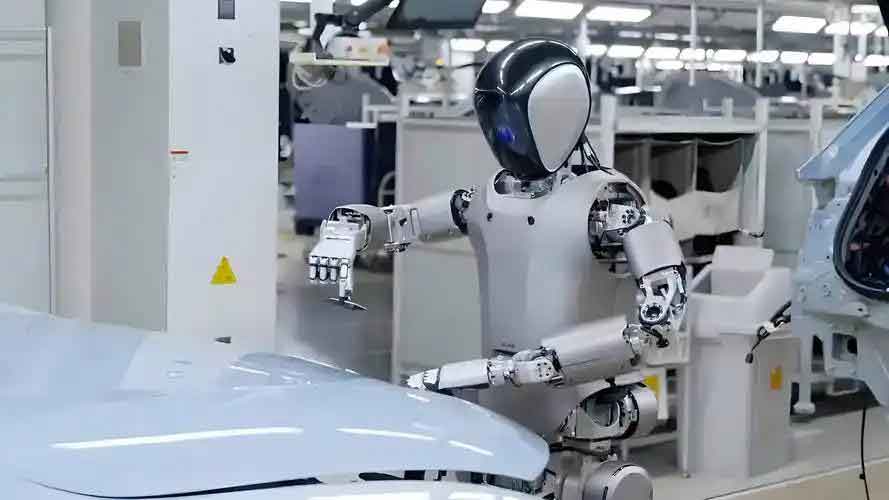
The core challenge stems from the unique technological constitution of the humanoid robot. It is not merely an advanced tool but an entity operating at the intersection of physical embodiment, autonomous cognition, and shared control. Understanding this triad is essential for any legal analysis.
Technological Foundations: The Triad of Complexity
The legal challenges posed by the humanoid robot are directly attributable to three interdependent technical features, summarized in Table 1.
| Technical Feature | Description | Legal & Practical Implication |
|---|---|---|
| Anthropomorphic Design | Hardware mimicking human form (limbs, stature, expression) to navigate human-centric environments and facilitate interaction. | Expands application scope into sensitive, everyday domains (homes, hospitals), increasing frequency and variety of potential accidents involving privacy, emotional distress, and physical harm. |
| Artificial Intelligence (AI) & Machine Learning (ML) | Cognitive capacity powered by ML algorithms that enable learning from data, adaptation, and decision-making without explicit pre-programming for every scenario. | Introduces fundamental uncertainty and unpredictability (“emergence”). Creates a “black box” problem, making causation and fault attribution for algorithm-driven actions extremely difficult. |
| Human-Machine Hybrid Control | Operational mode where control is dynamically shared or transferred between a human user/operator and the robot’s autonomous AI systems. | Blurs the line between human error and machine error. Challenges the foundational legal premise of a human being in complete control of an instrumentality. |
The shift from deterministic, rule-based algorithms to probabilistic machine learning algorithms is particularly transformative. A traditional algorithm follows a predefined path: $Action = f(Input, Explicit Rules)$. In contrast, a machine learning algorithm generates behavior through learned patterns: $Action = ML(Model, Training Data, Current Input)$, where the function $ML$ is often non-transparent and evolves. This autonomy is the source of both the utility and the liability “black box” of the modern humanoid robot.
The Inadequacy of Traditional Accident Liability Frameworks
Traditional tort and product liability laws are predicated on clearer lines of causation and agency. The humanoid robot, with its triad of features, strains these doctrines at multiple points:
- Fault Attribution: The “reasonable person” standard struggles when the acting “mind” is a non-transparent ML algorithm. Is fault with the user for poor supervision, the programmer for flawed training data, or the algorithm itself for an unexpected “emergent” decision?
- Product Liability Simplification: Traditional law often treats software failure as a breach of contract/warranty issue. However, when an ML algorithm’s active decision-making causes physical harm to third parties, contract law is insufficient; the gravitas of tort law is invoked, but without clear doctrinal hooks.
- The Debugging Dilemma: Identifying and remedying the cause of an accident is paramount. With ML algorithms, post-accident forensic analysis can be nearly impossible. The causal chain may be obscured within billions of neural network parameters. The failure may not be replicable, making standard debugging protocols ineffective.
- Remedial Shortcomings: Traditional remedies (damages, injunctions against human activity) are poorly suited to correct the behavior of a learning machine. How does one “enjoin” or “rehabilitate” a faulty algorithm? The law lacks tools for behavioral correction of autonomous systems.
A Typology of Humanoid Robot Accidents
To clarify where traditional law fails and where new law is needed, we can categorize accidents based on the primary causative agent, as shown in Table 2.
| Accident Category | Sub-Type | Description | Traditional Law Applicable? |
|---|---|---|---|
| Human Fault | Intentional Misuse | Using the humanoid robot as a tool to deliberately cause harm. | Yes (Criminal Law, Intentional Torts) |
| Negligence | User error due to distraction, over-reliance, or failure to maintain. | Yes (Negligence Law) | |
| Algorithmic Fault (“Failure”) | Traditional Software Bug | Flaw in deterministic, non-learning code (e.g., sensor failure, control loop error). | Yes (Product Liability) |
| Machine Learning Defect | Harm stemming from biased training data, flawed reward functions, or undesirable “emergent” behavior from the learning process. | No (Major Challenge) | |
| Algorithmic “Deliberate” Choice | The ML algorithm, in a crisis, makes a cost-minimizing choice that causes harm (e.g., swerving to save occupant, injuring pedestrian). This is a functional “deliberateness,” not conscious intent. | No (Major Challenge) | |
| Hybrid/Uncertain Fault | Indeterminate Causation | The most common and difficult case: accident occurs under hybrid control, and evidence cannot conclusively apportion blame between human error and algorithmic failure. | No (Major Challenge) |
The critical zone for legal innovation encompasses Machine Learning Defects, Algorithmic “Deliberate” Choice, and Indeterminate Causation. For these, traditional liability regimes enter a blind spot.
Constructing a New Liability Framework for the Humanoid Robot
A forward-looking liability system must address the challenges of uncertainty, hybrid control, and incentivizing safety without stifling innovation. A three-pronged approach is proposed.
1. A “Reasonable Machine” Standard and Technological Safe Harbors
Instead of striving for the unattainable goal of zero accidents, the law should aim to minimize them. A “reasonable machine” standard can be developed, analogous to the “reasonable person.” An algorithm’s actions would be judged against what a properly designed, trained, and deployed system of its kind should have done in the same circumstances. This standard can be operationalized through detailed, context-specific technical regulations (e.g., for medical, industrial, or domestic humanoid robots).
Manufacturers who adhere to these prescribed safety and performance standards could benefit from a “technology safe harbor,” providing a rebuttable presumption of non-liability or a limit on damages. This creates a predictable environment for innovation while setting a clear safety floor. The standard can be expressed as a compliance function:
$$
\text{Safe Harbor Presumption} =
\begin{cases}
\text{Applicable}, & \text{if } T_{\text{robot}} \geq S_{\text{reg}} \\
\text{Not Applicable}, & \text{otherwise}
\end{cases}
$$
where $T_{\text{robot}}$ represents the technical specifications and performance of the humanoid robot, and $S_{\text{reg}}$ represents the regulatory safety standard for its operational domain.
2. Establishing Facts in a Hybrid World: Logging, Auditing, and Black Boxes
Resolving liability in cases of hybrid or algorithmic fault requires overcoming evidentiary hurdles. A mandatory logging and data preservation regime is essential. Every humanoid robot must be equipped with a robust “event data recorder” (a black box) that continuously logs:
$$ \text{Log} = \{ \text{timestamp}, \text{sensor input}, \text{user command}, \text{algorithmic state}, \text{control allocation}, \text{action output} \} $$
This data stream must be securely stored and made available to certified investigators post-accident. Furthermore, independent third-party algorithm auditing should be mandated for high-risk applications. These audits would assess training data, model stability, and decision-making boundaries to identify latent systemic risks before they manifest in accidents.
3. The Manufacturer as the “Cheapest Cost-Avoider”
When fault is ambiguous or inherently tied to the robot’s autonomous design, the economic theory of the “cheapest cost-avoider” provides the most efficient and just basis for liability. Among the potential bearers of risk—the user, the owner, and the manufacturer—the manufacturer is uniquely positioned to minimize the social cost of accidents.
The total cost of accidents ($C_t$) includes prevention ($C_p$), damage ($C_d$), rectification ($C_r$), and systemic risk ($C_s$). The manufacturer has the greatest influence over $C_p$ (through design), can best absorb and insure against $C_d$ and $C_r$, and is the only entity that can reduce $C_s$ at the systemic level (e.g., via software updates). Therefore, a liability rule that initially assigns responsibility to the manufacturer creates optimal incentives for safety investment. This can be modeled as:
$$
\min_{C_p} C_t = C_p + E[C_d + C_r + C_s | C_p]
$$
where the manufacturer chooses a level of prevention cost $C_p$ to minimize the expected total cost.
This is not a proposal for absolute strict liability. Exemptions and modifications would apply based on the safe harbor compliance, obvious user misuse, or force majeure. The goal is to place the primary incentive and capability for risk management on the actor with the most comprehensive control over the technology’s life cycle—from its algorithmic core to its physical deployment. This entity is the humanoid robot manufacturer.
Conclusion: Toward a Balanced Regulatory Future
The age of the humanoid robot demands a recalibration of accident law. Clinging to anthropocentric liability models will result in legal uncertainty, stifled innovation, and inadequate compensation for victims. The path forward requires acknowledging the unique agentic nature of these machines. By developing a “reasonable machine” standard supported by safe harbors, implementing rigorous factual discovery mechanisms for hybrid control environments, and anchoring liability in the economic logic of the cheapest cost-avoider (the manufacturer), we can construct a framework that protects the public while fostering responsible technological advancement. The integration of the humanoid robot into society is inevitable; the development of a just and efficient legal structure to govern its unintended consequences is an urgent imperative.