
The development of industrial robots is inextricably linked to the entire manufacturing industry chain. While the United States was the birthplace of the industrial robot, its domestic robot body industry did not expand significantly and was overtaken by Japan in the 1980s, with the latter becoming the “Robot Kingdom.” The shift in the U.S. employment structure, from manufacturing to healthcare, illustrates a divergence from a core robotics growth path. In contrast, I believe the massive demand for transformation and upgrading within Chinese manufacturing will inject powerful momentum into the rise of China robots.
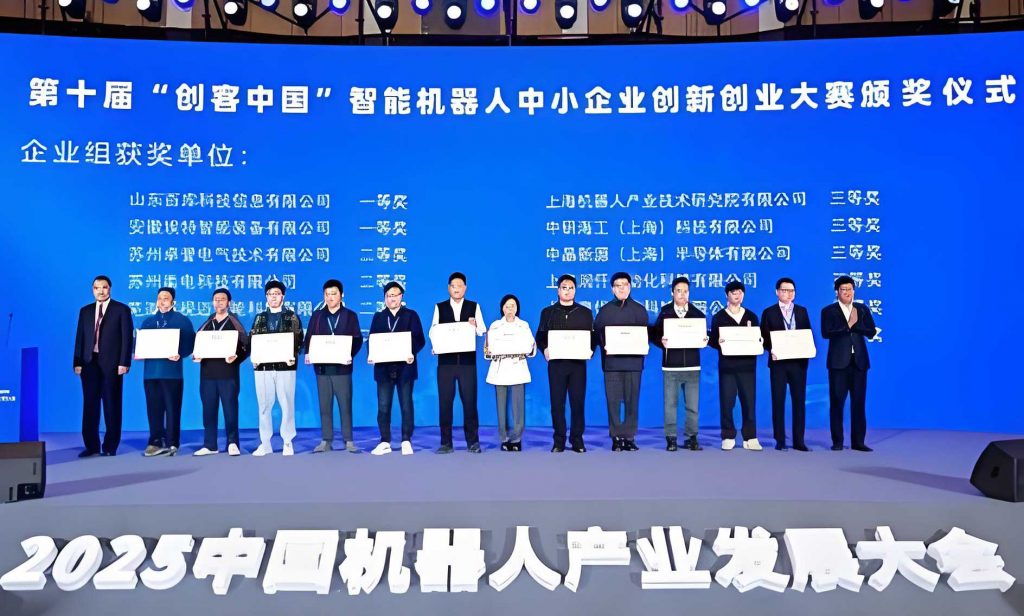
The cultivation of the robot industry in China must learn from the “Big Four” (ABB, KUKA, Yaskawa, Fanuc) while integrating new thinking suited to the domestic manufacturing landscape. Based on this, I have identified several dominant growth models for China robots.
1. Growth Models for China’s Robot Industry
Analyzing the successful pathways, we can categorize the emergence of China robots companies into distinct models, as summarized below.
| Growth Model | Core Logic & Origin | Key Advantages | Examples in China |
|---|---|---|---|
| Gene Inheritance | Spinning off from a large, established manufacturing parent company. The robot is first applied internally, absorbing cost and refining technology. | Deep manufacturing know-how, strong financial backing, ready internal market, high growth ceiling. | Companies evolving from major appliance, electronics, and industrial equipment manufacturers. |
| Research Institute Spin-off & Innovation | Transforming from university or state research institute projects into commercial entities with proprietary IP. | High R&D density, sensitivity to new tech, strong innovation capability. Includes both large established firms and agile startups. | Several pioneering robot companies and numerous startups in drones, service robots, and key components. |
| Merger & Acquisition (M&A) | Acquiring international or domestic robot companies to rapidly gain technology, talent, and market share. | Fast track to advanced technology and global market presence. Consolidates industry, moving away from a fragmented landscape. | Major acquisitions of foreign robot giants; domestic consolidation among leading firms. |
| System Integration & Application | Focusing on integrating purchased robot arms with end-of-arm tools and peripheral systems to solve specific customer problems. | Lower technical barrier to entry, deep understanding of local customer needs and non-standard processes, quicker ROI. Vital for widespread adoption. | Over 3000 system integrators in China, mostly SMEs serving diverse, non-automotive sectors. |
The market share of a company within the China robots ecosystem can be conceptualized by its specialization and scale. We can define a company’s focus index $F_i$ and scale factor $S_i$:
$$
F_i = \frac{R\&D_i}{Revenue_i}, \quad S_i = \frac{C_i}{C_{total}} \times 100\%
$$
where $R\&D_i$ is the R&D expenditure, $Revenue_i$ is total revenue, $C_i$ is the company’s capacity, and $C_{total}$ is the total industry capacity. Gene-inheritance and M&A models often have high $S_i$, while innovative spin-offs may have high $F_i$.
2. Strategic Investment Considerations for China Robots
The robot industry is experiencing a vibrant era, attracting significant investment interest. After a period of “speculative fever,” a return to rationality is necessary. Clear investment directions are now emerging, as outlined below.
| Investment Direction | Primary Target | Investment Logic & Rationale | Risk/Reward Profile |
|---|---|---|---|
| Robot Body Manufacturing | Large-scale, integrated robot OEMs. | Core link in the chain. Requires mastering integration and reliability. High investment density, long payback period (“3-Highs & 1-Long”: high capital, tech, talent intensity; long cycle). | High risk, potentially very high long-term reward. Crucial for national industrial capability. |
| Lightweight & Economical Robot Bodies | Midsize companies producing SCARA, delta, collaborative, and small 6-axis robots. | Serves the massive “low-end capacity” automation in 3C,家电, food, plastics. Market demand is vast and underserved by global giants. Local service and cost advantages prevail. | Moderate risk, strong growth potential aligned with immediate market needs. |
| User-Customized & Specialized Robots | Innovative SMEs focused on niche applications (inspection, logistics, retail, etc.). | Avoids homogenized competition. Driven by specific economic needs in untapped sectors. Success depends on unique technology and market fit. | High risk of market acceptance, but high reward if a niche is successfully dominated. |
| System Integration Services | SME system integrators serving specific regional or industry verticals. | Market size larger than robot bodies. Local integrators understand non-standard processes and have cost advantages. Shorter project cycles and faster capital turnover. | Lower technical risk, but faces business risks like upfront capital requirements and intense competition. Healthy average margins. |
| High-Quality Industrial Parks/Clusters | Clusters with strong design,完整的产业链, local economic synergy, and talent platforms. | Drives regional economic growth. Successful parks generate significant returns. Requires avoiding homogeneity and low-level competition among tenants. | Long-term infrastructure investment. Success depends on execution quality and avoiding “follow-the-trend” politicking. |
The expected return on investment (ROI) for different directions can be modeled with varying parameters. For system integration, the shorter cash cycle improves ROI:
$$
ROI_{SI} = \frac{G_{SI} – C_{SI}}{C_{SI}} \times 100\%,\ \text{with } T_{cycle(SI)} < T_{cycle(OEM)}
$$
where $G$ is gain, $C$ is cost, and $T_{cycle}$ is the capital turnover cycle. For body manufacturing, the gain must offset the long development and market penetration time $T_D$:
$$
ROI_{OEM} = \int_{0}^{T_D} \frac{P(t) – E(t)}{C_0} dt
$$
Here, $P(t)$ is profit over time, $E(t)$ is ongoing expense, and $C_0$ is the high initial capital outlay.
3. A Rational Perspective on Unmanned Factories
While “unmanned factory” or “lights-out factory” concepts generate excitement, a rational and pragmatic approach is essential for China robots deployment. The optimal strategy is “适度自动化” or “appropriate automation.”
The core principle is to maximize overall production line efficiency and profitability, not to pursue automation for its own sake. This often results in a hybrid human-robot line. The economic efficiency $E$ of a production line can be expressed as a function of automation level $\alpha$ (0 to 1, where 1 is fully unmanned):
$$
E(\alpha) = \frac{\text{Output Value}(\alpha)}{\text{Total Cost}(\alpha)} = \frac{V(\alpha)}{C_{capital}(\alpha) + C_{labor}(\alpha) + C_{maintenance}(\alpha)}
$$
where $C_{capital}$ increases non-linearly with $\alpha$, $C_{labor}$ decreases, and $C_{maintenance}$ often increases. The optimal automation level $\alpha^*$ is not necessarily 1:
$$
\alpha^* = \arg\min_{\alpha} (\text{Cost}(\alpha)) \quad \text{or} \quad \arg\max_{\alpha} (E(\alpha))
$$
For many processes, especially final assembly, dexterous human labor remains more cost-effective than complex robotic solutions. The recent troubles of some high-profile companies that attempted to over-automate complex assembly processes serve as a cautionary tale. They discarded mature, hybrid manufacturing models in pursuit of a fully robotic “machine that builds the machine,” leading to significant technical and financial bottlenecks.
The path for China robots should be one of practicality. Given the vast landscape of Chinese manufacturing, which includes many SMEs with limited capital and technical skill, the focus should be on solving concrete productivity problems with cost-effective, reliable robotic solutions rather than chasing futuristic but economically unviable “unmanned” showcases. The concept of “appropriate automation” is the rational guide.
4. The Question of a “Chinese Core” in Robotics
The 2018 U.S. trade actions, which listed industrial robots, raised a strategic question: Is there a potential threat of supply chain strangulation for China robots, akin to what happened in the semiconductor sector? Currently, the immediate threat level is assessed as low, but vigilance and proactive measures are imperative.
| Aspect | Current Assessment (Low Threat) | Rationale |
|---|---|---|
| Technology Control | Core industrial robot IP is held by EU/Japanese “Big Four,” not the U.S. | U.S. leverage over these companies’ global supply chains is limited. Sanctions would also harm U.S. and allied manufacturers. |
| Competitive Threat | Chinese industrial robots primarily serve the domestic market and lag in high-end applications. | They do not yet pose a significant competitive threat to leading international players in core markets like automotive. |
| Critical Components (Chips) | Controller and drive chips are less advanced than leading-edge mobile/CPU chips. | Design and manufacturing capabilities for these chips are more accessible globally. Developing domestic alternatives is a surmountable challenge compared to 7nm/5nm silicon. |
However, “low threat” is not “no threat.” Strategic vulnerability lies in the long-term ecosystem. From the perspective of building a resilient industry chain for China robots, the core issue is achieving technological autonomy in key components, including controllers, high-precision reducers, and servos. The dependency index $D$ for a critical component can be modeled:
$$
D = 1 – \frac{\text{Domestic Production Capacity}}{\text{Total Domestic Demand}} \times \frac{\text{Domestic Technical Capability}}{\text{Global State-of-the-Art}}
$$
A high $D$ value indicates strategic vulnerability. The goal for China robots is to minimize $D$ across all critical paths $i$:
$$
\text{Minimize } \sum_{i} w_i D_i, \quad \text{where } w_i \text{ is the strategic weight of component } i.
$$
Therefore, while there is no imminent “chip embargo” crisis for robotics, proactive, policy-supported investment in R&D for core components is a strategic necessity to secure the future of the industry.
5. Conclusion
In summary, the future trajectory of China robots is shaped by several key insights. The manufacturing gene remains the most potent soil for cultivating robust industrial robot enterprises. Investment opportunities are still abundant but must be guided by rationality, focusing on segments where Chinese companies have inherent advantages, such as lightweight robots and localized system integration. The pursuit of automation must be grounded in economic efficiency, with “appropriate automation” being the guiding principle over the unrealistic ideal of fully unmanned factories. Finally, while the immediate risk of a “core” technology blockade is low, the strategic imperative to develop a fully independent and innovative ecosystem for China robots is clear and urgent.
Reflecting on the journey, the rise of China robots is an undeniable trend of our era. With its vast domestic market, deepening manufacturing expertise, and increasingly rational investment and policy environment, we can optimistically anticipate that by 2025, the landscape of China robots will be profoundly transformed, inevitably reshaping the global robotics industry order.