
In the fields of aerospace, defense equipment, and industrial automation, the demand for high-reliability six-axis force sensors is critical. These sensors measure three force components and three moment components in three-dimensional space, providing comprehensive mechanical parameter data. However, harsh environments or unexpected events can lead to system failures, making it impossible to perform on-site repairs promptly. Traditional six-axis force sensors, such as the Stewart platform-based design, rely on six measurement branches in a statically determinate structure. If any branch fails, the entire system may malfunction, leading to inaccurate measurements or complete breakdown. To address this, I propose integrating fault-tolerant design principles into six-axis force sensor research. This approach enhances reliability by incorporating redundant measurement branches, allowing the system to maintain functionality even when some branches fail. In this article, I analyze the reliability and redundancy of fault-tolerant parallel six-axis force sensors, compare them with conventional designs, develop mathematical models using fault tree analysis (FTA), derive failure rate functions, and establish relationships between system reliability and redundancy. Based on this analysis, I propose sensor configurations and present a prototype.
The fundamental principle of a fault-tolerant parallel six-axis force sensor involves using more than six measurement branches, typically denoted as n > 6, arranged in a parallel structure. Each branch connects the upper and lower platforms via spherical joints or elastic hinges. Under normal conditions, all n branches contribute to force measurement by mapping external forces to the outputs of the branches. When a branch fails, the remaining n-1 branches can still function. Through information processing techniques, the faulty branch’s signal is identified and excluded, and a new mapping relationship between the external forces and the outputs of the functional branches is established. This ensures continuous six-axis force measurement as long as the number of faulty branches does not exceed the redundancy level, defined as r = n – 6. For example, if n = 8, the system can tolerate up to two branch failures. This redundancy is crucial for applications where high reliability is paramount, such as in aerospace systems where sensor failures could lead to catastrophic outcomes.
To quantitatively assess reliability, I compare the fault-tolerant parallel six-axis force sensor with the ordinary Stewart platform-based sensor. The reliability of a system is defined as the probability that it performs its intended function under specified conditions for a given time. For the ordinary six-axis force sensor with six branches, the system is a series configuration where the failure of any single branch causes system failure. Thus, the reliability R_6(t) is the product of the reliabilities of each branch. Assuming identical branches with reliability R(t), the system reliability is given by:
$$ R_6(t) = R(t)^6 $$
In contrast, the fault-tolerant six-axis force sensor with n branches operates as a 6/n redundant voting system, meaning the system functions if at least six branches are operational. The reliability R_n(t) can be expressed using the binomial distribution:
$$ R_n(t, 6/n) = 1 – \sum_{i=0}^{5} C_n^i R(t)^i (1 – R(t))^{n-i} $$
where C_n^i represents the binomial coefficient. To illustrate, I compute the reliability for different configurations assuming R(t) = 0.9, a typical value for measurement branches. The results are summarized in Table 1.
| Sensor Type | Number of Branches (n) | Reliability R(t) |
|---|---|---|
| Ordinary Six-Axis Force Sensor | 6 | 0.5314 |
| Fault-Tolerant Six-Axis Force Sensor (6/7) | 7 | 0.8503 |
| Fault-Tolerant Six-Axis Force Sensor (6/8) | 8 | 0.9619 |
| Fault-Tolerant Six-Axis Force Sensor (6/9) | 9 | 0.9917 |
As shown, the fault-tolerant six-axis force sensor significantly outperforms the ordinary design in terms of reliability. Increasing the number of redundant branches further enhances reliability, making it suitable for high-stakes applications. This comparison underscores the importance of redundancy in six-axis force sensor design.
To delve deeper into reliability modeling, I employ fault tree analysis (FTA), a deductive method that identifies potential failure causes and their relationships. The top-level event is the failure of the six-axis force sensor measurement system. This event can be triggered by failures in various subsystems, including the computer, data acquisition equipment, power supply, the sensor itself, or external interference. The system-level fault tree depicts these as parallel events, meaning any one can cause system failure. For the sensor subsystem, failure occurs when more than r branches fail, where r is the redundancy. The component-level fault tree for a measurement branch includes mechanical structures (e.g., spherical joints and measurement components) and measurement units. The mechanical structures fail if any part fails, while the measurement units fail only if all units in a branch fail, representing a series configuration.
The structure function of the fault tree is derived using logical operations. Let x_sys denote system failure, and x_co, x_DAQ, x_po, x_se, x_ex represent failures of the computer, data acquisition, power supply, sensor, and external interference, respectively. The system failure is the union of these events:
$$ x_{sys} = x_{co} \cup x_{DAQ} \cup x_{po} \cup x_{se} \cup x_{ex} $$
For the sensor failure x_se, it depends on the branch failures x_leg. With n branches and redundancy r, sensor failure occurs if more than r branches fail. The structure function is:
$$ x_{se} = \bigcup_{k=r+1}^{n} \left( \bigcap_{j \in S_k} x_{leg_j} \right) $$
where S_k represents all combinations of k failed branches. Since branches are identical, x_leg is the same for all, simplifying to:
$$ x_{se} = \sum_{k=r+1}^{n} C_n^k x_{leg}^k (1 – x_{leg})^{n-k} $$
For a single measurement branch, failure x_leg involves mechanical structure failure x_st or measurement unit failure x_me. Mechanical structure failure includes spherical joint failure x_sj or measurement structure failure x_mj, while measurement unit failure requires all m units in the branch to fail:
$$ x_{leg} = x_{st} \cup x_{me} = (x_{sj} \cup x_{mj}) \cup (x_{mu1} \cap x_{mu2} \cap \ldots \cap x_{mum}) $$
Assuming identical units, this simplifies to:
$$ x_{leg} = (x_{sj} \cup x_{mj}) \cup x_{mu}^m $$
These structure functions form the basis for quantitative reliability analysis.
Next, I derive the failure rate function for the system. The failure rate λ(t) is the probability of failure per unit time, and the mean time between failures (MTBF) is its reciprocal. For the measurement branch, the failure probability F_leg depends on the failure probabilities of its components: spherical joint F_sj, measurement structure F_mj, and measurement unit F_mu. With m units per branch, the branch failure probability is:
$$ F_{leg} = 1 – (1 – F_{sj})(1 – F_{mj})(1 – F_{mu}^m) $$
For the sensor subsystem, the failure probability F_se is the probability that more than r branches fail:
$$ F_{se} = \sum_{k=r+1}^{n} C_n^k F_{leg}^k (1 – F_{leg})^{n-k} $$
Finally, the system failure probability F_sys accounts for all subsystems:
$$ F_{sys} = 1 – (1 – F_{co})(1 – F_{DAQ})(1 – F_{po})(1 – F_{ex})(1 – F_{se}) $$
For simplicity, I assume constant failure rates for non-sensor components and focus on the sensor’s contribution. Thus, F_sys can be expressed as:
$$ F_{sys} = 1 – (1 – F_{ee}) \left[ 1 – \sum_{k=r+1}^{n} C_n^k F_{leg}^k (1 – F_{leg})^{n-k} \right] $$
where F_ee combines F_co, F_DAQ, F_po, and F_ex. Substituting F_leg:
$$ F_{sys} = 1 – (1 – F_{ee}) \left[ 1 – \sum_{k=r+1}^{n} C_n^k \left(1 – (1 – F_{sj})(1 – F_{mj})(1 – F_{mu}^m)\right)^k \left((1 – F_{sj})(1 – F_{mj})(1 – F_{mu}^m)\right)^{n-k} \right] $$
This function highlights how the system failure rate depends on component failure rates and redundancy parameters (n, r, m). For practical design, typical values are used: F_sj = 10^{-6} for spherical joints (based on fatigue life of 10^5.5 to 10^7 cycles), F_mj = 10^{-6} for measurement structures, and F_mu = 10^{-5} for measurement units (MTBF of 10^5 cycles). Assuming F_ee = 0 for analysis, the system failure rate becomes:
$$ F_{sys} = \sum_{k=r+1}^{n} C_n^k \left(1 – (1 – 10^{-6})^2 (1 – 10^{-5m})\right)^k \left((1 – 10^{-6})^2 (1 – 10^{-5m})\right)^{n-k} $$
I analyze this function to explore the relationship between system reliability and redundancy. Table 2 shows F_sys for different r and m values.
| Redundancy (r) | Number of Branches (n) | Measurement Units per Branch (m) | System Failure Rate F_sys |
|---|---|---|---|
| 1 | 7 | 1 | 3.0 × 10^{-9} |
| 1 | 7 | 2 | 3.1 × 10^{-9} |
| 1 | 7 | 3 | 3.2 × 10^{-9} |
| 2 | 8 | 1 | 1.2 × 10^{-11} |
| 2 | 8 | 2 | 1.3 × 10^{-11} |
| 2 | 8 | 3 | 1.4 × 10^{-11} |
The results indicate that increasing redundancy (r) significantly reduces the system failure rate, while increasing the number of measurement units per branch (m) has a negligible effect. For instance, with r=1 (n=7), F_sys is on the order of 10^{-9}, and with r=2 (n=8), it drops to 10^{-11}. This suggests that for high-reliability six-axis force sensor designs, using eight branches with one measurement unit per branch is optimal, as it minimizes complexity while maximizing reliability. In practical terms, this configuration ensures that the sensor can withstand up to two branch failures without compromising functionality, making it ideal for critical applications.
Based on this redundancy analysis, I propose two configurations for the fault-tolerant parallel six-axis force sensor. The first is an equal-leg-length 8/4-4 structure, where eight branches are divided into two groups of four, symmetrically arranged between parallel upper and lower platforms. The spherical joint centers are positioned on concentric circles, with parameters including platform radii, height, and angular positions. This design offers symmetry and potential for isotropic performance. The second configuration is an annular structure with eight branches arranged between inner and outer cylindrical rings, providing compactness and ease of integration. Both designs leverage redundancy to enhance reliability, and they can be optimized for specific application requirements.
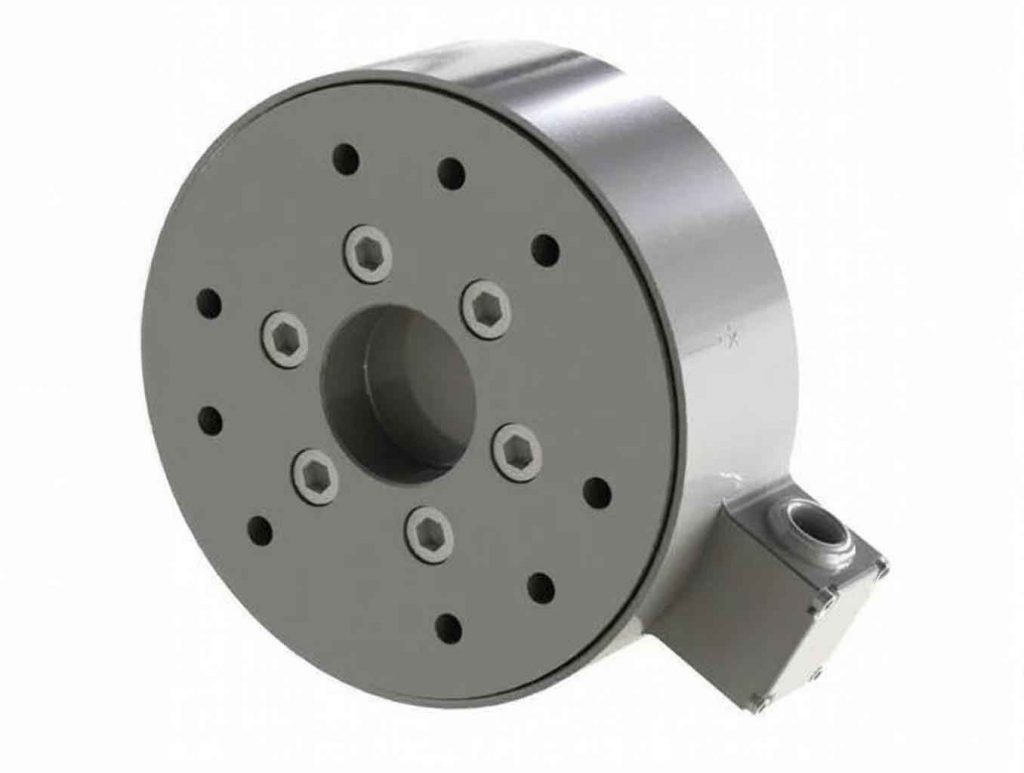
A prototype of the fault-tolerant six-axis force sensor has been developed based on these principles. Initial static calibration results demonstrate that under normal conditions, the average nonlinear error is less than 0.4% for force components and 1.72% for moment components. When a single branch fails, the average nonlinear error remains below 1.96%, and with two branch failures, it is under 2.67%. This confirms that the sensor maintains accurate measurement even with branch failures, validating the fault-tolerant design. However, the slight increase in nonlinear error during fault conditions indicates the need for further optimization of the measurement models and data processing algorithms. Future work will focus on improving the data acquisition system and loading mechanisms to enhance performance.
In conclusion, the integration of fault-tolerant design into six-axis force sensors significantly improves reliability through redundancy. By comparing fault-tolerant and ordinary sensors, I have shown that redundancy boosts reliability from 0.5314 to over 0.96 for an eight-branch system. Using fault tree analysis, I developed reliability models and derived failure rate functions that depend on component failure rates and redundancy parameters. Redundancy analysis reveals that eight branches with one measurement unit per branch strike an optimal balance, reducing the system failure rate to 10^{-11}. The proposed configurations and prototype demonstrate the practical viability of this approach. This research lays the foundation for high-reliability six-axis force sensors in critical applications, and ongoing efforts will refine these designs for broader adoption.