
The evolution of robotics stands as a definitive marker of a nation’s capabilities in technological innovation and advanced manufacturing. Among these, the humanoid robot represents the pinnacle, concentrating cutting-edge advancements from mechanical engineering, artificial intelligence (AI), and materials science. The maturation of this field promises not only to catalyze widespread industrial upgrading but also to address critical societal challenges such as labor shortages and an aging demographic. This analysis explores the core technological frameworks, global and domestic industrial landscapes, and strategic pathways essential for advancing the humanoid robot sector.
Core Technological Architecture of Humanoid Robots
The modern humanoid robot’s technological stack is architecturally modeled after human physiology, comprising three synergistic systems: the “Brain,” the “Cerebellum,” and the “Limbs.”
1. The “Brain”: Multimodal Perception and Cognitive Intelligence
The “Brain” serves as the central decision-making hub, integrating high-performance computing with advanced algorithms to process complex sensory data, understand environments, and execute high-level reasoning. Its capabilities are profoundly augmented by Multimodal Large Models, enabling sophisticated interaction and task planning.
The core architecture often relies on transformer-based models for processing sequential and visual data. The self-attention mechanism, a fundamental component, is calculated as:
$$
\text{Attention}(Q, K, V) = \text{softmax}\left(\frac{QK^T}{\sqrt{d_k}}\right)V
$$
where \( Q \), \( K \), and \( V \) represent the Query, Key, and Value matrices, and \( d_k \) is the dimensionality of the keys. This mechanism allows the model to weigh the importance of different parts of the input data, whether text tokens or image patches.
For multimodal understanding, a common framework involves separate encoders for different data types (vision, language) whose outputs are fused for joint representation learning and task execution. The “Brain” of a contemporary humanoid robot leverages this to excel in four key areas:
- Advanced Perception: Utilizing vision transformers and diffusion models for precise scene segmentation, object recognition, and 3D environment mapping.
- Imagination and Simulation: Generative models enable the humanoid robot to simulate physical interactions and predict outcomes before executing actions in the real world.
- Reasoning and Decision-Making: Large Language Models (LLMs) provide the humanoid robot with contextual understanding, logical planning, and natural language interaction.
- Affective Computing: Models trained on human behavioral data allow the humanoid robot to recognize and respond to emotional cues, enabling more natural human-robot collaboration.
2. The “Cerebellum”: Motion Planning and Control
The “Cerebellum” is responsible for translating high-level decisions from the “Brain” into stable, precise, and coordinated physical motions. Control methodologies have evolved from classical model-based approaches to more adaptive, learning-based paradigms.
| Control Paradigm | Key Principle | Application in Humanoid Robot | Challenges |
|---|---|---|---|
| Model Predictive Control (MPC) | Solves a finite-horizon optimization problem online, using a dynamic model to predict future states and compute optimal control inputs. | Ensures dynamic balance, stable gait generation, and adherence to physical constraints (torque, joint limits). | Requires accurate model; computationally expensive for highly complex systems. |
| Reinforcement Learning (RL) | An agent learns an optimal policy \(\pi^*(a|s)\) by maximizing cumulative reward through interaction with an environment. | Enables the humanoid robot to learn complex locomotion and manipulation skills through simulation and transfer to reality (Sim2Real). | High sample complexity; safety concerns during real-world exploration. |
| Imitation Learning (IL) | Learns a policy \(\pi_\theta(a|s)\) by mimicking expert demonstrations, minimizing a loss \(L(\theta)\). | Allows the humanoid robot to quickly acquire natural, human-like motions for tasks like walking or grasping. | Quality and breadth of demonstration data limit performance and generalizability. |
The value function in RL, central to many algorithms, is defined as:
$$
V^\pi(s) = \mathbb{E}_\pi \left[ \sum_{t=0}^\infty \gamma^t r_t \mid s_0 = s \right]
$$
where \(\gamma\) is the discount factor. Modern approaches for humanoid robot control often combine these paradigms, using RL/IL to learn robust policies within an MPC-based safety framework.
3. The “Limbs”: Actuation and Sensing Hardware
The physical embodiment of a humanoid robot depends on high-performance actuators and a dense sensor suite. The performance of these core components directly dictates the agility, strength, and dexterity of the machine.
| Component Category | Key Types | Critical Function | Performance Metrics |
|---|---|---|---|
| Actuators | Frameless Torque Motors, Hollow-Cup Motors (for hands) | Provide joint torque and motion. High torque-to-weight ratio is crucial. | Peak Torque, Continuous Torque, Power Density, Efficiency |
| Transmission | Harmonic Drives, RV Reducers, Planetary Gearheads | Reduce motor speed, amplify torque, and improve positioning accuracy. | Backlash, Transmission Efficiency, Torque Density, Lifespan |
| Sensors | 6-Axis Force/Torque, Tactile Arrays, Encoders, IMUs | Provide state feedback (position, velocity, force) and environmental interaction data. | Resolution, Bandwidth, Range, Linearity, Durability |
| Mechanical Elements | Ball Screws, Crossed Roller Bearings | Convert rotational motion to linear motion (for linear actuators) and support loads. | Positional Accuracy, Rigidity, Friction, Load Capacity |
The total system dynamics of a humanoid robot’s limb can be described by the rigid-body equation of motion:
$$
M(q)\ddot{q} + C(q, \dot{q})\dot{q} + G(q) = \tau_{motor} – J^T F_{ext}
$$
where \(M\) is the inertia matrix, \(C\) accounts for Coriolis and centrifugal forces, \(G\) is the gravity vector, \(q\) represents joint angles, \(\tau_{motor}\) is the motor torque, \(J\) is the Jacobian, and \(F_{ext}\) are external forces. Precise control of this system is the ultimate task of the “Cerebellum.”
Global Industrial Landscape and Trends
The international race for leadership in humanoid robotics is intensifying, driven by strategic national policies, concentrated R&D investment, and a rapidly evolving competitive ecosystem.
1. Policy and Strategic Funding
Major economies have implemented targeted initiatives to capture this future market:
- United States: The National Robotics Initiative (NRI) focuses on fundamental research, while substantial private investment (e.g., from Tesla, Figure AI) drives commercial prototypes.
- European Union: Horizon Europe funds collaborative research across member states, emphasizing human-robot interaction and safety.
- Japan & South Korea: National robotics strategies (Japan’s “Robot New Strategy,” Korea’s “Third Intelligent Robot Basic Plan”) provide direct funding and regulatory support to integrate robotics as a core industry.
2. Technological and Intellectual Property Landscape
Technological leadership is concentrated in companies and institutions in the US and Japan, as evidenced by patent holdings. The table below illustrates the distribution across key technological domains for leading entities.
| Entity | Body Structure Patents | Core Component Patents | Intelligent Perception Patents | Drive & Control Patents |
|---|---|---|---|---|
| Honda | 1075 | 29 | 444 | 819 |
| Sony | 373 | 33 | 593 | 266 |
| Toyota | 412 | 23 | 384 | 264 |
| Boston Dynamics | 115 | 17 | 124 | 115 |
Note: Patent counts are indicative and based on a specific database snapshot.
3. Industry Chain and Key Players
The global supply chain is specialized, with distinct leaders in components and system integration.
| Segment | Representative Global Companies | Key Products/Roles |
|---|---|---|
| Core Components | Harmonic Drive (JP), Nabtesco (JP), Kollmorgen (US), ATI Industrial Automation (US) | Reducers, frameless motors, force/torque sensors. |
| Humanoid Robot OEMs | Tesla (US), Boston Dynamics (US), Figure AI (US), Apptronik (US) | Full-system design, integration, and software development. |
| AI & Software | Google DeepMind (US), OpenAI (US) | Development of foundational models (LLMs, VLMs) for robot cognition and control. |
4. Pervasive Challenges
Despite progress, the global industry faces significant hurdles to mass commercialization:
- Technical: Achieving robust full-body dynamic control in unstructured environments, ensuring safe human-robot interaction, and developing energy-efficient systems for acceptable operational times.
- Economic: Extremely high Bill-of-Materials (BOM) costs, primarily due to expensive custom actuators and sensors. Scaling production to achieve cost reduction is a major challenge.
- Commercial: Identifying and validating high-value, scalable application scenarios that justify the current cost and complexity of a general-purpose humanoid robot.
Development Status of China’s Humanoid Robot Industry
China has emerged as a formidable and dynamic player in the humanoid robot arena, propelled by strong policy support, a vast manufacturing ecosystem, and significant capital investment.
1. Policy Environment
A clear top-down strategic directive has been established. The “Guiding Opinions on the Innovative Development of Humanoid Robots” (2023) issued by the Ministry of Industry and Information Technology (MIIT) sets a national agenda. It emphasizes breakthroughs in embodied intelligence, open-source ecosystems, and scenario-based applications, aiming to achieve mass production by 2027.
2. Technological Progress and Industrial Layout
China’s strength lies in its integrated manufacturing capability and rapid iteration. The industrial chain is maturing quickly.
| Industrial Chain Segment | Chinese Representative Companies | Progress and Characteristics |
|---|---|---|
| Upstream Components | Leader Harmonious Drive (谐波), Dual环 Transmission, ESTUN, INOVANCE | Significant progress in harmonic reducers and servo motors. Still catching up in ultra-high-performance motors, precision force sensors, and specialized bearings. |
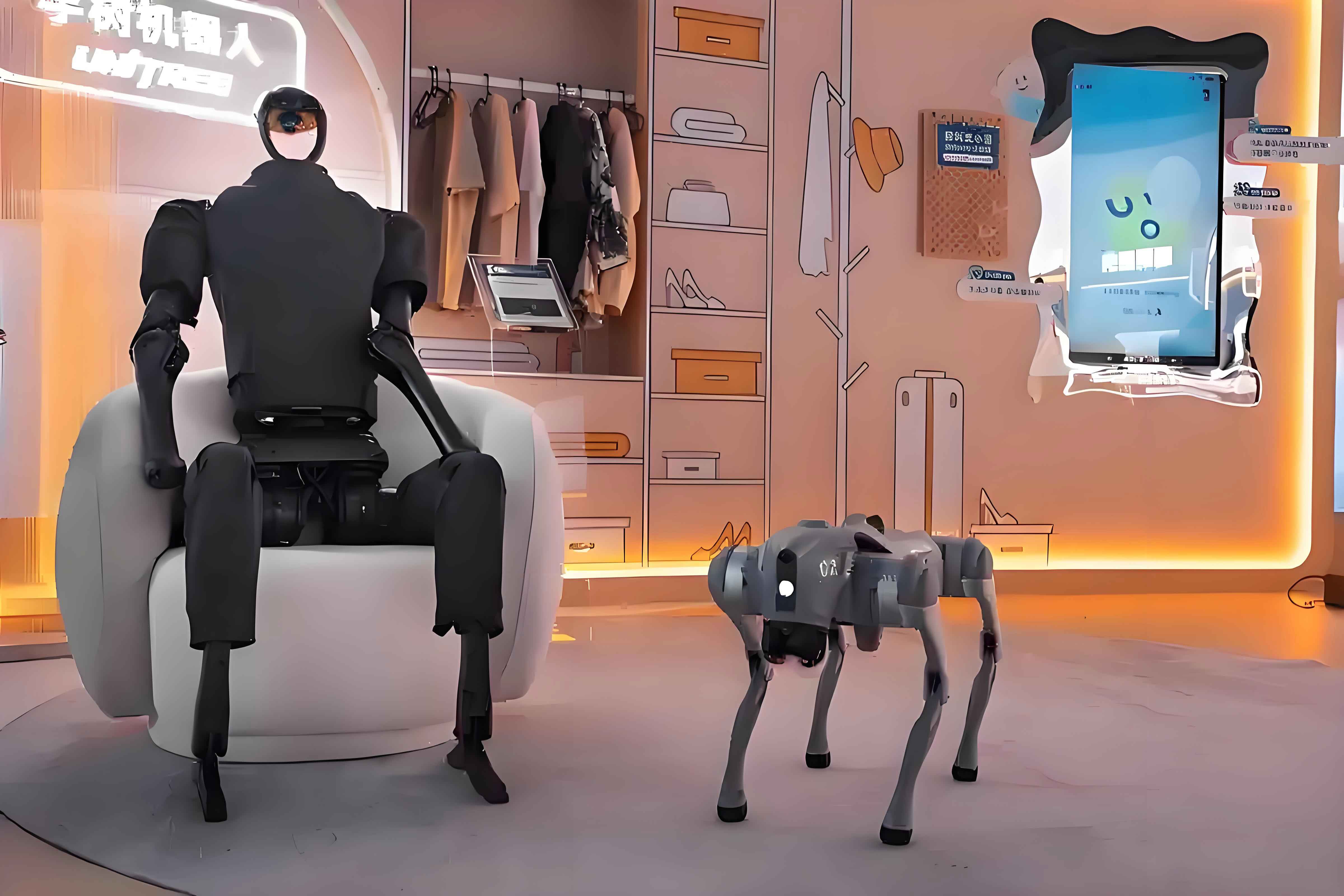
| Midstream System Integration | UBTECH, Fourier Intelligence, Xiaomi CyberOne, Unitree Robotics, Stardust Intelligence | Rapid prototyping and demonstration of functional humanoid robot platforms. Competitive in cost control and agility. Focus on consumer and service applications. |
| Downstream AI & Software | DeepSeek, Baidu, SenseTime | Active development of multimodal large models applicable to robotics. Contributing to the “Brain” of the next-generation humanoid robot. |
The market potential is considered enormous. Projections suggest the domestic humanoid robot market could grow at a CAGR exceeding 60%, reaching a scale of tens of billions of RMB by 2030.
3. Critical Challenges for China’s Industry
To transition from a fast follower to a true innovator and market leader, several deep-rooted issues must be addressed:
- Technology Gap in Core Components: Heavy reliance on imported high-end components (e.g., specific precision reducers, high-fidelity tactile sensors) constrains performance optimization and increases costs. The BOM cost for a capable domestic humanoid robot remains prohibitive for widespread adoption.
- Deficiency in Foundational Algorithms: While strong in application engineering, there is a relative shortage of groundbreaking research in novel control theories, advanced simulation environments, and original robotic AI architectures tailored for the unique challenges of a humanoid robot.
- Underdeveloped Application Ecosystem: Similar to the global scene, definitive, economically viable use cases are still being proven. Pilot projects in factories, logistics, and elderly care are underway but require scaling.
- Talent Shortage: A severe deficit of interdisciplinary talent proficient in mechatronics, advanced control theory, and embodied AI hinders breakthrough innovation.
Strategic Pathways and Policy Recommendations
To navigate the identified challenges and secure a leading position, a multi-faceted, coordinated strategy is essential.
1. Drive Breakthroughs in Core and Foundational Technologies
National and corporate R&D must target the stack’s most challenging layers.
- Component-Level Innovation: Establish national research projects for next-generation actuators (e.g., high-tor-density modular joints), durable high-resolution tactile skins, and low-power, high-bandwidth proprioceptive sensors.
- Algorithmic Leadership: Fund basic research in sample-efficient reinforcement learning, physics-based simulation fidelity, and human-in-the-loop adaptive control for the humanoid robot. Encourage open-source contributions to foundational frameworks.
- Embodied AI Models: Support the development and open-sourcing of large-scale multimodal datasets specific to robot learning and pre-trained models fine-tuned for physical reasoning and manipulation.
2. Build a Robust National Industrial and Innovation Ecosystem
Strength lies in a cohesive, collaborative network rather than isolated competitors.
- Strengthen the Supply Chain: Implement policies to vertically integrate critical component manufacturing. Foster partnerships between material scientists, component manufacturers, and integrators to co-develop custom solutions.
- Create Public Infrastructure: Fund the construction of shared, high-fidelity testing facilities, standardized benchmarking environments, and open cloud-based simulation platforms. This lowers the barrier for startups and accelerates validation.
- Foster Strategic Clusters: Encourage the formation of geographic innovation clusters that co-locate leading universities, component suppliers, and integrators to facilitate knowledge spillover and rapid prototyping.
3. Accelerate Commercialization through Targeted Pilots and Regulation
Market validation is the ultimate test for any humanoid robot technology.
- Implement Large-Scale Demonstration Projects: Government should facilitate and co-fund flagship deployment projects in clear-value scenarios (e.g., automotive final assembly, warehouse logistics, hospital support roles). Successes will create demand and drive iterative improvement.
- Develop Standards and Regulations Proactively: Collaborate with industry to establish safety standards, interoperability protocols, and ethical guidelines for humanoid robot deployment. Clear rules build public trust and provide certainty for investors.
- Leverage the “Cloud-Edge-End” Architecture: Promote an architectural paradigm where the computationally heavy “Brain” (AI models) resides in the cloud, communicating via 5G/6G with the “Cerebellum” and “Limbs” on the robot (the edge/end). This allows for continuous learning and updates while keeping the onboard hardware leaner and more affordable.
4. Cultivate a World-Class Talent Pipeline
Sustained leadership requires a deep bench of experts.
- Reform Educational Curricula: Introduce interdisciplinary robotics programs at leading universities that blend mechanical design, electrical engineering, computer science, and AI.
- Promote Industry-Academia Exchange: Create incentives for researchers to spend time in industry labs and for engineers to contribute to academic research, ensuring a feedback loop between theoretical advancement and practical application in humanoid robot development.
In conclusion, the humanoid robot represents a transformative technological frontier with the potential to reshape industries and societies. The convergence of breakthroughs in AI, particularly embodied intelligence, with advancements in advanced manufacturing is bringing this vision closer to reality. While significant challenges in technology, cost, and application remain, a strategic focus on core innovation, ecosystem building, and pragmatic commercialization will be decisive. For nations and companies aspiring to lead, the journey requires not only substantial investment but also a sustained commitment to collaboration across the entire spectrum of science, engineering, and policy.