
In the contemporary social landscape, the role of pets has evolved significantly, with a marked increase in attention and care directed towards them. Among pet owners, those who care for cats represent a substantial and growing demographic. A significant portion of these caretakers are professionals with demanding schedules, often facing the challenge of being away from home for extended periods. This situation frequently leads to issues of loneliness for the pet cat and irregular feeding patterns, which can adversely affect the animal’s well-being. While the market has responded with various automated products, including companion robots offering basic interaction and feeding functions, a clear gap remains. Existing pet cat companion robots often exhibit shortcomings in intelligent application, diversity of companionship methods, and hygiene management of cat food. The core problem, therefore, is that current designs do not fully align with user expectations, leading to suboptimal satisfaction. To address this, my research focuses on constructing a robust, user-centered product development model. The primary objective is to employ this model to guide the design of a pet cat companion robot that more accurately meets and exceeds user needs, thereby substantially enhancing user satisfaction.
The foundation of my methodological approach lies in the integration of two established techniques: the Kano model and the Analytic Hierarchy Process (AHP). Modern product design research utilizes various methods, but for this project, I find the combination of Kano and AHP particularly potent. The Kano model is an excellent tool for classifying user requirements into distinct attribute categories based on their impact on satisfaction. It helps differentiate between basic needs, performance needs, and delighters. However, while Kano effectively categorizes requirements, it does not inherently provide a precise quantitative ranking of their importance within and across categories. Traditional methods for deriving weights from Kano results, such as the Better-Worse coefficient analysis, can be subjective. This is where AHP proves invaluable. AHP is a multi-criteria decision-making method that combines qualitative and quantitative analysis. It systematically determines the weight or priority of different elements in a hierarchical structure through pairwise comparisons. By applying AHP to the requirements classified by the Kano model, I can calculate objective weightings, establishing a clear priority order for design focus. Conversely, using Kano to inform the structure of the AHP hierarchy enhances the qualitative rigor of the model. Thus, the Kano-AHP integrated model I propose offers a synergistic advantage: it allows for the scientific classification of user demand attributes and the accurate acquisition of their priority order. This dual capability increases the rationality of the final design solution. The procedural flow of this product design development model is executed in three main stages. First, I use the Kano theory to conduct a survey and classify the collected user requirements into different attribute categories. Second, based on this classification, I construct a hierarchical analysis model and employ AHP to calculate the weight of each user demand indicator, followed by a consistency check. Finally, I generate design concepts according to the prioritized needs and proceed to optimize the selected scheme.
Application of the Kano-AHP Model in the Design of a Pet Cat Companion Robot
Stage 1: Classifying User Requirement Attributes Using the Kano Model
The initial phase involves identifying and categorizing user needs for the pet cat companion robot. I began with preliminary desktop research and in-depth interviews with 17 users to gather raw demand items. Common themes included the need for automated play to combat pet loneliness, reliable and hygienic feeding solutions for absent owners, and aesthetic appeal. After consolidating these insights, I formulated an initial list of 25 user requirements. To filter out less critical items, I conducted a preliminary survey using a Likert 5-point scale with 60 users, which helped refine the list to 19 key initial user demands, as summarized in the table below.
| ID | User Demand Item | ID | User Demand Item |
|---|---|---|---|
| 1 | Autonomous Play | 11 | Safe and Reliable Materials |
| 2 | Automatic Return to Charging Dock | 12 | Photo and Video Capture |
| 3 | Scheduled & Measured Feeding | 13 | Lifelike Interactive Expressions |
| 4 | Cat Food Sterilization | 14 | Scheduled Play Initiation |
| 5 | Low Price | 15 | Smart Cat Collar (Integration) |
| 6 | Aesthetically Pleasing Form | 16 | Cat Food Drying |
| 7 | Convenient Maintenance | 17 | Moderate Size |
| 8 | Simple Operation | 18 | Safe Interaction |
| 9 | Remote Control | 19 | Durability |
| 10 | Remote Interaction |
Next, I designed a dedicated Kano questionnaire. For each of the 19 demands, I presented a pair of questions: one functional (if the feature is present) and one dysfunctional (if the feature is absent). Users responded to each using a standardized Kano assessment scale. I distributed 160 questionnaires to target users (cat owners) and collected 154 valid responses. To classify each demand attribute, I used a standard Kano evaluation matrix. The classification results for all demands are shown in the following table. For the purpose of this design study, I focus on Must-be (M), One-dimensional (O), and Attractive (A) attributes, excluding Indifferent (I) and Reverse (R) attributes from further analysis.
| Demand Item | I | Q | A | M | R | O | Demand Attribute |
|---|---|---|---|---|---|---|---|
| Automatic Return to Charging Dock | 22 | 2 | 32 | 59 | 5 | 34 | M |
| Low Price | 16 | 4 | 19 | 91 | 3 | 21 | M |
| Simple Operation | 18 | 4 | 34 | 76 | 2 | 20 | M |
| Safe and Reliable Materials | 22 | 5 | 25 | 68 | 3 | 31 | M |
| Moderate Size | 20 | 6 | 25 | 71 | 1 | 31 | M |
| Safe Interaction | 17 | 2 | 22 | 82 | 2 | 29 | M |
| Autonomous Play | 19 | 2 | 28 | 34 | 2 | 69 | O |
| Convenient Maintenance | 20 | 1 | 29 | 31 | 3 | 70 | O |
| Remote Control | 18 | 4 | 41 | 22 | 3 | 68 | O |
| Aesthetically Pleasing Form | 23 | 2 | 35 | 29 | 3 | 62 | O |
| Lifelike Interactive Expressions | 17 | 3 | 29 | 38 | 1 | 66 | O |
| Scheduled & Measured Feeding | 21 | 2 | 63 | 24 | 3 | 41 | A |
| Cat Food Sterilization | 18 | 4 | 71 | 28 | 2 | 31 | A |
| Remote Interaction | 19 | 3 | 74 | 22 | 2 | 34 | A |
| Scheduled Play Initiation | 14 | 1 | 81 | 19 | 3 | 35 | A |
| Cat Food Drying | 23 | 3 | 67 | 18 | 4 | 39 | A |
| Photo and Video Capture | 76 | 6 | 18 | 29 | 4 | 22 | I |
| Smart Cat Collar | 69 | 5 | 23 | 39 | 3 | 15 | I |
| Durability | 57 | 3 | 24 | 41 | 5 | 21 | I |
The analysis reveals clear categories. Must-be (M) Attributes are considered basic requirements. Their absence causes significant dissatisfaction, but their presence is expected and does not greatly increase satisfaction. For the companion robot, these include automatic charging, simple operation, safety, and moderate size. The design must fulfill these, but excessive investment in optimizing them yields limited returns on satisfaction. One-dimensional (O) Attributes exhibit a linear relationship with satisfaction. The more these are fulfilled, the higher the satisfaction. For the pet cat companion robot, these encompass autonomous play, remote control, aesthetic form, and interactive expressions. These are areas where the design should strive for clear performance and quality. Attractive (A) Attributes are delighters. Users do not explicitly expect them, but their presence greatly enhances satisfaction. These are key differentiators. For this product, they are primarily related to advanced feeding hygiene (sterilization, drying, precise scheduling) and intelligent companionship features like scheduled play initiation. Integrating these effectively into the companion robot presents a major opportunity to surpass user expectations.
Stage 2: Calculating User Demand Weights Using AHP
With the demands categorized, the next step is to determine their relative importance. I construct an AHP hierarchy model. The goal is to select the optimal design for the pet cat companion robot. The criterion level consists of the three Kano attribute categories: Must-be (M), One-dimensional (O), and Attractive (A). The sub-criterion level expands each category with its specific demand items identified earlier.
To populate the pairwise comparison matrices, I engaged 35 experts relevant to the field, including robot designers, pet product designers, researchers, and professors. They were asked to compare the elements at each level of the hierarchy using the standard Saaty 1-9 scale of relative importance. The judgments were aggregated, and the weight vectors for each matrix were calculated using the Geometric Mean Method. The procedure is as follows:
For a judgment matrix \(B\) of order \(n\) with elements \(b_{ij}\):
1. Calculate the geometric mean for each row \(i\):
$$ w’_i = \sqrt[n]{\prod_{j=1}^{n} b_{ij}} $$
2. Normalize the geometric means to obtain the weight vector \(w_i\):
$$ w_i = \frac{w’_i}{\sum_{i=1}^{n} w’_i} $$
3. Calculate the maximum eigenvalue \(\lambda_{max}\):
$$ \lambda_{max} = \frac{1}{n} \sum_{i=1}^{n} \frac{(Bw)_i}{w_i} $$
where \((Bw)_i\) is the \(i\)-th element of the vector resulting from the multiplication of matrix \(B\) and vector \(w\).
4. Perform consistency check:
$$ CI = \frac{\lambda_{max} – n}{n – 1} $$
$$ CR = \frac{CI}{RI} $$
where \(RI\) is the Random Index. If \(CR \leq 0.1\), the consistency is acceptable.
The calculated weights for the criterion and sub-criterion levels are shown in the following tables. All consistency ratios were below 0.1, validating the judgments.
| Goal | M | O | A | Weight |
|---|---|---|---|---|
| Must-be (M) | 1 | 3 | 2 | 0.5390 |
| One-dimensional (O) | 1/3 | 1 | 1/2 | 0.1638 |
| Attractive (A) | 1/2 | 2 | 1 | 0.2972 |
| M | M1 | M2 | M3 | M4 | M5 | M6 | Local Weight |
|---|---|---|---|---|---|---|---|
| Auto-Charge (M1) | 1 | 1/2 | 1/2 | 1/3 | 1/3 | 1/3 | 0.0687 |
| Low Price (M2) | 2 | 1 | 1/3 | 1/2 | 1/2 | 1/2 | 0.0986 |
| Simple Operation (M3) | 2 | 3 | 1 | 2 | 1/2 | 2 | 0.2084 |
| Safe Materials (M4) | 3 | 2 | 1/5 | 1 | 1/3 | 1/2 | 0.1319 |
| Moderate Size (M5) | 3 | 2 | 2 | 3 | 1 | 5 | 0.3405 |
| Safe Interaction (M6) | 3 | 2 | 1/2 | 2 | 1/5 | 1 | 0.1519 |
| O | O1 | O2 | O3 | O4 | O5 | Local Weight |
|---|---|---|---|---|---|---|
| Autonomous Play (O1) | 1 | 3 | 2 | 1/5 | 7 | 0.3054 |
| Easy Maintenance (O2) | 1/3 | 1 | 1/2 | 1/3 | 3 | 0.1093 |
| Remote Control (O3) | 1/2 | 2 | 1 | 2 | 3 | 0.2449 |
| Aesthetic Form (O4) | 2 | 3 | 1/2 | 1 | 5 | 0.2902 |
| Interactive Expressions (O5) | 1/7 | 1/3 | 1/3 | 1/5 | 1 | 0.0502 |
| A | A1 | A2 | A3 | A4 | A5 | Local Weight |
|---|---|---|---|---|---|---|
| Scheduled Feeding (A1) | 1 | 3 | 3 | 5 | 2 | 0.4048 |
| Food Sterilization (A2) | 1/3 | 1 | 2 | 1/2 | 1 | 0.1520 |
| Remote Interaction (A3) | 1/3 | 1/5 | 1 | 2 | 1/2 | 0.1205 |
| Scheduled Play (A4) | 1/5 | 2 | 1/2 | 1 | 1/3 | 0.1132 |
| Food Drying (A5) | 1/2 | 1 | 2 | 3 | 1 | 0.2095 |
To understand the overall global importance of each specific demand for the final companion robot design, I calculate the composite weight by multiplying the local weight of a sub-criterion by the weight of its parent criterion. I focus this synthesis on the O and A attributes, as they are the key drivers for increasing satisfaction beyond the baseline established by the M attributes. The results and ranking are as follows:
| Attribute | Demand Item | Local Weight | Global Composite Weight | Global Rank |
|---|---|---|---|---|
| One-dimensional (O) | Autonomous Play (O1) | 0.3054 | 0.0501 | 3 |
| Easy Maintenance (O2) | 0.1093 | 0.0179 | 9 | |
| Remote Control (O3) | 0.2449 | 0.0402 | 6 | |
| Aesthetic Form (O4) | 0.2902 | 0.0475 | 4 | |
| Interactive Expressions (O5) | 0.0502 | 0.0082 | 10 | |
| Attractive (A) | Scheduled Feeding (A1) | 0.4048 | 0.1203 | 1 |
| Food Sterilization (A2) | 0.1520 | 0.0452 | 5 | |
| Remote Interaction (A3) | 0.1205 | 0.0358 | 7 | |
| Scheduled Play (A4) | 0.1132 | 0.0336 | 8 | |
| Food Drying (A5) | 0.2095 | 0.0623 | 2 |
The weight analysis provides a clear directive for the design of the pet cat companion robot. While all Must-be requirements must be adequately met, the primary focus for maximizing user satisfaction should be on the top-ranked demands. The highest priority is the integration of sophisticated feeding management systems (Scheduled & Measured Feeding and Cat Food Drying), followed by enhancing core companionship features (Autonomous Play and Aesthetic Form). This quantitative ranking, derived from the Kano-AHP model, offers an objective basis for making critical design decisions and allocating resources effectively during the development of the companion robot.
Stage 3: Concept Generation, Evaluation, and Optimization
Guided by the priority list from the AHP analysis, I proceeded to generate design concepts for the pet cat companion robot. Three distinct preliminary schemes were conceived. Scheme One prioritized autonomous play, focusing on intelligent companionship through laser interaction and video communication. Scheme Two meticulously addressed the high-weight feeding hygiene demands, incorporating sterilization and drying systems, but its rectangular form and safety considerations limited companionship to basic auditory functions. Scheme Three sought a more balanced integration, combining the essential feeding hygiene and scheduling functions with diverse play methods like a physical teaser ball and a laser, all wrapped in a soft, aesthetically pleasing form with large curved surfaces.
To select the optimal direction, a panel of experts evaluated the three concepts against the user demand indicators using a Likert scale. Considering factors like aesthetics, manufacturability, cost, and alignment with the weighted requirements, Scheme Three was chosen for further development. This concept best balanced the high-priority needs for advanced feeding care and engaging companionship within a desirable form factor.
The optimization process involved detailed computer-aided design, resulting in refined renderings. The companion robot’s form features large radii and smooth transitions, creating a friendly and modern appearance. Lightweight yet safe ABS plastic was specified as the primary material. A white base color was chosen for cleanliness and versatility, accented with green details for visual appeal. To fulfill the Must-be attribute of ‘Moderate Size’ (which had high local weight), the overall dimensions were tightly controlled to approximately 315mm in length, 258mm in width, and 268mm in height. This compact size was achieved while strengthening the product’s character lines to ensure it remained visually distinct and manufacturable.
Safety, another critical Must-be attribute, was addressed through a low center of gravity achieved by placing heavier components like motors and the food storage bin near the base, preventing tipping during play. Proximity sensors were strategically placed around the periphery to enable obstacle avoidance, enhancing safe operation. The key One-dimensional and Attractive attributes were implemented as follows. For companionship, the design integrated both a motorized teaser ball and an infrared laser pointer, offering more engaging and varied play than simple sound or movement. For feeding, a precise timed dispensing system was coupled with a UV sterilization module and a desiccant system, ensuring food is not only delivered on schedule but is also hygienic and dry—directly addressing the top two global priorities. This integration of comprehensive feeding care with interactive play within a single, well-designed unit represents a significant innovation over existing market offerings. The addition of remote video interaction further elevates the智能化 of this companion robot.
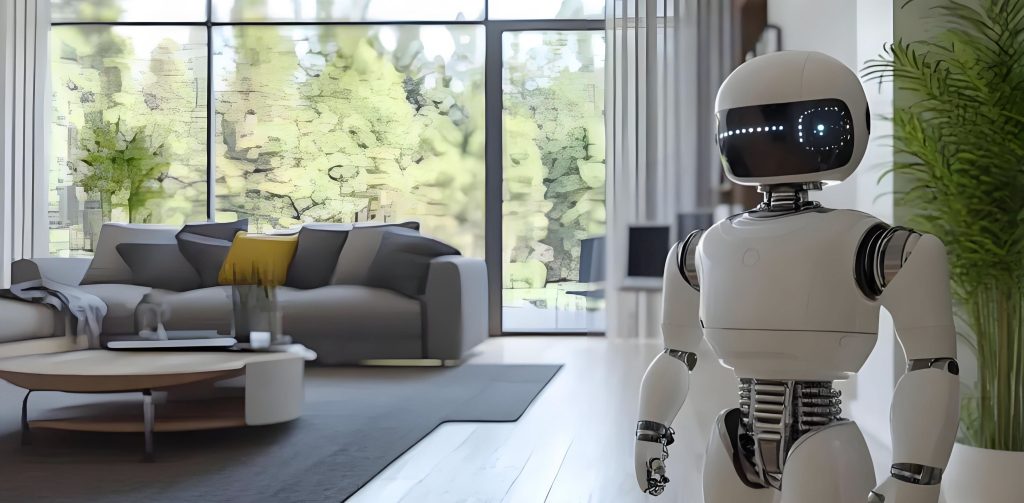
The finalized design of the pet cat companion robot, realized as a functional prototype using 3D printing for the shell and assembly with standard electronic components, demonstrates the successful application of the Kano-AHP model. The process ensured that fundamental requirements were met, while design resources were strategically focused on the features proven to have the greatest impact on user satisfaction.
Conclusion and Future Work
This research successfully constructed and applied an integrated Kano-AHP model to the design process of a pet cat companion robot. The model provided a structured framework to scientifically classify user requirements and accurately determine their order of importance. By doing so, it mitigated the ambiguity often present in defining user needs and helped align design priorities with what truly matters to the end-user. The resultant companion robot design logically incorporates essential functions while strategically emphasizing high-impact features related to feeding hygiene and interactive play, thereby increasing its potential for user satisfaction. This methodological approach offers a valuable new perspective for the development of similar consumer-centric robotic products, including other types of companion robots.
Looking ahead, there are avenues to strengthen this research. The sample size for the surveys, while informative, could be expanded for greater statistical robustness. Furthermore, the evaluation phase of design concepts, though informed by expert judgment, still contains subjective elements. Future work could explore integrating more objective evaluation metrics or user testing protocols at the prototyping stage. Continued refinement of this model holds promise for creating even more compelling and satisfying companion robots that seamlessly integrate into the lives of users and their pets.