
As a researcher in the field of law and technology, I have observed the rapid development of humanoid robots, which represent a significant advancement in artificial intelligence. These humanoid robots, with their human-like appearance and sophisticated capabilities, are increasingly integrated into various aspects of society, from industrial applications to domestic services. However, this integration raises critical questions about their role in the legal system, particularly concerning criminal liability. In this article, I will argue that, based on current legal frameworks, humanoid robots should not be considered as independent subjects of criminal liability. Instead, the focus should be on regulating the human actors involved in their development and use. I will explore the theoretical debates, critique the arguments for granting humanoid robots criminal liability, and propose a risk management approach within a macro-management framework for technology. Throughout this discussion, I will emphasize the unique characteristics of humanoid robots and the importance of aligning legal responses with their technological nature.
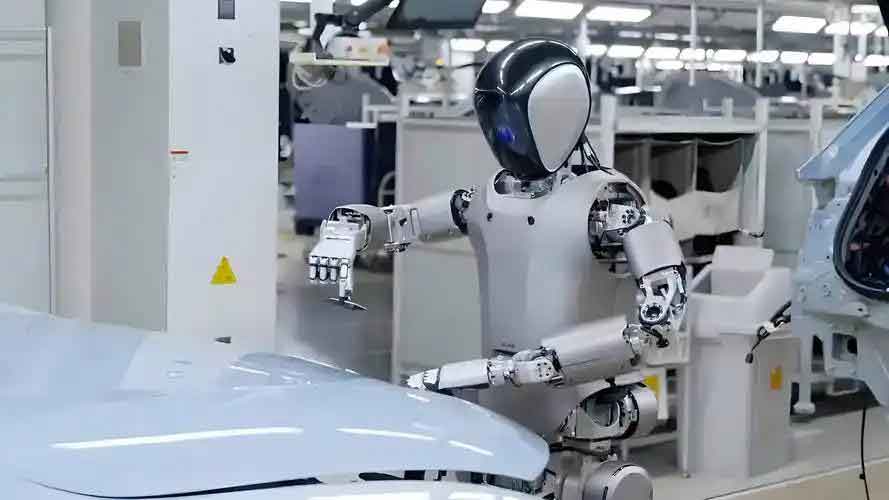
The debate over whether humanoid robots can be held criminally liable stems from their increasing autonomy and ability to perform tasks that were once exclusive to humans. Humanoid robots are defined as intelligent physical machines with human-like forms, capable of interactive learning, perception, and action. Their “skin” or external appearance mimics human anatomy, while their “soul” or internal programming involves advanced AI algorithms that enable decision-making and adaptation. This duality complicates legal assessments, as humanoid robots blur the lines between tools and agents. In criminal law, the principle of “no crime without a law” and “no punishment without a crime” requires a clear subject who can form intent and be held accountable. Humanoid robots, however, lack the biological and legal attributes of natural persons, such as consciousness, free will, and moral agency. Thus, I contend that attributing criminal liability to humanoid robots is not only impractical but also undermines the foundational principles of justice.
To understand the theoretical分歧, it is essential to categorize the arguments for and against the criminal liability of humanoid robots. Proponents of granting liability often base their views on the advanced capabilities of humanoid robots, such as their ability to learn and act beyond initial programming. They argue that as humanoid robots evolve into strong AI entities, they may develop independent consciousness, making them akin to legal persons. Conversely, opponents emphasize that humanoid robots are merely products of human innovation, lacking the essential elements of personhood, such as emotions and moral reasoning. The following table summarizes the key perspectives in this debate:
| Perspective | Key Arguments | Examples |
|---|---|---|
| Pro-Liability | Humanoid robots with strong AI can act autonomously; they may develop intent; legal systems should adapt to technological changes. | Comparisons to corporate liability; potential for new penalties like data deletion. |
| Anti-Liability | Humanoid robots lack human attributes; they are tools under human control; criminal law should focus on human actors. | Emphasis on human oversight; risks of anthropomorphizing machines. |
In my critique of the pro-liability arguments, I focus on two main aspects: the external “skin” and internal “soul” of humanoid robots. Externally, the human-like form of humanoid robots does not equate to legal personhood. Humanoid robots are machines, and their appearance is a functional design choice rather than a basis for rights or responsibilities. For instance, in criminal law, subjects are defined as natural persons or legal entities like corporations, which are ultimately accountable through human representatives. Humanoid robots do not possess the biological or social attributes necessary for criminal intent, such as the ability to understand moral consequences. Internally, the AI “soul” of humanoid robots does not constitute independent consciousness. While humanoid robots can process information and make decisions, their actions are derived from algorithms and data inputs, not free will. This can be expressed through a formula: if $A$ represents an action and $I$ represents intent, then for a humanoid robot, $A = f(P, D)$, where $P$ is programming and $D$ is data, whereas for a human, $A = g(C, M)$, where $C$ is consciousness and $M$ is motivation. Thus, the behavior of humanoid robots is deterministic and not culpable under criminal law.
Moreover, the concept of “act” in criminal law requires a voluntary movement guided by intent. Humanoid robots, despite their advanced capabilities, cannot form the requisite mens rea or guilty mind. For example, if a humanoid robot causes harm due to a programming error, it is not a criminal act but a technical failure. The following table outlines the differences between human and humanoid robot actions in criminal contexts:
| Aspect | Human Actions | Humanoid Robot Actions |
|---|---|---|
| Intent Formation | Based on consciousness, free will, and moral reasoning. | Derived from algorithms, data, and programming constraints. |
| Legal Accountability | Subject to criminal liability based on intent and act. | Not subject to criminal liability; humans (developers/users) may be liable. |
| Example | A person steals with intent to deprive. | A humanoid robot malfunctions and causes damage due to a bug. |
Transitioning to a risk management perspective, I propose that the regulation of humanoid robots should occur within a macro-management framework for technology. This framework involves strategic planning, systemic thinking, and sustainable development goals to prevent risks associated with humanoid robots. Rather than focusing on punishing humanoid robots, the law should emphasize the responsibilities of developers, manufacturers, and users. This approach aligns with the “permitted risk” theory in criminal law, where certain activities are allowed if they benefit society, provided that risks are managed appropriately. For humanoid robots, this means establishing clear guidelines for their development and use, such as safety standards and ethical audits. The risk allocation can be modeled using a formula: if $R$ is the total risk, then $R = \sum (R_d + R_u)$, where $R_d$ is developer risk and $R_u$ is user risk. By minimizing these components through regulation, we can enhance safety without stifling innovation.
In practical terms, the criminal liability for incidents involving humanoid robots should fall on humans under principles of supervisory responsibility. This includes both negligent and intentional oversight. For instance, if a developer fails to implement safety features in a humanoid robot, leading to harm, they could be held liable for supervisory negligence. Similarly, if a user intentionally misuses a humanoid robot for criminal purposes, they should face charges. The following table illustrates how responsibilities can be allocated in the lifecycle of humanoid robots:
| Stage | Responsible Party | Potential Liabilities |
|---|---|---|
| Research & Development | Developers/Manufacturers | Supervisory negligence if risks are not assessed; product liability for defects. |
| Deployment & Use | Users/Operators | Intentional misuse or negligent supervision; compliance with safety protocols. |
| Monitoring & Updates | Regulatory Bodies | Ensuring adherence to laws and ethical standards; imposing penalties for violations. |
Furthermore, the integration of humanoid robots into society requires a balance between innovation and safety. The macro-management framework should include dynamic risk assessment tools, such as real-time monitoring systems for humanoid robots, to detect and mitigate hazards early. For example, using AI-driven analytics, the behavior of humanoid robots can be evaluated for deviations that might indicate risks. This can be represented by a risk function: $Risk(t) = \int_0^t H(s) \, ds$, where $H(s)$ is the hazard rate at time $s$, and measures are taken to keep it within acceptable limits. By fostering collaboration between technologists, legal experts, and policymakers, we can create a robust ecosystem for humanoid robots that prioritizes human welfare.
In conclusion, humanoid robots represent a remarkable technological achievement, but they should not be endowed with criminal liability. Their human-like appearance and advanced AI do not confer the essential attributes of personhood required for legal accountability. Instead, the focus should be on regulating the human actors involved, through a comprehensive risk management approach. This involves clear责任分配, ongoing supervision, and adaptive legal frameworks that keep pace with technological advancements. As humanoid robots continue to evolve, it is crucial to maintain a human-centric perspective in law, ensuring that innovation serves society without compromising safety and justice. By doing so, we can harness the benefits of humanoid robots while mitigating their risks, ultimately fostering a harmonious coexistence between humans and machines.
Reflecting on this issue, I believe that the discourse around humanoid robots and criminal liability highlights broader questions about the role of law in a technologically driven world. As humanoid robots become more prevalent, we must continually reassess our legal principles to ensure they remain relevant and effective. This requires interdisciplinary dialogue and a proactive stance on risk prevention. Ultimately, the goal is not to suppress innovation but to guide it in a way that upholds ethical standards and protects public interests. Humanoid robots, as tools created by humans, should be governed by rules that reflect our values and priorities, ensuring that technology enhances rather than endangers our society.