
The global transportation sector is undergoing a profound transformation, driven by the fourth industrial revolution. Technologies such as artificial intelligence, big data, and cloud computing are reshaping the modernization of transport infrastructure worldwide. Within this dynamic landscape, the development of smart highways has emerged as a particularly active frontier for innovation and a critical domain for new infrastructure investment. The traditional paradigm, heavily reliant on external sensing and Vehicle-to-Everything (V2X) cooperation, has reached a plateau. While enabling incremental improvements in traffic management and safety, this approach often results in fragmented, passive intelligence. It lacks the foundational capacity for autonomous knowledge accumulation and the endogenous growth of wisdom required for next-generation systems. A fundamental reimagining of road infrastructure—from a passive conduit to an active, intelligent entity—is imperative.
This vision finds its theoretical underpinning in the concept of the embodied AI robot. An embodied AI robot is not merely a processing unit that analyzes data; it is a system where intelligence is deeply rooted in and shaped by a physical form that can perceive, act upon, and interact with its environment. Translating this to highway infrastructure, the road itself becomes the “body” or the intelligent agent. This embodied AI robot highway integrates sensing, computation, communication, and actuation directly into its physical fabric, enabling autonomous perception, diagnosis, cognition, and control. This paper argues for and details the architectural and functional system of an Auto-intelligence Smart Highway (ASH) founded on this principle of embodied AI robot intelligence.
Limitations of Current Smart Highway Architectures
Internationally, smart highway development has followed a path from technological exploration and system integration towards intelligent transformation. The United States, Europe, and Japan have pioneered various architectural frameworks. The U.S. Connected Vehicle Reference Implementation Architecture (CVRIA) provides a standardized, multi-perspective framework focusing on communication protocols. Europe’s Cooperative Intelligent Transport Systems (C-ITS) promotes a layered, cooperative model between centers, roadside, and vehicles. Japan’s “Smartway” emphasizes a centralized cloud platform for integrated traffic services. Domestically, provinces like Zhejiang, Jiangsu, and Guangdong have developed local frameworks, predominantly based on a “cloud-edge-terminal” hierarchical model aimed at holistic perception, active management, or support for autonomous driving.
While these architectures have advanced the field, they share common limitations that hinder the evolution towards true, autonomous intelligence, as summarized below:
| Architecture/Region | Core Focus | Key Limitations from an Embodied AI Perspective |
|---|---|---|
| U.S. CVRIA | Standardized V2X Communication | Communication-centric; lacks integrated perception and intelligent decision-making; weak dynamic coordination. |
| Europe C-ITS | Layered System Cooperation | Central-control oriented; weak horizontal interaction and feedback; poor adaptability to unstructured scenarios. |
| Japan Smartway | Centralized Cloud Processing | Heavy cloud reliance; weak edge intelligence; poor system autonomy and synergy. |
| Typical Chinese “Cloud-Edge-Terminal” | Holistic Perception & Centralized Control | Edge nodes lack autonomy; intelligent closed-loop (perception-cognition-decision-action) is incomplete; system evolution capability is limited. |
A critical analysis reveals these systems often treat the road as a passive data source or a communication relay. Intelligence is either pushed to vehicles (V2X) or pulled to a central cloud. This creates bottlenecks in latency, scalability, and resilience. The infrastructure itself lacks the innate capacity for self-awareness and proactive response. The proposed ASH model, in contrast, positions the highway as the primary embodied AI robot, shifting from a Vehicle-to-Everything (V2X) model to a Road-to-Everything (R2X) paradigm where the road is the central, intelligent actor interacting with all entities.
The ASH as an Embodied AI Robot: Core Concept and Operational Mechanism
The fundamental innovation lies in conceptualizing the smart highway as a large-scale, distributed embodied AI robot. In this model, the physical road infrastructure—the pavement, bridges, tunnels, and ancillary structures—constitutes the “body” or “torso” of the agent. This body is embedded with a nervous system and sensory organs, equipped with a brain for cognition, and capable of executing actions.
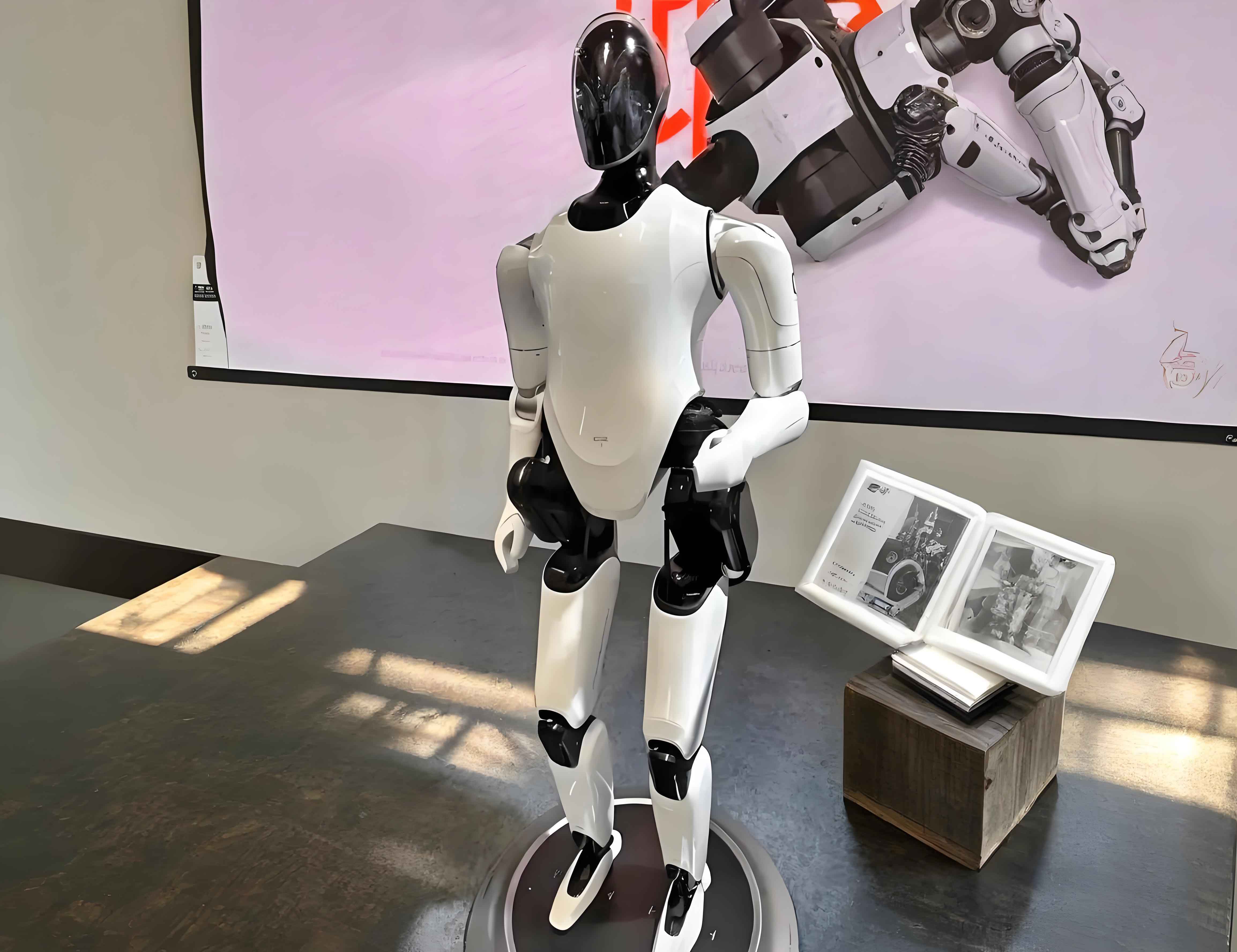
The operational mechanism of this embodied AI robot highway can be analogized to a biological system:
- Internal Sensation (Visceral System): Arrays of embedded sensors (e.g., fiber optic, strain, vibration) monitor the intrinsic state of the infrastructure—structural health, material stress, internal degradation—forming a proprioceptive sense.
- External Perception (Sensory System): Cameras, lidars, radars, and environmental sensors deployed along the roadside provide exteroceptive sensing of traffic flow, vehicle behavior, weather conditions, and external events.
- Neural Network (Communication System): A low-latency, hybrid communication network (5G, optical fiber, C-V2X) functions as the neural pathways, transmitting sensory data and control signals between the distributed “nerve endings” (edge nodes) and the central and regional “brains.”
- Central & Swarm Intelligence Brain (Cognitive System): Cloud-based AI platforms and edge computing clusters serve as the brain. They perform multi-source data fusion, traffic state analysis, behavior prediction, and strategic decision-making using knowledge graphs and machine learning models.
- Actuation and Service (Limbic/Motor System): The R2X control platform executes decisions. It actuates variable message signs, adaptive lighting, lane control signals, and communicates directly with vehicles and user terminals, completing the perception-decision-action loop.
This closed-loop enables the embodied AI robot highway to “feel” its own condition, “see” its environment, “think” and predict, and “act” autonomously to optimize safety, efficiency, and service life.
Architectural System of the Embodied AI Robot Highway
The development of the ASH architecture follows a structured, process-oriented analysis method, moving from functional requirements to physical implementation.
1. Functional Architecture: The “What”
The functional architecture defines the core capabilities of the embodied AI robot system, centered on data flow and processing to meet user needs and application scenarios.
$$Functional Layers = \{Autonomous Perception, Intelligent Diagnosis, Self-Cognition, Autonomous Control, Holographic Service\}$$
Each layer contributes to the system’s intelligence:
Autonomous Perception gathers raw data on structure, traffic, and environment. Intelligent Diagnosis processes this data at edge and cloud nodes to identify status and anomalies. Self-Cognition integrates diagnosis with historical knowledge and models to understand system state and predict evolution. Autonomous Control formulates and executes real-time management strategies. Finally, Holographic Service delivers tailored information to drivers, managers, and vehicles. This architecture ensures a continuous, self-improving cycle of awareness and action for the embodied AI robot.
2. Physical Architecture: The “How”
The physical architecture realizes the functional layers through concrete hardware, software, and network components. It details the data flow from perception to service.
| Module | Key Components | Primary Function |
|---|---|---|
| Perception | Embedded Sensors, Roadside Cameras/Lidars, Weather Stations, External Data Feeds | Raw data acquisition on infrastructure health, traffic flow, and environment. |
| Interaction (R2X) | 5G/C-V2X RSUs, Edge Computing Nodes (MEC), Fiber Optic Network | Low-latency data transport, edge preprocessing, and bidirectional communication with users/vehicles. |
| Decision (Brain) | Cloud AI Platforms, Edge AI Clusters, Knowledge Graph Databases, Simulation Models | Data fusion, analytics, prediction, and generation of control strategies. |
| Service & Actuation | Variable Message Signs, Adaptive Signal Systems, In-vehicle Displays, Management Consoles | Execution of control decisions and delivery of targeted information/services. |
Data flows cyclically: Perception → Interaction → Decision → Service → (back to Perception for feedback). This closed loop is the hallmark of an autonomous embodied AI robot.
3. Sub-Architectures and Their协同 Optimization
The overall system relies on three optimized sub-architectures working in concert.
Multi-Source Perception Architecture: This involves optimally placing sensors to achieve target coverage. The coverage $C_{overage}$ for $N$ sensors with radius $R$ in an area $A \times B$ can be modeled. The optimization seeks a sensor set $U_1$ that meets coverage constraints at minimal cost.
$$C_{overage} = \frac{\sum_{x=1}^{A} \sum_{y=1}^{B} S_i(x, y, N, R)}{A \times B}$$
R2X Interaction Architecture: This focuses on communication latency. The end-to-end delay $D_{elay}$ for $M$ interacting endpoints depends on round-trip time $RTT$ and network density $P$.
$$D_{elay} = f(RTT, M, P)$$
The goal is to find a configuration $U_2$ that supports the required number of endpoints within latency bounds cost-effectively.
Swarm Intelligence Brain Architecture: This defines the processing capability $B_{rain}$, determined by hardware $h$, algorithms $a$, and their coordination $c$.
$$B_{rain} = g(h, a, G, c)$$
Here, $G$ is the total number of embedded algorithms. Optimization aims to find a brain setup $U_3$ that meets operational speed and accuracy requirements efficiently.
协同 Optimization via Genetic Algorithm: The system-wide performance requires balancing these sub-architectures. A multi-objective optimization is performed to find a solution set $U(F_i, G_i, L_i)$ that jointly optimizes coverage, latency, and brainpower. A genetic algorithm is well-suited for this, evolving a population of architectural solutions (encoded as chromosomes combining parameters from $U_1$, $U_2$, $U_3$) towards Pareto-optimal fronts that balance these competing objectives.
Technology Sets and Data Requirements
Implementing the embodied AI robot highway demands specific technologies and data standards. The functional goals dictate stringent data attribute requirements (precision, dimension, freshness), which in turn define the necessary technology sets.
| Functional Goal | Exemplary Technical Requirement | Supporting Technology Set |
|---|---|---|
| All-Weather Operation | Traffic flow detection accuracy ≥ 95% | External Sensing Tech, Data Fusion Tech |
| Smooth & Efficient Traffic | End-to-end communication latency ≤ 10ms | Multi-mode Communication Tech, R2X Interaction Tech |
| Safety & Emergency Response | Collision avoidance service delay ≤ 10ms | Edge Computing Tech, Predictive Decision Tech |
| Smart Infrastructure Maintenance | Unified coding for critical components | Infrastructure Digitalization Tech, Internal Sensing Tech |
| Lane-level Management | Traffic state update frequency ≤ 30s | High-precision Positioning Tech, Cloud Control Info Publishing |
Fifteen core technology sets have been identified, ranging from infrastructure digitalization and multi-source sensing to edge computing, AI-driven prediction, and intelligent energy management. Each set has defined basic capability requirements that ensure the embodied AI robot possesses the necessary “skills” to perform its functions autonomously.
Application Scenarios: The Embodied AI Robot in Action
The true test of the ASH architecture lies in its application. The following scenarios demonstrate how the embodied AI robot operates holistically.
1. Real-Time Facility Status Updates: Embedded sensors continuously stream health data to edge nodes for preliminary analysis before being fused in the cloud brain. The system autonomously updates digital twin models and alerts managers to anomalies, enabling predictive maintenance—a key self-care function of the embodied AI robot.
2. Structural Performance Evolution & Prediction: Combining real-time sensor data with historical models, the AI brain diagnoses current pavement conditions and predicts future deterioration rates. It can then recommend optimal rehabilitation schedules, demonstrating the embodied AI robot‘s capacity for self-prognosis and long-term planning.
3. Service State Management in Extreme Environments: During blizzards or heatwaves, the system correlates environmental sensor data with structural response. It can autonomously activate warning systems, adjust speed limits, or dispatch anti-icing systems, showcasing the embodied AI robot‘s resilience and adaptive control.
4. Emergency Risk Early Warning & Safety Control: For geo-hazards like slope instability, dedicated sensors detect minute movements. The edge-brain analyzes the trend, predicts failure risk, and immediately triggers warnings to approaching vehicles via R2X while notifying emergency crews. This exemplifies the embodied AI robot‘s fast reflex and protective instinct.
5. Utilization-Based Travel Guidance: By analyzing real-time traffic density and facility usage (e.g., bridge load, tunnel congestion), the system dynamically calculates optimal routing. It then guides drivers via signage and in-vehicle messages to balance network load, illustrating the embodied AI robot‘s role in managing its own “metabolism” for system-wide health.
Conclusion
The transition from conventional smart highways to an Auto-intelligence Smart Highway based on embodied AI robot principles represents a paradigm shift. This paper has presented a comprehensive architectural and functional system that redefines road infrastructure as an active, intelligent agent. By establishing a closed-loop functional architecture, a corresponding physical implementation with optimized sub-systems, clearly defined technology sets, and practical application scenarios, the framework provides a viable path forward. This embodied AI robot highway is designed for hierarchical clarity, unified coordination, and open compatibility. It moves beyond fragmented intelligence towards a system capable of lifelong, omnipresent, and event-driven wisdom, fundamentally transforming the concepts of road construction, operation, and maintenance for the era of autonomous intelligence.