
In the era of intelligent manufacturing, precision reducers play a pivotal role in high-end automated equipment such as industrial robots and precision CNC machining centers. Among these, the RV reducer (Rotate Vector reducer) stands out due to its high transmission accuracy, low backlash, long service life, high efficiency, and strong impact resistance. As a key component in rotary execution mechanisms, the RV reducer has garnered significant attention from researchers and industries worldwide. In this review, I will comprehensively summarize the research status of RV reducers, focusing on critical aspects like transmission error, backlash, torsional stiffness, vibration characteristics, wear life, and processing technology. By leveraging tables and formulas, I aim to provide a structured overview of the advancements and challenges in this field. The goal is to highlight the progress made while identifying gaps that need addressing, particularly in enhancing the precision retention and consistency of domestic RV reducer products.
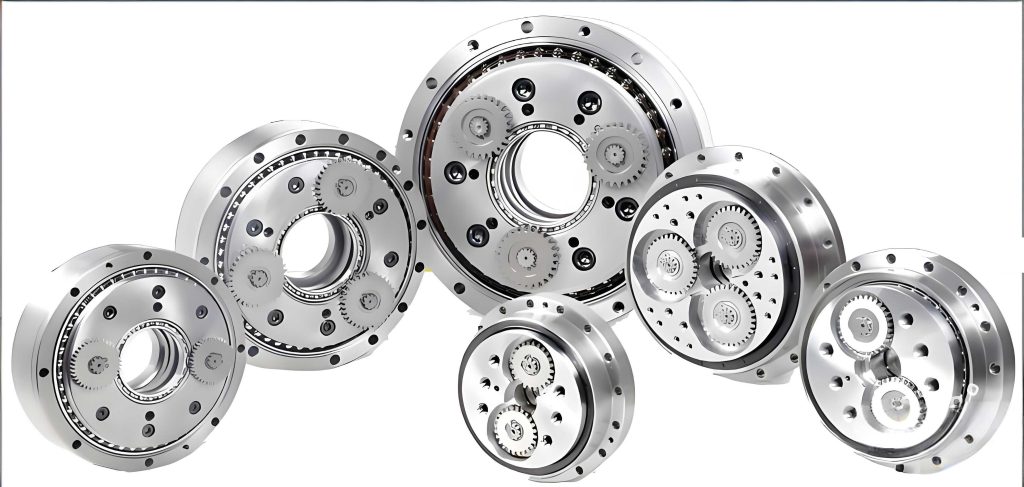
The RV reducer operates on a compound transmission principle, combining a planetary gear stage and a cycloidal gear stage to achieve high reduction ratios and compact design. Its performance is influenced by numerous factors, including geometric parameters, material properties, and manufacturing tolerances. Over the years, extensive research has been conducted to optimize the RV reducer’s performance, leading to improvements in accuracy, durability, and efficiency. However, despite these efforts, there remain challenges in achieving consistent quality and long-term reliability, especially when comparing domestic products with international counterparts. This review delves into the detailed research findings across various domains, offering insights into the current state and future directions for RV reducer development.
Transmission Error Research
Transmission error, defined as the deviation between the actual and theoretical output rotation angles, is a crucial metric for evaluating the performance of an RV reducer. It directly impacts the positioning accuracy and smooth operation of robotic systems. Research on transmission error in RV reducers can be categorized into static transmission error analysis, dynamic transmission error studies, and transmission error measurement techniques.
Early studies primarily employed geometric methods to analyze static transmission error. For instance, researchers developed models to calculate the transmission error in single-stage cycloidal gear transmissions, considering factors like tooth profile machining errors and assembly misalignments. The transmission error $\Delta \theta$ can be expressed as:
$$ \Delta \theta = \theta_{\text{actual}} – \theta_{\text{theoretical}} $$
where $\theta_{\text{actual}}$ is the measured output angle and $\theta_{\text{theoretical}}$ is the ideal output angle based on input and gear ratio. These geometric approaches helped establish the relationship between tooth profile modifications and transmission error. For example, optimized tooth profiles for cycloidal gears were proposed to minimize transmission error while maintaining load capacity. The influence of various modification combinations, such as equidistant and offset modifications, on transmission error was quantitatively analyzed, providing guidelines for design improvements.
In more complex RV reducer systems, the combined effects of manufacturing and assembly errors become significant. Researchers developed equivalent mathematical models, representing components as rigid bodies connected by equivalent springs, to study the static transmission error under multiple error sources. This approach allowed for sensitivity analysis, showing how individual errors, like pin gear position deviations or bearing clearances, contribute to overall transmission error. A summary of key error sources and their impact on transmission error is presented in Table 1.
| Error Source | Description | Impact on Transmission Error |
|---|---|---|
| Tooth Profile Error | Deviation from ideal cycloidal or involute profile | Increases periodic error components |
| Assembly Misalignment | Misalignment of gears, bearings, or shafts | Causes low-frequency error fluctuations |
| Bearing Clearance | Radial or axial play in bearings | Leads to nonlinear error spikes |
| Component Elasticity | Flexural deformation under load | Contributes to dynamic error variations |
Dynamic transmission error research involves accounting for time-varying factors such as inertial forces, damping, and stiffness variations. Nonlinear dynamic models have been developed to capture the effects of backlash, time-varying mesh stiffness, and external loads on transmission error. The equation of motion for an RV reducer system can be represented as:
$$ I \ddot{\theta} + C \dot{\theta} + K(t) \theta = T_{\text{input}} – T_{\text{load}} $$
where $I$ is the inertia matrix, $C$ is the damping matrix, $K(t)$ is the time-varying stiffness matrix, $\theta$ is the angular displacement vector, and $T$ denotes torque. These models, often implemented using multi-body dynamics software, enable simulation of transmission error under operational conditions. For instance, studies have shown that reducing backlash and optimizing mesh stiffness can significantly lower dynamic transmission error, enhancing the RV reducer’s performance in high-speed applications.
Measurement techniques for transmission error have evolved from basic optical methods to integrated test platforms. Modern systems use high-precision encoders, laser interferometers, or autocollimators to measure angular displacement with resolutions down to arc-seconds. These platforms allow for both no-load and loaded testing, providing comprehensive data on transmission error across various operating conditions. The advancement in measurement technology has been instrumental in validating theoretical models and ensuring quality control during RV reducer production.
Backlash Research
Backlash, defined as the angular lag when the direction of motion reverses, is another critical performance indicator for RV reducers. It affects positioning repeatability and can lead to vibrations or instability in precision systems. Backlash in RV reducers consists of two main components: geometric backlash due to clearances between components, and elastic backlash resulting from torsional deformations under load.
Research on backlash has focused on identifying its sources and developing methods to minimize it. Geometric backlash arises from tolerances in gear meshes, bearing clearances, and assembly gaps. For cycloidal gear pairs, the backlash $B_g$ can be approximated by:
$$ B_g = \sum_{i=1}^{n} \delta_i \cdot r_i $$
where $\delta_i$ is the clearance in the $i$-th component and $r_i$ is the effective radius. Studies have quantified the contributions of various error sources, such as pin gear position errors, cycloid gear profile modifications, and crankshaft eccentricity, to overall backlash. For example, it was found that the clearance between the cycloid gear and pin gears, along with the play in the crank bearings, are primary contributors to backlash in RV reducers.
Elastic backlash, on the other hand, is influenced by the stiffness of components like gears, shafts, and bearings. Under load, these elements deform torsionally, causing additional angular displacement. The total backlash $B_{\text{total}}$ can be expressed as:
$$ B_{\text{total}} = B_g + B_e $$
where $B_e$ is the elastic backlash, calculated based on torsional stiffness and applied torque. Optimization strategies have been proposed to reduce backlash, including tailored tooth profile modifications that compensate for deformations, and preloading mechanisms to minimize clearances. A comparison of backlash reduction techniques is shown in Table 2.
| Technique | Principle | Effect on Backlash |
|---|---|---|
| Tooth Profile Modification | Adjusting cycloid gear profile to account for deformations | Reduces geometric backlash by up to 30% |
| Bearing Preload | Applying axial or radial preload to bearings | Minimizes clearance-induced backlash |
| Error Distribution Optimization | Allocating tolerances to minimize cumulative error | Lowers overall backlash through statistical control |
| Stiffness Enhancement | Using materials or designs with higher torsional stiffness | Decreases elastic backlash under load |
Backlash measurement has advanced with the development of comprehensive testers that can perform static and dynamic assessments. These testers often use hysteresis curve methods, where the output rotation is measured while reversing input direction, to quantify backlash accurately. Such equipment enables rapid evaluation of RV reducer units, ensuring compliance with specifications and facilitating quality assurance in manufacturing.
Torsional Stiffness Research
Torsional stiffness, representing the resistance to angular deformation under torque, is vital for the load-bearing capacity and precision of RV reducers. High torsional stiffness ensures minimal deflection under varying loads, which is crucial for applications requiring high positional accuracy, such as robotic arms.
The torsional stiffness $K_t$ of an RV reducer is defined as:
$$ K_t = \frac{T}{\Delta \theta} $$
where $T$ is the applied torque and $\Delta \theta$ is the resulting angular deformation. Research has explored both analytical and numerical methods to compute and enhance torsional stiffness. Early studies used lumped-parameter dynamic models to represent the RV reducer as a system of masses, springs, and dampers. These models helped identify key parameters affecting stiffness, such as the number of pin gears, pin radius, and bearing stiffness. For instance, increasing the number of pin gears generally improves torsional stiffness by distributing the load more evenly.
Finite element analysis (FEA) has become a powerful tool for torsional stiffness evaluation, allowing detailed consideration of component flexibility and contact conditions. FEA simulations reveal stress distributions and deformation patterns in cycloidal gears, crankshafts, and bearings under load. Studies have shown that the support stiffness of bearings, particularly the crankshaft bearings, significantly influences the overall torsional stiffness of the RV reducer. Optimizing bearing selection and housing design can thus lead to substantial improvements.
A summary of factors affecting torsional stiffness and their impact levels is provided in Table 3.
| Factor | Description | Impact on Torsional Stiffness |
|---|---|---|
| Number of Pin Gears | More pins increase load-sharing | High positive impact |
| Bearing Stiffness | Stiffness of support bearings | Critical; directly affects overall stiffness |
| Material Properties | Young’s modulus and strength of components | Moderate impact; higher modulus increases stiffness |
| Gear Profile Design | Optimized tooth profiles for even contact | Enhances stiffness by reducing stress concentrations |
Dynamic torsional stiffness, which varies with frequency and load conditions, has also been investigated. Nonlinear dynamic models incorporate time-varying mesh stiffness and damping to predict stiffness fluctuations during operation. These studies highlight the importance of considering dynamic effects in high-speed applications, where resonance or vibrations can degrade performance. By optimizing design parameters, such as gear geometry and bearing preload, the torsional stiffness of RV reducers can be maximized across a wide range of operating conditions.
Vibration and Fault Diagnosis Research
Vibration and noise are key indicators of the quality and reliability of RV reducers. Excessive vibrations can lead to premature wear, reduced accuracy, and even failure. Research in this area focuses on understanding vibration mechanisms, developing measurement techniques, and applying vibration signals for fault diagnosis.
The vibration behavior of an RV reducer is influenced by factors such as gear meshing frequencies, bearing defects, and structural resonances. The fundamental meshing frequency $f_m$ for the cycloidal stage can be calculated as:
$$ f_m = \frac{Z_c \cdot n}{60} $$
where $Z_c$ is the number of cycloid gear teeth and $n$ is the input speed in rpm. Modal analysis and experimental studies have identified the natural frequencies and mode shapes of major components, helping to avoid resonance conditions. For example, the crankshaft and housing often exhibit low-frequency modes that can be excited by torque fluctuations.
Dynamic models have been developed to simulate vibration responses under various loads. These models account for nonlinearities like backlash, time-varying stiffness, and friction. Sensitivity analysis has shown that parameters such as eccentricity and bearing clearance significantly affect vibration amplitudes. By tuning these parameters, vibrations can be minimized, enhancing the smooth operation of the RV reducer.
Vibration measurement techniques have advanced with the use of accelerometers, laser vibrometers, and integrated test platforms. These systems capture time-domain and frequency-domain signals, enabling detailed analysis of vibration characteristics. For instance, testers can measure torsional vibrations using encoder-based methods, providing insights into dynamic behavior under load. A summary of common vibration sources and their frequency ranges in RV reducers is shown in Table 4.
| Vibration Source | Typical Frequency Range | Remarks |
|---|---|---|
| Cycloidal Gear Meshing | 100 Hz to 1 kHz | Dominant at high speeds; harmonics present |
| Bearing Defects | 50 Hz to 500 Hz | Characteristic frequencies depend on bearing type |
| Structural Resonances | Below 100 Hz | Associated with housing or shaft flexure |
| Input Motor Ripple | Multiples of motor speed | Can be transmitted through the drivetrain |
Fault diagnosis using vibration signals has gained prominence with machine learning algorithms. By collecting vibration data from RV reducers under normal and faulty conditions, such as worn gears or damaged bearings, pattern recognition models can be trained to identify faults. Techniques like deep convolutional neural networks have achieved high accuracy in classifying fault types, enabling predictive maintenance and reducing downtime. This approach leverages the nonlinear characteristics of vibration signals, offering a robust tool for monitoring RV reducer health.
Wear Life Research
The wear life and precision retention of RV reducers are critical for long-term reliability, especially in continuous operation scenarios like industrial robotics. Wear primarily occurs at contact interfaces, such as gear teeth and bearing surfaces, and is influenced by lubrication, material properties, and load conditions.
Research on wear life has focused on lubrication analysis, friction modeling, and fatigue prediction. For cycloidal gear pairs, mixed lubrication models have been developed to study the interplay between fluid film lubrication and boundary contact. The oil film thickness $h$ in elastohydrodynamic lubrication (EHL) can be estimated using the Hamrock-Dowson equation:
$$ h_{\text{min}} = 2.69 R’^{0.53} U^{0.67} G^{0.53} W^{-0.067} $$
where $R’$ is the effective radius, $U$ is the speed parameter, $G$ is the material parameter, and $W$ is the load parameter. These models consider surface roughness, load distribution, and thermal effects to predict lubrication performance. Studies show that optimizing tooth profile modifications, such as adding roundings, can improve lubrication by reducing contact pressures and enhancing oil film formation.
Friction and wear in bearings, particularly the crankshaft bearings, are also major concerns. Finite element analysis has been used to simulate contact stresses and predict fatigue life based on the Lundberg-Palmgren theory. The basic rating life $L_{10}$ for bearings is given by:
$$ L_{10} = \left( \frac{C}{P} \right)^p $$
where $C$ is the dynamic load rating, $P$ is the equivalent dynamic load, and $p$ is an exponent (typically 3 for ball bearings). Research has proposed design optimizations, such as adjusting bearing geometry or preload, to extend fatigue life. For example, increasing the number of rolling elements or using advanced materials can significantly enhance the durability of RV reducer bearings.
Accelerated life testing methods have been developed to evaluate wear life without requiring years of operation. These tests apply cyclic loads and monitor performance degradation, such as increases in backlash or vibration. By correlating test results with theoretical models, the wear life of RV reducers can be predicted with reasonable accuracy. Key factors affecting wear life and their mitigation strategies are summarized in Table 5.
| Factor | Impact on Wear Life | Mitigation Strategy |
|---|---|---|
| Lubrication Condition | Poor lubrication accelerates wear | Use high-performance greases; optimize oil film thickness |
| Contact Stress | High stress leads to pitting or spalling | Reduce stress through profile modification or load distribution |
| Material Hardness | Softer materials wear faster | Apply surface treatments like carburizing or nitriding |
| Operational Load | Overloading reduces fatigue life | Design for peak load conditions; incorporate safety factors |
Overall, advancements in lubrication modeling and fatigue analysis have contributed to longer wear lives for RV reducers, but challenges remain in achieving consistent life spans across mass-produced units.
Processing Technology Research
Manufacturing processes, including machining, heat treatment, and assembly, are fundamental to the performance and consistency of RV reducers. High-precision components, such as cycloidal gears and crankshafts, require advanced processing technologies to meet tight tolerances.
Research on processing technology has concentrated on gear grinding, material selection, and assembly techniques. For cycloidal gears, form grinding is a common method for achieving precise tooth profiles. The grinding process involves controlling parameters like wheel speed, feed rate, and depth of cut to minimize errors. Mathematical models have been developed to relate grinding parameters to profile accuracy. For instance, the normal deviation $\Delta N$ of the ground profile can be expressed as:
$$ \Delta N = f(v_s, f_r, d_c) $$
where $v_s$ is the wheel speed, $f_r$ is the feed rate, and $d_c$ is the depth of cut. Optimization studies using design of experiments (DOE) have identified optimal parameter combinations to reduce surface roughness and improve geometric accuracy.
Alternative machining methods, such as wire electrical discharge machining (EDM) or hobbing, have been explored for small-batch production or prototyping. These methods offer flexibility in producing modified tooth profiles but may have limitations in surface finish or efficiency. For example, wire EDM can achieve high accuracy for complex shapes but is slower compared to grinding.
Heat treatment processes, like carburizing or induction hardening, are critical for enhancing the wear resistance and strength of gear teeth. Research has focused on optimizing treatment parameters to achieve desired hardness profiles without introducing distortions. Similarly, assembly techniques, including precision alignment and preloading, play a key role in minimizing errors and ensuring consistent performance. A comparison of common processing technologies for RV reducer components is provided in Table 6.
| Technology | Application | Advantages | Challenges |
|---|---|---|---|
| Form Grinding | Cycloidal gear teeth | High accuracy and surface finish | Requires specialized machinery; high cost |
| Wire EDM | Prototyping or small batches | Flexible for complex profiles | Slow processing; surface integrity issues |
| Precision Hobbing | Involute gears in planetary stage | Efficient for mass production | Limited to certain gear types |
| Heat Treatment | Gear and shaft hardening | Enhances durability and wear resistance | Risk of distortion; requires careful control |
Advancements in computer-aided manufacturing (CAM) and metrology have further improved processing consistency. For example, in-process measurement systems can monitor grinding operations in real-time, allowing for adjustments to maintain accuracy. However, the reliance on high-end machine tools, often imported, poses a challenge for domestic RV reducer production. Developing indigenous manufacturing capabilities is thus a priority for achieving self-sufficiency in this sector.
Comparative Analysis of Domestic and International Research
The global landscape of RV reducer research and production is dominated by a few key players, with significant disparities between domestic and international advancements. While domestic researchers have made progress in theoretical modeling and performance optimization, practical implementation and product consistency often lag behind international standards.
In terms of transmission error and backlash control, international products typically exhibit lower values and better stability over time. This is attributed to decades of experience in tooth profile design and meticulous manufacturing processes. For instance, international manufacturers employ advanced grinding machines and stringent quality control measures to ensure minimal deviations. Domestic efforts, though improving, still face challenges in replicating this level of precision consistently across large production volumes.
Torsional stiffness and vibration performance show narrower gaps, as domestic studies have effectively leveraged simulation tools to optimize designs. However, the use of inferior materials or less robust heat treatments can lead to reduced stiffness and higher vibrations in domestic RV reducers under heavy loads. Wear life remains a notable area of difference, with international products often boasting longer service lives due to superior lubrication systems and material science. Domestic research on wear modeling is advancing, but translating these findings into mass-produced components requires further refinement in processing technology.
Processing technology is perhaps the most critical differentiator. International manufacturers possess state-of-the-art equipment and well-established protocols for machining, assembly, and testing. In contrast, domestic production lines may rely on imported machinery, leading to higher costs and vulnerability to supply chain disruptions. Efforts to localize high-precision machine tools are underway, but progress is slow. Table 7 summarizes the key performance gaps between domestic and international RV reducers.
| Performance Aspect | International Level | Domestic Level | Gap Analysis |
|---|---|---|---|
| Transmission Error | Below 1 arc-min | 1-3 arc-min | Domestic error is higher, especially under load |
| Backlash | Below 1 arc-min | 1-2 arc-min | Similar at no-load, but domestic increases faster with wear |
| Torsional Stiffness | High, with minimal degradation | Moderate, may degrade over time | Domestic stiffness is adequate but less consistent |
| Wear Life | Over 10,000 hours | 5,000-8,000 hours | Significant gap due to material and lubrication issues |
| Product Consistency | High, with tight statistical control | Variable, depending on batch | Domestic consistency is a major challenge |
To bridge these gaps, domestic research must focus on holistic improvements, encompassing design, material science, and manufacturing. Collaborative efforts between academia and industry can accelerate technology transfer, while investment in domestic precision machinery will reduce dependency. Moreover, adopting international standards for testing and quality assurance can enhance the reliability of domestic RV reducer products.
Conclusions and Recommendations
In conclusion, the RV reducer is a cornerstone of precision motion control, with ongoing research driving advancements in accuracy, durability, and efficiency. This review has highlighted significant progress in understanding transmission error, backlash, torsional stiffness, vibration, wear life, and processing technology for RV reducers. Theoretical models and simulation tools have provided deep insights, while experimental techniques have enabled validation and refinement. However, challenges persist, particularly in achieving long-term precision retention and consistent quality in domestic production.
Based on the analysis, I recommend the following directions for future research and development in RV reducers:
- Enhanced Dynamic Modeling: Future studies should incorporate more nonlinear factors, such as thermal effects, fluid-structure interactions, and micro-scale friction, into dynamic models of RV reducers. This will improve the accuracy of performance predictions under real-world conditions.
- Integrated Fault Diagnosis Systems: Developing embedded sensors and AI-driven monitoring systems for RV reducers can enable real-time fault detection and predictive maintenance, reducing downtime and extending service life.
- Advanced Material and Lubrication Research: Exploring novel materials, coatings, and lubricants can significantly enhance wear resistance and fatigue life. Collaborations with material science experts are essential for breakthroughs in this area.
- Localization of Manufacturing Technology: Investing in domestic high-precision machine tools and processing equipment is crucial for reducing reliance on imports and improving product consistency. Research should focus on optimizing grinding, heat treatment, and assembly processes for local conditions.
- Standardization and Testing Protocols: Establishing rigorous testing standards and quality control measures will help domestic manufacturers achieve higher consistency and reliability. Sharing best practices internationally can also facilitate improvement.
The journey toward excellence in RV reducer technology is ongoing, and with concerted efforts in research and industrialization, domestic products can reach global standards. By addressing the identified gaps and fostering innovation, the RV reducer industry can support the growth of high-end manufacturing and robotics worldwide.