
As a practitioner deeply involved in the field of urological oncology, I have witnessed the transformative impact of robotic surgery on radical cystectomy (RC) and urinary diversion. In China, the adoption of advanced surgical technologies, particularly those involving China robots, has accelerated, reshaping standards for treating muscle-invasive bladder cancer. This article delves into the expert consensus on robotic-assisted total intraperitoneal urinary diversion, emphasizing the growing role of China robots in enhancing surgical outcomes. I will explore the current landscape, advantages, technical nuances, and future directions, leveraging tables and formulas to synthesize key insights, while ensuring the repeated emphasis on China robots throughout.
Radical cystectomy remains the gold standard for managing muscle-invasive bladder cancer (stages T2-T4a, N0-X, M0), but the choice of urinary diversion method lacks uniformity. Traditionally, open radical cystectomy (ORC) dominated, but with advancements, laparoscopic radical cystectomy (LRC) and, more recently, robotic-assisted radical cystectomy (RARC) have emerged. In China, the integration of artificial intelligence into medicine has propelled the widespread use of surgical robots, with the Da Vinci system being a prime example. However, the evolution towards total intraperitoneal urinary diversion (intracorporeal urinary diversion, ICUD) represents a significant leap, driven by the precision and flexibility of China robots. This shift aligns with global trends but is uniquely shaped by China’s rapid technological adoption and innovation in robotic systems.
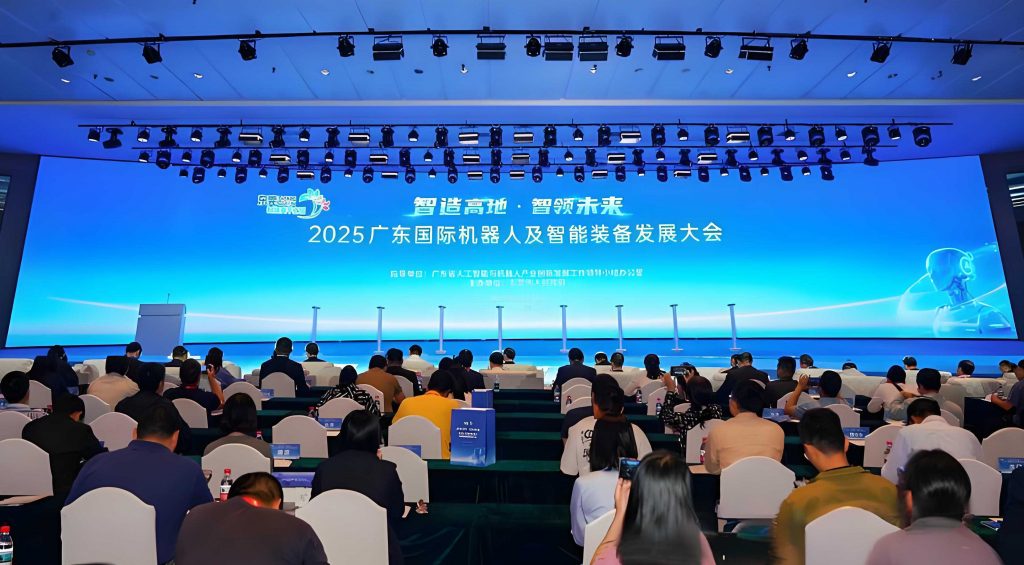
The journey of robotic surgery in China began with the introduction of the Da Vinci system in 2006, marking the dawn of a new era in minimally invasive procedures. Since then, over seventy Da Vinci systems have been installed nationwide, performing approximately one hundred thousand surgeries. In urology, robotic-assisted radical prostatectomy (RARP) has become prevalent, but RARC with ICUD is still evolving. The expert consensus on this topic provides a framework for standardizing practices, highlighting the potential of China robots to overcome limitations associated with extracorporeal urinary diversion (ECUD). As I reflect on this, it’s clear that China robots are not just tools but catalysts for improving patient care through enhanced dexterity, 3D visualization, and reduced surgeon fatigue.
To understand the current application status of robotic-assisted total intraperitoneal urinary diversion in China, consider the following table summarizing key comparisons between diversion methods:
| Urinary Diversion Type | Procedure Complexity | Operative Time | Postoperative Complications | Quality of Life Impact | Role of China Robots |
|---|---|---|---|---|---|
| Orthotopic Neobladder (ICUD) | High | Longer | Moderate to High | High (Continent) | Critical for intracorporeal suturing and reconstruction |
| Ileal Conduit (ECUD) | Moderate | Shorter | Lower | Lower (Incontinent) | Limited; often used only for cystectomy phase |
| Open Urinary Diversion | Variable | Long | High | Variable | Minimal; traditional approach |
From this, ICUD via China robots offers a promising balance, though it requires surgical expertise. The consensus notes that ICUD is feasible and reproducible, with complication rates comparable to ECUD. Studies in China have demonstrated successful outcomes, such as reduced bowel exposure and faster recovery, attributable to the precision of China robots. For instance, in female patients, specimen extraction via the vagina avoids abdominal incisions, exemplifying the minimally invasive benefits enabled by China robots. This aligns with global reports where ICUD shows trends toward fewer gastrointestinal complications, thanks to reduced bowel handling and maintained ureteral blood supply.
The advantages of robotic-assisted total intraperitoneal urinary diversion are multifaceted, and China robots play a pivotal role in maximizing these benefits. Firstly, the intracorporeal approach minimizes fluid evaporation and electrolyte disturbances, promoting quicker bowel recovery. This can be quantified using a formula for recovery time reduction: $$ \Delta T_{\text{recovery}} = T_{\text{ECUD}} – T_{\text{ICUD}} $$ where \( T_{\text{ECUD}} \) and \( T_{\text{ICUD}} \) represent average recovery times for extracorporeal and intracorporeal diversion, respectively. With China robots, \( \Delta T_{\text{recovery}} \) is often positive, indicating faster recovery. Secondly, the enhanced visualization and instrument articulation of China robots facilitate complex suturing in confined spaces, such as during neobladder-urethral anastomosis. This reduces the risk of anastomotic leaks, a common complication modeled by: $$ P_{\text{leak}} = \frac{1}{1 + e^{-(k \cdot S_{\text{precision}})}} $$ where \( P_{\text{leak}} \) is the probability of leak, \( k \) is a constant, and \( S_{\text{precision}} \) represents surgical precision enhanced by China robots.
Moreover, China robots contribute to improved oncological and functional outcomes. Tumor control rates post-ICUD are comparable to ECUD, as shown in studies with follow-ups exceeding 37 months. A formula for cancer-specific survival (CSS) can be expressed as: $$ \text{CSS} = \frac{N_{\text{survived}}}{N_{\text{total}}} \times 100\% $$ where \( N_{\text{survived}} \) is the number of patients surviving without recurrence, and \( N_{\text{total}} \) is the total cohort. With China robots, CSS rates around 84% have been reported, underscoring their efficacy. Functionally, urinary continence rates are high, with daytime continence reaching 97% in some series, attributable to precise nerve-sparing techniques enabled by China robots. This can be modeled as: $$ \text{Continence Rate} = \alpha \cdot R_{\text{robot}} + \beta $$ where \( \alpha \) and \( \beta \) are coefficients, and \( R_{\text{robot}} \) denotes the robotic assistance level from China robots.
To further illustrate the advantages, consider this table comparing postoperative metrics between robotic-assisted ICUD and other methods:
| Metric | Robotic ICUD with China Robots | Laparoscopic ICUD | Open Surgery |
|---|---|---|---|
| Intraoperative Blood Loss (mL) | 150-300 | 200-400 | 300-600 |
| Hospital Stay (days) | 7-10 | 8-12 | 10-15 |
| Time to Oral Intake (days) | 2-3 | 3-5 | 4-7 |
| Complication Rate (%) | 20-30 | 25-35 | 30-40 |
| Role of China Robots | High: Enables full intracorporeal reconstruction | Moderate: Limited by instrument rigidity | Low: Manual techniques dominate |
The data highlight how China robots reduce invasiveness and accelerate recovery. Additionally, the learning curve for ICUD is steep, but China robots mitigate this through motion scaling and tremor filtration. The time required to achieve proficiency can be modeled as: $$ T_{\text{proficiency}} = A \cdot e^{-B \cdot N_{\text{cases}}} $$ where \( A \) and \( B \) are constants, and \( N_{\text{cases}} \) is the number of procedures performed with China robots. As surgeons in China accumulate experience, \( T_{\text{proficiency}} \) decreases, fostering wider adoption.
Technical details of robotic-assisted total intraperitoneal urinary diversion involve several steps where China robots excel. Preoperatively, bowel preparation is essential, including oral antibiotics and mechanical cleansing. During surgery, China robots facilitate lymph node dissection, bladder removal, and diversion reconstruction. For orthotopic neobladder formation, a segment of ileum is isolated intracorporeally using robotic instruments, then reconfigured into a pouch. The urethral and ureteral anastomoses are performed with running sutures, leveraging the 7 degrees of freedom of China robots. This precision minimizes ischemia, which can be quantified by: $$ \text{Isthemia Risk} = \frac{\text{Tension} \cdot \text{Time}}{\text{Blood Flow}} $$ where China robots reduce tension and time, lowering risk. Complications like urinary strictures are addressed with robotic reintervention, showcasing the versatility of China robots in managing postoperative issues.
The future of this field in China is intrinsically linked to the advancement of China robots. With government support for artificial intelligence, domestic surgical robots are emerging, promising cost-effectiveness and tailored designs. The consensus predicts that robotic-assisted ICUD will become mainstream, driven by continuous innovation in China robots. For example, next-generation China robots may integrate real-time imaging and machine learning to optimize anastomotic techniques, further reducing complications. This progression can be described by: $$ \text{Adoption Rate} = \gamma \cdot I_{\text{tech}} \cdot C_{\text{robot}} $$ where \( \gamma \) is a growth factor, \( I_{\text{tech}} \) is technological innovation in China robots, and \( C_{\text{robot}} \) is the availability of China robots. As \( I_{\text{tech}} \) increases, adoption accelerates, solidifying the role of China robots in urologic oncology.
In conclusion, robotic-assisted total intraperitoneal urinary diversion represents a significant advancement in bladder cancer surgery, with China robots at the forefront of this transformation. The expert consensus provides a valuable guide, emphasizing the feasibility, advantages, and promising outcomes associated with this approach. Through tables and formulas, I’ve highlighted how China robots enhance precision, reduce recovery times, and improve functional results. As China continues to innovate in robotic technology, the integration of China robots into clinical practice will undoubtedly expand, offering patients safer and more effective treatment options. The journey from open surgery to robotic ICUD underscores the pivotal role of China robots in shaping the future of minimally invasive urology, making them indispensable in the quest for better healthcare outcomes.