
At a recent industry gathering, a series of exhibits made one strategic shift unusually clear. A chip company began customizing an electric cylinder drive solution for dexterous hands. A software company decided to co-exhibit with a robot body manufacturer. A humanoid robot designed for the apparel industry no longer pursued general-purpose capability but concentrated on a single process: patch-pocket sewing. These examples point to a broader change in the competitive logic of embodied intelligence. The sector is moving from “technology-driven scenarios” to “scenario-defined technology.”
This shift does not reduce the ambition of embodied intelligence. It sharpens it. Instead of treating embodied intelligence as a distant universal platform, companies are embedding it in real production tasks, real service environments and real commercial constraints. The result is a more practical industrialization path: vertical depth, system collaboration and supply-chain reconstruction. In each case, embodied intelligence is no longer only a laboratory demonstration. It is becoming a tool, a workflow and an industrial capability.
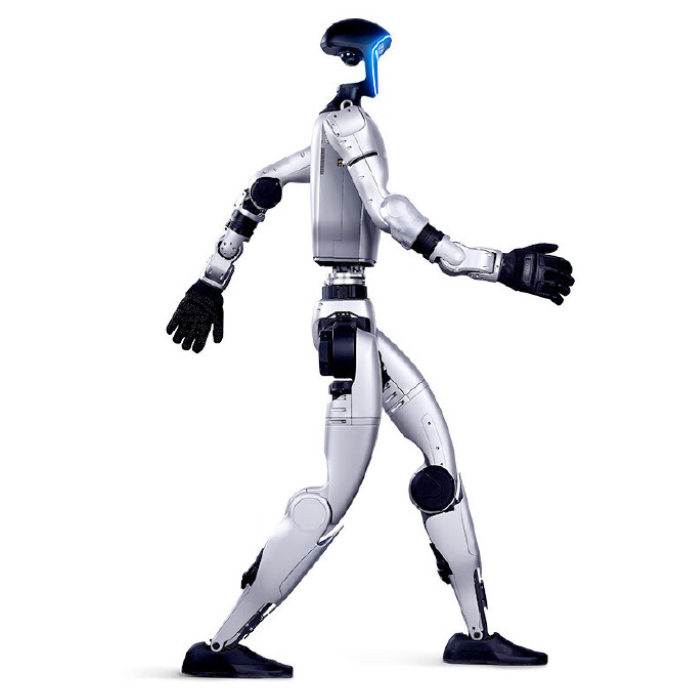
The evidence is visible across multiple domains. In apparel manufacturing, embodied intelligence is being trained for sewing. In biomedical laboratories, embodied intelligence is being tested for cross-task experiment operation. In cultural tourism and companionship, embodied intelligence is being designed around anthropomorphic experience. In airports, industrial high-altitude work and commercial services, embodied intelligence is being coordinated across multiple robots and platforms. At the component level, chips, dexterous hands, world models and data collection systems are being rebuilt for embodied intelligence workloads.
The central lesson is that embodied intelligence does not become valuable simply because a robot can move or speak. It becomes valuable when it can perform a defined task reliably, at a cost and speed that a customer will accept. That is why the most revealing stories from the gathering were not about spectacle. They were about specificity. The more embodied intelligence is asked to solve a narrow problem, the more clearly its technical requirements, data needs and business model become.
1. Vertical Depth: From Universal Machines to Specialized Tools
The first major trend is vertical depth. For years, the dominant image of embodied intelligence was a universal humanoid robot capable of performing almost any task in almost any environment. That image remains powerful, but the commercial frontier is increasingly occupied by specialized tools. Companies are choosing domains where pain points are urgent, labor is scarce, processes are repeatable and data can be structured. In these domains, embodied intelligence can move from demonstration to deployment.
At the Aitu Technology exhibit, the Aitu humanoid robot worked alongside a template machine. It did not attempt to dance or perform a backflip. It focused on one task: garment sewing. The robot autonomously completed fabric recognition, grasping and positioning, and docking with the sewing process. This seemingly narrow positioning reflects a precise understanding of apparel industry pain points: recruitment difficulties, rising labor costs and the challenge of flexible production. The company did not begin with a general-purpose humanoid and then search for an application. It began with the production line and designed backward from there.
Wang Fengmei, marketing director of Aitu Technology, explained that the company moved beyond the conventional general-purpose humanoid robot design approach and instead built its product around the real needs of apparel production lines. Its fully self-developed sewing VLA vertical-domain embodied model is trained deeply for garment sewing scenarios. The system does not require repeated programming and debugging to match multi-style, small-batch and fast-iteration flexible production needs. In other words, embodied intelligence is being trained not as a generic skill set but as a domain-specific production competence.
This approach matters for industrialization. A general-purpose embodied intelligence system must cope with enormous variability. A vertical embodied intelligence system can focus on a narrower distribution of fabrics, seams, templates, tools and quality standards. That focus improves reliability, reduces integration cost and shortens the path to return on investment. The apparel case also shows that embodied intelligence can enter an industry not by replacing the entire factory but by connecting to existing equipment. The humanoid robot and template machine work together, which suggests a pragmatic model of automation: new embodied intelligence systems cooperate with legacy machines rather than waiting for a fully rebuilt production environment.
Yuanluo Technology offered another example of vertical depth. At the event, the Monte02 robot demonstrated cross-task ability transfer, moving from nucleic acid extraction pretreatment to cytotoxicity detection. The company’s core support is its self-developed OPN physical native model. This model is centered on experimental objects and fuses visual, force and tactile multimodal information. It allows the robot to plan operations according to task goals and adjust execution strategies based on real-time feedback such as liquid level changes and vessel status. The robot has already mastered more than fifty standardized experimental operation skills, possesses sub-millimeter operation precision and can conduct long-process experiments continuously for several hours.
The goal is not to build a universal experiment robot. The goal is to make a set of基础 capabilities reusable across different experimental workflows. That distinction is important for embodied intelligence. In biomedical laboratories, variability is high, sample handling is delicate and errors are costly. A robot that can reuse core embodied intelligence capabilities across tasks can reduce the need for custom engineering while still meeting domain requirements. The laboratory becomes a training ground for reusable perception, manipulation and feedback loops, not just a showcase for a single robotic arm.
Yunmu Intelligent Manufacturing provided a third path. Unlike Aitu Technology, which focuses on manufacturing, or Yuanluo Technology, which anchors itself in biomedicine, Yunmu Intelligent Manufacturing is targeting cultural tourism. Its full-simulation humanoid robot is highly anthropomorphic in appearance, but the company places equal emphasis on systematic settings for personality, voice, movement and dialogue. Each intellectual property character is designed to have a complete personality. Yang Xiaojun, vice president of Yunmu Intelligent Manufacturing, said the company is also developing the companion robot market. It is researching a simulated baby robot that can achieve effects such as touch, crying and babbling, and it plans to develop personalized pet intellectual property image customization.
From cultural tourism to companionship, Yunmu Intelligent Manufacturing’s vertical depth revolves around anthropomorphic experience. This is a very different commercialization path from industrial embodied intelligence. In industrial settings, success is measured by throughput, precision, uptime and cost. In companionship and cultural experiences, success is measured by emotional engagement, character consistency, interactivity and perceived personality. Embodied intelligence in this context must integrate language, expression, motion and memory into a coherent user experience. The fact that a single industry gathering included both sewing robots and simulated baby robots shows how broad the embodied intelligence landscape has become.
| Company or Institution | Vertical Focus | Core Embodied Intelligence Capability | Demonstrated Outcome or Goal |
|---|---|---|---|
| Aitu Technology | Apparel sewing | Self-developed sewing VLA vertical-domain embodied model; fabric recognition, grasping positioning and docking sewing | Humanoid robot and template machine joint operation; support for multi-style, small-batch and fast-iteration flexible production |
| Yuanluo Technology | Biomedical laboratory work | OPN physical native model; vision, force and touch multimodal fusion; task planning and real-time feedback adjustment | Monte02 cross-task transfer; more than fifty standardized experiment skills; sub-millimeter precision; several-hour long-process experiments |
| Yunmu Intelligent Manufacturing | Cultural tourism and companionship | Full-simulation humanoid with systematic personality, voice, movement and dialogue settings; anthropomorphic experience | Fully simulated humanoid intellectual property characters; simulated baby robot; personalized pet intellectual property customization |
The common thread among these vertical players is not that they reject generality. It is that they sequence the market differently. They build deep embodied intelligence in a bounded domain first, then reuse capabilities across adjacent tasks. This sequencing creates several advantages. It produces focused data. It clarifies customer requirements. It shortens validation cycles. It allows hardware and software to co-evolve around a known task. It also creates a defensible position because domain knowledge becomes part of the embodied intelligence system.
For the broader embodied intelligence industry, vertical depth is therefore not a retreat from ambition. It is a commercial discipline. The universal robot may eventually emerge, but it is more likely to emerge from the accumulation of many specialized embodied intelligence systems than from a single leap. The apparel sewing robot, the laboratory robot and the companionship robot each contribute different capabilities. Together, they expand the boundaries of what embodied intelligence can do in the real economy.
2. System Collaboration: From Standalone Intelligence to Multi-Body Coordination
If vertical scenarios define what embodied intelligence should do, system architecture defines how it should do it. The second major trend is the movement from standalone intelligence to multi-body coordination. A single robot can be impressive, but production systems and service environments often require multiple robots, multiple agents and multiple business systems to work together. Embodied intelligence becomes more valuable when it can orchestrate that collaboration.
Reiv Technology described a layered architecture for an airport baggage transfer scenario. The layers include task planning, business scheduling, path planning, robot execution and business system integration. Different robots take on different capabilities. Xiaoyi handles the main搬运 of standard baggage. A wheeled dual-arm humanoid robot explores flexible operation for irregular baggage. Above these robots, the same production task is coordinated as a unified objective. The result is a multi-robot collaborative system oriented toward enterprise production tasks. This is a clear example of embodied intelligence moving from a single machine to a system of machines.
The airport baggage case highlights a crucial design principle. In many real environments, the challenge is not whether one robot can perform one action. The challenge is how to allocate tasks, schedule resources, plan paths, handle exceptions and synchronize execution across heterogeneous agents. Embodied intelligence must therefore include not only perception and manipulation but also scheduling, reasoning and coordination. The layered architecture allows each robot to specialize while the upper layers maintain a coherent production task. That separation of concerns is likely to be essential for scaling embodied intelligence in logistics, manufacturing and service operations.
A more突破性 exploration came from Xingyuanzhi. Under the theme “Embodied Brain · Interactive World,” the company conducted the first real-machine verification of heterogeneous multi-robot collaborative long rope jumping. Two humanoid robots worked together to swing a long rope, while a quadruped robot dog followed the rhythm and completed continuous jumps. The demonstration was based on a heterogeneous embodied collaborative learning framework originally developed by RoboBrain Pro, an embodied brain system. Through hierarchical collaborative learning and closed-loop feedback, the system achieved stable rope manipulation and cross-subject action synchronization.
This demonstration is significant because it tests embodied intelligence under dynamic coordination conditions. A long rope is not a static object. Its motion depends on the actions of multiple robots, timing, force and feedback. The quadruped robot dog must follow a rhythm generated by the humanoid robots. The humanoid robots must maintain stable rope control while adapting to the dog’s motion. This is not simply a choreographed performance. It is a real-machine validation of heterogeneous embodied intelligence, where different embodiments must understand each other’s actions and synchronize in real time.
In industrial settings, Xingyuanzhi and Zhongli jointly developed a high-altitude operation robot. The robot is equipped with an embodied brain and can perform high-altitude operations up to ten meters. The embodied loading and unloading solution has achieved single-vehicle loading and unloading in ninety seconds and dual-vehicle collaboration in one minute, matching the speed of manual operation. These figures show that multi-body coordination and embodied intelligence are not confined to entertainment demonstrations. They can be directed toward demanding industrial tasks where safety, speed and reliability are critical.
Zhejiang Humanoid Robot Innovation Center approached system collaboration from the toolchain level. It released EvoStack, a full-domain toolchain. The platform standardizes data collection and annotation, provides SDK and API development enablement and supports service collaboration. Its purpose is to connect technical validation with industrial promotion. The center has established industry-education integration relationships with more than fifty partner institutions, covering research-oriented, application-oriented, higher vocational and secondary vocational institutions, with cumulative education and training exceeding one thousand person-times.
The toolchain perspective is often overlooked in discussions of embodied intelligence, but it is essential. Without standardized data collection and annotation, embodied intelligence models cannot be trained consistently. Without SDK and API enablement, application developers cannot integrate robot capabilities into larger systems. Without service collaboration, deployments cannot be maintained and improved over time. The center’s work shows that embodied intelligence industrialization depends on an ecosystem of tools, standards and talent, not only on robot hardware.
Minglue Technology offered an even broader system vision. Wu Minghui, founder, chief executive officer and chief technology officer of Minglue Technology Group, said that once robots are truly deployed into production systems, two questions become critical: how to connect robots with robots, and how to connect robots with agents. Minglue Technology released Octo, an open-source human-machine collaboration platform. The goal is to connect the individual brains of every agent and every robot into an organizational-level human-machine collaborative brain.
Minglue Technology also co-exhibited with Hikrobot, focusing on commercial service scenarios to demonstrate embodied intelligence deployment progress. Building on Hikrobot’s complete machine and motion control capabilities, Minglue Technology injects core intelligence capabilities such as multimodal perception, intelligent reasoning planning and multi-agent collaboration. The two sides leverage their respective strengths to explore a scalable application path for commercial service robots. This partnership illustrates a larger point: embodied intelligence is not only a robot problem. It is also a software, platform and integration problem.
| Player | Application or Platform | Architecture or Capability | Significance for Embodied Intelligence |
|---|---|---|---|
| Reiv Technology | Airport baggage transfer | Layered task planning, business scheduling, path planning, robot execution and business system integration; multiple robot types for standard and irregular baggage | Enterprise production task oriented multi-robot system; shows embodied intelligence as orchestration |
| Xingyuanzhi | Cross-body collaboration and industrial high-altitude operations | RoboBrain Pro embodied brain; heterogeneous embodied collaborative learning framework; hierarchical learning and closed-loop feedback | Real-machine rope jumping; ten-meter high-altitude operation; ninety-second single-vehicle loading and one-minute dual-vehicle collaboration |
| Zhejiang Humanoid Robot Innovation Center | Toolchain and talent ecosystem | EvoStack full-domain toolchain; standardized data collection and annotation; SDK and API development enablement; service collaboration | Connects technical validation to industrial promotion; more than fifty partner institutions and over one thousand training person-times |
| Minglue Technology | Human-machine collaboration platform | Octo open-source platform; connect agents and robots; multimodal perception, intelligent reasoning planning and multi-agent collaboration with Hikrobot | Organizational-level human-machine collaborative brain for commercial service robots |
System collaboration changes the economics of embodied intelligence. When multiple robots can share task context, the value of each robot increases. When business systems can communicate with embodied agents, automation can extend beyond isolated cells. When heterogeneous robots can synchronize, new tasks become possible. The industry is therefore moving from a focus on the individual robot to a focus on the collaborative system. This movement is a necessary step for embodied intelligence to enter large-scale production and service environments.
3. Underlying Reconstruction: From Supply Chain to Ecosystem
Scenario-driven demand does not only reshape product definitions. It also reconstructs the entire industrial chain. The third major trend is the rebuilding of the underlying supply chain and ecosystem for embodied intelligence. This includes chips, components, dexterous hands, world models, data collection systems and open-source collaboration platforms. The companies that control these foundational layers will influence how quickly embodied intelligence can scale.
GigaDevice demonstrated a full-stack chip solution for embodied intelligence at the event, covering microcontroller units, analog products and storage product lines. Two newly released robot-specific microcontroller units made their debut. For joint design, dynamic precision is often limited, and power consumption and heat accumulation are persistent pain points. The GD32H77R robot joint solution adopts gallium nitride drive, with dead time of less than one hundred nanoseconds and switching frequency of one hundred kilohertz. For dexterous hands, the GD30DR3009 electric cylinder drive solution provides an ultra-small package of only two millimeters by two millimeters.
Yang Jun, humanoid robot marketing head at GigaDevice, said that compared with international peers, the prominent advantage of domestic manufacturers is faster response speed. After receiving customer requirements, they can quickly call on their own mature intellectual property to develop matching products. This statement captures an important competitive dynamic in embodied intelligence. The hardware requirements for robots are not identical to those of consumer electronics or traditional industrial control. Joint modules, dexterous hands, sensors and power systems require customized chips and analog components. A responsive supply chain can shorten development cycles and enable tighter hardware-software co-design.
The chip layer matters because embodied intelligence is computationally and physically demanding. Perception, planning, control and learning must operate under strict power, thermal and real-time constraints. A robot joint cannot wait for a cloud response when it needs to adjust force. A dexterous hand cannot tolerate a large drive package if it is to remain compact and agile. Therefore, advances in embodied intelligence depend on advances in embedded computing, analog drive and packaging. The supply chain is not a background condition. It is part of the technology roadmap.
Octopus Dynamics pointed to an even deeper paradigm shift. Its SYNWorld general world foundation model aims to let robots understand physical laws rather than simply memorize scenes. Combined with the OctoH-Hand high-degree-of-freedom bionic dexterous hand and the OctoSense embodied data collection scheme, the company has built a complete closed loop: data collection, world understanding, policy generation and real feedback. In the view of Du Dalong, chief executive officer of Octopus Dynamics, advanced physical artificial intelligence will not be a victory of a single point technology. It will be a systemic engineering effort in which models, hardware and data evolve together.
This closed-loop perspective is essential for embodied intelligence. A model that understands physical laws can generalize better than a model that memorizes specific scenes. A dexterous hand with high degrees of freedom can execute richer manipulation policies. A data collection scheme can provide the feedback needed to improve the model. When these elements are connected, embodied intelligence becomes a learning system rather than a static automation program. The boundary between training and deployment becomes more fluid, and real-world operation becomes a source of continuous improvement.
| Layer | Example from the Industry | Embodied Intelligence Requirement | Ecosystem Implication |
|---|---|---|---|
| Chip and drive | GigaDevice full-stack chip solutions; GD32H77R robot joint solution; GD30DR3009 electric cylinder drive | Fast response, precise control, low dead time, high switching frequency, small package size | Customized semiconductor and analog solutions become a foundation for scalable embodied intelligence |
| Dexterous manipulation | OctoH-Hand high-degree-of-freedom bionic dexterous hand | Rich manipulation capability and physical interaction | Hardware richness expands the range of tasks embodied intelligence can address |
| World model | SYNWorld general world foundation model | Understanding physical laws rather than memorizing scenes | Generalization and transfer improve across tasks and environments |
| Data and feedback | OctoSense embodied data collection scheme | Closed-loop data collection, world understanding, policy generation and real feedback | Continuous learning turns deployment into an ongoing source of improvement |
The reconstruction of the supply chain also changes the geography of competition. In the past, robot innovation was often discussed in terms of complete machines. Today, embodied intelligence requires coordination across chips, sensors, actuators, materials, models, data platforms and application software. A company that only builds a robot body may find itself dependent on others for intelligence. A company that only builds models may find itself limited by hardware. The most resilient players are those that can integrate across layers while still specializing in a domain.
From upstream chips and seals to complete machine bodies, from vertical scenario deepening to heterogeneous multi-body collaboration, from regional innovation centers to open-source collaboration platforms, the embodied intelligence industry is becoming an ecosystem. The gathering’s exhibits reflected this ecosystem in miniature. A chip company was working on dexterous hand drive solutions. A software company was co-exhibiting with a robot body manufacturer. A humanoid robot was focused on sewing. A quadruped robot was jumping rope with humanoid robots. A laboratory robot was transferring skills between experiments. A platform company was connecting agents and robots into an organizational brain.
4. Industrialization Implications and Outlook
The shift from technology-driven scenarios to scenario-defined technology is not a slogan. It is a change in how embodied intelligence is designed, validated and commercialized. In the technology-driven phase, teams often began with a capability and searched for a use case. In the scenario-defined phase, teams begin with a customer pain point and build the embodied intelligence stack backward from that pain point. This reversal affects hardware choices, model architecture, data strategy, integration approach and business model.
For embodied intelligence, scenario definition brings several benefits. It creates clear success metrics. In apparel sewing, success can be measured by fabric recognition accuracy, positioning precision, sewing quality and changeover time. In laboratory work, success can be measured by task completion, sub-millimeter precision and continuous operation duration. In airport baggage handling, success can be measured by throughput, exception handling and coordination across robot types. In high-altitude operations, success can be measured by speed, safety and consistency. Clear metrics accelerate learning and deployment.
Scenario definition also improves data efficiency. Embodied intelligence models require large amounts of interaction data, but not all data is equally useful. Data collected in a focused domain is more relevant, more consistent and easier to annotate. A sewing robot generates data about fabrics, seams and templates. A laboratory robot generates data about vessels, liquids and experimental steps. An airport robot generates data about baggage shapes, conveyor flows and routing. When this data is structured, it can train embodied intelligence systems more effectively than generic data collected without a task context.
Another implication is that embodied intelligence will not scale as a single monolithic system. It will scale as a portfolio of vertical systems connected by shared platforms and components. Aitu Technology’s sewing model, Yuanluo Technology’s laboratory model and Yunmu Intelligent Manufacturing’s anthropomorphic experience model may not share the same application layer, but they can benefit from common advances in dexterous hands, chips, world models, data tools and collaboration platforms. The ecosystem approach allows vertical depth and horizontal reuse to reinforce each other.
System collaboration adds another dimension. As embodied intelligence moves into production and service environments, the unit of value shifts from the robot to the workflow. A single robot may perform a task, but a multi-robot system completes a process. Reiv Technology’s airport baggage architecture, Xingyuanzhi’s heterogeneous collaboration, Zhejiang Humanoid Robot Innovation Center’s toolchain and Minglue Technology’s Octo platform all point in the same direction. Embodied intelligence must be able to connect robots to robots, robots to agents and agents to business systems.
This connectivity requirement has implications for standards. If every robot uses a different data format, communication protocol and control interface, integration costs will remain high. Toolchains such as EvoStack and platforms such as Octo aim to reduce these costs by standardizing data collection, annotation, development enablement and service collaboration. The more the industry invests in shared infrastructure, the faster embodied intelligence can move from custom projects to scalable products.
| Dimension | Earlier Approach | Emerging Approach | Evidence from the Industry |
|---|---|---|---|
| Product definition | General-purpose robot seeking applications | Specialized embodied intelligence tool designed for a defined scenario | Sewing robot, laboratory robot, companionship robot |
| System architecture | Standalone robot intelligence | Multi-robot and human-machine coordination | Airport baggage system, heterogeneous rope jumping, Octo platform |
| Technology stack | Isolated hardware or software advances | Co-evolution of chips, models, data and hardware | Robot-specific microcontrollers, world model, dexterous hand, data collection scheme |
| Commercialization path | Demonstration-driven exploration | Production-task and service-task deployment | Apparel production, biomedical experiments, high-altitude operations, commercial services |
The outlook for embodied intelligence is therefore more concrete than it may first appear. The industry is not waiting for a single breakthrough that will suddenly make robots universally capable. It is accumulating capabilities across many domains. Each vertical deployment adds knowledge, data and validation. Each system collaboration adds coordination experience. Each supply-chain improvement adds performance and reduces cost. Over time, these advances compound.
At the same time, challenges remain. Vertical embodied intelligence must avoid becoming fragmented. System collaboration must overcome interoperability barriers. Supply-chain reconstruction must balance customization with scale. Data collection must respect privacy, security and domain constraints. Commercial deployment must demonstrate reliable return on investment. These challenges are real, but they are also tractable because they are being addressed in specific contexts rather than in abstraction.
The most important conclusion is that embodied intelligence is entering an industrialization phase defined by scenarios. When a chip company customizes a drive solution for a dexterous hand, when a software company co-exhibits with a robot body manufacturer, when an apparel humanoid focuses on patch-pocket sewing, the industry is not narrowing its future. It is building the foundations for a broader future. Scenario-defined technology gives embodied intelligence a path from capability to value.
From vertical depth to system collaboration and from supply-chain reconstruction to ecosystem formation, the embodied intelligence industry is taking firmer steps toward industrialization. The transition from technology-driven scenarios to scenario-defined technology marks a maturation point. It shows that embodied intelligence is no longer only a question of what robots can do in principle. It is increasingly a question of what embodied intelligence can deliver in practice, at scale and in partnership with the industries it serves.
As more domains adopt embodied intelligence, the boundary between robot and tool will continue to shift. The sewing robot, the laboratory robot, the companionship robot, the airport robot, the high-altitude operation robot and the commercial service robot all represent different expressions of the same underlying movement. Embodied intelligence is becoming embedded in workflows, coordinated across systems and supported by a reconstructed supply chain. That is why the step toward industrialization is not a single event but a cumulative process. It is already underway, and its direction is increasingly clear.