
Shanghai has formally launched a new action to accelerate the development of a new generation of intelligent manufacturing, setting out a target-driven roadmap that places artificial intelligence, intelligent factories and humanoid robot deployment at the center of the city’s manufacturing upgrade. The initiative, titled the Shanghai Action for Accelerating the Development of a New Generation of Intelligent Manufacturing, was launched at the opening ceremony of the 26th China International Industry Fair. The action follows the spirit of September’s National Advanced Manufacturing Conference and is designed to turn strategic priorities into measurable manufacturing outcomes.
The plan is built around 4 major projects intended to deepen the integration of artificial intelligence and manufacturing. It also sets out 19 key tasks and a 2028 target framework covering intelligent factory coverage, advanced-level intelligent factory cultivation, artificial intelligence application scenarios, vertical large models, high-level agents, industrial robot density, humanoid robot deployment and the scale of intelligent manufacturing equipment and system integration industries. The humanoid robot target is among the most closely watched elements of the plan: Shanghai aims to promote 8,000 humanoid robots into factories by 2028.
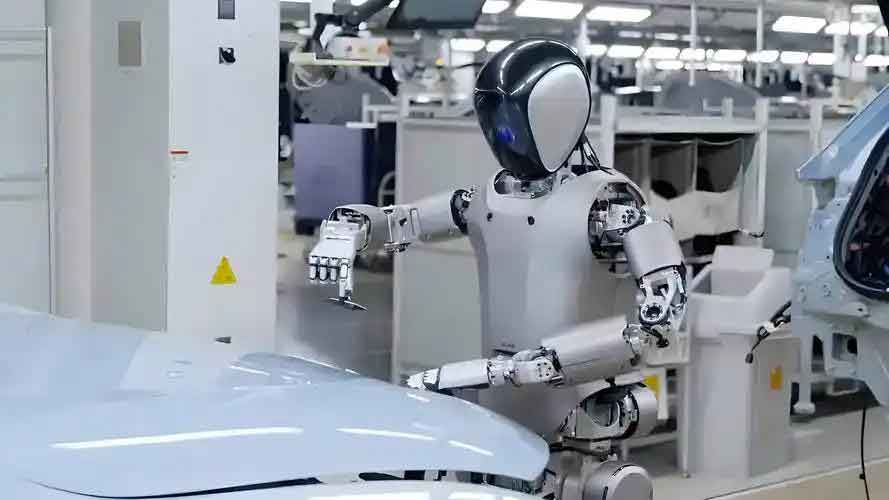
The action is not limited to a single technology layer. It combines supply-side capability, artificial intelligence innovation, intelligent factory cultivation and ecosystem development. For manufacturers, the significance lies in the way the plan links factory-level adoption with supply-chain capacity, model development, scenario expansion and standards. For the humanoid robot sector, the plan creates a clear demand signal: humanoid robot deployment is no longer only a research or demonstration topic, but a manufacturing target connected to factory operations and intelligent manufacturing systems.
- 2028 targets at a glance
Shanghai’s 2028 targets are broad and interconnected. They cover the full coverage of intelligent factories among key manufacturing enterprises in Shanghai, the cultivation of 500 advanced-level intelligent factories, more than 2,000 artificial intelligence application scenarios in manufacturing, 10 advanced and applicable vertical large models, and 300 high-level agents. The targets also include industrial robot density of 600 units per 10,000 people, the deployment of 8,000 humanoid robots in factories, an artificial intelligence-enabled new intelligent manufacturing equipment industry scale exceeding 200 billion yuan, and an intelligent manufacturing system integration industry scale reaching 100 billion yuan.
Selected 2028 targets for Shanghai’s new-generation intelligent manufacturing action Indicator 2028 target Intelligent factory coverage among key manufacturing enterprises in Shanghai Full coverage Advanced-level intelligent factories 500 Artificial intelligence application scenarios in manufacturing More than 2,000 Advanced and applicable vertical large models 10 High-level agents 300 Industrial robot density 600 units per 10,000 people Humanoid robots deployed in factories 8,000 Artificial intelligence-enabled new intelligent manufacturing equipment industry scale More than 200 billion yuan Intelligent manufacturing system integration industry scale 100 billion yuan
The table shows how humanoid robot deployment sits alongside factory modernization, artificial intelligence models, agents and industrial robot density. The 8,000 humanoid robot target is therefore not isolated. It is part of a wider effort to build a manufacturing environment in which artificial intelligence, robotics, data, models and factory systems can operate together. The humanoid robot target also provides a visible measure of how far the integration of artificial intelligence and manufacturing has progressed by 2028.
- Project 1: New-generation intelligent manufacturing supply leadership
The first project is the new-generation intelligent manufacturing supply leadership project. It calls for benchmarking against international frontier levels and focusing on full-chain upgrades across technology, equipment and services. The objective is to strengthen the supply of new-generation intelligent manufacturing. In practice, this means that Shanghai intends to support not only individual machines or software products, but also the integrated supply capabilities that manufacturers need when they move toward intelligent production.
For the humanoid robot sector, supply leadership matters because humanoid robot deployment depends on components, sensors, actuators, control systems, software, integration services and safety capabilities. A strong supply chain is essential if humanoid robots are to move from controlled demonstrations into factory environments. The project therefore supports the broader humanoid robot ecosystem by emphasizing technology, equipment and service upgrades across the full chain.
The supply leadership project also connects with the target of expanding the artificial intelligence-enabled new intelligent manufacturing equipment industry scale beyond 200 billion yuan by 2028. Humanoid robots are one part of that equipment landscape, and the project’s emphasis on international benchmarks suggests that Shanghai is seeking capabilities that can compete at advanced levels rather than only serve local demand.
- Project 2: AI plus manufacturing foundation innovation
The second project is the AI plus manufacturing foundation innovation project. It aims to seize the strategic opportunity created by the deep integration of artificial intelligence and manufacturing. The action calls for accelerating the construction of a new-generation intelligent manufacturing system that is data-driven, model-supported, scenario-pulled and secure and controllable.
This project provides the digital and intelligent foundation for humanoid robot deployment in factories. A humanoid robot in a factory must interact with data, models and scenarios. It must operate within secure and controllable systems. It must be supported by models that can interpret tasks, and by scenarios that define where the humanoid robot can deliver value. The foundation innovation project therefore addresses the conditions that make humanoid robot deployment practical rather than purely experimental.
The data-driven element is important because intelligent manufacturing depends on the flow of information across design, production, operations, product services and supply chains. The model-supported element links to the target of developing 10 advanced and applicable vertical large models. The scenario-pulled element links to the target of more than 2,000 artificial intelligence application scenarios in manufacturing. The secure and controllable element ensures that the integration of artificial intelligence and manufacturing can be managed within industrial requirements.
For humanoid robot adoption, this project suggests that Shanghai is not treating the humanoid robot as a standalone device. Instead, the humanoid robot is part of a system in which data, models and scenarios combine to support factory tasks. That systems view is likely to shape how humanoid robot pilots are designed and how humanoid robot performance is evaluated in manufacturing settings.
- Project 3: Intelligent factory gradient cultivation
The third project is the intelligent factory gradient cultivation project. It uses intelligent factory construction as the carrier for implementing new-generation intelligent manufacturing across research and development and design, production operations, operations management, product services and supply chain management. The phrase gradient cultivation indicates a phased approach: factories at different levels of maturity can be supported as they move toward higher levels of intelligence.
This project is directly relevant to humanoid robot deployment because intelligent factories provide the environment in which humanoid robots can be tested, integrated and scaled. A factory with stronger data systems, clearer process definitions and more mature automation can more easily absorb a humanoid robot into selected tasks. The intelligent factory cultivation project therefore creates a pathway for humanoid robot adoption across different manufacturing contexts.
The target of full coverage of intelligent factories among key manufacturing enterprises in Shanghai by 2028 shows the breadth of the ambition. The target of 500 advanced-level intelligent factories shows that the plan also emphasizes depth. Humanoid robots can play a role in both breadth and depth: in some factories, humanoid robots may support specific operations; in advanced-level intelligent factories, humanoid robots may be integrated into more complex human-machine collaboration and data-driven workflows.
The full-chain scope of the project matters. If intelligent factory cultivation were limited to production operations alone, humanoid robot use cases would be narrower. By covering research and development and design, operations management, product services and supply chain management, the project opens a wider range of potential humanoid robot applications. A humanoid robot might support production tasks, but it might also support logistics, inspection, quality-related operations or other activities that connect to the wider manufacturing chain.
- Project 4: New-generation intelligent manufacturing ecosystem development
The fourth project is the new-generation intelligent manufacturing ecosystem development project. It focuses on key elements such as platforms, pilot testing, clusters, standards and talent. The goal is to build a development ecosystem that is strongly supportive, collaboratively efficient and open for innovation.
For humanoid robots, ecosystem development is essential. Humanoid robot deployment in factories requires testing environments, platform support, standards for safety and interoperability, cluster-based collaboration and skilled talent. The ecosystem project therefore complements the more direct deployment targets by addressing the supporting conditions that determine whether humanoid robot adoption can be sustained.
Pilot testing is particularly important for humanoid robots. Factories need ways to evaluate humanoid robot performance before large-scale deployment. Platforms can help share tools and data. Clusters can bring together manufacturers, technology providers and research institutions. Standards can reduce integration risk. Talent can support the operation and maintenance of increasingly intelligent systems. The ecosystem project therefore gives the humanoid robot target a broader institutional base.
The open innovation element also suggests that Shanghai intends to encourage collaboration across the intelligent manufacturing ecosystem. For humanoid robot development, open innovation can help connect component suppliers, software developers, factory operators and system integrators. That kind of collaboration is important because humanoid robot deployment involves many technical and operational disciplines.
The 4 projects are supported by 19 key tasks. The action does not list all 19 tasks in the source material, but it clearly frames them as the implementation mechanisms for the 4 projects. The 19 key tasks are expected to translate the strategic direction into concrete work across supply, innovation, factory cultivation and ecosystem development. For humanoid robot deployment, the key point is that the 8,000 humanoid robot target is embedded in a broader task structure rather than presented as a standalone procurement goal.
- Humanoid robot deployment becomes a measurable manufacturing target
The target of promoting 8,000 humanoid robots into factories by 2028 is a distinctive feature of the action. It gives the humanoid robot sector a quantified factory deployment goal and links humanoid robot adoption to intelligent manufacturing. The wording is important: the target refers to promoting humanoid robots into factories, which places the emphasis on factory deployment rather than only laboratory development or exhibition demonstrations.
For manufacturers, the humanoid robot target creates a reason to examine where humanoid robots could fit within factory operations. The action’s wider framework covers research and development and design, production operations, operations management, product services and supply chain management. These areas provide potential contexts for humanoid robot deployment. The humanoid robot target also interacts with the industrial robot density target of 600 units per 10,000 people, showing that Shanghai is pursuing a broad robotics agenda rather than focusing on a single robot category.
The humanoid robot target should be read together with the artificial intelligence targets. The action aims for more than 2,000 artificial intelligence application scenarios in manufacturing, 10 advanced and applicable vertical large models and 300 high-level agents. Humanoid robots can benefit from these developments because humanoid robot operation in factories depends on perception, decision-making, task execution and integration with factory systems. The growth of artificial intelligence scenarios, models and agents can therefore support the humanoid robot deployment goal.
The humanoid robot target also has supply-chain implications. If 8,000 humanoid robots are to be promoted into factories by 2028, the supply side must be able to support deployment, integration, maintenance and operation. The supply leadership project’s focus on technology, equipment and services across the full chain is relevant here. Humanoid robot deployment is not only about the number of humanoid robots; it is also about the capability to integrate and support them in real manufacturing environments.
- Intelligent factory cultivation moves from pilots to full coverage
The intelligent factory target is one of the broadest elements of the action. By 2028, Shanghai aims to achieve full coverage of intelligent factories among key manufacturing enterprises in Shanghai. It also aims to cultivate 500 advanced-level intelligent factories. These targets indicate that intelligent factory development is moving from isolated pilots toward broader coverage and deeper capability building.
For humanoid robots, intelligent factory cultivation provides the operational context. A humanoid robot deployed in a factory must work within existing processes, safety systems and data flows. The more mature the intelligent factory, the more likely it is that humanoid robot integration can be managed effectively. The 500 advanced-level intelligent factory target is particularly relevant because advanced factories are likely to have the digital infrastructure needed to support more sophisticated humanoid robot applications.
The full coverage target also suggests that the benefits of intelligent manufacturing are expected to reach a wide range of key manufacturing enterprises. Humanoid robot deployment may start in selected factories or selected tasks, but the broader intelligent factory program creates a base for wider humanoid robot adoption over time. The humanoid robot target and the intelligent factory target therefore reinforce each other.
The action’s emphasis on research and development and design, production operations, operations management, product services and supply chain management means that intelligent factory cultivation is not confined to the shop floor. Humanoid robots could potentially be relevant in multiple parts of the manufacturing chain. This broader scope increases the potential relevance of the humanoid robot target and gives manufacturers more ways to consider humanoid robot deployment.
- Artificial intelligence models, agents and scenarios form the digital backbone
The action sets targets for 10 advanced and applicable vertical large models, 300 high-level agents and more than 2,000 artificial intelligence application scenarios in manufacturing. These targets form a digital backbone for intelligent manufacturing and provide supporting conditions for humanoid robot deployment.
Vertical large models can be adapted to specific industrial domains, which is important for manufacturing because factory tasks often require domain knowledge. High-level agents can support task execution and decision support within defined environments. Artificial intelligence application scenarios provide the practical contexts in which models and agents create value. For humanoid robots, these elements can support perception, planning, interaction and task execution in factory settings.
The humanoid robot target is therefore connected to the broader artificial intelligence target set. A humanoid robot in a factory is not only a mechanical system; it is also a platform for sensing, data processing and intelligent behavior. The development of vertical large models and high-level agents can contribute to the intelligence layer that supports humanoid robot deployment. The expansion of artificial intelligence application scenarios can provide more opportunities to test and refine humanoid robot use cases.
The secure and controllable requirement in the AI plus manufacturing foundation innovation project is also relevant. Humanoid robot deployment in factories involves safety, reliability and operational control. The action’s emphasis on secure and controllable systems suggests that the integration of artificial intelligence and manufacturing will be approached with industrial requirements in mind. That approach is important for humanoid robot adoption because factories need dependable systems rather than experimental intelligence alone.
- Industrial robot density and equipment industry scale set the hardware agenda
The action targets industrial robot density of 600 units per 10,000 people by 2028. It also aims to push the artificial intelligence-enabled new intelligent manufacturing equipment industry scale beyond 200 billion yuan. These targets set a hardware and equipment agenda that complements the humanoid robot deployment goal.
Industrial robot density is a measure of robotics adoption in manufacturing. The target of 600 units per 10,000 people indicates that Shanghai intends to deepen robotics deployment across its manufacturing base. Humanoid robots are a distinct category from industrial robots, but the two categories can coexist in an advanced manufacturing environment. The industrial robot density target shows that robotics adoption is a central part of the manufacturing agenda, while the humanoid robot target shows that Shanghai is also looking toward newer forms of robotics.
The equipment industry scale target indicates that the action is not only about using intelligent manufacturing equipment but also about building the industry that supplies it. Humanoid robots can be part of that equipment landscape. The target of more than 200 billion yuan for the artificial intelligence-enabled new intelligent manufacturing equipment industry suggests that Shanghai sees equipment supply as a strategic industrial opportunity. Humanoid robot development can contribute to and benefit from that opportunity.
The humanoid robot target and the equipment industry target should be viewed together. A growing equipment industry can support humanoid robot development, and humanoid robot deployment can create demand for components, systems and integration services. The action’s supply leadership project reinforces this connection by focusing on technology, equipment and services across the full chain.
- Intelligent manufacturing system integration market targeted at 100 billion yuan
The action aims for the intelligent manufacturing system integration industry scale to reach 100 billion yuan by 2028. System integration is a critical enabler of intelligent manufacturing because factories need to connect equipment, software, data and processes into coherent systems. For humanoid robots, system integration is equally important. A humanoid robot must be integrated with factory workflows, safety systems, data platforms and operational management processes.
The system integration target therefore supports the practical side of humanoid robot deployment. Humanoid robots are unlikely to deliver value in factories if they are treated as isolated devices. They need to be integrated into the manufacturing system. The 100 billion yuan target indicates that Shanghai expects a substantial system integration industry to support intelligent manufacturing. That industry can also support humanoid robot deployment by providing the integration capabilities needed to connect humanoid robots with factory environments.
The system integration target also complements the intelligent factory cultivation project. As factories move toward higher levels of intelligence, they require integration across research and development and design, production operations, operations management, product services and supply chain management. Humanoid robots can be one element within that integrated environment. The system integration industry can help translate humanoid robot capabilities into factory-ready solutions.
- Shanghai’s existing intelligent factory base provides a starting point
Shanghai has already cultivated 2 national lighthouse-level intelligent factories and 28 national excellence-level intelligent factories. The number has ranked at the top among Chinese cities for many years. This existing base provides a starting point for the new action and for humanoid robot deployment.
The presence of national lighthouse-level and excellence-level intelligent factories indicates that Shanghai has experience with advanced intelligent manufacturing practices. These factories can serve as reference points for further intelligent factory cultivation and for the integration of new technologies such as humanoid robots. The humanoid robot target can build on this base by encouraging humanoid robot deployment in factories that already have relevant digital and automation capabilities.
The existing intelligent factory base also supports the action’s gradient cultivation approach. Factories at different levels can learn from advanced factories and move toward higher levels of intelligence. Humanoid robots can be part of that progression, especially in factories that are prepared to integrate new robotic systems into their operations. The 2 national lighthouse-level and 28 national excellence-level intelligent factories therefore represent an important foundation for the next phase of intelligent manufacturing development.
- Why humanoid robots matter in the factory plan
Humanoid robots matter in the factory plan because they represent a convergence of robotics, artificial intelligence, sensing and system integration. The action’s humanoid robot target of 8,000 humanoid robots in factories by 2028 places humanoid robots within the broader intelligent manufacturing agenda. The target gives the humanoid robot sector a clear factory-oriented goal and encourages manufacturers to consider humanoid robots as part of their intelligent manufacturing plans.
Humanoid robots can potentially support tasks that require mobility, manipulation and interaction in human-designed environments. Factories are often designed around human workflows, which is one reason humanoid robot deployment is of interest. At the same time, humanoid robot deployment requires careful integration and safety management. The action’s emphasis on intelligent factories, artificial intelligence models, agents, scenarios and system integration provides a framework for addressing those requirements.
The humanoid robot target is also significant because it is quantitative. A quantitative target can help focus attention across the supply chain, factory operations and technology development. It can encourage collaboration among humanoid robot developers, component suppliers, system integrators and manufacturers. The target of 8,000 humanoid robots in factories by 2028 therefore serves as a coordinating point for the humanoid robot ecosystem.
The humanoid robot target should not be viewed in isolation from the industrial robot density target. The action aims for industrial robot density of 600 units per 10,000 people and 8,000 humanoid robots in factories. Together, these targets show that Shanghai is pursuing a broad robotics strategy that includes both established industrial robots and emerging humanoid robots. The humanoid robot target adds a new dimension to the robotics agenda while the industrial robot density target reflects the continuing importance of robotics in manufacturing.
- Ecosystem, standards, talent and pilot testing support humanoid robot adoption
The ecosystem development project focuses on platforms, pilot testing, clusters, standards and talent. These elements are essential for humanoid robot adoption. Humanoid robots require pilot testing to evaluate performance in factory environments. They require platforms for data, software and integration. They require clusters that bring together different parts of the supply chain. They require standards for safety, interoperability and performance. They require talent to develop, operate and maintain them.
The ecosystem project therefore supports the humanoid robot target in practical ways. Pilot testing can help manufacturers assess humanoid robot use cases before wider deployment. Standards can reduce integration risk and support interoperability. Talent development can address the skills needed to work with humanoid robots and intelligent manufacturing systems. Clusters can encourage collaboration among humanoid robot developers, manufacturers and service providers.
The open innovation element of the ecosystem project is also relevant. Humanoid robot development involves many disciplines, including mechanics, electronics, control, artificial intelligence, sensing and human-machine interaction. Open innovation can help connect these disciplines and accelerate the development of humanoid robot solutions. The ecosystem project therefore provides a collaborative environment that can support the humanoid robot deployment goal.
The humanoid robot target is more likely to be achieved if the supporting ecosystem develops alongside it. The action’s emphasis on platforms, pilot testing, clusters, standards and talent suggests that Shanghai recognizes the need for a broad support system. For humanoid robots, that support system is as important as the robots themselves.
- From supply chain to product services: full-chain deployment
The intelligent factory cultivation project covers research and development and design, production operations, operations management, product services and supply chain management. This full-chain scope is important for humanoid robot deployment because humanoid robots can potentially be relevant in multiple parts of the manufacturing chain.
In research and development and design, humanoid robots could support testing or design validation in some contexts. In production operations, humanoid robots could support selected tasks. In operations management, humanoid robots could contribute to inspection or material handling in some environments. In product services, humanoid robots could support service-related operations. In supply chain management, humanoid robots could support logistics or warehouse-related tasks. The action does not specify exact humanoid robot use cases, but the full-chain scope creates a broad framework for considering humanoid robot deployment.
The full-chain approach also aligns with the system integration target. Humanoid robot deployment across different parts of the manufacturing chain requires integration capabilities. The intelligent manufacturing system integration industry can help connect humanoid robots with factory systems and processes. The humanoid robot target therefore benefits from the action’s integrated view of manufacturing.
The supply leadership project reinforces the full-chain approach by focusing on technology, equipment and services. Humanoid robot deployment requires not only humanoid robot hardware but also services such as integration, maintenance and training. The full-chain focus of the action therefore supports the humanoid robot target from both the supply side and the factory side.
- What the 2028 targets mean for manufacturers
For manufacturers, the 2028 targets provide a clear signal that intelligent manufacturing and robotics will continue to advance in Shanghai. The target of full coverage of intelligent factories among key manufacturing enterprises suggests that intelligent factory capabilities will become more widespread. The target of 500 advanced-level intelligent factories suggests that deeper capabilities will also be cultivated. The target of 8,000 humanoid robots in factories suggests that humanoid robots will be part of the manufacturing landscape.
Manufacturers may need to consider how their own digital systems, data infrastructure, automation strategies and workforce skills align with the action’s direction. Humanoid robot deployment is not only a technology decision; it is also an operational and organizational decision. Factories need to evaluate where humanoid robots can add value, how humanoid robots can be integrated safely and how humanoid robots can be supported over time.
The action’s targets for artificial intelligence scenarios, vertical large models and high-level agents also suggest that manufacturers should expect artificial intelligence to become more deeply embedded in manufacturing operations. Humanoid robots can be one expression of that trend. The combination of artificial intelligence and robotics can support new forms of automation and human-machine collaboration.
The humanoid robot target of 8,000 humanoid robots in factories by 2028 provides a concrete reference point for manufacturers considering humanoid robot adoption. It indicates that humanoid robot deployment is expected to move beyond early demonstrations and into factory environments. Manufacturers that engage early with humanoid robot testing and integration may be better positioned to benefit from the broader intelligent manufacturing transition.
- A target-driven path for humanoid robots and intelligent manufacturing
The Shanghai action brings together 4 major projects, 19 key tasks and a 2028 target framework. It links supply leadership, artificial intelligence foundation innovation, intelligent factory cultivation and ecosystem development. It sets quantitative goals for intelligent factories, artificial intelligence scenarios, vertical large models, high-level agents, industrial robot density, humanoid robot deployment, equipment industry scale and system integration industry scale.
The humanoid robot target of 8,000 humanoid robots in factories by 2028 is a central element of the plan’s public profile, but it is also part of a wider manufacturing transformation. The action’s emphasis on data-driven, model-supported, scenario-pulled and secure and controllable intelligent manufacturing provides the context in which humanoid robots can be deployed. The action’s focus on full-chain upgrades, intelligent factory cultivation and ecosystem development provides the supporting conditions for humanoid robot adoption.
For the humanoid robot sector, the plan creates a factory-oriented demand signal and a framework for collaboration across technology, equipment, services, standards, talent and system integration. For manufacturers, the plan sets a path toward broader intelligent factory coverage and deeper artificial intelligence integration. For Shanghai’s manufacturing ecosystem, the plan connects existing strengths in intelligent factories with future-oriented capabilities in artificial intelligence and humanoid robotics.
By 2028, the success of the action will be measured through the targets it has set: full coverage of intelligent factories among key manufacturing enterprises, 500 advanced-level intelligent factories, more than 2,000 artificial intelligence application scenarios, 10 advanced and applicable vertical large models, 300 high-level agents, industrial robot density of 600 units per 10,000 people, 8,000 humanoid robots in factories, an artificial intelligence-enabled new intelligent manufacturing equipment industry scale exceeding 200 billion yuan and an intelligent manufacturing system integration industry scale of 100 billion yuan. The humanoid robot target will be one of the most visible indicators of how far the integration of artificial intelligence and manufacturing has advanced in Shanghai’s factories.