
The 2026 World Robot Conference has closed in Beijing, but the questions it raised about industrial maturity, commercial deployment and regional competition remain very much open. More than 300 companies from around the world and more than 3,000 innovative products appeared at the event, which many industry participants described as a “super week” for robotics in China. For the Sichuan delegation, the conference was not merely a showcase. It was a test of whether a regional robotics cluster can move from promising prototypes to real orders, real workplaces and a real industrial chain.
Sichuan sent 15 companies and more than 50 products to the conference, covering core components, complete machines, industrial manufacturing and livelihood services. The range was notable. So was the tone. The delegation did not present robotics as a distant technology theme. It presented robots as products with customers, scenarios and delivery schedules. A new-generation emotional interaction humanoid robot called AiQiu was offered for global sale at a starting price of 98,000 yuan and was already planned for deployment at more than 30 bank outlets in Chengdu. Canop Robotics brought three industrial robots in different forms for precision assembly, warehouse logistics and complex environments. Le’en Automation and Ruidi Zhiqu drew a steady stream of industry visitors to their core component booths.
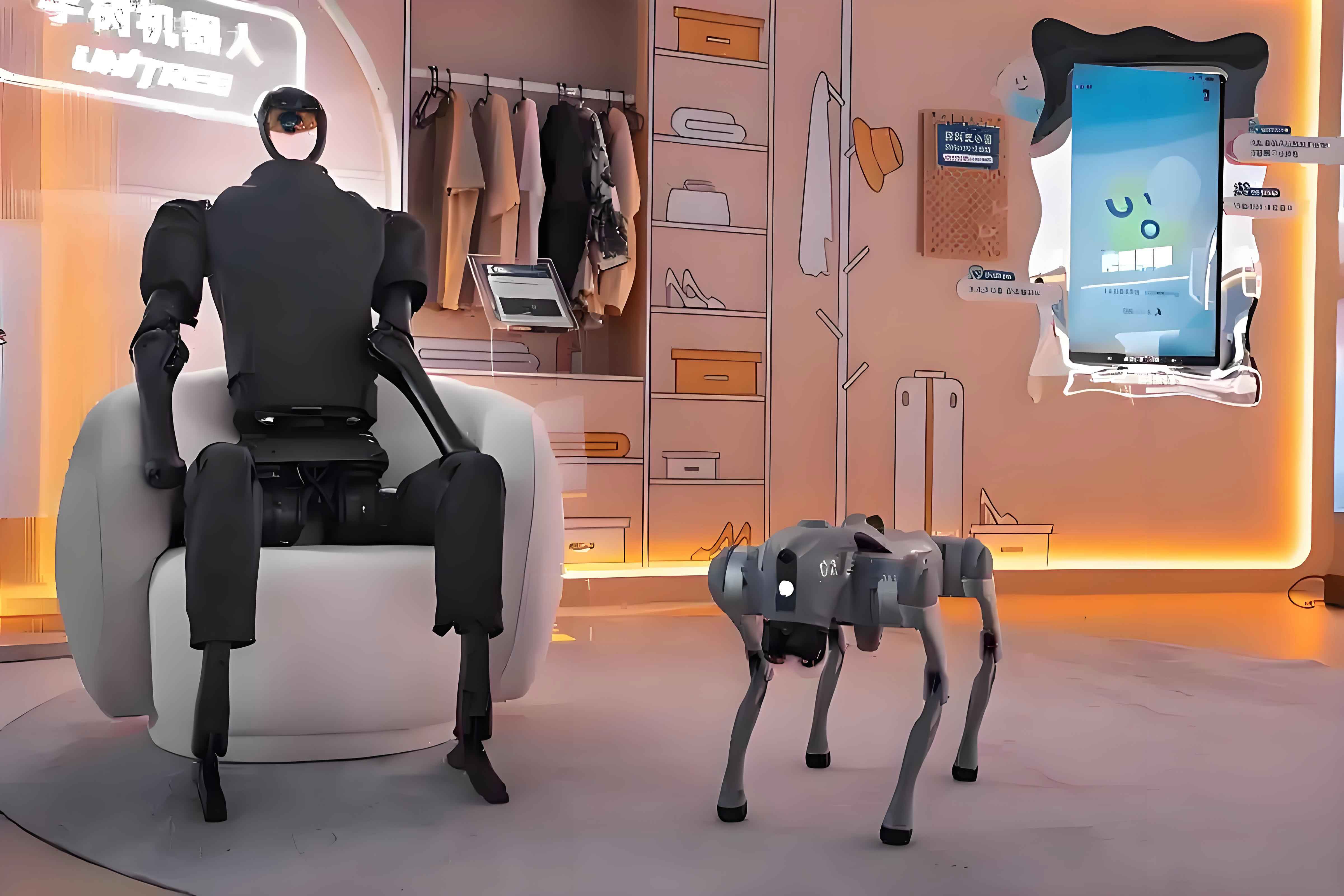
The significance of the Sichuan showing lies in the direction of travel. The province’s robotics sector is no longer relying on a handful of isolated exhibits. It is beginning to present itself as a chain: complete-machine builders, component suppliers, software and algorithm developers, research institutions and policy support mechanisms are appearing in the same frame. That shift matters for every category of robot, but it matters most for the humanoid robot, a product category that depends on the tight integration of actuators, reducers, controllers, sensors, batteries, software and application scenarios.
- A Global Stage Tests a Regional Strategy
The 2026 World Robot Conference provided a global stage for more than 300 enterprises and more than 3,000 innovative products. The scale of the event made it a useful measure of where robotics stands as an industry. It was no longer enough for a company to bring a single striking prototype. Visitors and buyers wanted to know what the robot could do, where it could work and how quickly it could be delivered. For Sichuan, that shift in expectations was welcome. The delegation arrived with a mix of industrial robots, quadruped robots, humanoid robot products and core components, and it arrived with a story about how those pieces fit together.
The Sichuan presence covered the full chain in a way that had not been seen before at the conference. There were complete machines, including the humanoid robot AiQiu and industrial robots from Canop Robotics. There were quadruped robots from the Automation Research Institute of China Ordnance Equipment Group. There were reducers, electric joints, controllers, servo drives, integrated joint modules, harmonic reducers and electromagnetic brakes from component specialists. The display was not simply a collection of products. It was a statement that Sichuan intends to compete in the humanoid robot era not only through assembly but through the underlying industrial base that makes assembly possible.
That industrial base is important because the humanoid robot is often discussed as a software and artificial intelligence story, but it is also a hardware story. A humanoid robot requires compact and reliable joints, precise motion control, durable reducers, efficient actuators and a supply chain capable of producing those parts at consistent quality and acceptable cost. The Sichuan companies at the conference addressed these layers directly. Their presence gave the delegation a more complete profile than a pure exhibition of finished robots would have done.
The commercial mood was also different. In earlier years, robotics conferences often featured prototypes that attracted crowds but remained far from purchase decisions. At the 2026 event, Sichuan exhibitors spoke about orders, deployment schedules, bank outlets, hydropower stations, warehouses and buildings. The humanoid robot AiQiu was not presented only as a demonstration of emotional interaction. It was presented as a product with a price, a sales plan and an intended job. Canop Robotics did not only show a robot arm. It explained how different forms of industrial robots could be switched across precision assembly, warehouse logistics and complex environments. The message was that robotics in Sichuan is moving from technical validation toward commercial validation.
The conference also revealed the competitive pressure. More than 300 global companies and more than 3,000 products mean that buyers have many choices. A regional cluster cannot rely on a single flagship product or a single research breakthrough. It must build depth across components, complete machines, software, services and deployment. That is why the Sichuan delegation’s emphasis on a complete chain was significant. The humanoid robot may be the most visible symbol of the sector, but the health of the humanoid robot industry depends on the health of the component ecosystem behind it.
Sichuan’s strategy is therefore not only about building a better robot. It is about building a better industrial system around robotics. The conference provided a public test of that system, and the initial results were visible in the density of products, the variety of forms and the presence of commercial plans. The humanoid robot was central to the display, but it was not alone. It sat within a wider ecosystem of industrial robots, service robots, quadruped robots and core components, each of which contributes to the maturity of the whole.
- From Solo Exhibitions to Chain-Scale Participation
At the booth of the Sichuan Humanoid Robot Manufacturing Innovation Center, three industrial robots of different forms stood in a row. They included a humanoid arm form, a wheeled form and a biped form. Deng Shihai, vice president of Canop Robotics, explained the logic behind the lineup. The humanoid arm offers good stability and is suitable for precision assembly. The wheeled form offers strong mobility and can be used in warehouse logistics. The biped form covers a wider range and can handle complex environment operations. The display made a practical point: the humanoid robot concept is not confined to a single body type. Different forms can serve different tasks, and the industrial value of a humanoid robot platform lies in how well it can be adapted to the work that needs to be done.
Nearby, the Automation Research Institute of China Ordnance Equipment Group displayed eight quadruped robots in different configurations. Li Yanan, deputy director of the institute’s robot innovation center, said the team equips the robots with different “tool kits” according to scenario requirements. For firefighting, a quadruped robot can carry a fire pump on its back. For security inspection, it can be fitted with more sensitive sensors. The aim is to make the product capable of handling demanding tasks rather than merely walking on stage. This approach reflects a broader trend in the Sichuan robotics sector: the robot is increasingly treated as a platform that can be configured for a customer’s operational needs.
The presence of component makers reinforced that trend. Reducers, electric joints, controllers and servo drives are not glamorous products in the way a humanoid robot can be. But they determine performance, reliability and cost. Xiong Zhuang, director of the Equipment Industry Division I of the Sichuan Provincial Department of Economy and Information Technology, said the province appeared at the conference with a complete industrial chain for the first time. The delegation included complete-machine builders as well as supporting enterprises producing reducers, electric joints and controllers. Chengdu and Mianyang serve as dual cores, while Deyang, Yibin and Zigong provide supporting capacity. The framework of “dual-core leadership and multi-polar coordination” has moved from policy documents to the exhibition floor.
That framework is especially relevant to the humanoid robot. A humanoid robot is a system product that integrates many subsystems. It needs joints that can deliver precise motion, reducers that can handle repeated loads, controllers that can coordinate movement, sensors that can perceive the environment and software that can turn perception into action. If any link in that chain is weak, the final product suffers. By bringing component makers and complete-machine developers into the same delegation, Sichuan presented a more integrated approach to humanoid robot development. The humanoid robot is no longer just a flagship exhibit. It is a focal point for supply chain coordination.
The change from solo participation to chain-scale participation also changes the way companies compete and cooperate. In the past, a robot company might attend a conference alone, promote its own product and look for customers. In a chain-based model, the conversation expands. Component suppliers can meet complete-machine builders. Research institutions can meet application providers. Local governments can identify gaps. Customers can see a wider set of options. The exhibition floor becomes a market for coordination, not only a stage for publicity.
This is particularly important for the humanoid robot because the category is still in an early phase of commercialization. No single company can solve every problem alone. The development of a humanoid robot requires advances in materials, actuators, control algorithms, artificial intelligence, battery management and human-machine interaction. A regional cluster that can connect these capabilities is better positioned than a cluster that depends on imports or isolated champions. Sichuan’s display suggested that it is trying to build that connected capability, even if the work is far from finished.
The industrial logic behind the delegation was therefore as important as the products themselves. The province was not only saying that it can make robots. It was saying that it can make the parts, build the machines, test the systems and find the scenarios. For the humanoid robot, that full-stack orientation is essential. The humanoid robot market will not be won by a single demonstration. It will be won by companies and regions that can combine technology, supply chain, cost control and application knowledge.
- From Exhibit to Commercial Product
On the opening day of the conference, Sichuan Embodied Humanoid Robot Technology Co. formally offered AiQiu for global sale. CEO Feng Zhenyu described the launch as a key step from debut to mass production. The new-generation AiQiu upgraded about 40 percent of its structural parts to magnesium alloy and adopted a self-developed ELA Harness architecture. The architecture connects voice, vision, memory and motion capabilities into a unified framework. The details matter because they show where humanoid robot development is heading. The competition is no longer only about making a robot that can move. It is about making a humanoid robot that can perceive, remember, communicate and act within a coherent system.
The more telling detail was the job assignment. AiQiu was already planned for deployment at more than 30 bank outlets in Chengdu as a lobby manager. The starting price was set at 98,000 yuan. That combination of a defined workplace, a published price and a deployment plan moved the humanoid robot closer to the logic of a commercial product. A bank lobby is not a laboratory. It requires interaction with customers, navigation in a public space, handling of routine inquiries and a level of reliability that a demonstration does not require. The humanoid robot must work in a real environment, with real people and real expectations.
The Chengdu Humanoid Robot Innovation Center provided another example of commercialization. The center recently secured a strategic procurement order for 5,000 embodied intelligent robots. A conveyor belt inspection robot developed with PowerChina Chengdu Engineering Corporation has already started work at the Shuangjiangkou Hydropower Station. The application is specific and demanding. Inspection work in a hydropower station requires mobility, sensing and data collection in an industrial environment. It is the kind of scenario where a robot can deliver measurable value by reducing manual inspection burden and improving consistency.
Yuefan Innovation also used the conference to introduce the Yuefan Lubao PRO indoor-outdoor integrated delivery robot. The company’s products have already been deployed in thousands of buildings across the country. Delivery robots may not attract the same attention as a humanoid robot, but they demonstrate an important commercial principle: scale comes from repeatable use cases. A robot that can operate in thousands of buildings has passed through the difficult stages of installation, maintenance, user acceptance and daily operation. That experience is valuable for the wider robotics sector, including humanoid robot developers who need to understand how service robots are actually managed in the field.
The shift from exhibit to commodity is a change in the nature of the challenge. A prototype must prove that a technical concept works. A commercial product must prove that it works reliably, that it can be manufactured at a reasonable cost, that it can be serviced and that customers are willing to pay for it. The humanoid robot is now entering this harder phase. The AiQiu launch, the bank deployment plan, the 5,000-unit procurement order and the hydropower station inspection robot are all signs that the sector is beginning to face commercial questions rather than only technical ones.
This does not mean that mass adoption is imminent. The humanoid robot still faces significant hurdles in dexterity, safety, battery life, cost and application integration. But the direction is clear. Companies in Sichuan are no longer content to bring a humanoid robot to a conference and wait for visitors to take photographs. They are defining jobs, setting prices, signing orders and placing robots in operating environments. That is how a technology category begins to become an industry.
The commercial push also changes the relationship between the humanoid robot and other robot forms. A humanoid robot may be the most versatile long-term platform, but near-term applications may be served by wheeled robots, quadruped robots, industrial arms or delivery robots. Sichuan’s portfolio approach reflects this reality. The province is not betting everything on a single form factor. It is building strength across multiple robot categories while allowing the humanoid robot to develop as a flagship platform for interaction, mobility and task execution.
- From Single Points to a Forest
Industrial growth becomes durable when individual successes begin to support one another. At the Chengdu Le’en Automation booth, rows of servo drives and integrated joint modules were displayed. Relying on self-developed drive-control integration technology, the company has achieved 100 percent domesticization of its full set of software and hardware. That claim is significant for the humanoid robot supply chain. Servo drives and joint modules are central to motion control, and domestic capability in these areas can reduce dependence on external suppliers while improving responsiveness to customer needs.
Ruidi Zhiqu displayed harmonic reducers and electromagnetic brakes with more than 100 independent intellectual property rights. The products have already been supplied in batches to various robot complete-machine enterprises in China. Harmonic reducers are a critical component in many robot joints, and their precision, durability and cost have a direct impact on the performance of a humanoid robot. The ability to supply these components in batches is a sign of industrial depth. It means that the component maker has moved beyond sample production and into the more demanding realm of consistent manufacturing.
Aerospace Kaite Electromechanical has also achieved high-end domestic substitution in servo drives. The company’s presence alongside other component makers underlined a broader point: the strength of Sichuan’s robotics sector is not limited to final products. It extends into the parts and subsystems that determine whether those final products can be competitive. For the humanoid robot, this is especially important. A humanoid robot may have dozens of joints, each requiring precise control and reliable components. A strong local component ecosystem can shorten development cycles and lower costs.
Policy support is providing additional momentum. In July 2026, Sichuan pre-paid incentive and subsidy policies for landmark products in robotics and other fields. The policy provides a subsidy of 10 percent of new sales revenue, with a maximum of 5 million yuan per enterprise. The Sichuan Provincial Department of Economy and Information Technology, together with seven provincial departments, issued a work plan for accelerating the innovative development of the humanoid robot industry. The plan sets a target of exceeding 50 billion yuan in industry scale by 2030.
The policy signal is clear. Sichuan is treating the humanoid robot as a strategic industry rather than a narrow technology project. The combination of sales-based incentives, supply chain development and application promotion is designed to move companies from prototype development to market expansion. The 10 percent subsidy may not solve every cost problem, but it can reduce the risk of early commercialization. The 2030 target provides a long-term direction for companies, investors and research institutions.
Research institutions are also being drawn into the commercial agenda. Fang Rui, deputy director of the Robotics Training Technology Innovation Center at Tianfu Jiangxi Laboratory, attended the conference for the first time. The purpose was to find application scenarios for algorithms accumulated in the laboratory. The message was direct: good technology in a laboratory must become a good product on a production line. That mindset is essential for the humanoid robot, where algorithms for perception, motion planning and interaction must be tested in real environments before they can create commercial value.
The aggregate numbers show that the ecosystem is beginning to produce results. In 2025, Sichuan’s robot industry recorded more than 10 billion yuan in full-chain revenue. In the first quarter of this year, the province’s industrial robot output grew by 50.6 percent. These figures do not yet make Sichuan the largest robotics cluster in the country, but they show momentum. More importantly, they show that the growth is not confined to a single product category. It spans components, complete machines, industrial robots and service robots, creating a broader base for the humanoid robot to develop.
The “forest” metaphor is useful because it captures the difference between a collection of trees and a functioning ecosystem. A single company can build a remarkable robot. A forest can supply talent, components, capital, testing facilities, customers and knowledge. Sichuan is trying to build that forest around robotics. The humanoid robot is one of the most visible trees in that forest, but its growth depends on the soil, water and climate created by the wider industrial system.
Selected data points from the 2026 showcase and industry updates Category Data point Conference scale More than 300 global enterprises; more than 3,000 innovative products Sichuan participation 15 companies; more than 50 products Humanoid robot commercialization AiQiu offered for global sale at 98,000 yuan and up; planned for more than 30 bank outlets in Chengdu Procurement Chengdu Humanoid Robot Innovation Center secured a strategic order for 5,000 embodied intelligent robots Service robot deployment Yuefan Innovation products deployed in thousands of buildings nationwide Industry revenue Sichuan robot full-chain revenue exceeded 10 billion yuan in 2025 Industrial robot output Up 50.6 percent in the first quarter of this year 2030 target Humanoid robot industry scale to exceed 50 billion yuan Subsidy policy 10 percent of new sales revenue, with a maximum of 5 million yuan per enterprise - The Application Test and the Next Half
The theme of the 2026 World Robot Conference was “human-machine symbiosis and production-demand integration.” The theme captured a shift that is now visible across the industry. The key question is no longer whether robots can be built. The key question is whether they can be used well. For the humanoid robot, this is the central challenge. A humanoid robot can be technically impressive and still fail commercially if it cannot perform useful work, operate safely and justify its cost in a real setting.
At the conference, a visitor from Zhejiang asked a Sichuan exhibitor a simple question: what is different about Sichuan’s robots? The exhibitor pointed to Canop Robotics’ industrial robots, the humanoid robot AiQiu and Le’en Automation’s joint modules. The answer was that Sichuan can offer everything from parts to complete machines and from laboratory development to production line deployment. The answer was brief, but it summarized the path the province has traveled. It has moved from being a component exhibitor to being a system solution provider. It is moving from technological catch-up toward scenario-based parallel development.
That path is not unique to Sichuan, but it is instructive. China’s robotics industry is often described through the lens of a few headline products, especially the humanoid robot. The reality is more layered. Industrial robots are improving in precision and reliability. Service robots are expanding into delivery, cleaning, inspection and public interaction. Core components are becoming more competitive. Research institutions are becoming more application-oriented. Policy is shifting from broad support to targeted commercialization. The humanoid robot sits at the intersection of these trends, drawing on advances in components, artificial intelligence, motion control and human-machine interaction.
The next stage of competition will test whether companies can turn demonstrations into repeatable deployments. A humanoid robot in a bank lobby must handle unexpected questions, navigate around customers and maintain a consistent service standard. A humanoid robot on an industrial site must operate safely alongside workers and integrate with existing workflows. A humanoid robot in a hospital or a community service center must meet different requirements for privacy, reliability and user acceptance. These are not only technical problems. They are operational, organizational and commercial problems.
Application-driven development is therefore essential. Companies need to work closely with customers to define use cases, measure performance and improve products based on real feedback. The AiQiu bank deployment plan and the hydropower station inspection robot are examples of this approach. They start with a specific job and build the technology around the job, rather than starting with a general-purpose humanoid robot and searching for a use case later. This does not mean abandoning the long-term vision of a general-purpose humanoid robot. It means building toward that vision through a series of practical applications.
The humanoid robot industry also needs a stronger innovation chain. Basic research, component development, system integration, testing, certification, deployment and after-sales service must be connected. A weakness in any link can slow the entire chain. Sichuan’s effort to bring research institutions, component makers and complete-machine builders into the same innovation system is a step in this direction. The presence of Tianfu Jiangxi Laboratory at the conference, with its search for application scenarios, shows that the research side is beginning to orient itself toward industrial needs.
The second half of industry competition has just begun. The first half was about proving that robots could work in controlled conditions. The second half will be about proving that they can work in uncontrolled conditions, at scale, with acceptable economics. For the humanoid robot, this will require continued progress in actuators, dexterity, safety, energy efficiency and artificial intelligence. It will also require progress in business models, service networks and customer education. The companies that succeed will be those that can combine technical excellence with operational discipline.
Sichuan’s showing at the 2026 World Robot Conference suggests that the province understands this shift. The delegation did not rely only on the novelty of a humanoid robot. It presented a chain, a set of commercial plans and a policy framework. The humanoid robot was a headline, but the deeper story was about industrial organization. The province is trying to build an ecosystem in which the humanoid robot can move from a conference exhibit to a workplace tool. That is a harder task than building a prototype, but it is the task that will determine the future of the industry.
- What the Growth Path Reveals
The growth path of Sichuan’s robotics sector offers several lessons. The first is that cluster development matters. A single company can innovate, but a cluster can industrialize. Component suppliers, complete-machine builders, research institutions and customers need to be close enough to interact, test and iterate. The humanoid robot is a complex product, and complexity rewards coordination. Sichuan’s attempt to present a complete chain at the conference was an attempt to make that coordination visible and to attract more participants into the network.
The second lesson is that commercialization must be designed, not assumed. A robot does not become a product simply because it works in a demonstration. It becomes a product when it has a price, a customer, a service plan and a repeatable use case. AiQiu’s published price and bank deployment plan, the 5,000-unit procurement order for embodied intelligent robots and Yuefan Innovation’s deployment in thousands of buildings all show that commercialization is being actively designed. The humanoid robot is part of this process, but it is not the only part. The broader robotics sector provides the commercial discipline that the humanoid robot needs.
The third lesson is that policy can support, but it cannot substitute for market validation. The 10 percent sales revenue subsidy and the 2030 industry target provide direction and reduce risk. But the real test will be whether customers continue to buy, whether robots perform reliably and whether companies can generate sustainable profits. Policy can accelerate the early phase, but the mature phase must be driven by value creation. For the humanoid robot, value creation will depend on whether the robot can perform useful work at a cost that customers are willing to pay.
The fourth lesson is that the humanoid robot should be understood as part of a broader robotics ecosystem. Advances in industrial robots can improve components and control systems. Advances in service robots can improve human-machine interaction and deployment operations. Advances in quadruped robots can improve mobility and environmental sensing. The humanoid robot can draw on all of these developments. A region that supports multiple robot categories is likely to have a stronger foundation for humanoid robot development than a region that focuses on a single category.
Sichuan’s robot industry is still in the growth stage. The province has strong industrial foundations, a growing number of robotics companies, research institutions and policy support. It also faces intense competition from other regions and from international companies. The 2026 conference did not resolve that competition. It provided a snapshot of where Sichuan stands and what it needs to do next. The snapshot shows a sector that is moving from seeds to trees, and from trees toward a forest. The humanoid robot is one of the most important trees in that forest, but its health depends on the entire ecosystem.
The conference also showed that the language of the industry is changing. Companies are talking less about what a robot can demonstrate and more about where a robot can work. They are talking about orders, deployment, maintenance and cost. That language is less dramatic than a stage demonstration, but it is more important for the long-term development of the industry. The humanoid robot will not succeed because it looks impressive. It will succeed because it can perform useful tasks in real environments and because the industrial system behind it can deliver those robots reliably and affordably.
For Sichuan, the next steps are clear. The province needs to continue strengthening core components, especially those required by the humanoid robot. It needs to support complete-machine companies in finding repeatable applications. It needs to connect research institutions with commercial partners. It needs to use policy to reduce early-stage risk without creating dependence. And it needs to keep the entire chain visible, so that component makers, complete-machine builders and customers can find one another.
The 2026 World Robot Conference has ended, but the work has not. The exhibition halls have closed, the displays have been packed away and the visitors have returned home. What remains is the harder task of turning attention into orders, orders into deployments and deployments into a sustainable industry. Sichuan’s robotics sector has made visible progress. The humanoid robot has become a symbol of that progress. The next challenge is to make the symbol ordinary: to make the humanoid robot a normal part of factories, service centers, public spaces and communities, not a rare exhibit that attracts crowds but a reliable tool that performs work.
That is the meaning of the growth story. It is not only about a region building better robots. It is about a region building the industrial, commercial and institutional conditions in which robots can become useful. The humanoid robot will be one measure of success. The strength of the chain behind it will be another. And the ability to move from a conference showcase to everyday deployment will be the most important measure of all. The second half of the competition has begun, and the next few years will show which regions and companies can turn momentum into lasting industrial capacity.