
The humanoid robot, often hailed as the “crown jewel of the robotics industry,” has become a fiercely contested new track for future industries across numerous provinces and cities in China. As a new round of technological revolution and industrial transformation deepens, the humanoid robot industry is entering a strategic window of opportunity characterized by rapid technological iteration and initial scenario deployment. This industry is accelerating its rise as a crucial lever for cultivating new, quality productive forces. In 2023, the Ministry of Industry and Information Technology issued the “Guiding Opinions on the Innovative Development of Humanoid Robots,” elevating it to a national industrial strategy. Following this, in 2024, seven ministries including MIIT released the “Implementation Opinions on Promoting the Innovative Development of Future Industries,” positioning humanoid robots at the forefront of innovative landmark products. Driven by this national top-level design, multiple regions have actively followed suit, introducing supportive policies and establishing dedicated research institutions to seize market opportunities. In this context, it is imperative for this region to accelerate its strategic layout within the humanoid robot industry to capture opportunities and achieve leapfrog development in this new industrial wave.
1. Overview of the Humanoid Robot Industry
A humanoid robot is a type of biomimetic robot whose shape and dimensions resemble the human form. It is capable of imitating human movement, expression, interaction, and actions, while possessing a certain degree of cognitive and decision-making intelligence. Compared to other robotic forms, the humanoid robot places significantly higher demands on integrated capabilities such as environmental perception, motion control, intelligent decision-making, and human-machine interaction. Empowered by Artificial General Intelligence (AGI) technologies, the modern humanoid robot has effectively “grown a brain,” becoming the optimal carrier for “AI embodied intelligence.” It represents the ultimate integrated product, synthesizing cutting-edge technologies from multiple industrial fields including new materials, new energy, artificial intelligence, and high-end manufacturing.
1.1 Industry Chain Structure
The humanoid robot industry chain can be segmented into upstream, midstream, and downstream sectors. The upstream sector focuses on core components and software systems. Core components, based on the robot’s structure, can be categorized into four functional modules: environmental perception, motion control, intelligent decision-making, and structural units. Here, the motion control module acts as the “cerebellum,” while the intelligent decision-making module serves as the “cerebrum” of the humanoid robot. The midstream sector consists of robot original equipment manufacturers (OEMs) and system integrators. OEMs are responsible for structural design and the assembly of components into a complete robot body. System integrators tailor solutions by performing system integration and secondary software development for specific application scenarios. The downstream sector encompasses application scenarios, primarily categorized into industrial manufacturing, commercial services, home companionship, and high-risk rescue operations. Currently, the commercial deployment of humanoid robots remains in an exploratory phase.
| Segment | Category | Key Elements |
|---|---|---|
| Upstream: Core Components & Software | Environmental Perception | Sensors (3D Vision, IMU, Six-Axis Force, Tactile), Encoders, Cameras, LiDAR |
| Motion Control | Controllers, Actuators, Drivers, Motors (Frameless Torque, Coreless), Reducers (Planetary, Harmonic, RV), Lead Screws, Bearings | |
| Intelligent Decision-Making | AI Chips, AI Large Language Models, Memory | |
| Structural Unit | Manipulators, Bipedal Mechanisms, Dexterous Hands, Flexible E-Skin, Joints (Linear, Rotary), Lightweight Skeletons (Special Steel, PEEK), Battery Modules | |
| Software Systems | Perception Software (Speech/Vision/Position/Motion Recognition), Cognitive Software (NLP, Deep Semantic, Knowledge Graph), Decision Software (Path Planning, Behavioral Decision), Operating System | |
| Midstream: Manufacturing & Integration | Humanoid Robot OEMs, Humanoid Robot System Integrators | |
| Downstream: Applications | Industrial Manufacturing, Commercial Services, Home Companionship, High-Risk Rescue | |
1.2 Competitive Landscape and Technological Drivers
Global research into humanoid robots began in the 1960s, initially led by Japan and later evolving into a landscape driven by both Japanese and European/American innovation, characterized by diversity and high competition. Domestically, research started in the 1990s. The industry is now transitioning from “catch-up innovation” to “breakthrough originality.” Key industrial clusters are concentrated in the Yangtze River Delta and Pearl River Delta regions. The competitive landscape involves three main types of entrants: dedicated humanoid robot OEMs, cross-sector companies leveraging homologous technologies (from industrial robotics, automotive, internet, AI), and startups spun off from academic research or established robotics firms.
The rapid advancement of the humanoid robot field is underpinned by several converging technological forces, which can be modeled to understand their synergistic effect on capability $C_{HR}$:
$$C_{HR}(t) = \alpha \cdot I_{AI}(t) + \beta \cdot P_{Sens}(t) + \gamma \cdot E_{Act}(t) + \delta \cdot M_{Mat}(t)$$
Where:
- $I_{AI}(t)$ represents the intelligence level from AI & LLMs (the “Brain”).
- $P_{Sens}(t)$ represents the perceptual capability from multi-modal sensors.
- $E_{Act}(t)$ represents the actuation efficiency from motors, reducers, and drives (the “Cerebellum & Limbs”).
- $M_{Mat}(t)$ represents the structural performance from lightweight, high-strength materials.
- $\alpha, \beta, \gamma, \delta$ are time-variant coefficients indicating the relative contribution of each driver.
The evolution towards capable, cost-effective humanoid robots requires simultaneous optimization across all these parameters.
1.3 Market Prospects and Investment Trends
The humanoid robot is poised to replicate the technological and industrial chain success story of the new energy vehicle sector. Driven by demographic shifts like aging populations and rising labor costs, societal demand for intelligent production and services is growing steadily. Market projections indicate substantial potential. According to industry analyses, the global market size for humanoid robots could reach approximately \$150 billion by 2030. Growth in the Chinese market is expected to outpace the global average. The investment landscape in this sector remains highly active, characterized by a “preferencing early-stage” trend, with numerous startups securing significant funding, often in the hundreds of millions or even billions of RMB, primarily in hubs like Beijing, Shanghai, Shenzhen, and Hangzhou.
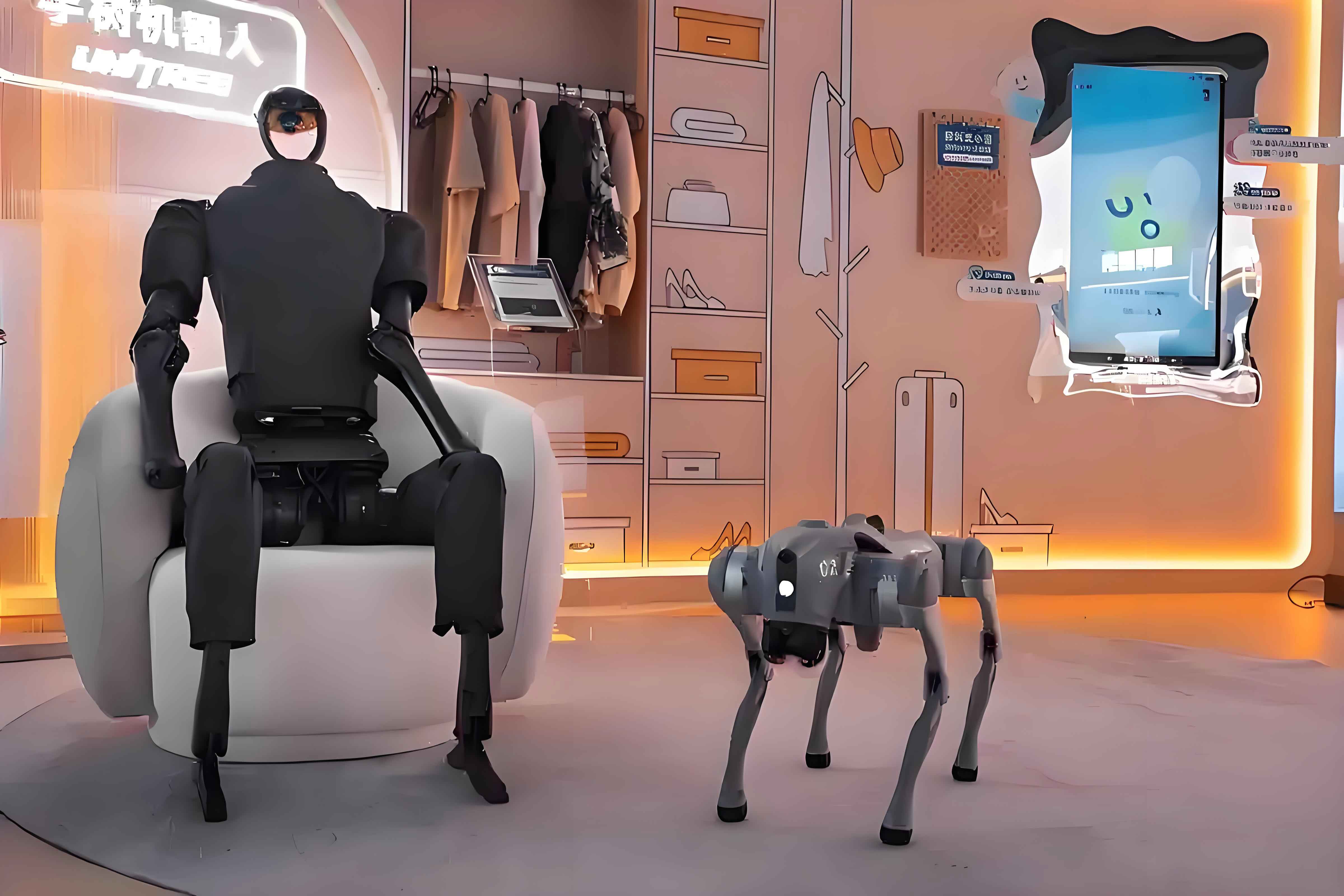
The market penetration of humanoid robots can be conceptually framed using a technology adoption model adapted for high-cost, high-complexity systems. The rate of adoption $A(t)$ in a primary target sector (e.g., industrial manufacturing) may follow a modified logistic function influenced by cost decline:
$$A(t) = \frac{K}{1 + e^{-r \cdot (t – t_0)}} \cdot \frac{C_0}{C(t)}$$
Where $K$ is the market saturation point, $r$ is the intrinsic adoption rate, $t_0$ is the inflection point, $C_0$ is a reference cost, and $C(t)$ is the declining cost curve. This underscores that widespread adoption is contingent upon achieving significant cost reductions through scaling and supply chain maturity.
2. Analysis of the Local Humanoid Robot Ecosystem: Foundations, Gaps, and Challenges
2.1 Existing Industrial and Innovative Foundations
The local humanoid robot industry is in a nascent stage but possesses relevant foundational elements. On the hardware front, there is a base in industrial robotics, fostering a cluster of specialized enterprises. Some local companies have made strides in educational robots, including child-focused smart education and special-needs therapy robots. Furthermore, strategic招商引资 has attracted leading robotics companies to establish a presence, primarily focusing on AI education robot production and market exploration collaborations involving cloud brain operating systems and large models for humanoid robots.
On the innovation platform front, initiatives are underway to establish public technical service platforms focused on social robots, encompassing testing, simulation, and AI technology support. Academic institutions host key laboratories concentrating on robotics integration and digital manufacturing research. Regarding capital, state-owned industrial funds have begun investing in the broader robotics track, partnering with leading companies to establish venture funds aimed at fostering industrial agglomeration.
| Category | Strength / Initiative | Current Limitation / Focus |
|---|---|---|
| Hardware & Manufacturing | Industrial robotics cluster; Educational robot developers; Attracted leading OEMs for specific segments. | No native humanoid robot OEM; Weak local supply chain for core components (reducers, controllers, precision gears). |
| Software & AI | Companies working on smart city ops with robots; Collaboration on cloud brain OS and RobotGPT models. | Limited local capability in foundational robot AI (multi-modal perception, motion control algorithms). |
| Innovation Platforms | Planned social robot public service platform; University labs on robotics systems. | Platforms are in early development; Lack of high-energy-level R&D institutions dedicated to humanoid robots. |
| Investment & Finance | State fund participation in a robotics venture fund. | Fund scale is modest compared to major clusters; No dedicated humanoid robot investment vehicle. |
2.2 Identified Problems and Strategic Gaps
Several critical gaps hinder the development of a robust humanoid robot industry locally. First, the industrial base is weak. There is a lack of local humanoid robot OEMs, and supporting capabilities for core components like reducers, controllers, precision lead screws, and specialized motors are insufficient. This weak supply chain limits the region’s attractiveness to leading robot manufacturers. While some major players have established a presence, their core R&D and high-end manufacturing activities often remain elsewhere.
Second, there is a deficit in relevant technological innovation capacity. The humanoid robot demands interdisciplinary convergence across advanced manufacturing, new materials, and AI. While there is competence in vertical domains, the horizontal integration capability needed for humanoid robot development is lacking. There is a scarcity of innovative tech firms mastering core technologies like high-precision motion control and multi-modal sensor fusion essential for advanced humanoid robots.
Third, proactive strategic layout requires strengthening. Investment intensity is relatively low. Many other regions have established government-guided robotics industry funds with scales ranging from \$1.5B to \$15B, whereas local participation remains in smaller funds. Furthermore, policy action has been slow. Numerous provinces and cities have already released specific humanoid robot policies and established related research alliances. In contrast, there is no dedicated policy framework or clear guidance here, and related academic research remains sparse.
2.3 Inherent Challenges for the Industry
Beyond local gaps, the industry itself faces universal challenges. Commercialization remains a long road. The high cost of humanoid robots is a significant barrier. Widespread adoption awaits the steady decline in core component costs, improved supply chain efficiency, and successful mass production. Industrial applications may see scaling in 3-5 years, but service or home scenarios involving close human contact will likely take longer.
Investment returns are uncertain. The humanoid robot sector is fast-evolving but immature, with unknown factors in technical pathways, business models, and market acceptance. As competition intensifies with many new entrants, industry consolidation is probable, with only a few companies possessing core technical advantages and viable commercialization strategies likely to survive.
Potential regulatory and ethical risks are emerging. Issues concerning data privacy, security, and prevention of misuse are paramount. Society must also grapple with new norms for human-robot coexistence and complex questions regarding legal personhood, rights, and responsibilities for advanced humanoid robots.
3. Proposed Development Directions and Focus Areas
3.1 Developing Distinctive Humanoid Robot Products
The strategy should focus on leveraging existing industrial strengths to cultivate distinctive humanoid robot products. First, encourage established industrial robotics companies to expand horizontally into the humanoid robot domain, extending towards robot bodies and core components. The focus should be on developing humanoid robots with high precision, flexibility, and load capacity for applications in automotive manufacturing, precision machining, and warehousing logistics to enhance production efficiency.
Second, capitalize on the existing base in educational technology. Support leading educational robot and AI companies to collaborate on developing child education and companion humanoid robots. These robots should offer engaging, personalized learning experiences, merging AI deeply with pedagogical needs.
Third, foster the development of interactive service humanoid robots. Encourage smart home and digital security companies to jointly develop robots with strong environmental adaptation and multi-modal interaction capabilities. Target applications should include commercial services, public services, and wellness support.
3.2 Strengthening R&D in Core Components and Materials
A parallel thrust must be on fortifying the upstream supply chain through focused R&D. Support local sensor, optoelectronics, and motor companies to make breakthroughs in high-precision sensing technologies (visual, force) and develop key products like vision sensors and six-axis force sensors, as well as specialized motors like frameless torque and coreless motors. Encourage battery manufacturers to research long-endurance, high-density power batteries suitable for humanoid robots. Furthermore, leverage local advanced materials expertise, such as in carbon fiber composites, to develop and apply lightweight, high-strength materials like carbon fiber-reinforced PEEK for humanoid robot skeletons, addressing the critical need for weight reduction.
The performance of a critical component like an actuator, which determines torque $ au$ and speed $\omega$, can be a key differentiator. Local R&D could aim to optimize the power-density ratio, a crucial metric:
$$\text{Power Density} = \frac{ au \cdot \omega}{m}$$
where $m$ is the mass of the actuator assembly. Improving this ratio through material science and design is a valuable target.
3.3 Leveraging AI to Empower Humanoid Robots
Artificial intelligence is the defining enabler for the next generation of humanoid robots. The development must focus on three AI-driven layers. First, the Software Layer: Support AI software companies to collaborate with robotics firms on developing application-specific software, advancing platforms and toolchains for humanoid robot development, and accelerating R&D in smart control platforms, algorithms, and data acquisition technologies.
Second, the Chip Layer: Utilize the local integrated circuit industry cluster to develop specialized chips supporting humanoid robot control, motor driving, and intelligent computing, enhancing the computational efficiency for motion control and cognitive decision-making.
Third, and most crucially, the Model Layer: Support joint ventures between robot and AI companies to tackle key technologies for humanoid robot-specific large models. This involves building a motion control “cerebellum” model through imitation and reinforcement learning, and constructing a multi-modal perception and planning “cerebrum” model based on foundational multi-modal LLMs.
| Strategic Direction | Concrete Focus Areas | Potential Local Leverage Points |
|---|---|---|
| Distinctive Robot Products | Industrial humanoid robots; Child education robots; Interactive service robots. | Existing industrial robotics firms; Educational tech & AI companies; Smart home/security industry. |
| Core Components & Materials | High-precision sensors; Specialized motors; Lightweight battery packs; Advanced composite materials. | Optoelectronics & sensor firms; Motor manufacturers; New energy battery plants; Advanced materials companies. |
| AI Empowerment | Application software & toolchains; Specialized control/processing chips; Robot-specific large language models (LLMs). | AI software developers; Integrated circuit design houses; Potential for industry-academia collaboration on AI. |
4. Strategic Recommendations for a Conducive Ecosystem
4.1 Building the Industrial Chain from the Ground Up
To build a competitive humanoid robot industry, a multi-pronged approach is needed. First, implement a targeted industrial chain investment campaign. Form a dedicated task force to dynamically track the industry and compile a list of target enterprises—especially promising startups and specialists in niche components—to attract them through tailored strategies. The goal should be to host regional R&D headquarters or production bases for robot OEMs and integrators, thereby aggregating a cluster of core component suppliers.
Second, actively encourage local enterprises to participate. Guide companies with relevant potential, identified through the industrial chain map, to extend into humanoid robot component R&D and production through technological upgrades. Facilitate partnerships, joint ventures, and R&D collaborations with external leading firms to accelerate the localization of key technologies.
Third, promote industrial agglomeration. Upgrade existing industrial zones to create dedicated humanoid robot parks, fostering a full-chain ecosystem from “core components to whole machine manufacturing to system integration.” These parks should integrate R&D incubation, pilot-scale production, and scenario demonstration zones, supported by public technical service platforms and computing centers.
4.2 Strengthening Multi-Point Innovation Capability
Innovation is the lifeblood of the humanoid robot industry. First, intensify core technology research. Include humanoid robots and their key components in key scientific research project selections. Employ mechanisms like competitive selection and “unveiling the list” to organize collaborative攻关 on critical areas such as the “brain,” “cerebellum,” and “limbs”—specifically multi-modal perception, autonomous decision algorithms, high-precision motion control, specialized chips, and lightweight materials.
Second, construct high-energy-level innovation platforms. Adopt a “company + alliance” model led by backbone enterprises in cooperation with top universities and research institutes to introduce or jointly build high-level R&D institutions. Furthermore, proactively plan and deploy industry innovation service carriers such as proof-of-concept centers, pilot-scale testing bases, and open testing platforms focused on validation, data, and scenario testing.
Third, deepen industry-academia-research collaboration. Promote “New Engineering” reforms in local universities, encouraging interdisciplinary fusion between robotics, AI, electronics, and mechanics. Establish specialized robotics disciplines and laboratories to strengthen basic research on human dynamics, brain-like perception, and fundamental “root technologies” like robot-specific LLMs and human-robot interaction. Leverage local science city incubators to nurture robotic startups and facilitate the transformation of research成果.
4.3 Linking to the Market by Expanding Application Scenarios
Market pull is essential for iterative improvement and cost reduction. First, create demonstration application scenarios. Build a series of such scenarios in industrial manufacturing (automated lines, quality inspection), high-risk rescue, commercial services, and home companionship. Promote the inclusion of humanoid robot products in “first-set” equipment catalogs to stimulate initial adoption.
Second, enhance market promotion efforts. Utilize major local exhibitions and fairs by establishing dedicated humanoid robot zones. This provides platforms for companies to showcase products and connect with potential clients. Furthermore, set up public experience zones in museums or cultural centers to gather user feedback for product optimization.
Third, innovate application promotion models. Explore Robot-as-a-Service (RaaS) business models. Cultivate smart robot system integrators to promote flexible “service leasing + system integration” models. For enterprise users, pilot “use-without-purchase” programs where access is granted via subscription, significantly lowering the initial cost barrier and accelerating deployment.
4.4 Implementing Precise Policies to Optimize the Industrial Ecology
A supportive policy environment is critical. First, increase policy support intensity. Designate the humanoid robot as a key future industry and formulate a dedicated development plan with supporting policies and necessary financial backing. Establish a dedicated humanoid robot sub-fund under existing advanced manufacturing funds to support targeted projects and companies, encouraging social capital to participate in孵化 and industrialization.
Second, attract specialized talent. Include key robotics technology roles like machine learning and computer vision experts in the local紧缺 talent catalog, using tailored approaches to recruit industry leaders. Host national-level humanoid robot competitions to attract high-end talent and innovative teams. Deepen enterprise-university cooperation to cultivate interdisciplinary talent through joint R&D and training bases.
Third,完善 supporting services. Collaborate with financial institutions to develop tailored credit and financing services for robotics firms, such as intellectual property pledged loans. Establish a sound legal consultation service system to help companies navigate risks. Support high-value patent cultivation around core humanoid robot technologies and improve the efficiency of the patent review process to strengthen intellectual property protection.
| Pillar | Key Recommendations | Expected Outcome |
|---|---|---|
| Build Industrial Chain | Targeted investment; Encourage local participation; Create dedicated agglomeration zones. | Attract OEMs/Integrators; Strengthen local supply chain; Form industry cluster. |
| Strengthen Innovation | Fund core tech R&D Build high-level platforms; Deepen industry-academia collaboration. | Breakthroughs in key tech; Enhanced R&D capacity; Steady talent pipeline & spin-offs. |
| Expand Market Application | Create demo scenarios; Enhance promotion; Innovate with RaaS models. | Validate use-cases; Increase product visibility; Lower adoption barrier for users. |
| Optimize Policy Ecology | Issue dedicated policies & fund; Attract specialized talent; Improve financial/legal/IP services. | Clear strategic guidance; Influx of skilled professionals; Reduced business friction & risk. |