
The rapid advancement of artificial intelligence (AI) and its deep integration with the real economy represent a pivotal national strategy for fostering new quality productive forces. The intelligent robot, as a crucial physical embodiment and integrative platform of AI technologies, has seen extensive application across sectors such as advanced manufacturing, healthcare, and personal services. Consequently, the “Intelligent Robotics” course has been widely incorporated into the undergraduate curricula of AI and related engineering programs in universities. However, under the “New Engineering” paradigm, which emphasizes interdisciplinary knowledge, innovation capabilities, and solving complex real-world engineering challenges, traditional lecture-based teaching methods for the intelligent robotics curriculum face significant shortcomings. These primarily include a disconnect between theoretical knowledge and practical application, a sequential and often disjointed arrangement of theory and lab sessions, and a lack of standardized teaching content and assessment criteria. To cultivate engineering talents capable of leading technological and industrial transformations, a fundamental reform in the teaching methodology of the intelligent robotics course is imperative.
Current Challenges in Intelligent Robotics Education
Traditional teaching models for intelligent robotics often struggle to meet the practical, hands-on demands intrinsic to the field. The primary challenges can be summarized as follows:
- Theory-Practice Disconnect: Heavy reliance on abstract theoretical instruction without immediate practical application leads to a superficial understanding. Students may grasp concepts like kinematics or sensor fusion in theory but fail to comprehend their implementation on a physical intelligent robot system.
- Sequential and Isolated Course Structure: Even in courses with lab components, experiments are typically scheduled after the completion of theoretical modules. This temporal gap weakens the reinforcing effect between learning and doing. Furthermore, labs often demand the immediate synthesis of multiple theoretical concepts, creating a steep learning curve without adequate foundational practice.
- Lack of Standardization and Resource Disparity: As a rapidly evolving field, there is no unified standard for course content, experimental projects, or hardware platforms. Disparities in institutional resources mean that some lack access to sophisticated intelligent robot platforms, limiting students’ practical exposure.
These challenges necessitate an innovative teaching reform model centered on practical ability cultivation, aligning with the core objectives of New Engineering education.
Proposed Reform Framework: The “Theory-Practice Parallel” Model
The core of the proposed reform is a synchronized, integrated teaching model. It moves away from the traditional sequential approach, instead interweaving theoretical instruction with hands-on experimentation within the same instructional timeline. The overarching goal is to achieve a deep, reciprocal reinforcement where theory guides practice, and practice consolidates and illuminates theory. The reform framework is built upon three interconnected pillars, as shown in the table below:
| Pillar | Core Principle | Key Implementation |
|---|---|---|
| Synchronized Curriculum Design | Theory and practice are taught in parallel, not in sequence. | Weekly schedule pairs a theoretical topic with a directly related experimental activity. |
| Integrated Learning Pathway | Seamless progression from conceptual understanding to virtual and physical implementation. | “Theory → Simulation → Physical Experiment” pedagogy is employed for complex modules. |
| Collaborative & Project-Based Learning | Fosters teamwork, problem-solving, and systems engineering thinking. | Students work in groups on experimental projects using assigned intelligent robot platforms, culminating in a final demonstration. |
Detailed Implementation of the Reform Model
1. Synchronized Curriculum Design and Content Mapping
The most critical operational change is the restructuring of the course schedule. Each week, students engage with both a theoretical concept and its practical counterpart. This design ensures immediate application and contextualization of abstract knowledge. The following table outlines a representative 16-week course structure implementing this “theory-practice parallel” model.
| Week | Theoretical Lecture Content | Parallel Laboratory / Practical Session |
|---|---|---|
| 1 | Introduction: History, Components, and Classification of Robots. | Course overview, team formation, introduction to available intelligent robot platforms, and safety briefing. |
| 2 | Robotic Kinematics I: Pose description, coordinate transformations, homogeneous coordinates and transformations. | Introduction to Robot Operating System (ROS): Installation, basic concepts (nodes, topics, services), and simple programming. |
| 3 | Robotic Kinematics II: Denavit-Hartenberg (D-H) parameters, forward kinematics equations. | Hands-on with coordinate transformations in ROS; Creating and visualizing a simple robot model using Unified Robot Description Format (URDF). |
| 4 | Robotic Dynamics I: Lagrangian formulation, equations of motion. | Architecture of a mobile intelligent robot platform: Hardware components (sensors, actuators), software stack, and core algorithms. |
| 5 | Robotic Dynamics II: Newton-Euler formulation, dynamic simulation concepts. | Setting up the software environment for a specific mobile robot platform and executing basic motion commands. |
| 6 | Robot Control: Control architectures, PID control, single-joint and multi-joint control strategies. | Implementing velocity and position control for a mobile robot or a single robotic joint. |
| 7 | Sensors for Intelligent Robots: Internal (encoders, IMU) and external sensors (LiDAR, camera), sensor fusion. | Data acquisition and processing: Reading and visualizing data from LiDAR and cameras on an intelligent robot. |
| 8 | Robot Vision I: Camera models, calibration, basic image processing. | Implementing color-based object detection or AprilTag recognition using a robot’s camera. |
| 9 | Robot Vision II: Deep Learning for vision: Convolutional Neural Networks (CNNs), object detection (YOLO, SSD). | Deploying a pre-trained CNN model (e.g., YOLO) on the robot for real-time object detection and classification. |
| 10 | Path Planning I: Configuration space, graph-based search algorithms (BFS, DFS, Dijkstra, A*). | Programming the A* algorithm in a discrete grid world simulation for an intelligent robot. |
| 11 | Path Planning II: Reactive navigation: Bug algorithms, Potential Fields, Dynamic Window Approach (DWA). | Implementing a reactive obstacle avoidance behavior using sensor data on a physical robot. |
| 12 | Localization & Mapping: Bayes filter, Kalman Filter, Simultaneous Localization and Mapping (SLAM) concepts. | Using ROS tools (e.g., gmapping) to have an intelligent robot build a 2D occupancy grid map of a lab environment. |
| 13-14 | Advanced Topics / Simulation: Introduction to PyBullet/MuJoCo for physics simulation, reinforcement learning basics. | Simulation Project: Building a robot model in PyBullet and training a simple policy (e.g., for balancing or grasping). |
| 15-16 | Project Work & Synthesis | Group project development, integration, final testing, and demonstration. Comprehensive project reporting. |
2. The “Theory → Simulation → Experiment” Integrated Learning Pathway
To bridge the gap between abstract theory and physical experimentation—especially for complex algorithms or when hardware resources are limited—a triphasic learning pathway is implemented. This approach is particularly effective for modules like control, path planning, and machine learning.
- Theory: Fundamental principles and mathematical models are introduced. For example, the forward kinematics of a robotic manipulator is derived. For a simple 2-link planar arm, the position of the end-effector based on joint angles $\theta_1$ and $\theta_2$ with link lengths $l_1$ and $l_2$ is given by:
$$ x = l_1 \cos(\theta_1) + l_2 \cos(\theta_1 + \theta_2) $$
$$ y = l_1 \sin(\theta_1) + l_2 \sin(\theta_1 + \theta_2) $$
This model forms the theoretical basis for controlling the intelligent robot’s arm. - Simulation: Before deploying code on physical hardware, students test their algorithms in a high-fidelity simulated environment. Using platforms like PyBullet or CoppeliaSim (V-REP), they can import or create a URDF model of their intelligent robot. They then program and debug their kinematic calculations, control loops, or planning algorithms in a risk-free, reproducible setting. For instance, they can verify their implementation of the Inverse Kinematics (IK) solution:
$$ \theta_2 = \pm \arccos\left( \frac{x^2 + y^2 – l_1^2 – l_2^2}{2 l_1 l_2} \right) $$
$$ \theta_1 = \operatorname{atan2}(y, x) – \operatorname{atan2}\left( l_2 \sin(\theta_2), l_1 + l_2 \cos(\theta_2) \right) $$
The simulation provides immediate visual feedback on the robot’s motion. - Physical Experiment: Once the algorithm performs robustly in simulation, it is migrated to the physical intelligent robot. This step introduces real-world challenges such as sensor noise, actuator delays, and mechanical imperfections. Students learn to fine-tune parameters and handle uncertainties, thereby completing the full engineering cycle from model to deployment.
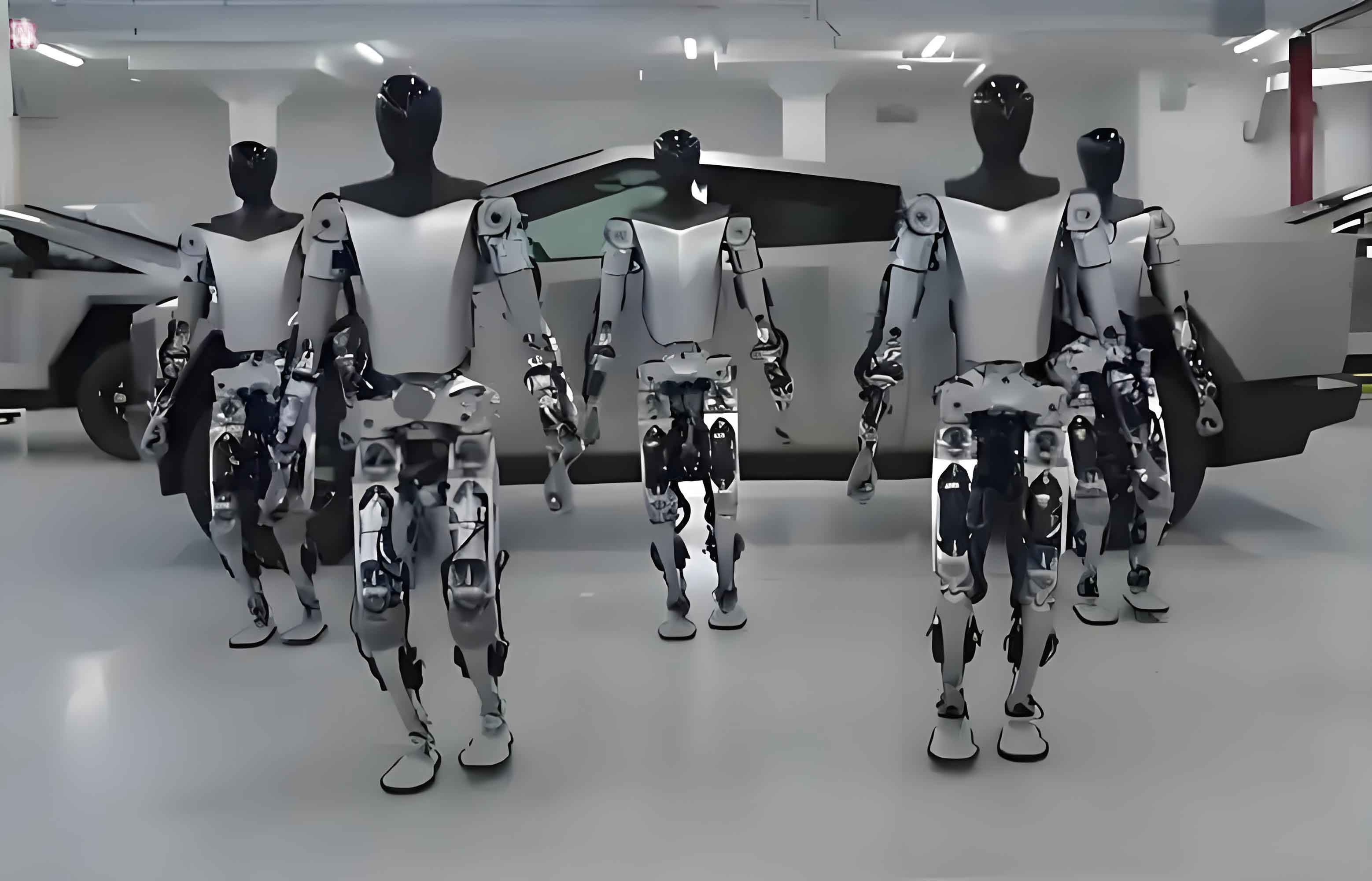
The image above illustrates the kind of practical, hardware-focused learning environment that this reform model aims to create and support, where students directly interact with intelligent robot systems.
3. Collaborative Project-Based Learning and Assessment
To cultivate teamwork and systems integration skills—key competencies in New Engineering—the laboratory component is structured around group projects. A class is divided into small teams, each assigned a specific intelligent robot platform (e.g., a differential-drive mobile robot, a robotic arm, or a humanoid platform). The team’s objective is to progressively integrate the skills learned each week to accomplish a culminating capstone project, such as “Autonomous Item Retrieval and Delivery” or “Interactive Guest Guidance Robot.”
The assessment system is designed to be comprehensive and multifaceted, evaluating both process and outcome, individual contribution, and team performance.
| Assessment Component | Weight | Description & Learning Objectives Measured |
|---|---|---|
| Individual Theoretical Quizzes | 20% | Tests comprehension of core concepts in kinematics, dynamics, perception, and planning. |
| Weekly Lab Reports & Code Submission | 30% | Evaluates practical implementation skills, documentation, and understanding of weekly modules. Reports connect experimental results back to theory. |
| Final Group Project Demonstration | 30% | Assesses integrated problem-solving, technical success of the intelligent robot system, and quality of live presentation/demo. |
| Final Project Report & Peer Evaluation | 20% | Evaluates technical writing, systematic analysis of the project (challenges, solutions), and individual contribution within the team (via peer assessment). |
Expected Outcomes and Advantages of the Reform
The implementation of this “theory-practice parallel” model with its integrated learning pathway is anticipated to yield significant educational benefits:
- Deepened Conceptual Understanding: Immediate application of theory to a tangible intelligent robot solidifies abstract concepts. The mathematical formulation of robot motion ceases to be just equations but becomes the driver of observable behavior.
- Enhanced Practical and Problem-Solving Skills: Students develop hands-on proficiency with real robotic systems, software frameworks like ROS, and simulation tools. They learn systematic debugging and gain resilience in tackling hardware-software integration issues.
- Cultivation of Teamwork and Communication: The group project framework mirrors real-world engineering projects, requiring effective collaboration, task division, and integration of subsystems to make the intelligent robot function as a whole.
- Bridging the Resource Gap: The strategic use of simulation (e.g., PyBullet) democratizes access to advanced experimentation. Students can work with complex intelligent robot models and algorithms even without extensive physical hardware, ensuring a high-quality learning experience across different institutional settings.
Conclusion and Future Perspectives
The “New Engineering” initiative demands a paradigm shift in technical education, moving from knowledge transmission to competence cultivation. The intelligent robotics course, with its inherent interdisciplinary and practical nature, is an ideal candidate for pioneering such reform. The proposed “theory-practice parallel” model, supported by the “theory-simulation-experiment” pathway and collaborative project-based learning, offers a structured framework to address the traditional shortcomings of the curriculum. This approach ensures that students not only learn about intelligent robots but also gain the indispensable experience of building, programming, and troubleshooting them. By fostering a deeper integration of theoretical knowledge with hands-on engineering practice, this reform model contributes directly to the development of innovative, adaptable, and capable engineers ready to advance the field of intelligent robotics and meet the challenges of future industries. Future work will focus on refining the modular project templates, expanding the library of simulation-based exercises, and exploring deeper industry-academia collaboration to keep the course content at the forefront of intelligent robot technology.