
Tesla is deepening its engagement with China’s manufacturing supply chain as it prepares for mass production of Optimus, its humanoid robot. The Tesla robotics team has recently visited listed companies headquartered in Ningbo, Zhejiang Province, including Tuopu Group, Sanhua Intelligent Controls and Junsheng Electronics, according to information reviewed by a news team. The supplier audits are oriented toward mass production of the Tesla humanoid robot and may lead to orders being allocated to Chinese supply chain companies.
The visits have drawn attention because several of the companies involved have already worked with Tesla for years in the new energy vehicle component business. Industry experts said Tesla is likely to favor Chinese companies that combine humanoid robot development capabilities with an existing cooperation record in Tesla’s electric vehicle supply chain. Tesla China did not respond to questions about the reported new round of humanoid robot mass production supplier audits. Local industry chain personnel in Ningbo, however, confirmed that the Tesla robotics team visited Tuopu Group, Sanhua Intelligent Controls and Junsheng Electronics last week to begin supplier audit work.
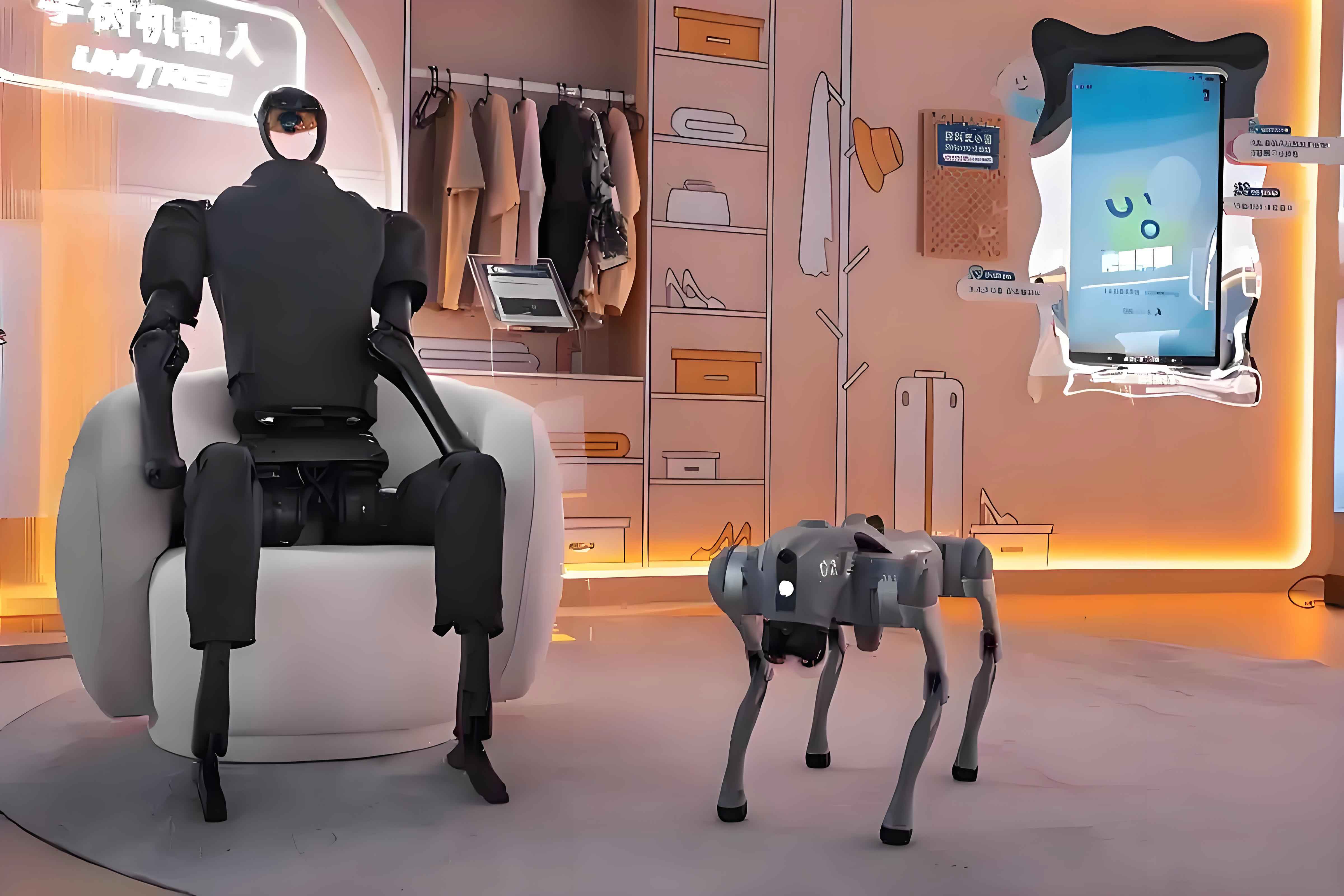
The development comes as global attention shifts toward the commercial readiness of humanoid robot platforms. Tesla’s Optimus program is one of the most closely watched efforts because of the company’s experience in electric vehicles, manufacturing automation and large-scale production. For China’s component makers, the potential opportunity extends beyond a single customer. The humanoid robot supply chain is expected to draw on capabilities developed in automotive electronics, actuators, precision manufacturing, sensors, power systems, software and system integration.
Experts said the demand outlook for humanoid robot components will increase significantly as Tesla expands robot production capacity in the United States. Tesla’s long-term production ambitions are large enough to require a broad and responsive supplier base. In this context, Chinese companies with both humanoid robot component development capability and a place in Tesla’s new energy vehicle supply chain are seen as having clear advantages.
1. Tesla Robotics Team Conducts Supplier Audits in Ningbo
The reported supplier audits mark a new stage in Tesla’s humanoid robot sourcing discussions. According to the information, the Tesla robotics team visited Tuopu Group, Sanhua Intelligent Controls and Junsheng Electronics in Ningbo. The companies are listed in China and have operations in automotive components and related manufacturing fields. Several of them have supplied Tesla’s new energy vehicle business for years.
Tesla China did not comment on the situation. Local supply chain sources confirmed the visits and said the audits were connected to preparations for humanoid robot mass production. The audits do not by themselves guarantee orders, but they are an important signal that Tesla is evaluating suppliers for the next phase of its Optimus program.
The humanoid robot supply chain is different from a conventional automotive supply chain in several respects. Humanoid robot components must combine lightweight design, precision, durability and cost control. Actuators, dexterous hands, joint modules, sensors, controllers and power systems all require close integration. Suppliers that have worked in automotive manufacturing can bring experience in quality management, volume production and cost reduction, but they must also adapt to the specific requirements of humanoid robot platforms.
Tesla’s approach appears to favor suppliers that can bridge these two worlds. The company has a long history of working with Chinese suppliers in electric vehicles, and those relationships may shorten validation and development cycles for humanoid robot components. For Chinese companies, the audit process is also a chance to demonstrate their ability to move from automotive component production to humanoid robot component production.
2. Third-Generation Optimus Moves Toward Mass Production
The Tesla humanoid robot now moving toward mass production is the third-generation Optimus. It is described as Tesla’s first humanoid robot model designed for mass production. Compared with earlier generations, Tesla has focused on upgrading the hand dexterity mechanism and joint actuators. These improvements are intended to support industrial tasks such as material handling and simple assembly line assistance in factories.
Tesla has set a long-term target cost of USD 20,000 to USD 30,000 per unit for the humanoid robot. Cost control will be central to the commercial viability of Optimus. A humanoid robot contains many precision components, and the cost of actuators, hands, sensors and control systems can be significant. Mass production, supplier competition and design simplification are expected to play important roles in reducing costs.
Tesla announced in May 2026 that the Optimus production project had started. The project is part of the expansion of Tesla’s Texas Gigafactory. Tesla Chief Executive Officer Elon Musk has set a long-term output target of 10 million humanoid robots per year once the production line reaches full capacity. Production is expected to begin in mid-2027. That volume would far exceed the annual capacity of 1 million units at Tesla’s separately built pilot production line in Fremont, California.
If Tesla moves toward such scale, demand for humanoid robot components would rise sharply. The requirement would not be limited to actuators and hands. It would extend to structural parts, sensors, connectors, power and charging systems, thermal management, control electronics and assembly services. The humanoid robot supply chain could therefore become a new growth platform for companies that already serve the automotive industry.
3. Ningbo’s New Energy Vehicle Base Offers Humanoid Robot Synergy
The Tesla robotics team’s visit to Ningbo was not accidental. The new energy vehicle industry is Ningbo’s largest manufacturing sector, and the city has formed a complete ecosystem covering research and development, vehicle production and testing services. That industrial base gives local companies access to engineering talent, precision manufacturing, supply chain networks and testing capabilities.
A notable feature of Ningbo’s new energy vehicle industry is the high degree of synergy between automotive components and the humanoid robot industry. According to data from the Ningbo Municipal Bureau of Economy and Information Technology, about 80 percent of humanoid robot component categories overlap with the new energy vehicle supply chain. Companies can therefore transfer technology and switch production capacity relatively quickly.
This overlap is important for the humanoid robot industry. Many humanoid robot components are derived from or related to automotive technologies, including electric motors, gearboxes, sensors, power electronics, battery systems, lightweight structures and electronic controls. Automotive suppliers already understand how to manufacture these products at scale and how to manage quality under demanding conditions.
For Tesla, Ningbo offers a concentration of suppliers with relevant capabilities. For the suppliers, Tesla’s humanoid robot program offers a potential route into a new market. The same manufacturing base that supports electric vehicles can be adapted to support humanoid robot production, provided that companies meet the specific performance, reliability and cost requirements of robot platforms.
4. Junsheng Electronics Expands Humanoid Robot Component Portfolio
Among the companies visited, Junsheng Electronics has publicly outlined a broad humanoid robot component portfolio. In 2026, the company concentrated on releasing core robot components and system solutions, including a dexterous hand, a third-generation artificial intelligence head assembly, an embodied intelligence brain, electronic skin and a hybrid solid-liquid battery.
One of the company’s central humanoid robot offerings is its embodied intelligence brain solution, known as EAOS plus EAPC. The solution is positioned as a core highlight of Junsheng Electronics’ robot business layout. It reflects the growing importance of software, control and system-level integration in humanoid robot development. A humanoid robot must coordinate perception, decision-making, motion control and interaction, and the brain solution is intended to support these functions.
Junsheng Electronics has also established cooperation with domestic and international robot companies, including Zhiyuan Robot, Galaxy General and Swiss company RIVR. The cooperation covers controllers, robot components, custom development, testing and validation. The parties are advancing joint research and development, product sampling and supply.
In overseas projects, Junsheng Electronics has already delivered robot components in batches, including parts for the back of the head, neck, shoulder, knee and fingers. The company is also advancing next-generation head display solutions and head assembly supply. These activities show that the company is not only developing humanoid robot components but also moving into delivery and validation with customers.
For Tesla’s humanoid robot program, such experience could be relevant. A humanoid robot requires many different component types, and suppliers that can provide system-level solutions may have an advantage. At the same time, Tesla is known for rigorous supplier qualification and cost discipline, so companies must demonstrate reliability, scalability and competitive pricing.
5. Sanhua Intelligent Controls Pursues Mechatronic Actuators
Sanhua Intelligent Controls is approaching the humanoid robot market from a mechatronics direction, with a focus on robot actuators. Actuators are among the most important components in a humanoid robot because they convert control signals into motion. The performance of actuators affects strength, precision, energy efficiency and overall robot design.
According to the company’s 2026 half-year report, its core products for bionic robot mechatronic actuators have steadily advanced batch delivery and production line ramp-up. This indicates that the company is moving from development toward production readiness in the humanoid robot actuator field.
The actuator market is expected to be a major part of the humanoid robot value chain. Different robot designs may use different actuator technologies, but the demand for compact, efficient and reliable motion systems is common across platforms. Suppliers with experience in automotive thermal management, electric motors, precision manufacturing and mechatronic integration may be able to transfer capabilities into humanoid robot actuators.
Sanhua Intelligent Controls’ existing relationship with Tesla in new energy vehicles could also be relevant. Tesla tends to work with suppliers that have proven manufacturing capability and can scale production. If the company’s humanoid robot actuator products meet Tesla’s requirements, it could become part of the broader Optimus supply chain.
6. China’s Humanoid Robot Supply Chain Advantage Goes Beyond Capacity
China’s humanoid robot supply chain advantage is not limited to production capacity. According to statistics from Chebai Research Institute, as of August 2026, nearly 20 mainstream automakers worldwide had entered the embodied robot track through self-development, incubation, investment or other means. Cumulative planned investment exceeded RMB 100 billion, and Chinese automakers were a major force among these participants.
Industry experts said the opportunity for Chinese automotive supply chain companies may be even larger than for vehicle manufacturers. The new energy vehicle wave nurtured companies such as CATL in the power battery sector. In a similar way, global robot giants represented by Tesla may drive Chinese automotive supply chain companies to expand across sectors and open new business growth space.
China’s humanoid robot industry has shown a clear pattern of deployment first and manufacturing driven. In 2025, China’s humanoid robot output exceeded 15,000 units, about 30 times that of North America. This scale reflects both strong demand experimentation and a dense manufacturing ecosystem.
The advantages of Chinese companies are not only in capacity. They also include a complete manufacturing foundation, fast supply chain response, a high density of application scenarios and policy support. These factors can help companies iterate products quickly, reduce costs and move from prototypes to volume production. For humanoid robot suppliers, speed and flexibility are particularly important because robot designs and requirements are still evolving.
The humanoid robot market is also attracting automakers and component makers because it shares technologies with electric vehicles. Motors, actuators, sensors, power systems, lightweight materials and electronic controls are all relevant. Companies that can combine automotive-grade quality with robot-specific innovation may be well positioned in the emerging humanoid robot supply chain.
7. Market Forecasts Point to a Platform-Scale Humanoid Robot Opportunity
Roland Berger has provided long-term forecasts for the humanoid robot market. In a base-case scenario, the global integrated humanoid robot market could reach USD 750 billion by 2035. If technology iteration, supply chain maturity and application expansion continue along the current trajectory, the integrated humanoid robot market could exceed USD 4 trillion by 2050.
A new industrial value chain is forming around humanoid robot components and services. It includes actuators, dexterous hands, computing and connectivity, perception systems, energy and charging, structural parts, and assembly and supply chain services. By 2035, the body actuator market alone could reach USD 26 billion to USD 79 billion, while hand actuator systems could contribute USD 9 billion to USD 26 billion.
Roland Berger believes that the humanoid robot is not simply a single new product category. It is a platform-type market that could reshape the division of labor across electromechanical systems, automotive components, semiconductors, industrial software, system integration and production services. This view helps explain why so many automotive suppliers are examining humanoid robot opportunities.
| Indicator | Reported data or forecast |
|---|---|
| Global integrated humanoid robot market, base case, 2035 | USD 750 billion |
| Global integrated humanoid robot market, 2050 | More than USD 4 trillion |
| Body actuator market, 2035 | USD 26 billion to USD 79 billion |
| Hand actuator systems market, 2035 | USD 9 billion to USD 26 billion |
| Overlap between humanoid robot component categories and the new energy vehicle supply chain | About 80 percent |
| China humanoid robot output, 2025 | More than 15,000 units, about 30 times North America |
| Mainstream automakers entering embodied robots, as of August 2026 | Nearly 20, with cumulative planned investment above RMB 100 billion |
The table illustrates why the humanoid robot supply chain is attracting attention from automotive component companies. The potential market size is large, but the opportunity is also fragmented across many component categories. Suppliers must identify where their capabilities can create value and how they can meet the cost and performance requirements of humanoid robot platforms.
For Tesla, the humanoid robot program is part of a broader effort to combine artificial intelligence, manufacturing and robotics. For Chinese suppliers, the program is a potential gateway into a new market that could complement their existing automotive businesses. The relationship is not one-sided. Tesla needs capable suppliers to achieve scale and cost targets, while Chinese suppliers need customers that can drive volume and technical requirements.
8. Implications for Suppliers and the Emerging Humanoid Robot Value Chain
The reported Tesla supplier audits in Ningbo highlight several implications for the humanoid robot value chain. First, humanoid robot sourcing is moving from early prototyping toward supplier qualification. Companies that can demonstrate production readiness, quality systems and cost control may have an advantage.
Second, the boundary between automotive components and humanoid robot components is becoming less distinct. Actuators, sensors, power systems, structural parts and electronic controls are relevant to both fields. Suppliers that can transfer technology from automotive to humanoid robot applications may be able to reduce development time and investment.
Third, humanoid robot mass production will require a broad supplier ecosystem. No single company is likely to produce every component. The value chain will include specialized suppliers for hands, joints, actuators, perception, computing, batteries, structural parts and assembly. System integrators and software providers will also play important roles.
Fourth, cost and reliability will remain critical. Tesla’s long-term target cost of USD 20,000 to USD 30,000 per humanoid robot implies significant pressure on component costs. At the same time, humanoid robots must operate safely and reliably in industrial environments. Suppliers must balance cost reduction with performance and durability.
Fifth, the humanoid robot market is still evolving. Tesla’s production plans are ambitious, but mass production timelines and volumes may change. Supplier audits are an important signal, but they do not guarantee orders. Companies involved in the humanoid robot supply chain will need to manage investment and capacity planning carefully.
For Ningbo and China’s broader manufacturing base, the humanoid robot opportunity builds on existing strengths. The region’s new energy vehicle ecosystem provides a foundation for component development, testing and production. If local suppliers can meet Tesla’s requirements, they may be able to participate in a global humanoid robot supply chain that extends beyond a single customer.
9. What to Watch Next
The next developments to watch include whether Tesla confirms supplier selections for its humanoid robot program, whether Chinese companies announce specific orders or cooperation agreements, and how Tesla’s production milestones progress. The timing of production at the Texas Gigafactory and the ramp-up of the Fremont pilot line will also be important indicators of humanoid robot supply chain demand.
For Chinese suppliers, the key test will be whether they can move from sample delivery and audits to stable mass production. That requires not only technical capability but also quality management, supply chain coordination and cost discipline. Companies such as Tuopu Group, Sanhua Intelligent Controls and Junsheng Electronics are already part of the discussion because of their manufacturing backgrounds and existing automotive relationships.
The broader humanoid robot market is expected to remain dynamic. Automakers, technology companies and component suppliers are all investing in the field. China’s manufacturing ecosystem, application scenarios and supply chain responsiveness are likely to remain important advantages. As Tesla prepares for humanoid robot mass production, the interaction between global robot platforms and China’s industrial base will continue to shape the emerging humanoid robot value chain.
Tesla’s humanoid robot ambitions are large, and the supplier opportunities are potentially significant. The reported audits in Ningbo show that the company is examining Chinese partners for the next stage of the Optimus program. For China’s supply chain companies, the humanoid robot market offers a new opportunity to apply automotive manufacturing capabilities to a platform that could become a major global industry.