
In a recent social media post, Tesla CEO Elon Musk unveiled his upcoming schedule, highlighting internal meetings focused on artificial intelligence and autonomous driving systems, the production roadmap for the Optimus humanoid robot, and vehicle manufacturing and delivery. This announcement has ignited significant excitement across global markets, particularly influencing related sectors in the A-share market. Analysts note that Tesla’s moves in the humanoid robots arena are reminiscent of its disruptive impact on the electric vehicle industry, often described as a “catalyst effect,” driving innovation and investment in associated fields.
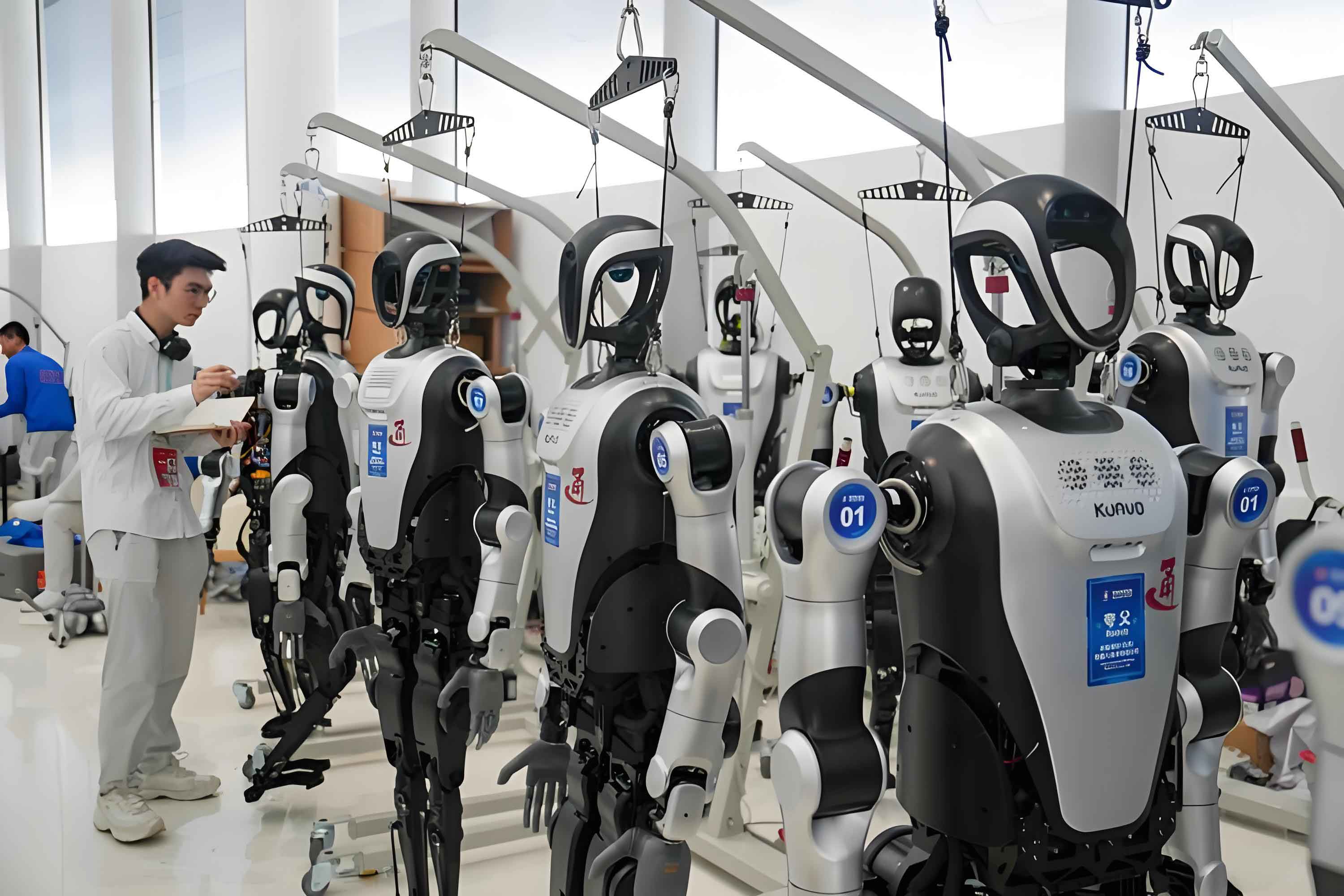
The development of humanoid robots, specifically Tesla’s Optimus, is seen as a transformative force in robotics and automation. According to industry observers, Tesla’s Optimus has demonstrated advanced capabilities in motion control, AI algorithms, and task execution, showcasing versatility in adapting to various service scenarios, including domestic environments. If Optimus achieves mass production as planned, it could replicate the trajectory of Tesla’s electric vehicles, fostering growth across the entire supply chain ecosystem for humanoid robots.
1. Evolution of Tesla’s Optimus Humanoid Robot
Tesla has previously introduced the first and second generations of the Optimus humanoid robot, both of which have undergone training in real-world settings. However, these iterations remain distant from large-scale production. The current focus is on the third-generation Optimus, which is under development and regarded by the market as the most technologically mature version poised for mass manufacturing. Musk has indicated that Tesla is finalizing the design of this generation, describing it as potentially “the greatest product in human history,” featuring human-like dexterous hands and advanced AI cognition to interpret reality.
The third-generation Optimus is expected to incorporate sophisticated hand designs, with each arm equipped with 26 actuators. Musk emphasized that addressing engineering challenges in the robot’s hands and forearms required establishing a supply chain from scratch. When production scales to an annual output of one million units, the cost per humanoid robot is projected to drop to between $20,000 and $25,000, with AI chips accounting for $5,000 to $6,000 of that cost. This cost reduction is critical for making humanoid robots accessible for widespread adoption in various industries.
2. Market Implications and Analyst Perspectives
Kaiyuan Securities analysis suggests that the enhancement of dexterous hands, moving toward highly biomimetic and refined upgrades, is a definite focus for the third-generation Optimus. As October approaches, the finalization of the Optimus Gen 3 design is nearing, with subsequent order placements expected to continuously catalyze the sector. Once the third-generation model is定型, Tesla will conduct tests for large-scale manufacturing, with an anticipated shipment volume of 30,000 to 50,000 units. Additionally, the company may simultaneously develop the fourth-generation Optimus tailored for future mass production, potentially outlining requirements for supplier capacity expansion and overseas factory establishment.
From both Tesla’s strategic development and Musk’s personal ambitions, Optimus is positioned to play a pivotal role. Tesla’s recently released “Master Plan Part 4” underscores the scaling of Full Self-Driving (FSD) and Optimus as top priorities. For Musk, the delivery of Optimus is closely tied to his personal interests; Tesla’s board has proposed a new compensation package for him, with a potential value of approximately $1 trillion, contingent on milestones such as the cumulative delivery of one million humanoid robots starting from September 3, 2025.
However, Musk has faced criticism for repeatedly adjusting his stance on the humanoid robot business and delaying production timelines for Optimus. Whether this iteration will overcome past setbacks remains to be seen, but the ongoing developments have already spurred significant activity in related markets, particularly among A-share companies.
3. Response from A-Share Companies and Supply Chain Dynamics
Recently, influenced by multiple factors including Musk’s personal purchase of Tesla stock and the unveiling of Tesla’s “Master Plan,” Tesla’s stock price has surged sharply. This momentum has spilled over into the A-share robotics industry chain, triggering a rally in stocks such as Sanhua Intelligent Control, Top Group, and Ningbo Huaxiang. Historically, any updates on Optimus—from technical designs to production forecasts—have caused fluctuations in the A-share market. For instance, earlier market rumors about production delays or design adjustments for Optimus led to significant declines in related sectors.
Due to factors like undisclosed contract amounts or confidentiality agreements, few A-share companies have publicly acknowledged their roles as suppliers for Optimus through official announcements or interactive platforms. According to Shanxi Securities, Tesla’s primary Tier-1 suppliers for humanoid robots include Top Group and Sanhua Intelligent Control. Top Group has established an electric drive division to enter the embodied intelligent robotics business. Its 2025 interim report indicates that the company began collaboration with clients on linear actuators, leveraging its experience and积累 in IBS (Intelligent Braking System) to quickly gain client approval, subsequently initiating the development of rotary actuators and dexterous hand motors. The company has repeatedly submitted samples to clients, with projects progressing rapidly.
Sanhua Intelligent Control, capitalizing on its expertise in motor manufacturing, scalability, and cost control, has successfully entered the field of biomimetic robot机电 actuator production. Its interim report for 2025 shows that in the biomimetic robotics sector, the company is focused on technological improvements for multiple key product models, collaborating with clients on the research, development, trial production, iteration, and sampling of full product series. This has yielded positive client feedback and a series of innovations around existing products, enhancing overall product capability.
Furthermore, on September 2, market rumors suggested that Tesla held a conference call with suppliers, providing a “very optimistic” guidance for next year’s robot production capacity. Suppliers were asked to prepare for capacity ramp-up in the first quarter of next year, with an estimated weekly production capacity potentially reaching 10,000 units by the third quarter. Zhejiang Rongtai was identified as a supplier in these rumors, and the company later responded that it indeed has cooperative exchanges with Tesla, but there are no major undisclosed matters at present.
Analysts believe that Tesla is likely to leverage its established electric vehicle supply chain for humanoid robots. Numerous domestic automotive supply chain companies have already ventured into the robotics components sector, covering core areas such as reducers, lead screws, and joints. However, as the design of Optimus continues to evolve, the supply chain landscape is not fixed and could be subject to reallocation, depending on technological advancements and production needs.
4. Future Outlook for Humanoid Robots and Industry Impact
The progression of humanoid robots like Tesla’s Optimus signifies a broader shift toward automation and AI integration in daily life and industrial applications. The potential for humanoid robots to perform tasks in households, healthcare, and manufacturing underscores their transformative potential. If Tesla achieves its production goals, it could set a benchmark for the industry, accelerating innovation and competition in the global market for humanoid robots.
Market watchers anticipate that the successful mass production of Optimus could lead to increased investments in robotics research and development, spurring job creation and economic growth in related sectors. However, challenges such as technical hurdles, regulatory frameworks, and public acceptance remain. The iterative design process for humanoid robots, as seen with Optimus, highlights the complexity of creating machines that can seamlessly interact with human environments.
In summary, Tesla’s advancements in humanoid robots are closely monitored for their ripple effects on technology and markets. As the company moves toward finalizing the third-generation Optimus, stakeholders across the supply chain are positioning themselves to capitalize on emerging opportunities. The emphasis on cost reduction and scalability aligns with broader trends in robotics, aiming to make humanoid robots more accessible and functional for diverse applications.
The ongoing developments in humanoid robots, particularly Tesla’s Optimus, represent a critical juncture in the evolution of automation. With Musk’s ambitious timelines and the active involvement of A-share companies, the sector is poised for dynamic growth. As the design of the third-generation Optimus is finalized and production plans take shape, the global community will be watching closely to see if Tesla can deliver on its promises, potentially ushering in a new era for humanoid robots in everyday life.