
As an observer deeply embedded in the field of robotics, I view the advent of the “Year of Mass Production” for humanoid robots not merely as a milestone, but as the ultimate crucible. It is the definitive test where theoretical elegance meets the unforgiving realities of physics, supply chains, and economics. Mass production is the complex system that separates prototype marvels from commercial assets. Every minute error in design, manufacturing, software, or data processing is amplified through this system, culminating in a formidable constraint on scalability and reliability. The core significance of mass production lies in its relentless demand for consistency. It forces the entire ecosystem—from component suppliers to AI trainers—to minimize tolerances at every stage of production, design, and execution. This disciplined reduction of variance is not just about building robots; it is about creating the reliable, shared foundation upon which a true industry data commons can be established, enabling rapid and collective advancement.
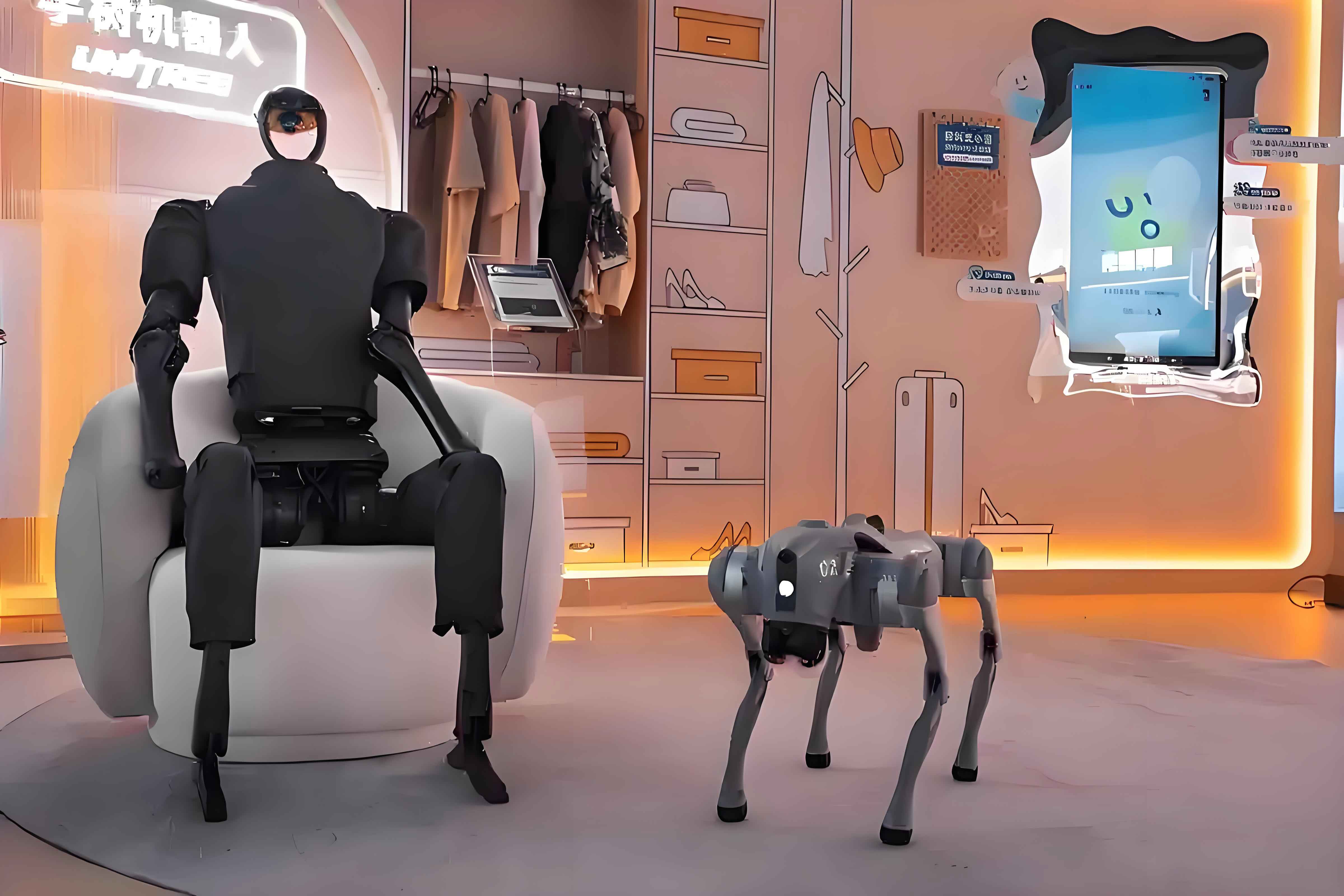
The recent surge in commercial activity signals a market transitioning from hype to tangible transactions. Events showcasing humanoid robots have demonstrated significant sales volumes and investment inflows, bolstering confidence in the sector’s commercial viability. Success in this arena hinges on a pragmatic, commercially-minded approach to product development. The leading entities are those that first identify and penetrate viable application niches. The strategic imperative is clear: begin with scenarios that have lower performance thresholds but clear, immediate economic logic, such as replacing low-value, repetitive human labor. This initial foothold provides the essential cash flow and, more importantly, the real-world operational data required for iterative improvement.
This “shallow-to-deep” expansion strategy is a hallmark of savvy first-mover companies. They prioritize domains like research, education, exhibition services, and cultural tourism—sectors with predictable demand and lower initial complexity. This approach mitigates early market entry risks and creates a vital time buffer for technological maturation. The subsequent, more challenging phase involves leveraging this accumulated capability—both in hardware robustness and learned intelligence—to address scenarios demanding higher dexterity, reliability, and environmental understanding, thereby constructing a complete ecosystem from demonstrative applications to indispensable tools.
| Commercialization Phase | Target Scenarios | Key Success Metrics | Primary Challenges |
|---|---|---|---|
| Phase 1: Validation & Cash Flow | Research/Education, Exhibitions, Guided Tours | Unit Sales Volume, Contract Value, Deployment Uptime | Supply Chain Readiness, Basic Functional Reliability |
| Phase 2: Capability Scaling | Logistics (Sorting, Tote Handling), Light Assembly | Task Success Rate, Mean Time Between Failures (MTBF), Cost-Per-Task | Scene Understanding, Robust Manipulation, Economic Viability |
| Phase 3: Advanced Integration | Complex Manufacturing, Hazardous Environment Operation, Personalized Care | Autonomy Level, Integration with Legacy Systems, Return on Investment (ROI) | Advanced AI Reasoning, Safety Certification, High-Precision Actuation |
The leap to mass production is the critical enabler for this commercial flywheel. However, the path is fraught with systemic challenges. Early-stage production often encounters unexpected bottlenecks, not from a lack of vision, but from a supply chain unprepared for the sudden scale of demand. The true test comes when thousands of units are ordered, stressing every link from precision actuators and sensors to structural composites. The resilience and responsiveness of the domestic supply chain become paramount. The ability of suppliers to reconfigure production lines within days to meet surge demand is what separates a conceptual rollout from a successful scale-up. To master this, leading firms are vertically integrating key manufacturing processes, establishing their own production bases. This control grants deep familiarity with manufacturing intricacies, enabling rapid iteration of assembly processes based on field feedback and ensuring stable, high-volume output. The roadmap then logically extends to global markets, necessitating a supply chain and production logic robust enough to support international delivery and service.
Yet, even with a refined, scalable hardware platform, the most significant impediment to widespread humanoid robot adoption shifts decisively to the digital realm. The consensus is growing: while hardware continues its steady evolution, the true bottleneck for humanoid robot intelligence is now the quality and applicability of data and the models that learn from it. The vision of a general-purpose humanoid robot is fundamentally a data problem. It is not merely about accumulating petabytes of raw information; it is about curating high-fidelity, task-relevant, and physically accurate data. The current paradigm for collecting the most valuable data—teleoperation, where human operators demonstrate tasks—faces severe limitations. Data acquisition capacity is low, and the cost of obtaining sufficient, high-quality demonstrations for every conceivable task is prohibitive. This scarcity directly throttles the pace at which humanoid robot skills can evolve.
| Data Type | Source | Advantages | Disadvantages & Challenges |
|---|---|---|---|
| Teleoperation / Demonstration Data | Human operators physically guiding the robot | High-quality, goal-oriented, contains subtle human priors | Extremely expensive, low throughput, difficult to scale, operator fatigue |
| Real-World Operational Data | Robots deployed in actual working environments | Rich, noisy, contains true environmental variance, fuels closed-loop learning | Requires large deployed fleet, slow to accumulate, may contain failures or sub-optimal actions |
| Synthetic / Simulation Data | Physics-based simulation engines and generative AI pipelines | Virtually unlimited scale, perfect annotation, safe, enables exploration of edge cases | Reality Gap: Simulated physics and visuals may not match real world, requiring robust sim-to-real transfer |
To break this data bottleneck, the industry is turning to sophisticated simulation and synthetic data generation. The premise is to create vast, interactive digital twins of the physical world. By leveraging advanced computer graphics and high-fidelity physics engines, it is possible to simulate a near-infinite variety of objects—rigid, deformable, articulated—and the complex interactions a humanoid robot might have with them, from simple grasping to operating household appliances. Within this simulated sandbox, autonomous agents powered by reinforcement learning can engage in lifelong learning, generating billions of trial-and-error interactions. This process, guided by carefully designed reward functions, produces a colossal corpus of labeled action data. After rigorous simulation validation and photorealistic rendering, this synthetic data can be transferred to train real-world models. This approach has already yielded foundational assets like the first 10-billion-scale synthetic grasping dataset. When a Vision-Language-Action model digests this volume of curated synthetic experience, it exhibits remarkable cross-scene generalization, understanding the underlying principles of interaction rather than memorizing specific instances.
The core challenge, therefore, evolves from acquiring data to utilizing it effectively. The ultimate objective is to enable the humanoid robot to learn from a human-like perspective—to internalize the fundamental laws of physics and cause-and-effect that govern our world. Language provides a powerful but highly abstracted representation of the world, using discrete tokens to encode logic and semantics. In stark contrast, the physical world is continuous, open-ended, and governed by complex dynamics. The varieties of objects are practically limitless, each with unique material properties and behavioral rules. The humanoid robot‘s intelligence must be rooted in learning these universal physical regularities from massive, multi-modal datasets.
This is the realm of foundation models for robotics. Imagine a “universal physical world reasoner.” Such a model would first pre-train on a vast corpus of internet videos, images, text, and existing robot operation data. From this, it would self-discover latent patterns and commonsense rules about object affordances, force dynamics, and sequential actions like picking, placing, and stacking. Architecturally, a Mixture of Experts (MoE) system can then dynamically specialize these universal rules to the specific kinematic and dynamic constraints of different humanoid robot hardware platforms. The power of this “learn the principle, not the pose” approach is its transferability. Empirical results suggest that a model trained primarily on data from one humanoid robot brand can, with minimal additional fine-tuning, enable a different humanoid robot platform to perform novel tasks like folding clothes. This decoupling of intelligence from embodiment is a revolutionary step, promising a future where robotic skills are as portable and adaptable as software.
The mathematical pursuit behind this can be framed as learning a generalizable policy $\pi$ that maps high-dimensional observations $o_t$ to actions $a_t$. The goal is to minimize the expected cost over trajectories $\tau$ drawn from a distribution of tasks $\mathcal{T}$, formalized as finding parameters $\theta^*$ that satisfy:
$$
\theta^* = \arg\min_{\theta} \mathbb{E}_{\mathcal{T}} \left[ \mathbb{E}_{\tau \sim p_{\theta}(\tau)} \left[ \sum_{t=0}^{H} \mathcal{C}(s_t, a_t) \right] \right]
$$
Here, $p_{\theta}(\tau)$ is the trajectory distribution induced by policy $\pi_{\theta}$, $H$ is the horizon, and $\mathcal{C}$ is a cost function. The inner expectation is standard reinforcement learning, while the outer expectation over tasks $\mathcal{T}$ forces the policy to generalize. The role of massive, diverse data—both real and synthetic—is to provide a rich approximation of $\mathcal{T}$, enabling the learning of robust, task-agnostic features. Foundation models act as powerful priors, effectively reducing the sample complexity for new tasks within the supported domain.
The journey of the humanoid robot into demanding industrial settings remains long and arduous. Client expectations in these environments are uncompromising: the humanoid robot must match or exceed human performance in cost, cycle time, and—above all—operational stability. This sets a very high bar, requiring not just a capable machine but a tightly integrated, co-evolutionary system. The humanoid robot embodiment (its physical form and actuators), the data it learns from, the algorithms that constitute its brain, and the target applications must be developed in a tightly coupled feedback loop. Each iteration on hardware design informs new data collection needs, which train better models, which reveal new requirements for application software and hardware robustness, and so on.
| System Layer | Key Components | Co-Design Requirements | Iteration Cycle Driver |
|---|---|---|---|
| Embodiment (Hardware) | Actuators, Sensors, Structure, Power System | Reliability for 10k+ hour MTBF, Serviceability, Cost of Goods Sold (COGS) | Field failure data, New manipulation requirements from AI |
| Perception & Cognition (AI) | Foundation Models, Scene Understanding, Motion Planning | Real-time inference, Robustness to unseen objects/lighting, Explainability | New synthetic & real data, Hardware performance limits (e.g., sensor noise) |
| Data & Simulation | Physics Engines, Synthetic Data Pipelines, Real-World Fleet Data | High-fidelity sim-to-real transfer, Scalable data curation, Annotation tools | Gaps identified by AI failures, New object/task specifications from applications |
| Application & Integration | Task Libraries, Fleet Management, API/SDKs | Easy programming by non-experts, Safe Human-Robot Interaction (HRI) | Customer feedback, Regulatory requirements, ROI analysis |
In conclusion, the “mass production元年” for humanoid robots is less about a single year and more about the initiation of a rigorous, system-level discipline. It marks the transition from building individual machines to engineering a scalable, intelligent, and economically viable product category. Success is predicated on mastering a trinity of challenges: building resilient supply chain “muscle,” cultivating high-quality data and intelligent “brains” through foundation models and simulation, and executing a phased commercialization strategy that learns from the real world. The equation for a successful humanoid robot industry is no longer just about elegant kinematics $$FK(\vec{q}) = \vec{x}$$ or dynamics $$M(\vec{q})\ddot{\vec{q}} + C(\vec{q}, \dot{\vec{q}}) = \vec{\tau}_{motor} – J^T(\vec{q})\vec{F}_{ext}$$, but about the systemic integration of these principles into a reliable, learning, and value-delivering entity. The race is now defined by who can most effectively close the loop between the physical body of the humanoid robot and the digital intelligence that animates it, turning the immense challenge of mass production into its greatest advantage.