
The integration of technology into therapeutic practices represents a significant frontier in developmental disorder intervention. Autism Spectrum Disorder (ASD), characterized by core deficits in social communication and interaction alongside restricted, repetitive patterns of behavior, presents a profound challenge. While traditional, human-delivered interventions such as the Developmental, Individual-differences, Relationship-based (DIR)/Floortime model have demonstrated efficacy, their effectiveness in enhancing intrinsic social motivation can be variable. The emergence of robotics, particularly humanoid robot platforms, offers a novel, predictable, and engaging medium for delivering structured social interventions. This article synthesizes and expands upon a comparative clinical study, exploring the effects of a humanoid robot-assisted intervention versus traditional Floortime therapy, and situates the findings within a broader theoretical and methodological framework, supported by statistical models and empirical data tables.
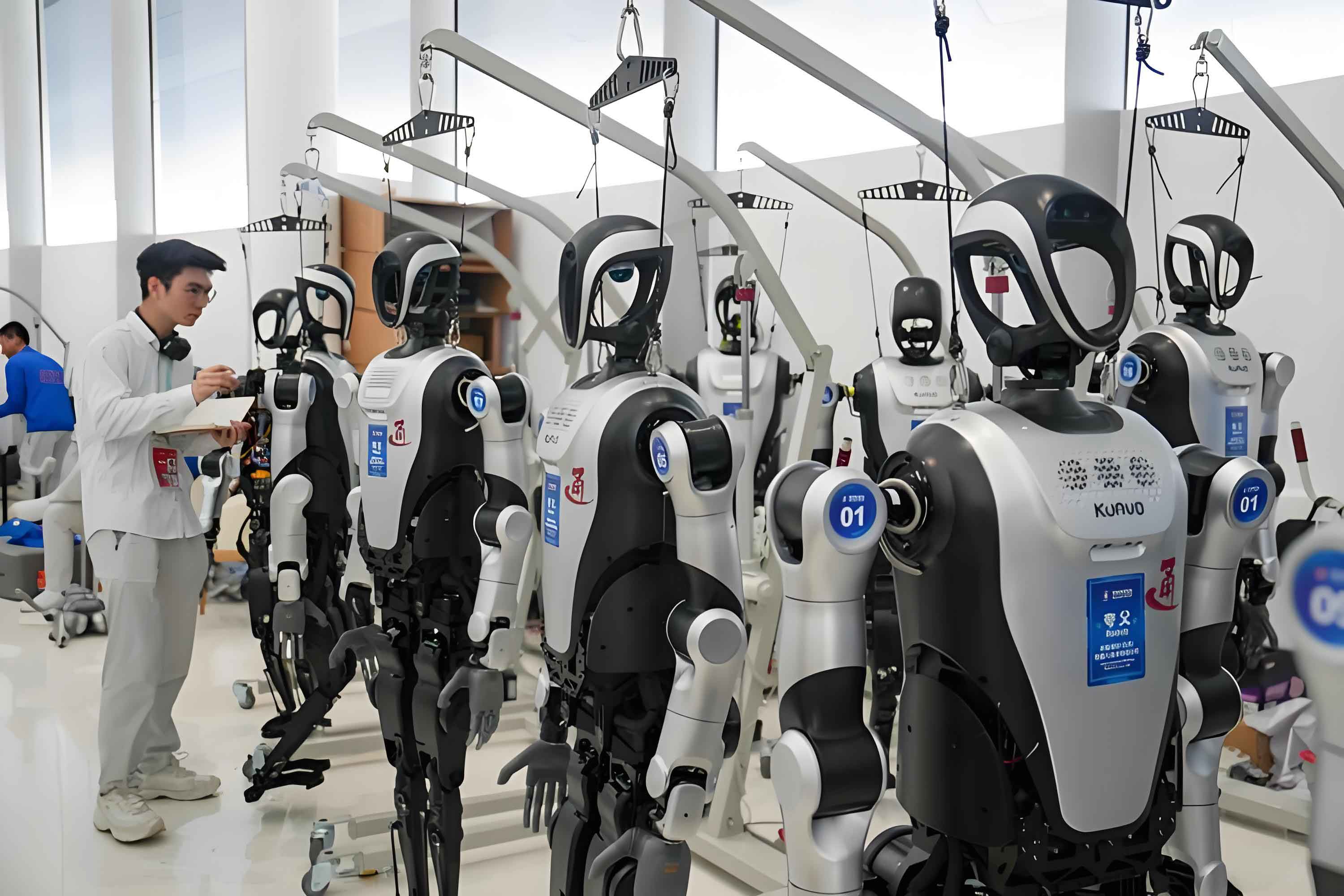
The rationale for employing a humanoid robot in ASD intervention is rooted in the cognitive and sensory processing profiles of many autistic children. Human social cues are complex, fast-paced, and often overwhelming. In contrast, a humanoid robot can present simplified, exaggerated, and highly consistent social stimuli. Its movements, sounds, and visual feedback (like colored LED lights) are more predictable and easier to decode than the nuanced expressions of a human therapist. This predictability aligns with a potential preference for systematic, rule-based interaction, thereby reducing anxiety and increasing the child’s willingness to engage. The humanoid robot acts not as a replacement for human interaction, but as a “social bridge” or catalyst, designed to build foundational skills that can later be generalized to human-human interactions.
The core hypothesis of the discussed study was that a protocol-driven humanoid robot intervention, modeled on the established principles of social engagement, would yield measurable improvements in the social-communicative skills of preschool-aged children with ASD. The intervention logic followed a progressive sequence: Attract Attention → Establish Communication → Promote Communication → Introduce a Peer → Fade Prompts. This logic was translated into programmable tasks for the humanoid robot, ensuring a standardized delivery of the intervention stimulus.
Methodological Expansion: Participants, Design, and Tools
A sample of 24 male children aged 4-6 years, diagnosed with ASD per DSM-5 criteria, participated in the randomized controlled trial. All participants had a Childhood Autism Rating Scale (CARS) score >36, indicating moderate to severe symptoms. They were randomly allocated to one of two groups:
• Experimental Group (N=12): Received the humanoid robot-assisted intervention. The platform used was a programmable humanoid robot capable of movement, speech, sound, and light feedback. The intervention was administered via a structured software program executed by the robot.
• Control Group (N=12): Received conventional DIR/Floortime therapy administered by a trained human therapist, following the standard developmental sequence of building intimacy, two-way communication, and shared problem-solving.
The study employed a repeated-measures design. Assessments were conducted at four time points: Baseline (T0), 1 month (T1), 3 months (T2), and 6 months (T3) post-intervention initiation.
Assessment Metrics and Statistical Models
Primary Outcome – Symptom Severity: The CARS was used at T0 and T3. A 2×2 mixed-design ANOVA was applied to analyze the effects. The model can be conceptualized as follows, where $Y_{ij}$ is the CARS score for participant $i$ in group $j$:
$$Y_{ij} = \mu + G_j + T_k + (G \times T)_{jk} + \epsilon_{ij}$$
Here, $\mu$ is the grand mean, $G_j$ is the fixed effect of Group (Robot vs. Floortime), $T_k$ is the fixed effect of Time (Pre vs. Post), $(G \times T)_{jk}$ is the interaction effect, and $\epsilon_{ij}$ is the random error.
Secondary Outcome – Social-Communication Skills: The Autism Social and Communication Behavior Scale was used at all four time points (T0, T1, T2, T3). This scale evaluates three key domains with specific subskills:
• Interpersonal Relationship: Joint Attention, Intent to Contact Others, Imitation, Turn-taking, Emotional Expression/Understanding.
• Communication: Response to Others, Initiation of Communication, Basic Conversational Skills.
• Play: Spontaneous Play Patterns, Interactive Ability in Play.
A 2×4 mixed-design ANOVA was used for each subskill and the total score. The time factor here has four levels. Post-hoc independent samples t-tests were conducted at each time point to identify specific between-group differences. The t-statistic is calculated as:
$$t = \frac{\bar{X}_1 – \bar{X}_2}{s_p \sqrt{\frac{1}{n_1} + \frac{1}{n_2}}}$$
where $\bar{X}_1$ and $\bar{X}_2$ are the group means, $n_1$ and $n_2$ are the group sizes, and $s_p$ is the pooled standard deviation.
Empirical Results and Data Synthesis
The analysis revealed distinct patterns of improvement attributable to the different intervention modalities.
Symptom Severity (CARS) Results
Both groups showed a significant reduction in CARS scores after the 6-month intervention, indicating an overall alleviation of autistic symptoms. However, there was no significant difference in the degree of improvement between the group that worked with the humanoid robot and the group that received traditional therapy. This suggests that both approaches are broadly effective in reducing global symptom severity over a medium-term period.
| Group | Baseline CARS Score (M ± SD) | 6-Month CARS Score (M ± SD) | Time Main Effect (F, p) | Group Main Effect (F, p) | Interaction Effect (F, p) |
|---|---|---|---|---|---|
| Humanoid Robot | 40.33 ± 2.77 | 38.50 ± 3.34 | F=48.11, p<0.001 | F=0.03, p=0.86 | F=0.20, p=0.87 |
| Floortime Control | 40.58 ± 3.08 | 38.66 ± 2.74 |
Social-Communication Skills: Differential Gains
The more nuanced analysis of social-communication subskills revealed a compelling divergence in outcomes. The humanoid robot group demonstrated statistically superior progress in specific foundational areas, particularly in the early phase of intervention. The following table summarizes the key ANOVA results and the direction of significant group effects.
| Skill Domain & Subskill | Significant Time Main Effect | Significant Group Main Effect | Significant Interaction Effect | Group with Superior Performance | Notable Temporal Pattern |
|---|---|---|---|---|---|
| Total Score | Yes (p<0.001) | No | Yes (p<0.001) | Robot at T1 (p<0.01) | Robot advantage most pronounced at 1 month. |
| Joint Attention | Yes (p<0.001) | Yes (p<0.001) | Yes (p<0.001) | Humanoid Robot | Robot consistently higher. |
| Intent to Contact Others | Yes (p<0.001) | Yes (p<0.001) | Yes (p<0.001) | Humanoid Robot | Robot consistently higher. |
| Imitation | Yes (p<0.001) | No | Yes (p<0.001) | Humanoid Robot at T1 | Significant early advantage for robot. |
| Turn-taking | Yes (p<0.001) | No | Yes (p<0.001) | Humanoid Robot at T1 | Significant early advantage for robot. |
| Response to Others | Yes (p<0.001) | Yes (p<0.001) | Yes (p<0.001) | Humanoid Robot | Robot consistently higher. |
| Spontaneous Play Patterns | Yes (p<0.001) | Yes (p<0.001) | Yes (p<0.001) | Humanoid Robot | Robot consistently higher. |
| Interactive Ability in Play | Yes (p<0.001) | Yes (p<0.001) | Yes (p<0.001) | Floortime Control | Control group consistently higher. |
The effect size for these differences can be estimated using Cohen’s $d$, a standardized measure of the difference between two means:
$$d = \frac{\bar{X}_1 – \bar{X}_2}{s}$$
where $s$ is the standard deviation pooled across groups. For the skills where the humanoid robot showed a clear main effect (e.g., Joint Attention, Intent to Contact), the calculated $d$ values typically fell into the medium to large range ($d > 0.5$), indicating a clinically meaningful difference.
Theoretical Interpretation and Discussion
The results delineate a clear and theoretically coherent role for the humanoid robot in ASD rehabilitation. The superior gains in Joint Attention, Intent to Contact Others, Response to Others, and Spontaneous Play Patterns among the humanoid robot group can be attributed to the robot’s intrinsic properties. Its ability to provide simplified, repetitive, and highly salient social cues (via movement, light, and sound) likely lowers the perceptual and cognitive threshold for engagement. For a child with ASD, responding to a humanoid robot may feel less demanding and more rewarding than navigating the unpredictable flow of human interaction, thereby increasing the frequency of practice for these core skills.
The striking early advantage in Imitation and Turn-taking at the one-month mark (T1) is particularly significant. These skills are fundamental building blocks for social learning. The humanoid robot serves as an ideal model for imitation—its movements are precise, decomposable, and easily observable. Similarly, the structured programming of the humanoid robot creates a perfectly predictable turn-taking routine, reinforcing the contingency between the child’s action and the robot’s response. This early “boost” suggests that the humanoid robot is an exceptionally efficient tool for establishing basic social reciprocity, potentially accelerating the initial phase of therapy.
Conversely, the finding that the Floortime control group excelled in Interactive Ability in Play is equally instructive. This complex skill requires dynamic, flexible, and contingent responsiveness—qualities that a human therapist naturally possesses but are extremely challenging to program into a humanoid robot with current technology. A human can instantly adapt their play strategy, language, and emotional tone based on the child’s minute-to-minute cues, co-creating a genuinely interactive experience. This underscores a critical limitation of current humanoid robot systems: while excellent for teaching rule-based social fundamentals, they cannot yet replicate the fluid, adaptive nature of authentic human social play.
Therefore, the optimal intervention model appears to be a hybrid or sequential one. The humanoid robot acts as a powerful assistive tool, particularly in the early stages of intervention, to efficiently build motivation and foundational competencies like joint attention, imitation, and turn-taking. Once these foundations are established, the skills can then be generalized and elaborated upon through more nuanced, human-led therapies like Floortime, which are better suited for developing advanced, flexible interaction abilities. This paradigm positions the humanoid robot not as a competitor to traditional therapy, but as a complementary technological asset that can enhance the overall efficiency and effectiveness of the therapeutic process.
Conclusion and Future Directions
This comparative analysis substantiates the value of the humanoid robot as a viable and effective assistive tool in the social rehabilitation of children with Autism Spectrum Disorder. The data demonstrate that a protocol-driven humanoid robot intervention can produce significant, and in some areas superior, gains in specific social-communicative skills compared to a established human-delivered therapy, especially during the critical early phases of engagement. The humanoid robot‘s strengths lie in its capacity to deliver consistent, engaging, and simplified social stimuli, making it an ideal platform for teaching foundational social mechanics.
Future research should focus on several key areas: developing more adaptive AI algorithms to allow the humanoid robot to respond more flexibly to a child’s behavior, moving beyond pre-programmed scripts; designing and testing explicit hybrid models that seamlessly integrate humanoid robot sessions with human therapist sessions; and conducting longitudinal studies to track the long-term maintenance and generalization of robot-acquired skills into diverse real-world social contexts. As technology advances, the role of the humanoid robot is poised to evolve from a novel tool into a fundamental component of a comprehensive, personalized, and data-driven approach to autism intervention.