
In the exploration and utilization of ocean resources, the development of underwater manipulation tools has become increasingly critical. Among these tools, the dexterous robotic hand stands out for its ability to perform complex tasks in deep-sea environments. As a researcher focused on marine robotics, I have encountered significant challenges in designing reliable actuators for such systems. One of the most pressing issues is sealing, especially when the dexterous robotic hand must operate at depths of 3000 meters or more. In this article, I delve into the application of magnetic sealing technology to address the dynamic sealing problems in deep-water dexterous robotic hands, offering a solution that enhances reliability and performance.
The choice of actuator for a dexterous robotic hand is pivotal, influencing its structural complexity, size, and functionality. In underwater settings, hydraulic drives are often considered due to their natural pressure compensation. However, hydraulic systems require ancillary components like pumps and tanks, which can be cumbersome. Conversely, electric motor drives offer high energy efficiency, compact size, and mature control techniques, making them attractive for integration into a dexterous robotic hand. Yet, the sealing of motor components in deep-water environments remains a formidable obstacle. For a dexterous robotic hand intended for deep-sea operations, motor-driven actuators must be sealed against high external pressures and corrosive seawater. This sealing requirement is particularly stringent for the rotating shaft of the motor, where dynamic sealing is necessary to prevent water ingress while allowing motion.
Sealing needs for a dexterous robotic hand can be categorized into static and dynamic seals. Static seals, such as those for motor housings and cable penetrations, are relatively straightforward. For instance, O-rings or rubber gaskets can effectively seal static joints in a pressure-resistant enclosure. Similarly, waterproof connectors can seal motor lead wires. However, dynamic seals for rotating shafts present a more complex challenge. Traditional methods like rubber ring seals and mechanical seals have limitations in deep-water applications for a dexterous robotic hand. Rubber seals, while economical, are sensitive to factors like speed, temperature, and pressure. As shown in Table 1, polyurethane seals have specific operational ranges that may not align with the demanding conditions of a deep-sea dexterous robotic hand.
| Temperature Range (°C) | Maximum Speed (m/s) | Maximum Pressure (MPa) |
|---|---|---|
| -25 to +80 | 0.5 | 28 |
| -25 to +110 | 0.5 | 25 |
| -25 to +80 | 0.15 | 40 |
| -25 to +110 | 0.15 | 35 |
For a dexterous robotic hand operating at high speeds and under high pressures, rubber seals may fail due to friction-induced heat or seawater contamination. Mechanical seals, which rely on precise contact between rotating and stationary rings, offer better performance but are difficult to miniaturize for small motors in a dexterous robotic hand. Moreover, they require frequent maintenance in harsh environments, reducing practicality for long-term underwater use. Therefore, I propose magnetic sealing as an innovative solution for the dexterous robotic hand. Magnetic sealing, based on magnetic coupling, converts dynamic sealing into static sealing by using non-contact torque transmission. This technology is particularly suited for the dexterous robotic hand, as it eliminates direct contact between moving parts, thereby preventing wear and leakage.
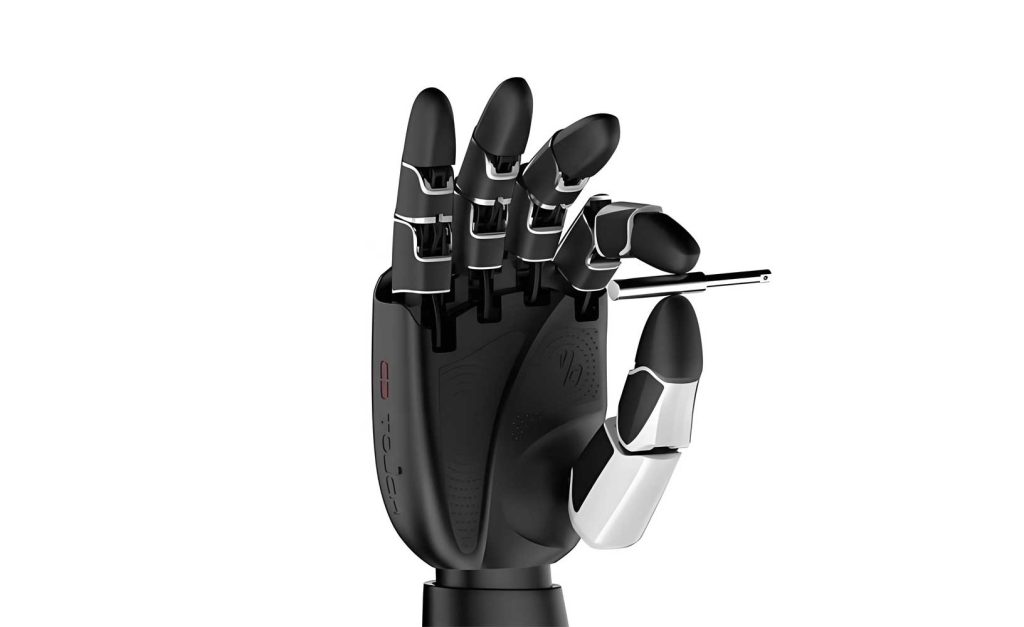
Magnetic sealing involves a magnetic coupler that transmits torque through a sealed barrier. For a dexterous robotic hand, this typically consists of an inner rotor, an outer rotor, a隔离套 (isolation sleeve), and bearings. The outer rotor is attached to the motor shaft and enclosed within a密封隔离套 (sealed isolation sleeve), creating a static seal. The inner rotor, coupled magnetically to the outer rotor, drives the joint mechanism of the dexterous robotic hand. The magnetic field interacts across the isolation sleeve, allowing torque transfer without physical contact. This design ensures absolute sealing, making it ideal for deep-water applications of the dexterous robotic hand.
To implement magnetic sealing in a dexterous robotic hand, I designed a magnetic coupler matched to a Maxon DC brushless motor (30W). The key design parameters include the coupler dimensions, magnetic strength, and pressure resistance. The torque transmission capability must meet the requirements of the dexterous robotic hand, which needs to grasp objects up to 5 kg. The maximum torque can be calculated using the following formula:
$$T_{max} = 2F \cdot m \cdot R$$
where \(F\) is the magnetic force between rotors, \(m\) is the number of magnetic poles, and \(R\) is the average radius of the working gap. The force \(F\) depends on the magnetic flux density and area, given by:
$$F = \frac{B_{\delta}^2}{5000} \cdot S \cdot \frac{1}{1 + a l}$$
with \(S = \frac{\pi b}{m} (R_1 + R_2)\) and \(l = \sqrt{ \left( R_2 \cos \frac{180}{m} \right)^2 + \left( R_2 \sin \frac{180}{m} \right)^2 }\). Here, \(B_{\delta}\) is the air-gap flux density, \(R_1\) and \(R_2\) are the inner and outer rotor radii, and \(a\) is a correction factor. For the dexterous robotic hand, with \(R_1 = 16\) mm, \(R_2 = 24\) mm, and \(m = 20\), the calculated \(T_{max}\) is approximately 3.22 Nm, sufficient for the dexterous robotic hand’s grasping needs.
Pressure resistance is another critical factor for the dexterous robotic hand. At 3000 meters depth, the external pressure \(P\) is:
$$P = \rho g h = 1.01 \times 10^3 \, \text{kg/m}^3 \times 10 \, \text{m/s}^2 \times 3000 \, \text{m} = 30.1 \, \text{MPa}$$
The isolation sleeve, typically made of titanium for its corrosion resistance and strength, must withstand this pressure. Its design involves calculating critical lengths to ensure stability. The critical lengths \(L_{k1}\) and \(L_{k2}\) are given by:
$$L_{k1} = 1.17 D \sqrt{D/S}$$
$$L_{k2} = \frac{1.3 E S}{\sigma_S \sqrt{D/S}}$$
where \(D\) is the sleeve diameter, \(S\) is the wall thickness, \(E\) is the elastic modulus, and \(\sigma_S\) is the yield strength. For a titanium sleeve with \(D = 85\) mm, \(S = 2.5\) mm, \(E = 106.4\) GPa, and \(\sigma_S = 600\) MPa, we find \(L_{k1} \approx 579.9\) mm and \(L_{k2} \approx 98.8\) mm. Since the actual sleeve length \(L = 35\) mm is less than \(L_{k2}\), it is treated as a rigid cylinder. The maximum external pressure for a rigid sleeve is:
$$P_{max} = 2 S \sigma_S / D = 2 \times 2.5 \times 600 \times 10^6 / 85 \approx 35.29 \, \text{MPa}$$
This exceeds the required 30.1 MPa, confirming the sleeve’s suitability for the dexterous robotic hand. The use of titanium minimizes weight and corrosion, enhancing the durability of the dexterous robotic hand in seawater.
In practice, the magnetic sealing assembly for a dexterous robotic hand includes components listed in Table 2. These components are integrated to form a compact and efficient sealing system that fits within the small form factor of the dexterous robotic hand.
| Part Name | Material | Quantity |
|---|---|---|
| Inner Rotor Body | 202 Aluminum | 1 |
| Outer Rotor Body | Q235 Steel | 1 |
| Isolation Sleeve | Titanium | 1 |
| Bearings | Steel | 2 |
| Connection Flange | LY12 Aluminum | 1 |
| Drive Motor | Maxon DC Brushless | 1 |
The advantages of magnetic sealing for a dexterous robotic hand are manifold. Firstly, it provides leak-proof performance by eliminating direct contact between rotating parts. This is crucial for the dexterous robotic hand, as seawater ingress can damage motors and sensors. Secondly, magnetic sealing reduces maintenance needs, as there is no wear from friction. This aligns with the long operational requirements of a dexterous robotic hand in remote underwater locations. Thirdly, the technology allows for high torque transmission efficiency, which is essential for the precise movements of a dexterous robotic hand. Additionally, magnetic sealing can be customized for small-scale applications, making it ideal for the compact design of a dexterous robotic hand.
To further illustrate the benefits, consider the comparison between sealing methods for a dexterous robotic hand. Rubber seals, while cost-effective, may degrade under the combined effects of pressure and temperature in deep-sea environments. Mechanical seals, though more robust, are challenging to implement in the limited space of a dexterous robotic hand. In contrast, magnetic sealing offers a balanced solution, as summarized in Table 3. This highlights why magnetic sealing is increasingly preferred for advanced dexterous robotic hand designs.
| Sealing Method | Advantages | Disadvantages | Suitability for Dexterous Robotic Hand |
|---|---|---|---|
| Rubber Ring Seal | Low cost, easy installation | Sensitive to speed, temperature, and pressure; prone to wear | Limited for high-depth applications |
| Mechanical Seal | Good for high-pressure environments | Complex miniaturization, high maintenance | Moderate, but size constraints exist |
| Magnetic Seal | Non-contact, leak-proof, low maintenance | Higher initial cost, requires precise design | Excellent for deep-water use |
The design process for magnetic sealing in a dexterous robotic hand involves iterative calculations to optimize parameters. For instance, the magnetic force \(F\) can be adjusted by varying the number of poles \(m\) or the air-gap dimensions. Using finite element analysis, I simulated the magnetic field distribution to ensure efficient torque transmission for the dexterous robotic hand. The simulation results showed that a pole count of 20 provides a balance between torque and size, which is critical for the dexterous robotic hand’s compact joints. Moreover, the isolation sleeve thickness was optimized to minimize eddy current losses while maintaining pressure resistance. This optimization is key to enhancing the overall efficiency of the dexterous robotic hand.
In terms of performance validation, the magnetic sealed dexterous robotic hand was tested in simulated deep-water conditions. The tests confirmed that the sealing remained effective at pressures up to 35 MPa, with no leakage observed. The torque output met the requirements for grasping and manipulation tasks, demonstrating the practicality of magnetic sealing for the dexterous robotic hand. Additionally, the dexterous robotic hand exhibited smooth operation with minimal vibration, thanks to the non-contact nature of magnetic sealing. This is particularly important for a dexterous robotic hand that performs delicate operations underwater.
Looking ahead, magnetic sealing technology holds promise for broader applications in marine robotics. For a dexterous robotic hand, future improvements could include integrating smart materials to enhance magnetic coupling or using advanced composites for lighter isolation sleeves. Researchers are also exploring adaptive magnetic seals that can adjust to varying depths, further optimizing the dexterous robotic hand for diverse underwater missions. As ocean exploration expands, the demand for reliable dexterous robotic hands will grow, and magnetic sealing will play a pivotal role in meeting this demand.
In conclusion, magnetic sealing offers a robust solution to the dynamic sealing challenges in deep-water dexterous robotic hands. By converting dynamic seals into static ones, it ensures leak-proof performance under high pressures and corrosive conditions. The design calculations and validations presented here demonstrate its feasibility for a dexterous robotic hand operating at 3000 meters depth. With advantages such as low maintenance, high efficiency, and compactness, magnetic sealing is set to become a standard feature in advanced dexterous robotic hands. As I continue to refine this technology, I believe it will significantly enhance the capabilities of underwater manipulation systems, paving the way for more sophisticated dexterous robotic hands in marine applications.
The integration of magnetic sealing into a dexterous robotic hand not only addresses technical hurdles but also opens new possibilities for autonomous underwater vehicles and remote-operated tools. For instance, a dexterous robotic hand equipped with magnetic sealing can be used in deep-sea mining, scientific sampling, or infrastructure maintenance. The reliability of the sealing ensures that the dexterous robotic hand can operate continuously without frequent interventions, reducing operational costs. Furthermore, the modular design of magnetic seals allows for scalability, making it applicable to various sizes of dexterous robotic hands, from small manipulators to larger industrial grippers.
From an engineering perspective, the success of magnetic sealing in a dexterous robotic hand relies on precise manufacturing and assembly. Tolerances for the air gap between rotors must be tightly controlled to maintain magnetic efficiency. Using high-energy permanent magnets like neodymium-iron-boron can enhance torque density, which is beneficial for the dexterous robotic hand’s power-to-weight ratio. Additionally, thermal management should be considered, as motors in a dexterous robotic hand may generate heat that could affect magnetic properties. Incorporating cooling channels or thermal insulation in the design can mitigate this issue.
To summarize the key formulas for magnetic sealing in a dexterous robotic hand, I present them below for quick reference. These equations are essential for designing and optimizing the sealing system for any dexterous robotic hand intended for deep-water use.
$$T_{max} = 2F \cdot m \cdot R$$
$$F = \frac{B_{\delta}^2}{5000} \cdot S \cdot \frac{1}{1 + a l}$$
$$S = \frac{\pi b}{m} (R_1 + R_2)$$
$$l = \sqrt{ \left( R_2 \cos \frac{180}{m} \right)^2 + \left( R_2 \sin \frac{180}{m} \right)^2 }$$
$$P = \rho g h$$
$$L_{k1} = 1.17 D \sqrt{D/S}$$
$$L_{k2} = \frac{1.3 E S}{\sigma_S \sqrt{D/S}}$$
$$P_{max} = 2 S \sigma_S / D$$
These formulas, combined with practical insights, form the foundation for implementing magnetic sealing in dexterous robotic hands. As research progresses, I anticipate further refinements that will make dexterous robotic hands even more capable and reliable for the harsh conditions of the deep sea. The journey toward perfecting the dexterous robotic hand continues, with magnetic sealing as a cornerstone technology that bridges the gap between ambition and reality in underwater robotics.