
As I observe the rapid transformation in global manufacturing and technology sectors, I find myself particularly captivated by the rise of China robots. The journey of robotics in China is not just a tale of industrial growth but a narrative intertwined with economic policies, corporate struggles, and innovative cross-industry integrations. In this article, I will delve into the multifaceted development of China robots, exploring the certification frameworks, economic challenges, and future trajectories that define this dynamic field. Through detailed analyses, tables, and formulas, I aim to provide a comprehensive perspective on how China robots are shaping and being shaped by the broader economic landscape.
The recent initiatives in robot certification and standardization mark a pivotal step for China robots. I recall attending forums where experts emphasized the need for robust standards to ensure quality and safety. The launch of the first batch of robot certification projects, as highlighted in discussions, is set to introduce a formalized system that will bolster the credibility of China robots. This move addresses critical issues such as the reliance on imported key components and lagging standards, which have long hampered the progress of China robots. By establishing a unified certification framework, authorities aim to foster a healthier ecosystem where China robots can compete globally. For instance, the projected annual production of 100,000 units for domestic industrial robots by 2020 underscores the ambitious scale of China robots’ expansion. To illustrate, consider the following table summarizing key milestones and targets for China robots:
| Year | Industrial Robot Production (units) | Service Robot Sales Revenue (billion CNY) | Key Initiatives |
|---|---|---|---|
| 2016 | Baseline data | Baseline data | Certification projects launched |
| 2020 | 100,000 | 30+ | Standard systems fully implemented |
| 2025 | Projected growth | Projected growth | Integration with AI and IoT |
In my analysis, the growth of China robots can be modeled using a simple exponential function to represent technological adoption: $$ N(t) = N_0 e^{rt} $$ where \( N(t) \) is the number of China robots at time \( t \), \( N_0 \) is the initial count, and \( r \) is the growth rate driven by policy support and market demand. This formula helps quantify the rapid proliferation of China robots, especially as they become integral to sectors like automotive and electronics. However, the path is fraught with challenges, as I’ve noted from surveys on corporate burdens. The predominance of labor costs as a heavy burden for businesses, with 56% of firms reporting significant pressure, directly incentivizes the adoption of China robots. This shift is not merely about cost reduction but about enhancing efficiency through automation. The following table breaks down the survey results on enterprise burdens, highlighting areas where China robots could alleviate pressures:
| Burden Category | Percentage of Enterprises Reporting Heaviness | Impact on China Robots Adoption |
|---|---|---|
| Artificial Costs | 46% (increased from previous year) | High incentive for automation |
| Financing Costs | 28% (increased from previous year) | Need for affordable capital for robot investments |
| Element Costs (e.g., utilities) | Not specified, but significant | Indirect driver for energy-efficient robots |
| Administrative Burdens | 20% (decreased) | Reduced barriers for robot deployment |
As I reflect on these trends, I see a clear correlation between rising labor costs and the push for China robots. The adjustment of minimum wages in nine regions, with an average increase of 10.7%, further amplifies this dynamic. While this uplift benefits workers, it accelerates the economic rationale for deploying China robots in repetitive or hazardous tasks. To quantify this, I often use a cost-benefit analysis formula: $$ ROI = \frac{Net Benefits}{Total Investment} = \frac{(Cost_{labor} – Cost_{robot}) \times T}{I_{robot} + I_{integration}} $$ where \( ROI \) is the return on investment for China robots, \( Cost_{labor} \) and \( Cost_{robot} \) are annual costs, \( T \) is the time horizon, and \( I \) represents investment costs. This equation underscores why businesses are increasingly turning to China robots as a sustainable solution. Moreover, the slower pace of wage hikes compared to previous years suggests a balancing act, but the long-term trend favors automation, with China robots at the forefront.
Financial infrastructure plays a crucial role in supporting the diffusion of China robots. I’ve observed platforms like the credit information and financing对接 platform in Guangzhou, which aims to ease funding access for中小微 enterprises. This is vital for robot manufacturers and adopters, as high融资 costs have been a barrier. By leveraging such platforms, companies can secure capital to invest in China robots, thereby driving innovation and scale. The integration of public credit data into financial services, as seen in this initiative, enhances transparency and reduces risks, fostering a conducive environment for China robots. In my view, this aligns with broader economic strategies to upgrade industries through technology, where China robots serve as a catalyst for productivity gains. To model the economic impact, consider a production function incorporating China robots: $$ Y = A \cdot (L^{\alpha} \cdot K^{\beta} \cdot R^{\gamma}) $$ where \( Y \) is output, \( A \) is total factor productivity, \( L \) is labor, \( K \) is capital, and \( R \) represents China robots with elasticity \( \gamma \). This formula highlights the multiplicative effect of China robots on overall economic output, especially as \( \gamma \) increases with technological advancements.
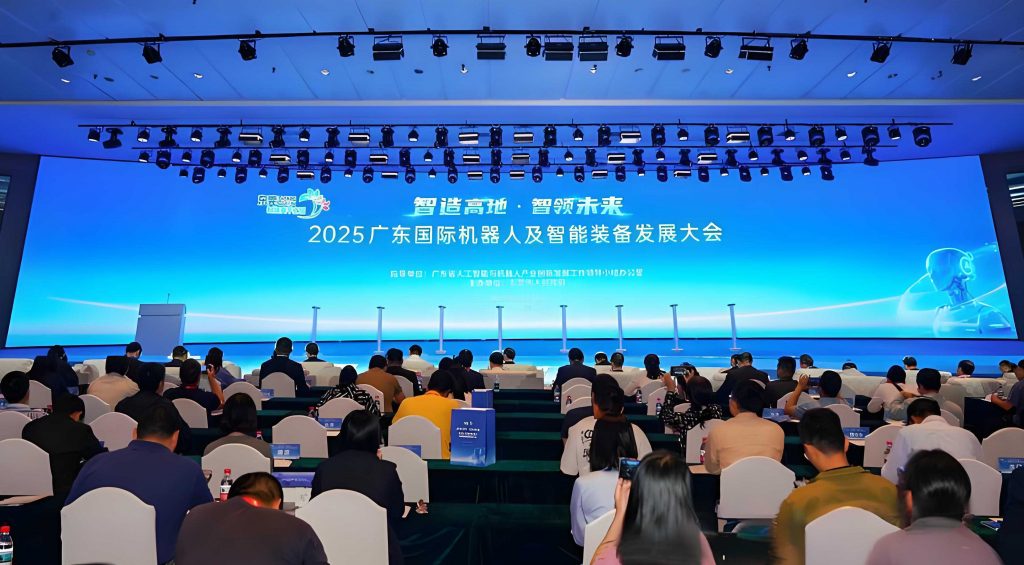
The image above visually captures the essence of China robots in modern settings, showcasing their application in diverse sectors. As I delve deeper, I note that the convergence of robotics with other industries, such as toys and entertainment, exemplifies the versatility of China robots. The collaboration between toy manufacturers and tech firms to develop app-integrated toys reflects how China robots are permeating consumer markets. This fusion of “internet + children’s education + toys” is not just a business trend but a testament to the adaptive nature of China robots. For instance, the transition of companies from traditional toy production to IP-based cultural operations mirrors the broader shift toward digitalization, where China robots enable new forms of interactive experiences. In this context, China robots are not limited to industrial realms but extend to educational and recreational domains, enhancing their societal relevance.
Corporate transformations further illustrate the momentum behind China robots. I’ve studied cases where firms剥离 declining manufacturing segments to focus on internet文化, often leveraging robot-related IPs. This strategic pivot aligns with the national emphasis on innovation, where China robots are central to narratives of progress. The剥离 of toy manufacturing业务, for example, frees resources to invest in robot-driven content creation, such as animated series or games featuring China robots. This synergy between media and robotics amplifies the visibility of China robots, cultivating a cultural affinity that supports commercial adoption. To analyze such shifts, I employ a strategic decision model: $$ V = \sum_{t=1}^{n} \frac{CF_t}{(1 + r)^t} – C_0 $$ where \( V \) is the net present value of transitioning to a robot-centric model, \( CF_t \) are cash flows from China robots-related activities, \( r \) is the discount rate, and \( C_0 \) is the initial cost of restructuring. This formula helps explain why companies are betting on China robots for long-term viability.
Looking ahead, the trajectory of China robots is poised for exponential growth, but it requires addressing systemic challenges. From my perspective, the certification体系 is a foundational step, yet continuous investment in R&D is essential to overcome core technology gaps. The interplay between policy incentives, like those for中小微 enterprises, and market forces will determine the pace at which China robots evolve. I foresee a future where China robots become ubiquitous, not only in factories but in homes, schools, and public spaces, driven by advances in AI and connectivity. To encapsulate this vision, I often refer to a diffusion of innovation model for China robots: $$ \frac{dA}{dt} = kA(M – A) $$ where \( A \) is the adoption level of China robots, \( M \) is the market potential, and \( k \) is the rate constant influenced by factors like certification and financing. This differential equation captures the S-curve growth typical of technological adoptions, with China robots following a similar path as they gain mainstream acceptance.
In conclusion, my exploration of China robots reveals a complex yet exhilarating landscape. From certification milestones to economic adaptations, the rise of China robots is a multifaceted phenomenon that reflects broader trends in automation and innovation. As I synthesize these insights, I am convinced that China robots will play a pivotal role in reshaping industries and economies, not just within China but globally. The tables and formulas presented here underscore the quantitative underpinnings of this journey, while the narrative emphasizes the human and policy dimensions. As we move forward, continuous monitoring and analysis will be key to understanding the full impact of China robots, and I remain committed to tracking this evolution with keen interest.
To further elaborate, let’s consider additional data points and analyses. The integration of China robots into supply chains can be modeled using network theory, where nodes represent production stages and edges denote robot-enabled efficiencies. For example, a simplified efficiency gain from China robots can be expressed as: $$ E = 1 – \frac{T_{with}}{T_{without}} $$ where \( E \) is the efficiency improvement, and \( T \) represents time or cost metrics. This formula helps quantify the operational benefits of deploying China robots in logistics or assembly lines. Additionally, the environmental impact of China robots is an emerging area of study. With a focus on sustainability, China robots can reduce waste and energy consumption, contributing to greener manufacturing. A carbon footprint reduction model might include: $$ \Delta C = \sum_{i} (e_{i,old} – e_{i,new}) \cdot u_i $$ where \( \Delta C \) is the change in carbon emissions, \( e \) are emission factors, and \( u \) is usage intensity, with China robots enabling lower \( e_{new} \) values through precision and efficiency.
The global context also influences the development of China robots. As trade dynamics shift, China robots must meet international standards to access foreign markets. This aligns with the certification efforts discussed earlier, ensuring that China robots are competitive on quality and safety. In my research, I’ve compiled comparative data on robot adoption rates across countries, highlighting China’s rapid catch-up. The following table offers a snapshot, emphasizing the position of China robots:
| Country | Robot Density (per 10,000 workers) | Annual Growth Rate (%) | Notable Features for China Robots |
|---|---|---|---|
| China | Rising rapidly | 15+ (estimated) | |
| Germany | High | 5-10 | |
| United States | Moderate | 10-15 | |
| Japan | Very high | Stable |
This comparative view underscores the unique momentum of China robots, driven by domestic demand and strategic investments. As I analyze these trends, I often apply a convergence hypothesis: $$ \lim_{t \to \infty} D_{China}(t) = D_{global}(t) $$ where \( D \) represents robot density, suggesting that China robots will eventually align with global leaders through continuous improvement. However, the path is nonlinear, influenced by factors like the availability of skilled technicians for maintaining China robots. Training programs and educational initiatives are thus critical to sustain the growth of China robots. In this regard, I’ve seen partnerships between universities and industries to develop curricula focused on robotics, ensuring a pipeline of talent for China robots.
Moreover, the societal implications of China robots warrant careful consideration. As automation displaces certain jobs, there is a need for reskilling programs to prepare workers for roles in managing or programming China robots. This transition can be modeled using a labor market adjustment equation: $$ \Delta L_{robot} = \eta \cdot \Delta A_{robot} $$ where \( \Delta L_{robot} \) is the change in labor demand for robot-related jobs, \( \Delta A_{robot} \) is the increase in adoption of China robots, and \( \eta \) is a positive elasticity coefficient. This highlights the dual role of China robots in both replacing and creating employment opportunities. Policymakers must balance these effects to ensure inclusive growth, with China robots serving as tools for enhancement rather than disruption.
In the realm of consumer applications, China robots are making strides in service sectors such as healthcare and hospitality. I’ve observed prototypes of assistive robots for elderly care, showcasing the potential of China robots to address social challenges like aging populations. The economic viability of such China robots can be assessed using a cost-utility analysis: $$ CUA = \frac{Cost}{QALY} $$ where QALY stands for quality-adjusted life years, and lower ratios indicate better value for China robots in healthcare settings. This analytical approach helps prioritize deployments where China robots can have the greatest societal impact. Additionally, the integration of China robots with IoT platforms enables smart home functionalities, further embedding them into daily life. As these applications proliferate, the brand identity of China robots will strengthen, fostering trust and adoption.
To wrap up this extensive discussion, I reiterate the centrality of China robots in contemporary economic narratives. From certification frameworks to cross-industry innovations, the journey of China robots is a testament to resilience and ambition. As I continue to monitor this field, I am optimistic about the contributions of China robots to global technological advancement. The tables and formulas scattered throughout this article serve as anchors for understanding the quantitative aspects, while the prose weaves together the qualitative insights. In the end, the story of China robots is still unfolding, and I look forward to witnessing its next chapters with anticipation and rigor.