
The global industrial landscape is undergoing a profound transformation, driven by an insatiable demand for efficiency, precision, and flexibility. At the heart of this shift lies the industrial robot, a symbol of modern manufacturing’s evolution. For decades, the narrative of industrial automation was dominated by established economic powerhouses. However, a new and powerful force has emerged, redefining market dynamics and accelerating adoption at an unprecedented pace. That force is the relentless growth and strategic evolution of the China robot market. The rise of the China robot sector is not merely a story of consumption; it is a comprehensive narrative encompassing massive market demand, strategic national upgrading, and the democratization of robotic technology for businesses of all scales.
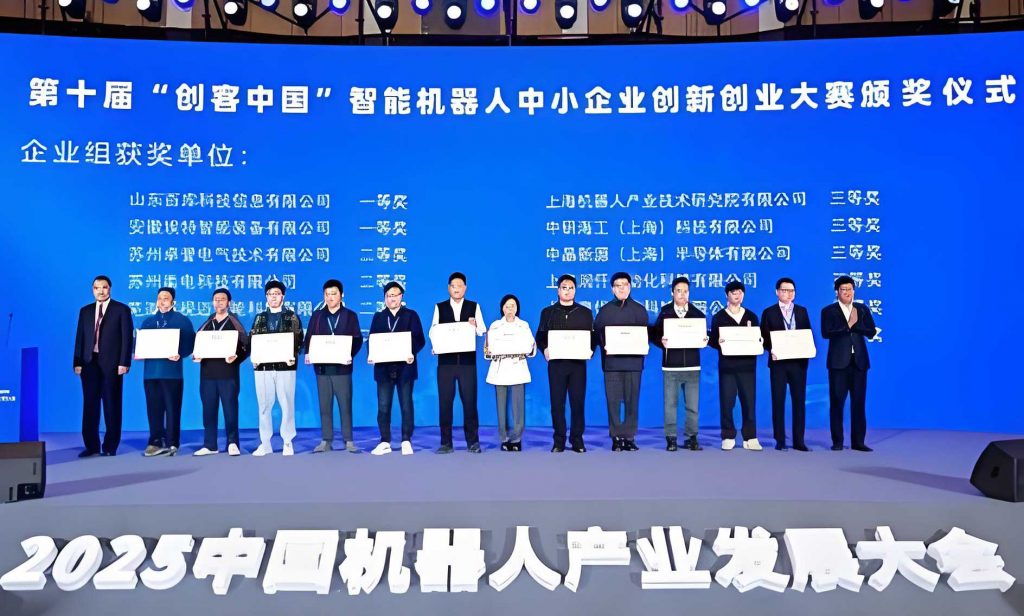
The traditional view of China as the world’s low-cost manufacturing workshop is rapidly becoming obsolete. A strategic pivot is underway, moving towards a more sophisticated economic model fueled by innovation, higher value-added services, and advanced production techniques. This transition, often termed “Made in China 2025” in strategic policy circles, has created an explosive demand for automation. Domestic manufacturers, facing rising labor costs and intensifying global competition, are turning to robotics to secure a crucial competitive edge. This fundamental shift in the economic fabric is the primary engine behind the nation’s rapid ascent to become the world’s largest and most dynamic China robot market. The demand is no longer confined to a few large state-owned enterprises; it is proliferating across thousands of small and medium-sized enterprises (SMEs) seeking to modernize their operations.
The global appetite for industrial robots reached a historic peak in 2011, marking the industry’s most robust year since its inception. According to authoritative data, the worldwide market experienced a staggering 37% growth compared to the previous year. While established markets in East Asia, such as South Korea and Japan, posted significant gains, the performance of the China robot market was nothing short of extraordinary. Sales within China surged by 51% in 2011, the highest growth rate globally, signaling the beginning of a new era. This trajectory has not slowed; it has solidified. The following table illustrates the explosive growth of the China robot market compared to other key regions during that pivotal period and subsequent years.
| Region/Country | 2010 Sales (Units) | 2011 Sales (Units) | Year-on-Year Growth (2011) | Projected Market Rank by 2014 |
|---|---|---|---|---|
| China | ~15,000 | ~22,650 | 51% | 1 |
| Japan | ~25,000 | ~30,000 | 20% | 2 |
| South Korea | ~18,000 | ~22,000 | 22% | 3 |
| United States | ~16,000 | ~20,000 | 25% | 4 |
| Germany | ~14,000 | ~17,500 | 25% | 5 |
This data underscores a clear trend: the China robot market was not just growing; it was accelerating at double the rate of other mature markets. The mathematical model for this growth can be expressed as a compound annual growth rate (CAGR). If we denote the sales volume in a given year as $S_t$, the initial sales as $S_0$, the growth rate as $r$, and the number of years as $n$, the growth of the China robot market follows:
$$ S_t = S_0 (1 + r)^n $$
For the period from 2010 to 2011, with $S_0 = 15,000$, $S_t = 22,650$, and $n=1$, we solve for $r$:
$$ 22,650 = 15,000 (1 + r)^1 $$
$$ r = \frac{22,650}{15,000} – 1 = 0.51 $$
This confirms the 51% growth rate. Projecting this forward, the dominance of the China robot sphere was a foregone conclusion, realized well before the middle of the last decade.
The driving forces behind this expansion are multidimensional. We can model the total demand $D_{total}$ for robots in the China robot ecosystem as a function of several key variables:
$$ D_{total} = f(L, P, I, G, E) $$
Where:
- $L$ = Rising labor costs and scarcity
- $P$ = Government policy and industrial initiatives (e.g., “Made in China 2025”)
- $I$ = Need for improved product quality and consistency
- $G$ = Globalization and competitive pressure
- $E$ = Expansion into new, complex application fields
The partial derivative of demand with respect to each of these factors is positive: $\frac{\partial D}{\partial L} > 0$, $\frac{\partial D}{\partial P} > 0$, and so on. An increase in any single factor amplifies the overall demand within the China robot marketplace.
Parallel to this market expansion, a technological revolution in robot design was taking place, which perfectly aligned with the needs of the burgeoning China robot user base. The traditional paradigm of robotics involved large, heavy, expensive, and complex machines that required specialized engineering teams and significant safety caging. This made them accessible only to industrial giants with vast capital expenditure budgets. The new wave of robotics, however, challenged every aspect of this paradigm. The focus shifted to creating robots that were lightweight, inherently safe through force and torque sensing, flexible, and remarkably easy to program and deploy. This democratization of technology meant that the benefits of automation—precision, repeatability, and uptime—could be accessed not just by large automotive or electronics plants, but by the vast universe of SMEs that form the backbone of the China robot adoption curve.
The economic impact of this technological shift can be analyzed using a simplified Return on Investment (ROI) model for an SME. Let $C_r$ be the cost of the collaborative robot, $C_i$ the cost of integration and installation, $C_l$ be the annual cost of the labor replaced (including wages, benefits, and management overhead), and $n$ the number of shifts operated. The annual savings $S$ and simple payback period $PP$ in years for a new, cost-effective robot versus a traditional system are starkly different.
For a Traditional Industrial Robot:
$$ C_r^{(traditional)} = \text{High}, \quad C_i^{(traditional)} = \text{Very High} $$
$$ PP^{(traditional)} = \frac{C_r^{(traditional)} + C_i^{(traditional)}}{C_l \cdot n} \quad \text{is often > 3 years, limiting SME adoption.} $$
For a New-Generation Collaborative Robot (aligned with China robot SME needs):
$$ C_r^{(collaborative)} = \text{Low}, \quad C_i^{(collaborative)} = \text{Low (often plug-and-play)} $$
$$ PP^{(collaborative)} = \frac{C_r^{(collaborative)} + C_i^{(collaborative)}}{C_l \cdot n} \quad \text{can be < 1 year, enabling rapid adoption.} $$
This dramatic reduction in the payback period, represented by the inequality $PP^{(collaborative)} \ll PP^{(traditional)}$, has been a critical catalyst in the proliferation of robots across diverse sectors in China.
The application spectrum for these advanced robots within the China robot ecosystem is vast and continually expanding. They are no longer confined to heavy welding or primary assembly lines. The flexibility and safety of modern robotic arms have opened doors to intricate tasks across a dizzying array of industries, as detailed in the following application matrix.
| Industry Sector | Primary Applications | Key Robot Requirements | Impact on China robot Demand |
|---|---|---|---|
| Consumer Electronics & Appliances | PCB handling, assembly, testing, packaging | High precision, cleanroom compatibility, gentle handling | Very High |
| Automotive Components | Small part assembly, screwdriving, gluing, quality inspection | Repeatability, integration with vision systems, flexibility for high-mix lines | High |
| General Manufacturing & Metalworking | Machine tending (CNC, injection molding), polishing, deburring | Payload capacity, reach, durability | High |
| Plastics & Chemicals | Injection molding, pick-and-place, packaging | Speed, cycle time optimization | Medium |
| Life Sciences & Pharmaceuticals | Lab automation, pipetting, packaging in controlled environments | Ultra-clean design, precision, easy decontamination | Growing Rapidly |
| Food & Beverage | Packaging, palletizing, sorting | Food-grade materials, washdown safety | Growing |
This diversification is crucial. The strength of the China robot market is not reliant on a single industry but is underpinned by a broad-based industrial upgrade. Each new application solved by a robot creates a reference case, driving further adoption in adjacent sectors and among competitors—a powerful network effect. The technological capabilities enabling this can be described by key performance metrics. For a robot with a reach $R$ (in cm) and a payload $P$ (in kg), the work volume $V$ it can cover in a hemisphere is approximately:
$$ V \approx \frac{2}{3} \pi R^3 $$
However, the effective utility $U$ is a more complex function that includes dexterity (number of degrees of freedom, $DoF$), repeatability $\epsilon$, maximum speed $v_{max}$, and ease of programming $E_p$:
$$ U = g(R, P, DoF, \epsilon, v_{max}, E_p) $$
Modern robots designed for the China robot market excel in optimizing $E_p$ and safety, lowering the barrier to $U > U_{threshold}$, where $U_{threshold}$ is the minimum utility needed for an SME to justify investment.
The future trajectory of the China robot industry points towards even greater integration and intelligence. The next phase of growth will be driven by the convergence of robotics with other transformative technologies. This includes advanced machine vision, enabled by deep learning algorithms that allow robots to recognize, classify, and handle unstructured objects with minimal programming. The rise of the Internet of Things (IoT) and cloud robotics will enable fleet management, predictive maintenance, and the sharing of optimal process programs across factories. Furthermore, the continued development of mobile manipulators—robotic arms mounted on autonomous mobile robots (AMRs)—will break the last barrier of fixed automation, creating truly flexible production cells that can be reconfigured in hours, not weeks.
The growth model thus evolves. Future demand $D_{future}$ will be a function of not only the traditional economic factors but also technological convergence $TC$ and data-driven efficiency gains $DG$:
$$ D_{future} = f(L, P, I, G, E, TC, DG) $$
Where $TC$ includes AI vision and cloud connectivity, and $DG$ represents the value extracted from operational data. The China robot market is uniquely positioned to lead this next wave due to its massive scale, which generates unparalleled datasets, and its agile manufacturing base, which is quick to pilot and adopt new solutions. In conclusion, the story of the global robotics industry in the 21st century is inextricably linked to the story of China’s industrial metamorphosis. The China robot phenomenon is a powerful testament to how market demand, technological innovation, and strategic economic planning can converge to redefine an entire global sector. It has moved from being the world’s largest market to becoming a critical crucible for innovation, shaping the very design and application of robots that will drive global manufacturing forward for decades to come.