
As we step into the realm of embodied AI robots, the landscape is often painted with visions of futuristic assistants seamlessly navigating our homes. Yet, behind the scenes, the reality is a gritty, iterative process of falls, collisions, and gradual learning. In this narrative, I share our perspective from a non-profit research institute dedicated to building the foundational infrastructure for embodied intelligence. Our mission is not to chase commercial trends but to foster a collaborative ecosystem where innovation in embodied AI robots can thrive through shared resources, open models, and standardized benchmarks. This article delves into the technical intricacies, challenges, and collaborative efforts shaping the future of embodied AI, emphasizing how a公共底座 can lower barriers to industrialization for embodied AI robots.
The development of embodied AI robots is at a pivotal拐点, transitioning from specialized machines to general-purpose entities capable of diverse tasks. However, the path is fraught with hurdles: current systems often suffer from being “unreliable, non-universal, and difficult to deploy.” To address this, we have focused on creating a full-stack technology体系 centered on an embodied brain, encompassing data collection, model training, evaluation, and deployment. This approach aims to provide reproducible, aligned public infrastructure that accelerates research and industrial adoption for embodied AI robots. Below, we outline key components through formulas and tables that summarize our progress and insights.
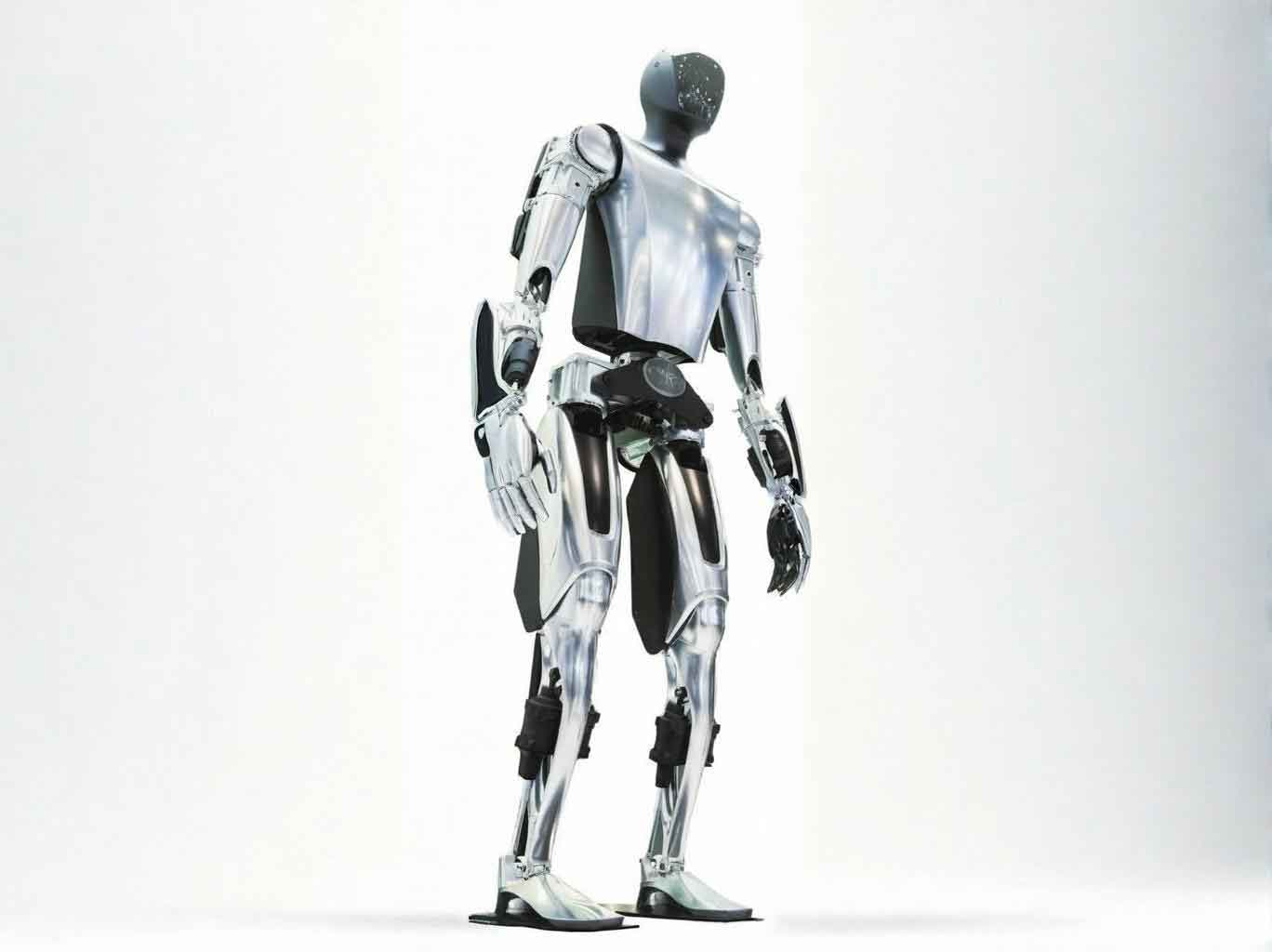
At the core of our work is the belief that embodied AI robots require a synergistic integration of “brain” and “little brain” models for practical solutions. The brain handles high-level reasoning and task planning, while the little brain manages low-level motor control and real-time adjustments. We model this collaboration through a hierarchical framework: let $$ \mathcal{B} $$ represent the embodied brain for cognitive functions, and $$ \mathcal{L} $$ denote the little brain for actuation. The overall system output $$ \mathcal{O} $$ for an embodied AI robot given input $$ \mathcal{I} $$ (e.g., sensory data) is:
$$ \mathcal{O} = \mathcal{L}(\mathcal{B}(\mathcal{I}), \mathcal{S}) $$
where $$ \mathcal{S} $$ encapsulates the robot’s physical state and dynamics. This decomposition allows for modular advancements in each component, enabling embodied AI robots to adapt across heterogeneous platforms. To quantify performance, we define a task completion score $$ C $$ as:
$$ C = \frac{1}{N} \sum_{i=1}^{N} \mathbb{I}(\text{task}_i \text{ completed successfully}) $$
where $$ N $$ is the number of tasks, and $$ \mathbb{I} $$ is an indicator function. Our evaluations show that this brain-little brain synergy improves $$ C $$ by up to 40% compared to monolithic models for embodied AI robots.
Multi-modal world models are crucial for embodied AI robots to perceive and interact with the physical world. We leverage video data as a rich source of spatiotemporal information, training models to predict future states. Consider a video sequence $$ V = \{v_1, v_2, \dots, v_T\} $$, where each frame $$ v_t $$ encodes visual, auditory, and haptic cues. Our multi-modal world model, Emu3.5, learns a transition function $$ f $$ such that:
$$ \hat{v}_{t+1} = f(v_t, a_t; \theta) $$
with $$ a_t $$ being the action taken by an embodied AI robot, and $$ \theta $$ as model parameters. The training objective minimizes a prediction loss $$ \mathcal{L}_{\text{pred}} $$:
$$ \mathcal{L}_{\text{pred}} = \sum_{t} \| v_{t+1} – \hat{v}_{t+1} \|^2 $$
As data scales, we observe a “multi-modal Scaling” effect: model capability $$ M $$ improves logarithmically with dataset size $$ D $$, expressed as $$ M \propto \log(D) $$ for embodied AI robots. This underscores the importance of large-scale, diverse data for advancing embodied intelligence.
To tackle the “non-universal” issue, we developed RoboBrain 2.0 Pro, a framework for cross-heterogeneous本体 collaboration. It incorporates modules like RoboBrain-Dopamine for action时序价值 assessment and RoboBrain-SpatialTrace for 3D spatial reasoning. The value function $$ V(s) $$ for an embodied AI robot in state $$ s $$ is approximated using a reward model $$ R $$:
$$ V(s) = \mathbb{E} \left[ \sum_{k=0}^{\infty} \gamma^k R(s_{t+k}) \mid s_t = s \right] $$
where $$ \gamma $$ is a discount factor. This enables zero-shot transfer across different robot platforms, enhancing the versatility of embodied AI robots. Additionally, our VLA model family, including RoboBrain-X0 Pro and RoboBrain-Dex, reduces data costs by leveraging human demonstrations. For灵巧手 manipulation, we model the probability of successful grasping $$ P_g $$ as:
$$ P_g = \sigma(\mathbf{w}^T \phi(\mathbf{o}) + b) $$
where $$ \sigma $$ is the sigmoid function, $$ \phi $$ extracts features from observation $$ \mathbf{o} $$, and $$ \mathbf{w}, b $$ are learned parameters. These advancements make embodied AI robots more adaptable and efficient.
Data is the lifeblood of training robust embodied AI robots. We introduced CoRobot, a software framework for standardized data collection and annotation across heterogeneous platforms. This has facilitated the creation of RoboCOIN, a high-quality dataset for双臂机器人 with extensive annotations. Table 1 summarizes its statistics, highlighting its role in advancing embodied AI robots.
| Metric | Value | Description |
|---|---|---|
| Number of robot platforms | 15+ | Diverse embodied AI robots from multiple manufacturers |
| Total demonstrations | 50,000+ | Real-world tasks performed by embodied AI robots |
| Annotation types | Trajectory, object pose, force data | Fine-grained labels for embodied AI robot learning |
| Data size | 10 TB+ | Rich multi-modal inputs for embodied AI robots |
Our full-stack platform, RoboXstudio, integrates data management, model training, simulation, and deployment for embodied AI robots. It supports end-to-end workflows, reducing development time by 30% for embodied AI robot projects. We also developed FlagOS-Robo, a multi-chip training and inference framework that optimizes resource utilization. The efficiency gain $$ E $$ is modeled as:
$$ E = \frac{T_{\text{baseline}}}{T_{\text{FlagOS}}} $$
where $$ T $$ denotes training time, with typical $$ E > 1.5 $$ for embodied AI robot models. This scalability is vital for handling the computational demands of embodied AI robots.
Evaluation is critical to measure progress in embodied AI robots. We launched FlagEval-EmbodiedVerse, a systematic benchmarking platform, and ERQA+, a challenging benchmark for embodied reasoning. The ERQA+ score $$ S $$ combines task complexity $$ \mathcal{C} $$ and success rate $$ \rho $$:
$$ S = \alpha \cdot \mathcal{C} + \beta \cdot \rho $$
with $$ \alpha, \beta $$ as weighting factors. Table 2 compares key benchmarks used for assessing embodied AI robots, emphasizing the need for comprehensive metrics.
| Benchmark | Focus Area | Metrics | Applicability to Embodied AI Robots |
|---|---|---|---|
| ERQA+ | Reasoning and task planning | Success rate, step efficiency | High – tests cognitive skills of embodied AI robots |
| RoboChallenge | Physical manipulation and mobility | Completion time, accuracy | High – evaluates embodied AI robot dexterity |
| Safety评测体系 | Collision avoidance and stability | Risk score, fall frequency | Critical for real-world embodied AI robots |
Moreover, we established a physical safety evaluation framework in collaboration with academic partners. It quantifies safety risks $$ \mathcal{R} $$ for an embodied AI robot as:
$$ \mathcal{R} = \sum_{i} w_i \cdot \text{incident}_i $$
where $$ \text{incident}_i $$ counts events like collisions, and $$ w_i $$ are severity weights. This ensures that embodied AI robots can operate reliably in human environments.
The ecosystem for embodied AI robots thrives on collaboration. We advocate for a data flywheel effect: companies share anonymized operational data, which we use to train better models, and in return, they receive improved brains for their embodied AI robots. This symbiotic relationship lowers costs and accelerates innovation. Table 3 outlines the benefits of this model for various stakeholders in the embodied AI robot industry.
| Stakeholder | Role | Gains from Collaboration |
|---|---|---|
| Research Institutes | Develop foundational models | Access to diverse data from embodied AI robots |
| Robot Manufacturers | Build hardware and specific solutions | Pre-trained brains for embodied AI robots, reduced R&D risk |
| End-Users | Deploy embodied AI robots in real scenarios | More reliable and通用 embodied AI robots |
We have open-sourced multiple models and tools to promote transparency and collective进步. For instance, our embodied brain models achieve跨本体泛化 through techniques like domain adaptation. The adaptation loss $$ \mathcal{L}_{\text{adapt}} $$ for an embodied AI robot is defined as:
$$ \mathcal{L}_{\text{adapt}} = \mathcal{L}_{\text{task}} + \lambda \cdot \mathcal{L}_{\text{domain}} $$
where $$ \mathcal{L}_{\text{task}} $$ is the task-specific loss, $$ \mathcal{L}_{\text{domain}} $$ aligns features across platforms, and $$ \lambda $$ balances the terms. This enables embodied AI robots to leverage shared knowledge while adapting to unique hardware constraints.
Looking ahead, we believe that specialized embodied AI robots will first gain traction in niche applications like logistics or healthcare, where task requirements are well-defined. The commercial viability of such embodied AI robots can be estimated using a return on investment (ROI) model:
$$ \text{ROI} = \frac{\text{Net Benefits from Embodied AI Robot}}{\text{Total Costs}} $$
where benefits include labor savings and efficiency gains. As technology matures, we anticipate a gradual expansion towards more通用 embodied AI robots, but this will require sustained collaboration and incremental breakthroughs. Our institute will continue to iterate on open-source projects, datasets, and benchmarks, partnering with industry to pilot embodied AI robots in real-world settings like manufacturing lines and service environments.
In conclusion, the journey of embodied AI robots is one of patient iteration and shared effort. By focusing on public infrastructure, cross-platform compatibility, and rigorous evaluation, we can overcome the current limitations and unlock the full potential of embodied intelligence. The B-side of this field—filled with trials, data, and collaboration—is just as important as the final showcase, and it is here that the future of embodied AI robots is truly forged. We invite more partners to join us in this endeavor, contributing data and insights to collectively advance the frontier of embodied AI robots for the benefit of all.