
How a medical robot can embody the ancient ideal of “physicians’ benevolence” is not merely a technical challenge but a profound philosophical inquiry at the heart of medical artificial intelligence development. This concept, sedimented through the long history of Chinese civilization, represents the moral sentiment of reverence for life. Its integration into the design and deployment of intelligent systems forces us to reconsider the very nature of healing, the role of technology in care, and what ultimately defines the physician in an age of silicon and algorithms. As I explore this intersection, it becomes clear that the journey of “benevolence” from a political virtue to a medical cornerstone provides the essential framework for understanding the potential and the perils of the medical robot.
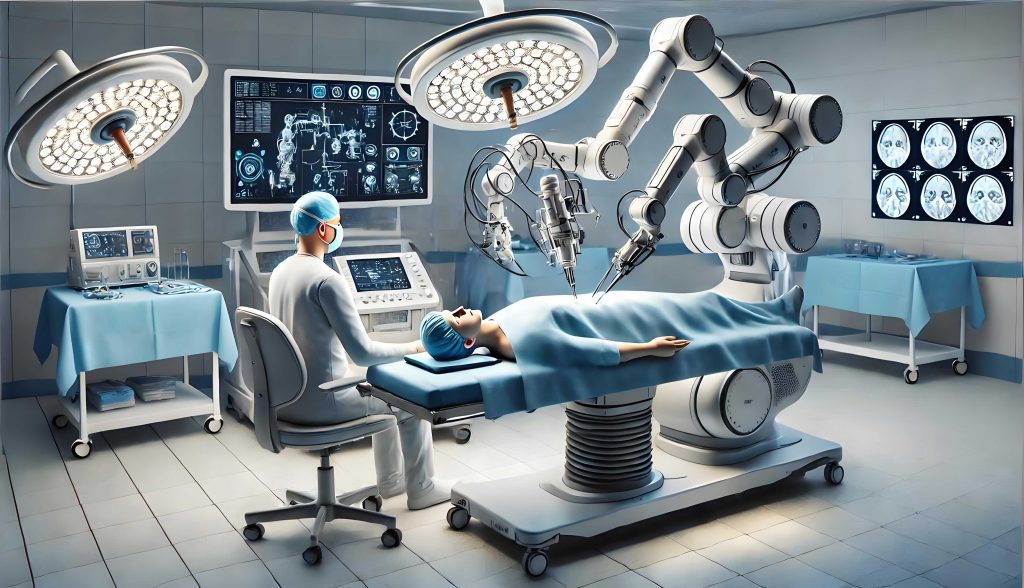
The notion of “physicians’ benevolence” (“yi zhe ren xin”) signifies a healthcare worker’s profound capacity for perceiving the suffering of patients and society, coupled with the will to act and alleviate it. This is more than professional competence; it is considered the foundational character and intrinsic attribute of the healer, the very trait that may prove most resistant to full replication by a medical robot. Early Chinese medical texts, such as the Huangdi Neijing, already recognized the intricate link between emotional states and physical health, implying that the physician’s engagement with the patient’s mind and spirit was as crucial as treating the body. The legendary physician Bianchi, a contemporary of Confucius, emphasized trust as the bedrock of the therapeutic relationship, showcasing a nascent form of this moral commitment.
The philosophical bedrock for this idea is found in Confucian thought. “Ren” (benevolence, humanity), with “loving others” as its core, evolved from familial love to a universal principle. Mencius explicitly articulated the concepts of “ren xin” (benevolent heart) and “ren shu” (benevolent technique). The “benevolent heart” is the innate “heart of compassion,” while the “benevolent technique” is the skillful method to enact that compassion without causing harm. As the philosopher Zhu Xi noted, “shu” refers to a clever or artful method—the “benevolent technique” is thus the practical wisdom needed to navigate complex realities while safeguarding the benevolent intention. Originally applied to governance (“ren zheng” or benevolent governance), this pairing gradually focused on the medical field as society deepened its understanding of life’s sanctity. By the Ming Dynasty, the phrase “medicine is a benevolent technique” (“yi nai ren shu”) was formally established, marking the recognition of medicine as the primary vessel for expressing and realizing benevolence through action. The physician became the “benevolent person” (“ren ren”) whose duty was to be “deeply sincere in emotion” (“du yu qing”), seeing others as oneself. Thus, “physicians’ benevolence” transitioned from a general ethical ideal to the specific, defining ethos of the healing profession, where compassion was both the motive and the measure.
| Period | Key Concept | Domain | Core Idea |
|---|---|---|---|
| Pre-Qin (e.g., Confucius, Mencius) | Ren (Benevolence), Ren Xin / Ren Shu | Political / General Ethics | Compassionate heart expressed through skillful governance. |
| Tang to Ming Dynasties | Yi Nai Ren Shu (Medicine is a Benevolent Technique) | Medical Ethics | Healing is the paramount method for practicing benevolence, focusing on life. |
| Modern Era | Physicians’ Benevolence (Yi Zhe Ren Xin) | Medical Professionalism | The essential character of a healer: compassion, empathy, and moral commitment to life. |
The execution of “physicians’ benevolence” has always been inextricably linked to technical skill. From the scalpel to the MRI, tools have extended the healer’s capabilities. The contemporary medical robot, particularly one with advanced learning capacities, represents a qualitative leap in this lineage. It is no longer a passive instrument but an active agent within a human-machine system. The question of whether such a medical robot can be a moral agent is debated. Some argue that advanced causal reasoning models grant a form of autonomy worthy of moral consideration, especially if aligned with human values. Others contend that without genuine consciousness or understanding, a medical robot remains a sophisticated tool, and endowing it with simulated emotions or values is unnecessary or even dangerous.
A more productive approach lies in relational theory. Rather than fixating on the medical robot‘s internal state, we can view its moral significance as emerging from its role and interactions within the care ecosystem. From this perspective, the medical robot and the human clinician form an integrated, synergistic whole. The medical robot acts as a non-human “medical worker,” extending human capabilities in precision, stamina, and data processing. In this broad, functional sense, through human-robot collaboration and interaction, the medical robot assumes part of the “physician’s” role. As such, its ethical design must embody the core principles that bind human healers. The most fundamental is the principle of non-maleficence, directly echoing the Hippocratic Oath and, in robotics, Asimov’s First Law. For a medical robot, this can be framed as a deontic constraint within its decision-making architecture.
However, medical care is laden with uncertainty. To handle the fuzzy boundaries of ethical decisions in clinical contexts, a medical robot may employ fuzzy deontic logic. A simplified representation of an ethical check could be modeled as a function that evaluates an action (A) against patient state (P), ethical rules (R), and contextual factors (C):
$$ Ethical\_Clearance(A) = \mu_{NonMaleficence}(A, P) \land \mu_{Beneficence}(A, P) \land \mu_{Context}(A, C) $$
Here, $\mu$ represents membership functions in fuzzy logic, determining the degree to which an action aligns with the principles of “do no harm” and “do good” given the specific patient and context. This allows the medical robot to navigate grey areas rather than relying on rigid binary rules.
But true “benevolence” in care requires more than avoiding harm; it requires personalized engagement. This is where the most significant challenge and opportunity for the medical robot lies: the domain of emotion and affective interaction. Emotional states significantly influence health outcomes, a fact central to traditional Chinese medicine’s focus on the “seven emotions.” A medical robot that can recognize and appropriately respond to a patient’s emotional state begins to approximate the empathetic dimension of “physicians’ benevolence.” This happens not because the robot possesses feelings, but because it is designed to detect affective cues and generate responses that are supportive and therapeutic within the human-machine interaction loop. Therefore, through collaborative synergy and intelligent interaction, the medical robot becomes a new, intelligent form of “benevolent technique,” giving “physicians’ benevolence” a novel, hybrid morphology.
| Role of Medical Robot | Technical Capability | Embodiment of “Benevolence” |
|---|---|---|
| Surgical & Procedural Assistant | Super-human precision, stability, miniaturization. | Minimizing physical trauma (non-maleficence), enabling previously impossible curative actions (beneficence). |
| Diagnostic & Analytical Partner | Pattern recognition in large-scale multimodal data (images, genomics, records). | Reducing diagnostic error, identifying subtle early warnings, promoting preventative care. |
| Rehabilitation & Elderly Care Aide | Physical support, guided motion therapy, consistent companionship. | Enabling dignity through mobility, providing patience and unwavering support for repetitive therapy. |
| Affective Interactive Agent | Emotion recognition via facial/voice analysis, context-aware empathetic dialogue generation. | Providing psychological support, reducing anxiety, personalizing communication to patient’s emotional needs. |
The key to ensuring that a medical robot truly serves as a vessel for “physicians’ benevolence” lies in its foundational ethical预设 (preset). Here, the Chinese philosophical paradigm of “Ti-Yong” (Essence-Function) provides a powerful framework. In this model, the ethical design of the medical robot should have “benevolence” (Ren) as its essence (Ti) and “emotion/affect” (Qing) as its primary function (Yong).
Establishing “benevolence” as the essence means attributing the property of “Ren” to the artificial entity. This finds justification in the Neo-Confucian expansion of “Ren” from an anthropocentric virtue to an ontological principle of “forming one body with all things” (“wan wu yi ti”). In this worldview, interconnectedness is fundamental. A medical robot is not an isolated tool but a node in the relational network of care, its existence defined by its connections to patients, clinicians, and the healthcare system. Its “essence” is thus relational and oriented towards the nurturing of life (“sheng sheng zhi ren”). This ontological grounding mandates that the medical robot be designed to perceive its service targets not as objects, but as living beings within a shared continuum, and to itself exhibit certain life-like, specifically human-like, properties—foremost among them, affective capacities.
The functional manifestation of this benevolent essence is “emotion.” In the age of “human-machine distinction,” what often differentiates human healers is not calculative rationality but emotional rationality—the capacity for empathy, compassion, and moral feeling. Therefore, the critical developmental direction for a medical robot is enhancing its affective competence. This involves two core pillars: emotion recognition and emotion expression, collectively forming affective computing. The process can be conceptualized as a pipeline:
1. Perception: The medical robot acquires multi-modal data $D$ (visual, auditory, physiological).
2. Recognition: A model $M_r$ processes $D$ to infer an affective state $E_p$ of the patient.
$$ E_p = M_r(D) $$
3. Learning & Adaptation: Using techniques like transfer learning, the model personalizes itself to the patient’s unique expressive patterns over time, updating $M_r$ to $M_r’$.
4. Decision & Expression: A response policy $P$, aligned with benevolent principles ($Ren$), uses $E_p$ and context $C$ to generate an appropriate action or expressive output $A_e$.
$$ A_e = P(E_p, C | Ren) $$
$$ where\ P\ aims\ to\ maximize\ therapeutic\ rapport\ R_t,\ R_t = f(empathic\ alignment,\ support,\ trust) $$
For instance, in applications for Autism Spectrum Disorder, a medical robot can use these models to recognize subtle, atypical emotional cues that might be missed by humans and respond with consistent, predictable, and calming interactions, thereby building trust and facilitating therapy.
| Stage | Recognition (Yong – Function) | Expression (Yong – Function) | Embodiment of “Benevolent Essence” (Ti) |
|---|---|---|---|
| Basic | Detects broad emotional categories (happy, sad) from clear signals. | Pre-programmed verbal consolation (e.g., “It will be okay”). | Demonstrates basic attentiveness to patient state. |
| Intermediate | Infers complex states (anxiety, frustration) from multi-modal data; some personalization. | Adapts tone, word choice, and non-verbal cues (light patterns, gentle motion) to inferred state. | Shows personalized care and begins to build therapeutic rapport. |
| Advanced (Future) | Real-time, nuanced understanding of mixed emotions and their clinical relevance (e.g., pain-related distress). | Generates dynamic, context-aware empathetic dialogues and physical responses that are genuinely supportive. | Functions as a sophisticated affective partner in care, deeply integrated into the healing relationship. |
This “Ti-Yong” framework—with benevolence as the core essence and affective interaction as the key function—guides the “moral materialization” of the medical robot. It ensures that the technology is designed from the outset with a humane purpose, not just a technical specification. This approach acts as a crucial counterbalance to the potential overreach of instrumental rationality. The history of modern medicine warns of how technology can inadvertently create distance, turning patients into cases. A medical robot designed under the ethos of “physicians’ benevolence” must do the opposite: use its technical prowess to foster connection and understanding.
In conclusion, the journey to embody “physicians’ benevolence” in a medical robot is a profound synthesis of ancient wisdom and cutting-edge technology. The Confucian ideal of “Ren,” refined through centuries of medical humanism, provides the indispensable value compass. By viewing the medical robot as a “benevolent technique” within a human-machine synergy, we can envision its role not as a replacement, but as an extension and amplifier of human compassion. The “Ti-Yong” paradigm offers a blueprint for its ethical architecture, demanding that benevolence be its foundational principle and affective intelligence its primary operational expression. Ultimately, the development of the medical robot guided by “physicians’ benevolence” is a testament to the principle of “technology for good.” It emphasizes that while the calculative and procedural aspects of medicine may be augmented or even surpassed by machines, the emotional-rational core of healing—the compassionate, empathetic engagement with another suffering being—remains the defining hallmark of the healer. Ensuring that every medical robot is built to serve and reflect this core is our most important task in forging a humane future for AI-driven healthcare.