
Shanghai – “The spring of open source has arrived!” declared Zhu Qigang, Secretary-General of the Shanghai Open Source Information Technology Association, during the “Open Source Path for Humanoid Robots” forum at the 2025 Global Developer Conference (GDC). This assertion stems from the transformative impact of DeepSeek’s rise, which has solidified open-source collaboration as a fundamental consensus across the artificial intelligence sector.
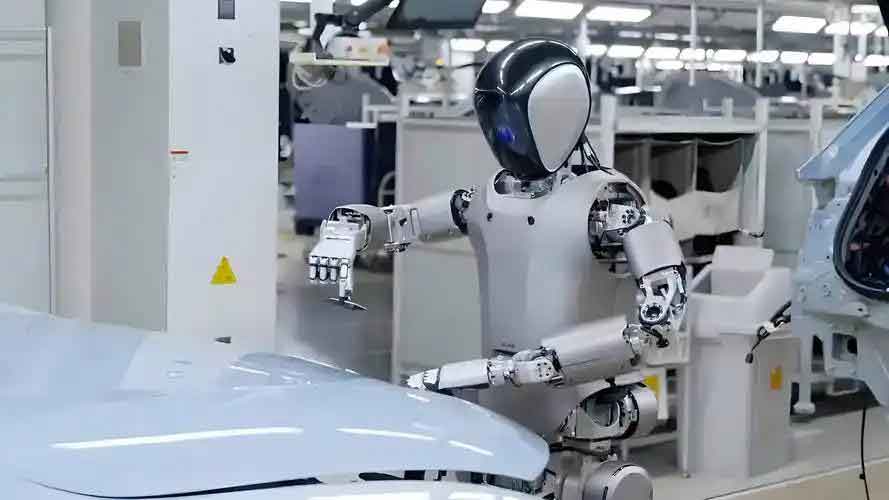
Propelled by platform enterprises, the burgeoning humanoid robot industry is now experiencing its own wave of open-source momentum. Xu Bin, General Manager of the National and Local Co-built Humanoid Robot Innovation Center (National-Local Center), emphasized that humanoid robots represent the pinnacle of AI and robotics integration, where open-source principles are vital for technological advancement and industrial prosperity. The National-Local Center is actively fostering an open-source ecosystem to harness global developer expertise and accelerate innovation in humanoid robot technology.
This movement signals a fundamental shift: From hardware blueprints and algorithm frameworks to datasets and training environments, an industry-wide collaborative wave centered on open source is actively reshaping the future of humanoid robotics.
1. The Imperative Logic of Open Source
The humanoid robot sector remains in its nascent “0 to 1” phase, with standards and foundational elements still under development. A senior executive from a humanoid robot manufacturer revealed the critical need for open source: “Laboratories might spend months debugging code that others have already perfected, while startups investing millions could unknowingly duplicate technologies already iterated upon by larger firms. Consequently, open source has become indispensable.”
Open source involves publicly releasing source code, design documents, and other resources to dismantle information barriers. This allows other participants to build upon existing work, learn, research, and innovate, eliminating redundant efforts and boosting efficiency. Unlike large-model open sourcing, humanoid robot open source encompasses both software and physical hardware design. It demands consideration of complex mechanical structures, sensor configurations, and intricate hardware-software integration challenges.
In a prior interview, Xu Bin detailed how the National-Local Center addressed this need by releasing “Qinglong” – the world’s first open-source universal humanoid robot base model last year. “This enables Chinese humanoid robot companies to develop atop ‘Qinglong,’ avoiding redundant wheel-reinvention. It elevates their research starting point, allowing entrants into the industry to enjoy ‘low barriers yet high starting points,’ empowering them to grow stronger, faster, and more robustly,” Xu explained.
He further highlighted the launch of OpenLoong, the world’s first full-scale humanoid robot open-source community: “This gathers top talent to discuss and research common technologies while accumulating technical achievements. The community also facilitates discussions on ethical norms, fostering consensus. Moreover, open-sourcing integrates brain systems, cerebellum controllers, hardware manufacturers, and technical experts within the community, accelerating industry convergence.”
Echoing the value chain benefits, Zhu Qigang noted that open-source hardware designs (like standardized sensor interfaces) reduce R&D costs and accelerate technical standardization. Enterprises can attract developers to co-build ecosystems through open-source foundational models, creating technological moats. Open-source software minimizes duplicate development efforts, lowering corporate R&D expenses.
Nevertheless, some industry voices urge caution, pointing out that the absence of unified hardware standards for humanoid robots could lead to fragmentation through open source – such as splintered technical standards and dispersed supply chains. They advocate initially concentrating resources on 1-2 leading enterprises to achieve breakthroughs, suggesting gradual ecosystem opening only after “technology convergence” – a process where diverse technical approaches, standards, and architectures unify and standardize.
Despite differing views, a core consensus prevails: Open source is pivotal for lowering development barriers and harnessing collective ecosystem strength in advancing humanoid robotics.
2. Forging a Comprehensive Open Source Ecosystem
Shanghai maintains a leadership position in the humanoid robot arena through continuous open-source initiatives – from the “Qinglong” base model release and the debut of the “Eighteen Arhats” array to the open-sourcing of million-sample real-world datasets and the publication of the first batch of group standards.
In January 2025, China’s first heterogeneous humanoid robot training ground launched in Shanghai, initially deploying over 100 heterogeneous robots. This facility targets the large-scale collection and generation of humanoid robot data, providing crucial support for developing a universal robotic foundation model.
Xu Bin asserts this training ground will significantly reduce costs in embodied intelligence development and eliminate redundant infrastructure investments. “Through mature operation and nationwide expansion, it holds potential to become a national-level platform integrating virtual and physical environments for embodied intelligence development, propelling China’s humanoid robot industry and fueling strategic emerging and future industries,” he stated.
Recognizing high-quality data as paramount for exploring embodied intelligence applications, Cupath collaborated with the National-Local Center, Caohejing Park, Qiongche, AgiBot, Songying, Fourier, Star Ocean Map, CETC 21st Research Institute, and Large Model Ecosystem Development at the 2025 GDC to launch the Embodied Intelligence Corpus Special Project and the “Production-accompanying” Data Collection Program.
Complementing this, AgiBot Robotics open-sourced AgiBot World – a dataset containing millions of real-world humanoid robot data points. AgiBot World spans over 100 authentic scenarios: 40% home environments, 20% catering settings, 20% industrial applications, with commercial and office scenarios each comprising 10%. Fourier Intelligence’s GRx series humanoid robots are already deployed in guided tours, academic research, and medical rehabilitation, offering global developers comprehensive documentation and responsive technical support.
3. Strategic Positioning and Future Outlook
Shanghai is strategically leveraging humanoid robot open source to capture leadership in this emerging industrial frontier. Pudong New Area aims to establish itself as an embodied intelligence innovation hub spearheaded by humanoid robotics, cultivating an influential industry ecosystem. The primary base in Zhangjiang has aggregated 73 enterprises across key supply chain segments – from core components to system integration – progressively forming a concentrated humanoid robot industry cluster.
Industry experts anticipate 2025 could mark the “Year One” for humanoid robots, driven by supportive policies and enterprise breakthroughs. Tian Feng, Dean of the Quick Thinking and Deep Reflection Institute and founding president of the former SenseTime Intelligent Industry Research Institute, highlighted comparative developments: “Quadruped robots represented by Unitree and DeepRobotics in China are accelerating commercialization. With rising production capacity driving down costs, core components for these robots could fall below 3,000 RMB within three years, enabling widespread adoption of robotic ‘carriers’ like machine dogs across production lines.”
However, he noted that humanoid robots still await two pivotal inflection points: Their “ChatGPT moment” signifying mass-service viability and their “DeepSeek moment” representing cost-reduction breakthroughs. The burgeoning open-source ecosystem, encompassing shared hardware platforms, accessible datasets, collaborative training environments, and vibrant developer communities, is actively accelerating progress toward these transformative thresholds for advanced humanoid robotics.