
The relentless advancement of micro-nano manufacturing and Micro-Electro-Mechanical Systems (MEMS) has propelled devices towards unprecedented miniaturization, integration, and multi-functionality. As the physical dimensions of components shrink to the micrometer and nanometer scale, the fundamental forces governing their behavior undergo a dramatic shift. Macroscopic gravity is superseded by surface tension, electrostatic forces, and van der Waals forces, phenomena often negligible at larger scales but dominant in the micro-world. This scale effect renders conventional robotic assembly techniques obsolete and introduces significant challenges in handling, transporting, and precisely releasing these tiny parts. At the heart of this technological frontier lies the end effector—the critical interface between a robotic micromanipulation system and the micro-device itself. The development of sophisticated end effectors capable of reliable, high-precision, and non-destructive manipulation is therefore of paramount importance for the assembly and integration of next-generation microsystems.
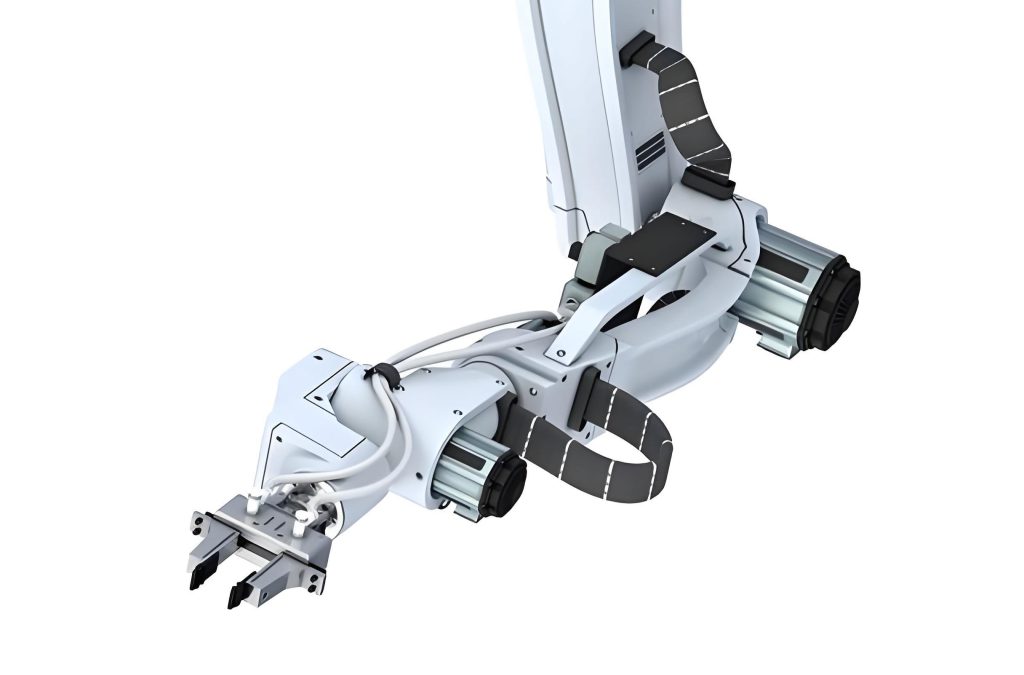
An end effector for microdevice manipulation must fulfill a complex set of requirements: it must provide sufficient force to overcome adhesion to the substrate for pick-up, securely hold the part during transport, and then reliably release it at a target location with micron-level accuracy, all while avoiding damage to the fragile component. Based on the nature of the physical interaction with the target object, end effectors are broadly classified into two categories: Contact and Non-Contact. Contact end effectors achieve manipulation through direct physical interaction, which can be further divided into Rigid-Contact and Compliant-Contact types. Non-Contact end effectors, on the other hand, employ field-based forces such as optical, acoustic, or magnetic fields to trap and move objects without any physical contact.
Contact End Effectors: Precision Through Physical Interaction
Contact end effectors represent the most direct approach to micro-manipulation, where a tool physically grasps, holds, and releases the micro-part. This category is mature and widely used in industrial settings, particularly for assembling electronic components.
Rigid-Contact End Effectors: Micro-Grippers
Micro-grippers are the archetypal rigid-contact end effectors. They function like miniature pliers, using controllable jaws to perform pick-and-place operations. Their design offers flexibility, simplicity, and high positioning accuracy, making them suitable for a wide variety of micro-part shapes (excluding thin films). The actuation principle defines the key subtypes of micro-grippers.
Piezoelectric Micro-Grippers: These utilize the inverse piezoelectric effect, where certain materials deform under an applied electric field. While offering precise control and fast response, the inherent strain of piezoelectric materials is small, necessitating complex mechanical displacement amplification mechanisms (e.g., flexible hinge levers) to achieve practical jaw motion. A generic model for the displacement amplification ratio $A$ of a lever amplifier is given by:
$$ A = \frac{L_{output}}{L_{input}} = \frac{l_2}{l_1} $$
where $l_1$ and $l_2$ are the distances from the flexure pivot to the input and output points, respectively. The actual jaw displacement $\delta_{jaw}$ is then:
$$ \delta_{jaw} = A \cdot \delta_{piezo} $$
where $\delta_{piezo}$ is the piezoelectric actuator’s free displacement. Challenges include limited miniaturization due to the actuator size and potential stiction during release, often addressed by integrating high-frequency vibration elements.
Electrostatic Micro-Grippers: Typically fabricated using silicon MEMS processes, these grippers use comb-drive capacitors. A voltage applied between interdigitated comb fingers generates a lateral electrostatic attraction force, closing the jaws. The force $F_e$ in a simple parallel-plate model (for a single finger pair) is approximated by:
$$ F_e \approx \frac{1}{2} \frac{\epsilon_0 \epsilon_r h V^2}{g} $$
where $\epsilon_0$ is vacuum permittivity, $\epsilon_r$ is the relative permittivity of the medium (often air), $h$ is the comb finger height, $V$ is the applied voltage, and $g$ is the gap between fingers. They are known for high precision, design flexibility, and batch-fabrication compatibility, but offer limited force and displacement and can be fragile.
Electrothermal Micro-Grippers: These exploit Joule heating-induced thermal expansion. Common designs use asymmetric beams (e.g., hot-and-cold arms in a U-shape or V-shape “chevron” actuators) where differential expansion causes bending. The induced deflection $\delta$ is related to the temperature rise $\Delta T$, the thermal expansion coefficient $\alpha$, and the beam length $L$:
$$ \delta \propto \alpha \cdot \Delta T \cdot L^2 $$
V-shaped actuators provide linear displacement and can be designed for larger amplification ratios. They can generate larger forces and displacements at lower voltages compared to electrostatic types but suffer from slower response times due to thermal inertia and heat dissipation challenges.
Other Actuation Principles: Electromagnetic micro-grippers use solenoid coils and magnets to generate actuation force, offering fast response and simple control but are difficult to miniaturize. Shape Memory Alloy (SMA) micro-grippers use the phase transformation of materials like Nitinol upon heating/cooling to produce motion, providing very large strains but have slow cooling cycles and fatigue issues.
| Actuation Type | Key Advantages | Key Limitations | Typical Output |
|---|---|---|---|
| Piezoelectric | High precision, fast response, high force density | Small native displacement, needs amplification, hysteresis | Force: mN range, Displacement: ~10-200 µm |
| Electrostatic (Comb-Drive) | IC-compatible, fast, suitable for batch fabrication | Small force/displacement, high voltage required, fragile | Force: µN range, Displacement: ~1-10 µm |
| Electrothermal | Large force & displacement at low voltage, simple structure | Slow response, power consumption, heat management | Force: mN range, Displacement: ~10-100 µm |
| Electromagnetic | Large stroke, fast, simple control | Difficult to miniaturize, heat generation, magnetic interference | Force: 10s of mN, Displacement: ~100s of µm |
| Shape Memory Alloy | Extremely large strain, high force | Very slow cycle time, hysteresis, fatigue | Force: N range, Displacement: mm range |
Compliant-Contact End Effectors
These end effectors use softer, field-mediated interactions rather than rigid jaws to grip objects. They are particularly useful for fragile, thin, or irregularly shaped parts.
Vacuum Grippers: A traditional and widely used end effector, especially in semiconductor packaging. It uses negative pressure (vacuum) to pick up objects, primarily flat parts like silicon chips or wafers. The pick-up force $F_{vac}$ is given by:
$$ F_{vac} = \Delta P \cdot A_{nozzle} $$
where $\Delta P$ is the pressure difference and $A_{nozzle}$ is the area of the suction nozzle orifice. Its main advantages are simplicity and reliability for flat surfaces, but it is unsuitable for porous, rough, or very small objects where sealing is difficult, and requires auxiliary vacuum equipment.
Capillary Force Grippers (Liquid Bridge Grippers): This is a highly versatile compliant end effector exploiting the surface tension of a liquid meniscus. A small liquid droplet (often water) at the tip of a probe forms a capillary bridge with the micro-part, creating a strong adhesive force. The capillary force $F_{cap}$ for a axisymmetric bridge between a spherical tip of radius $R_t$ and a spherical particle of radius $R_p$ can be approximated by:
$$ F_{cap} \approx 2\pi R \gamma \cos\theta $$
where $R$ is the effective radius ($\frac{1}{R} = \frac{1}{R_t} + \frac{1}{R_p}$), $\gamma$ is the liquid surface tension, and $\theta$ is the contact angle. For a gripper with a flat tip and a flat part, the force is:
$$ F_{cap} = \frac{2\pi \gamma \cos\theta}{1 + \frac{d}{h}} \cdot R_{meniscus} $$
where $d$ is the gap, $h$ is the height of the liquid bridge, and $R_{meniscus}$ is the radius of the meniscus. Its key strengths are adaptability to various shapes and materials, and gentle handling. The main challenge is controlled release, addressed through strategies like meniscus volume control (via piezo pistons, electro-wetting, evaporation), mechanical breakage (using a push-rod), or vibration-assisted release. Advanced designs include multi-probe grippers for better stability and 3D-printed tips with optimized textures.
Electrostatic and van der Waals Grippers: Less common, these use direct electrostatic attraction or cryogenic ice adhesion (based on van der Waals forces in the ice-solid interface) to pick up parts. The ice gripper, for instance, freezes a water droplet to adhere to a part and melts it to release. While powerful and shape-agnostic, these methods often suffer from low release accuracy, complex supporting systems, and environmental constraints.
Non-Contact End Effectors: Manipulation by Field Forces
Non-contact end effectors are indispensable for manipulating biological cells, droplets, colloidal particles, or in sterile environments where physical contact is undesirable or damaging. They use spatially controlled energy fields to create potential wells that trap and move objects.
| Technology | Operating Principle | Typical Target | Force Magnitude | Key Advantage | Key Challenge |
|---|---|---|---|---|---|
| Optical Tweezers | Gradient force from a highly focused laser beam | Dielectric particles, cells, organelles (0.01-10 µm) | pN range | Extremely high spatial resolution, versatile | Potential photo-damage, low force, requires transparent medium |
| Acoustic Tweezers | Acoustic radiation force from standing or travelling ultrasound waves | Cells, microparticles, organisms (1 µm-1 mm) | pN to nN range | Much higher force than optical tweezers, biocompatible, works in opaque media | Lower spatial resolution, complex transducer design for 3D trapping |
| Electromagnetic Tweezers | Magnetic gradient force on magnetic or magnetized particles | Magnetic beads, magnetotactic cells (0.1-10 µm) | pN to nN range | Very high forces, deep penetration in tissue, selective for magnetic labels | Requires magnetic particles, potential heating from coils |
Optical Tweezers: A tightly focused laser beam creates an intensity gradient that pulls dielectric particles towards the focal point against the scattering force. The gradient force $F_{grad}$ for a Rayleigh particle (diameter << wavelength) is:
$$ F_{grad} = \frac{2\pi n_m a^3}{c} \left( \frac{m^2 – 1}{m^2 + 2} \right) \nabla I $$
where $n_m$ is the refractive index of the medium, $a$ is the particle radius, $c$ is the speed of light, $m = n_p / n_m$ is the relative refractive index, and $I$ is the light intensity. They offer unparalleled precision for single-particle manipulation but generate low forces and risk optical damage to biological samples.
Acoustic Tweezers: These use ultrasonic waves, typically generated by piezoelectric transducer arrays, to form standing wave patterns or focused beams. Particles experience an acoustic radiation force $F_{rad}$ that pushes them towards pressure nodes (for positive contrast factors) or antinodes. For a spherical particle in a standing wave field, the force is proportional to:
$$ F_{rad} \propto V_p \cdot \Phi(\beta, \rho) \cdot \nabla (p_{rms}^2) $$
where $V_p$ is particle volume, $\Phi$ is the acoustic contrast factor (function of compressibility $\beta$ and density $\rho$ ratios between particle and medium), and $p_{rms}$ is the root-mean-square acoustic pressure. Acoustic tweezers provide significantly stronger, biologically benign forces suitable for manipulating cells and organisms within microfluidic channels.
Electromagnetic Tweezers: This end effector uses a sharp magnetic tip (often a magnetized needle or a solenoid with a core) to generate a strong localized magnetic field gradient. A superparamagnetic bead experiences a force $F_{mag}$:
$$ F_{mag} = \frac{V_p \Delta \chi}{\mu_0} (B \cdot \nabla)B $$
where $V_p$ is the bead volume, $\Delta \chi$ is the difference in magnetic susceptibility between the bead and medium, $\mu_0$ is the vacuum permeability, and $B$ is the magnetic flux density. It allows selective manipulation of magnetically labeled cells or particles with high force and is a key tool in single-molecule biophysics (e.g., magnetic tweezers for DNA stretching).
Challenges and Future Perspectives
Despite significant progress, the field of microdevice manipulation end effectors continues to face fundamental challenges that drive research forward.
1. Adhesion and Release Dynamics: As part size shrinks to the nanoscale, surface forces dominate, making stiction a severe problem. Reliable release often requires more sophisticated strategies than simple mechanical retraction. Future end effectors will integrate active release mechanisms (e.g., thermal, vibrational, electrochemical) directly into their functional design.
2. Scalability and Throughput: Most research focuses on single-part manipulation. Bridging the gap to industrial-scale, parallel assembly of thousands or millions of microparts requires the development of arrayed end effectors or novel parallel schemes like fluidic self-assembly guided by patterned end effector surfaces.
3. Dexterity and 3D Manipulation: Operating in full six degrees of freedom within confined spaces (e.g., inside microfluidic chips or 3D scaffolds) remains difficult. Hybrid end effectors that combine different actuation principles (e.g., magnetic steering of an optically or capillary-actuated tool) or minimally invasive tools like untethered micro-grippers are promising directions.
4. Intelligence and Autonomy: The future lies in “smart” end effectors integrated with real-time sensory feedback (force, vision, capacitive). This enables closed-loop control for adaptive grasping, automated error recovery, and ultimately, fully autonomous micro-assembly systems powered by machine vision and AI-based planning algorithms.
5. Specialized Tools for Novel Materials: Emerging materials like 1D nanowires, 2D materials (graphene), and soft hydrogels demand new manipulation strategies. Compliant end effectors like capillary grippers or field-based tools are well-suited, but protocols for damage-free handling need to be established.
In conclusion, the end effector is the critical enabling technology for micro- and nano-manipulation. The landscape is diverse, encompassing robust mechanical grippers for industrial micro-assembly, gentle capillary tools for delicate components, and powerful field-based tweezers for biological and colloidal science. The convergence of advanced microfabrication (including 3D nanoprinting), novel materials, and intelligent control systems will drive the next generation of end effectors towards greater dexterity, autonomy, and integration, ultimately unlocking the full potential of complex microsystem manufacturing and single-cell analysis.